Nagging injury? Don’t miss this interview!


In this very special edition of the CHP Spotlight Interview Series, I chatted with my physical therapy colleague, Dr. Kelly Henry.

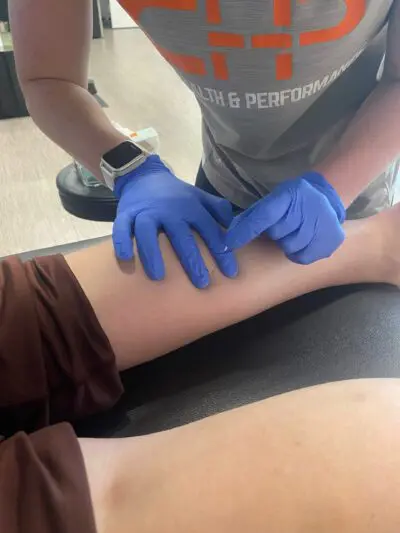
Her recent article about dry needling created a lot of interest and several questions (check that out here). What better way to answer them than to ask the expert herself?

As many of you know, Dr. Kelly is the Clinic Director of our McLean location and an amazing sports physical therapist and strength coach.

In this interview, we tackled many of your questions such as:
-Does dry needling actually work? If so, how?
-Can dry needling help me with my injury?
-Does it hurt?!

If you have a frustrating injury that just won’t go away and/or are considering physical therapy, don’t miss this interview!

To learn more about Dr. Kelly, click here.

Hidden injury risks in youth sports

Today’s article is from Dr. Samuel Kinney! Dr. Sam is a Performance Physical Therapist at our McLean location. In addition to being an amazing sports physical therapist and strength coach, Sam was a successful collegiate athlete. Learn more about Dr. Sam here. Enjoy!


What a great time of year to be a physical therapist! Our summer athletes that were injured or training with us are healthy and starting their fall sports seasons.

One of the most rewarding parts of being a sports physical therapist is seeing the athletes I helped return to the field and benefit from all their hard work from the summer.

But I can’t help but be a little nervous sometimes. There is always a risk of injury, and one of the greatest risks for a young athlete is specializing in one sport too early.

Sports specialization is defined as:

“intentional and focused participation in a single sport for most of the year that restricts opportunities for engagement in other sports and activities.”

Many athletes strongly desire to participate in their sport year-round and are pressured to do so. They have been led to believe that this will enhance their athletic success and potential to play “at the next level.” Yet, there is very little data to support this idea. On the contrary, there is strong support in the medical community for athletes to diversify their sporting activities during the off-season.

The main problem with sport specialization at a young age is that it increases an athlete’s risk for an overuse injury, and overuse injuries account for over 50% of injuries in young athletes. Common overuse injuries at CHP include back injuries like spondylolysis, foot and ankle problems, anterior knee pain, and muscle strains. Year-round play of one sport places continued stress through the same joints and tissues without the opportunity to recover.

How can we solve this problem?

First, a well-rounded strength and conditioning program with sport-specific considerations reduces injury risk by increasing the amount of work that the body can handle. As a result, athletes become more resilient to the stresses placed on them in sports. For example, improving the strength and stress-tolerance of a baseball pitcher’s rotator cuff protects against the high forces involved in pitching.

Second, participate in a secondary sport during the off-season of the main sport. This provides a break from the repetitive movements of the primary sport (e.g., repetitive throwing, hitting, jumping) and allows the athlete to explore different movement patterns. This can also improve performance in their primary sport by improving sporting decision-making and problem-solving and giving them a wider range of movements to utilize.

Finally, use the athlete’s age to guide the training load. A simple formula to use is:

Workload hours/week < age.

For example, a 12-year-old athlete should participate in their sport (including practices) less than 12 hours per week.

The topic of injury reduction is complex, and this is just scratching the surface of how we can reduce the risk of injury for youth athletes. If you are looking for ways to reduce the risk of injury for yourself or your child, contact us schedule an evaluation. We will consider all the factors at play and devise an individualized plan to keep you or your child in action!

Runners: Here is a quick workout for you

I get it. Running is a lot easier than going to the gym. Just throw on your running shoes, walk out the front door, and you are good to go! Meanwhile, the gym requires you to leave the house, get in the car, drive there, and fight for equipment and space with others. Not to mention that the traffic in McLean and Bethesda is no joke!

By now, you probably know that cross-training is essential to improving running performance and avoiding physical therapy. But many runners find it hard to make time for anything besides running. It is easy to fall into the trap that we have seen many runners fall victim to. This is the mindset that the only thing that counts towards training is the miles they log. But this is not true!

Cross-training is essential for runners because it helps prevent injury, build/maintain strength, and improve your run times and muscular endurance! Lifting weights and moving your body in varied ways from your typical movement patterns (running is repetitive!) builds resilience to injury. A typical cross-training program for a runner should include strength training of not only your lower body, but upper body and core as well. Lower body strength is important for power production and single leg control during your run. Core and upper body strength will help you maintain efficient running posture and overall muscular conditioning. Cross-training doesn’t have to be long and daunting.  2 sessions per week of 30 minutes of strength training is a great place to start! Below is an easy full-body template and example workout to try at the gym or home!

Step 1: 5-10 minutes warm-up 

  • Get your muscles warm
  • This can include jogging, biking, or dynamic stretches

Step 2: Full Body Circuit 

  • Choose 1-2 exercises for your lower body, and 1-2 exercises for your upper body
  • Include compound movements! This includes exercises that use your lower body, upper body, and core to work together
  • Perform each exercise for 8-10 repetitions, and repeat the circuit for 3-4 total rounds

Step 3: Core and Plyometric Finish 

  • Choose 2-3 core exercises and 1-2 plyometric exercises
  • Perform each exercise for 20-30 seconds, and repeat the circuit for 3-4 rounds

Example: 
1. Jog on the treadmill at 5-6 MPH for 5 minutes

2. Perform 3 rounds of the following circuit:
A. Reverse Lunge x10 reps on each leg
B. Dumbbell Bench Press x10 reps
C. Goblet Squat x10 reps
D. Shoulder press x10 reps
*Choose a weight that is challenging for you, but you can complete all 3 circuits

3. Perform 3 rounds of the following circuit:
A. Sprinter Step Up x 30 seconds
B. Side plank x 30 seconds on each side
C. Russian twists x 30 seconds

If you are a serious runner that is looking to step up your performance or avoid injury, contact us for a customized cross-training program designed by our resident triathlete, Dr. Kelly Henry!

Runners rejoice: how dry needling can help you

It must be your lucky day because we have another guest post from the Clinic Director of our McLean location, Dr. Kelly Henry!

Do you have tight muscles or knots that won’t go away? Maybe you have even gone to physical therapy elsewhere but made minimal progress!

If you are anything like me, you have tried massage, foam rolling, stretching, and whatever else you can think of, but they keep returning.

Dry needling could be the solution you are looking for. Running is a very linear and repetitive sport, which increases the risk of developing muscle tightness and symptoms related to overuse. Many runners have experienced relief of chronic quad, calf, hamstring or hip flexor tightness from dry needling.

I recently helped a runner during a physical therapy session at our McLean facility that was experiencing consistent calf pain. It was most intense in the middle of his runs and forced him to reduce his overall mileage. He did everything that he could to fix it. He spent a lot of time warming up before runs, cooling down after runs, and he stretched constantly. But nothing helped.

His first physical therapy session included dry needling for his calf muscles, range of motion drills, and a few adjustments to his running technique, and the chronic calf pain went away!

Dry needling works by targeting a muscle limiting range of motion or causing pain. Your physical therapist will identify which muscle is causing the problem, identify “trigger points” in the muscle, and create a “twitch response” with the needle. A twitch response is a quick contraction that helps the muscle relax. People often feel better just a few moments after treatment! Here are some of the things that my runners have noticed after dry needling:

  • Less tightness during and after runs
  • Improvement in muscle soreness
  • Faster recovery from nagging injuries
  • Improved range of motion and muscle activation during cross training

Dry needling is best used with other forms of physical therapy and rehabilitation, including exercise and neuromuscular conditioning.

If you are a runner that is struggling with chronic injuries or tightness or is looking to optimize your recovery, contact us for a dry needling session in our McLean facility today.

Speaking of serious runners…we have 2 slots still available for a FREE Resilient Runner Injury screen at our McLean facility. If you want to run injury-free for years to come, don’t miss this!

This screen involves the use of our exciting, new Forcedeck technology. Learn more about that here!

Contact us for more information and to sign up.

This is how I ran with an achilles injury

We have a special guest post today! Dr. Kelly Henry, the clinic director of our McLean location, is not only an outstanding sports physical therapist and strength coach but also a former collegiate swimmer at Virginia Tech. In her free time, she dominates triathlons, recently placing 2nd in her latest race. Enjoy her insights!


The Persistent Heel Pain Runners Know All Too Well

Most runners can relate to that dull, nagging pain at the back of your heel—a discomfort that’s more irritating than debilitating. It’s rarely severe enough to stop you from running or send you to physical therapy, but it lingers for a few miles each run, leaving you hoping it’ll fade away, or stretching beforehand in the hope that it won’t bother you.

I experienced this for months while training for my first triathlon. I breezed through the initial weeks, steadily increasing my mileage without any issues—until one day, I felt a twinge at the back of my heel at the start of a long run. The pain disappeared during the run, so I didn’t think much of it. But the next morning, it was back, and the morning after that, it persisted, gradually interfering with my training routine. Determined to stick to my program, I refused to cut back on my running volume or intensity, hoping the problem would resolve on its own. When it didn’t, I sought advice from a physical therapist colleague. Transitioning from a provider to a patient was humbling, but here’s what worked for me:

1) Adjusting My Running Volume

I had to admit that I needed some rest. Once I did, many of my symptoms began to decrease. Along with the strategies below, I slowly reintroduced running, increasing my mileage by no more than 10% per week.

2) Strengthening My Calves and Lower Legs

Tendon injuries often occur when a muscle isn’t prepared for the physical demands placed on it. Strengthening the calves and lower legs is crucial for enhancing load tolerance and reducing the strain on the Achilles tendon. I incorporated exercises like bent knee heel raises and various split squat variations with my heel elevated into my daily routine.


3) Addressing the Underlying Causes of My Injury

In addition to focusing on strength and running volume, I identified specific mechanical adjustments needed to optimize my running form and prevent future injuries. I improved my ankle range of motion and learned to better absorb ground impact. Drills like single leg box jumping and weighted single leg hopping were key in this process.

Are You a Serious Runner Looking to Overcome an Injury?

If you’re committed to running injury-free for years to come, our Resilient Runners Movement Screen is a must!

This screening utilizes our cutting-edge Forcedeck technology. Learn more about it here!

Contact us for more information and to sign up.

Why a physical therapist doesn’t recommend stretching

“My shoulder feels tight.” “My hip flexors are tight; I need to stretch them.”

These are common complaints we hear in physical therapy.

While these descriptions aren’t wrong—after all, no one can argue with how you feel—they can sometimes lead to misconceptions about how to address the problem.

The sensation of “tightness” often arises as the body’s way of protecting areas that are vulnerable to injury. When a part of the body is unstable, the nervous system responds by creating stiffness in the surrounding muscles to safeguard it. For example, the hamstrings, which attach to the pelvis, might feel tight in someone with low back pain. This tightness occurs as the muscles stiffen to provide added stability to the pelvis.

In this case, simply stretching the hamstrings won’t solve the problem. The individual needs to learn how to stabilize their back, perhaps by mastering the stack (find out how to do that here) and strengthening the trunk muscles accordingly. Once the underlying issue is addressed, the hamstrings can finally relax.

This is just one example of why a muscle might feel tight, but it’s important to understand that tightness can stem from various causes—and the solution is rarely just to stretch!

If you’re dealing with tight, uncomfortable muscles, it’s time to uncover the root cause. Contact us today to schedule an evaluation and discover how you can finally resolve those tight muscles!

×