The Best Sitting Posture

This is the best sitting posture.

Many physical therapy articles and rehab blogs discuss the importance of sitting posture and how perfect sitting posture is essential to avoid neck and back pain. Here are a few examples of what I found in several articles online.

  1. Sit with your feet flat on the floor. This position helps to distribute your weight evenly and reduces pressure on your lower back.
  2. Support your lower back. If your chair doesn’t provide enough support for your lower back, consider using a lumbar roll or cushion. This can help maintain the natural curve of your spine and prevent low back pain.
  3. Sit up straight. Sitting up straight helps to maintain good posture and reduce strain on your back. Avoid slouching or leaning forward.

While these may be helpful recommendations as part of the physical therapy process, they miss the most important thing.

There is no perfect sitting posture, and the “best” posture is the one that is constantly changing.

When standing, we naturally sway and shift our weight forward and back or from one foot to another. Unfortunately, this goes away as we sit and concentrate on something…like this blog I’m writing!

The longer we concentrate on something, muscular tension increases. This keeps us still and helps us focus better on what is in front of us. Unfortunately, too much muscular tension leads to discomfort.

Does this mean you must get up every 10-15 minutes and move around? In a perfect world, sure, but there may be better solutions if you try to get stuff done.

As I am writing this article, I am fidgeting. My sitting posture is changing, and I am shifting my weight from one side to the other. I sometimes cross one leg under the other and raise or lower my chair.

But one more part of sitting posture may be most impactful.


Give your eyes a break.


Research shows a connection between high levels of focus on a screen and discomfort in the upper body.

Optometrists recommend the 20/20/20 rule to help with this. The 20/20/20 rule states that for every 20 minutes of focus-intensive work, you should take a 20-second break and look 20 feet away.

This helps to reduce your focus on a single point and, as a result, reduces tension in your upper body.

Our bodies typically don’t respond well when we ask them to be still for long periods. A more active approach to sitting helps us avoid the discomfort that may come with it.

If you are interested in learning other strategies that can be used to sit comfortably throughout your day, contact us!

Why most sports physical therapy for ACL injuries is incomplete

Picture this: Four months ago, you underwent surgery to repair a torn ACL (anterior cruciate ligament) in your knee, and you’ve been diligently attending sports physical therapy ever since. Initially, you were on crutches, with a swollen knee that barely moved. But after several weeks of physical therapy, you regained full range of motion and relearned how to walk normally. You’ve even started running again and are eagerly anticipating the day you can return to practice or the activities that make you feel like an athlete!

But then, your physical therapist informs you that you’re being discharged from therapy…

This scenario is common because insurance companies often don’t classify return-to-sport activities as “medically necessary.” As a result, most traditional physical therapy clinics don’t offer return-to-play programs.

I refer to this crucial stage of recovery as “the gap.” The gap represents the period between completing physical therapy and beginning performance or personal training.

Many athletes aren’t actually ready to return to their sport when they’re discharged from physical therapy because they haven’t yet bridged this gap between rehabilitation and peak performance.

At this stage, athletes may be pain-free, have full knee range of motion, and even have regained much of their strength. However, they still need to train their knee to use that strength explosively and withstand the demands of cutting, jumping, and sprinting.

Unfortunately, many athletes skip this vital phase of ACL recovery, returning to their sport before their knee is fully prepared. This significantly increases the risk of re-injuring the repaired ACL or even damaging the other knee.

Programs designed to help athletes bridge this gap typically start with tests to assess how close they are to returning to their sport. These tests often include hops, agility drills, and movements specific to the athlete’s sport.

In our Bridge The Gap ACL program, we begin with the single-leg hop test. Research suggests that the surgically repaired leg should be at least 90% as strong as the unaffected leg before engaging in sport-specific activities. Ideally, both sides should be equal before an athlete resumes full practice.

Below is an example of a single-leg hop test.


Sports physical therapists use the results of these tests to create a tailored training program that combines elements of physical therapy, strength and conditioning, and sports performance.

Research indicates that the earliest an athlete can safely return to play after ACL surgery is around nine months (even longer for younger athletes). For this reason, most bridge-the-gap programs last between 2-4 months.

Interested in learning whether our Bridge the Gap ACL Program is right for you? If you or your child is recovering from an ACL repair, contact us to find out more!

Cryotherapy: Is It Really Worth the Hype?

A few months ago, I attended a conference with a group of physical therapists and personal trainers. Over a meal, we found ourselves discussing the day’s events. One of the highlights of the conference was a series of product pitches from various companies targeting healthcare providers like us. Among them was a cryotherapy company, and their representative happened to recognize our group.

He approached our table and confidently delivered his pitch:

“Cryotherapy can help your patients reduce pain, accelerate muscle recovery, decrease inflammation, and improve overall wellness.”

Sound familiar? If you’ve ever heard a similar claim and wondered if cryotherapy really lives up to the buzz, you’re not alone. At our physical therapy clinics in Bethesda and McLean, we receive many inquiries about the effectiveness of cryotherapy.

Let’s break it down.

What Exactly is Cryotherapy?

Cryotherapy involves exposing the body to extremely low temperatures for a brief period, usually just a few minutes. While there are several forms of cryotherapy, the most well-known is whole-body cryotherapy. This process involves standing in a chamber filled with liquid nitrogen vapor, where temperatures can drop as low as -200°F to -300°F (yes, you read that right).

The Ongoing Debate

The benefits of cryotherapy remain a topic of debate within the medical, physical therapy, and fitness communities. While some studies have shown promising results, others have found little to no benefit.

Proponents of cryotherapy suggest that it can help manage various conditions, including chronic pain, arthritis, inflammation, and even depression. The theory is that exposure to extreme cold triggers the release of endorphins—your body’s natural painkillers—while also reducing inflammation in targeted areas. In some cases, studies have indicated that cryotherapy may help alleviate pain and inflammation in people with conditions like rheumatoid arthritis. However, much more research is needed to validate these claims.

There are also suggestions that cryotherapy aids in **muscle recovery** after exercise. The idea is that cold temperatures cause blood vessels to constrict, reducing blood flow to the affected muscles. As the body warms up post-session, blood flow returns and promotes healing. While some studies support this, others have shown little to no significant effect.

So, What’s the Verdict?

Cryotherapy is still relatively new, and as with many emerging treatments, the evidence is limited and mixed. Early research shows potential, but more comprehensive studies are necessary to reach firm conclusions.

It’s also important to remember the risks. Exposing the body to such extreme cold comes with hazards, including potential skin damage and frostbite.

If you’re thinking about giving cryotherapy a try, it’s crucial to consult your physician first to ensure it’s a safe option for you.

3 Tips to Help You Find the Best Shoe

Minimalist shoes, running shoes, cross-training sneakers, weightlifting shoes. As sports physical therapists, personal trainers and performance coaches in McLean and Bethesda, we are asked all sorts of footwear questions. If you are like me, and do several different things, it may seem that you need a special shoe for each activity.

In my closet you can find running, hiking, cross-training, basketball, and special weightlifting shoes. But these days I mostly use 1 pair for all of my training.

I’m more of a generalist now. I dabble in many different things but spend most of my “fitness time” exercising in the gym. Sorry ego, my days of being a specialist are behind me.

If you are training for a particular sport or are a high-level runner, you are a specialist and likely need a special shoe for your sport (and the footwear recommendations in a sports physical therapy setting will be different). But if you are a generalist like me, you need a shoe that is comfortable, designed for your foot type, and can do everything that you need.

Here are 3 things that you should look for to choose the right shoe for you.

  • It must have a firm and snug heel cup. Your heel sits at the base of the shoe, in a place called the heel cup. The heels cup should fit snugly around your heel and should not be much wider than your heel itself. This prevents your heel from sliding within the shoe, which may negatively impact foot mechanics.
  • The shoe must have a toe break that bends where you toes bend. Place your shoe on the ground and hold it there. Pull the front of your shoe up from under it. The folding point of the shoe should be located where your toes bend. If your shoe folds at another location, your shoe is not accommodating to the mechanics of your foot and can lead to breakdown within the structure of the foot itself.
  • You should be able to feel the entirety of both your feet on the ground as you are standing still in your shoes. People are often unable to feel their arches, which results in more stress on the areas that have more contact with the ground.

There are 26 bones and 30 joints within the foot. This results in many ways that our foot can compensate but these 3 tips can help solve these issues.

Would you like help finding the right brand and model shoe for you? Our performance physical therapy team would be happy to provide you with recommendations based on the brands and models that are on the market right now!

CHP Spotlight Interview with Sports Medicine Physician, Dr. Richard Edgar

Why do so many field sport athletes and runners suffer lower body soft tissue injuries, like hamstring strains? 

As with all sports, injuries are part of the game and it is impossible to avoid them altogether. But being aware of risk factors can reduce the risk and is an essential component of the physical therapy process. There has been research studying the influence of strength imbalances of opposing muscles. One of the most common comparisons is with the hamstrings and quadriceps, called the hamstring to quadriceps strength ratio.

Research in physical therapy and sports medicine journals suggest that the hamstrings should be at least 60% as strong as the quads, especially among athletes.

Don’t miss my latest interview with Dr. Richard Edgar where we discussed topics like this and so much more! Dr. Edgar is a Primary Care Sports Medicine physician at the Anderson Orthopaedic Clinic. He specializes in non-operative treatment of musculoskeletal injuries and has an extensive sports background himself. 

The mission of the CHP Spotlight Interview Series is to share information with you from the greatest experts in the fields of sports medicine, sports physical therapy, personal training, and performance. Now, more than ever, there is a seemingly infinite amount of information available and finding the most credible information is a challenge. The good news is that we are here to help you find the best information related to physical therapy, personal training, and sports medicine from experts surrounding us in Bethesda, Chevy Chase, DC, McLean and Northern Virginia.

If you or someone you love has had a sports related injury, don’t miss this interview!

To learn more about Dr. Edgar, click here and check out our interview below!

Dry Needling Is Now in McLean

What’s up with this weird needling stuff that sports physical therapists are doing nowadays?

More and more people have been asking me about it as they have seen or heard about it being performed in performance physical therapy settings in McLean and Bethesda.

One person told me that their neighbor calls it “magic” and has cured all his aches and pains. Another person said they hear it only hurts without providing any relief.

So what is it?

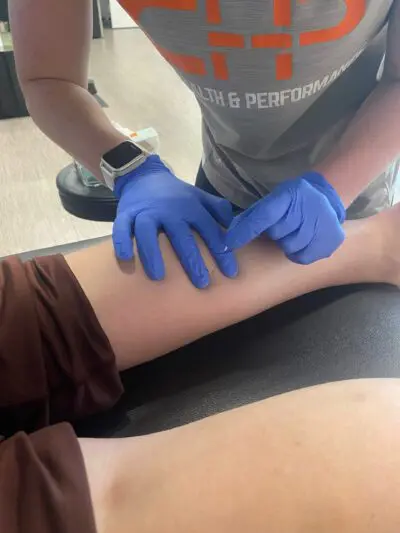
First, let’s define what dry needling is. Dry needling is a technique performed by healthcare providers like physical therapists. They insert small needles, similar to acupuncture needles, into muscles, tendons, and other soft tissues. The needle creates a small lesion (mini-injury) to the tissue, triggering the body to start a healing process.

Dry needling is a tool and like all tools in physical therapy, it has a time and place. It is not appropriate for everyone but may be helpful when used by a knowledgeable (and hopefully, not too biased) physical therapist.

If there is a great deal of inflammation currently present in one area of the body, dry needling likely is not appropriate. But if you’ve had pain for several months or years, it could help.

At the end of the day, dry needling is just one part of the overall treatment plan and will not fix an injury by itself.

At CHP, we now are offering Dry Needling as part of our physical therapy treatment plans in our McLean facility. We use this tool to reduce pain and the symptoms associated with an injury while working on the root causes.

Are you interested in learning more about dry needling and how it may help you overcome chronic pain? Contact us today to learn more and schedule an appointment!

×