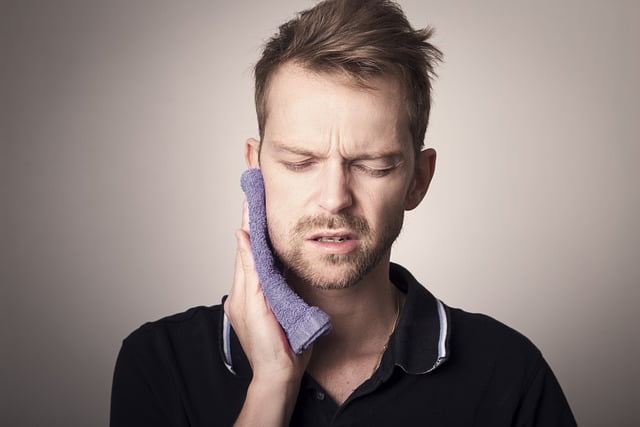
My jaw pops, is that bad?

Have you noticed joints making more noise as you have gotten older? One of the strangest ones is the random popping I get in my jaw.

Does that ever happen to you? If so, and if it is painful, you may want to investigate it (our physical therapy team in McLean and Bethesda treats this!). 

Open and close your mouth while feeling in front of your ears. Search until you feel the joint moving, called your temporomandibular joint (TMJ). This joint allows you to open and close your mouth and move your jaw from side to side.

The TMJ has a small shock-absorbing cartilage disc between the jawbone and your skull. If this disc moves out of alignment or there is arthritis in the joint, clicking, popping, and pain can occur.

The alignment of the TMJ is a product of everything below it. When I see physical therapy patients experiencing TMJ pain, I first check the position of the head, neck, and rib cage and look at posture. Check out this article to learn more about how to get your head, rib cage, and pelvis in the proper position.

This sometimes corrects TMJ pain, but we can’t stop here. Here are some factors that may also need to be addressed.

  1. Malocclusion: Malocclusion is when the teeth do not fit together correctly, resulting in jaw misalignment. This is when your dentist needs to work with your physical therapist as part of the healthcare team!
  2. Stress: Teeth clenching is associated with stress. Caring for your mental health is essential to helping TMJ issues. Many dentists also suggest nightguards for those of us that clench when sleeping.
  3. Chewing gum: stay away!
  4. Posture, especially while working: What posture is best? Does that even exist? Check out an article I wrote on that here.

Popping, clicking, and jaw pain is most likely a result of several different factors. TMJ issues usually require a healthcare team such as a physician, physical therapist, and dentist. Popping and clicking without pain likely isn’t much to worry about. Still, please see a healthcare provider if pain is associated with it.

At CHP, our physical therapists we evaluate patients with TMJ discomfort. If you or anyone you know would like help solving these challenging problems, contact us today!

Most People Forget This Part of Their Recovery

Recovery is a buzzword nowadays, and entire industries (outside of just sports physical therapy) have sprouted up to help athletes and weekend warriors improve their recovery from sports, challenging workouts, and injury. Foam rolling, compression garments, Theraguns, supplements, and cryotherapy (see a previous article I wrote here) are just some of what you may find.


Professional athletes like Tom Brady have gotten in on the action as well. He created his company, TB12, which focuses on “facilitating muscle recovery, injury prevention, and improved performance for anyone with an active lifestyle.”


Like many other approaches to recovery and health improvement, Tom emphasizes the importance of nutrition and sleep. People have argued about the finer details of how he approaches nutrition, but I’ll leave that to the internet to discuss.  


One major factor is commonly forgotten despite all this information about optimizing recovery and performance.


Our environment.


The environment is critical to our overall well-being and can significantly impact our body’s ability to heal itself. Our bodies are very complex and constantly respond to their surroundings. Research has shown that environmental factors such as temperature, noise, and light affect our mood, stress levels, and immune systems.


Physical therapy and dealing with an injury is a stressful and anxiety-inducing experience, and a calming environment can help to reduce these negative emotions. Studies have shown that exposure to nature, such as greenery and natural light, helps to reduce stress levels and improve overall well-being. Exposure to sunlight and fresh air has also been shown to boost the immune system and help the body heal faster.


Tips for Creating a Healing Environment


Choose the proper lighting.


Natural light is the best option, so try working or relaxing in an area near a window. If natural light is not possible, consider investing in full-spectrum lighting to mimic natural light.


Incorporate nature.


Consider incorporating plants, flowers, and other natural elements into your office or areas you relax.


Rest in organized places.

This is especially true when recovering from an injury. So much is out of our control as we wait for the body to heal, and research suggests that a clean and organized space reduces anxiety and promotes a sense of control. Keep your recovery area free of clutter!


Looking for ways to speed up your recovery from training or injury? Contact us to learn more!

What is blood flow restriction training? Should I try it?

Think of the last time that you injured your arm or leg or needed physical therapy. If you haven’t had an extremity injury, or needed sports physical therapy, congratulations, and I guess you must use your imagination.

You saw your doctor for help, and they told you to rest your injured limb for at least 4 weeks. You have no choice but to relax and allow your injured limb to get small and weak.

This is where blood flow restriction (BFR) training is a helpful part of the physical therapy process. A cuff or strap is placed tightly around a limb to reduce blood flow but not entirely block it. Exercise is then performed in this state.

This allows you to exercise at a lower intensity but enjoy many benefits of high-intensity training, such as muscle growth and improved strength.

While BFR can’t replace regular training, it is an excellent option for people that want to speed up their return from injury or are searching for ways to exercise without beating up their joints.

But restricting blood flow sounds sketchy. Is it safe?

Yes. Research has shown that BFR is safe when used with patients with no contraindications to it. As with all things, it can be unsafe when misused or placed in the wrong hands.

At Cohen Health and Performance, we use BFR both in McLean and Bethesda to limit weakness and muscle atrophy after surgery. Our patients recovering from knee surgery, such as an ACL reconstruction, have seen great results. When more strength is preserved, people have a faster recovery.

But the benefits extend far beyond people recovering from surgery. People struggling with chronic and overuse injuries can use BFR to maintain their strength without interrupting recovery. This helps people to return to the entirety of their active lifestyles much quicker.

Interested in using BFR to speed up your recovery from an injury or help you with your training? Contact us!

Why most sports physical therapy for ACL injuries is incomplete

Picture this: Four months ago, you underwent surgery to repair a torn ACL (anterior cruciate ligament) in your knee, and you’ve been diligently attending sports physical therapy ever since. Initially, you were on crutches, with a swollen knee that barely moved. But after several weeks of physical therapy, you regained full range of motion and relearned how to walk normally. You’ve even started running again and are eagerly anticipating the day you can return to practice or the activities that make you feel like an athlete!

But then, your physical therapist informs you that you’re being discharged from therapy…

This scenario is common because insurance companies often don’t classify return-to-sport activities as “medically necessary.” As a result, most traditional physical therapy clinics don’t offer return-to-play programs.

I refer to this crucial stage of recovery as “the gap.” The gap represents the period between completing physical therapy and beginning performance or personal training.

Many athletes aren’t actually ready to return to their sport when they’re discharged from physical therapy because they haven’t yet bridged this gap between rehabilitation and peak performance.

At this stage, athletes may be pain-free, have full knee range of motion, and even have regained much of their strength. However, they still need to train their knee to use that strength explosively and withstand the demands of cutting, jumping, and sprinting.

Unfortunately, many athletes skip this vital phase of ACL recovery, returning to their sport before their knee is fully prepared. This significantly increases the risk of re-injuring the repaired ACL or even damaging the other knee.

Programs designed to help athletes bridge this gap typically start with tests to assess how close they are to returning to their sport. These tests often include hops, agility drills, and movements specific to the athlete’s sport.

In our Bridge The Gap ACL program, we begin with the single-leg hop test. Research suggests that the surgically repaired leg should be at least 90% as strong as the unaffected leg before engaging in sport-specific activities. Ideally, both sides should be equal before an athlete resumes full practice.

Below is an example of a single-leg hop test.


Sports physical therapists use the results of these tests to create a tailored training program that combines elements of physical therapy, strength and conditioning, and sports performance.

Research indicates that the earliest an athlete can safely return to play after ACL surgery is around nine months (even longer for younger athletes). For this reason, most bridge-the-gap programs last between 2-4 months.

Interested in learning whether our Bridge the Gap ACL Program is right for you? If you or your child is recovering from an ACL repair, contact us to find out more!

Cryotherapy: Is It Really Worth the Hype?

A few months ago, I attended a conference with a group of physical therapists and personal trainers. Over a meal, we found ourselves discussing the day’s events. One of the highlights of the conference was a series of product pitches from various companies targeting healthcare providers like us. Among them was a cryotherapy company, and their representative happened to recognize our group.

He approached our table and confidently delivered his pitch:

“Cryotherapy can help your patients reduce pain, accelerate muscle recovery, decrease inflammation, and improve overall wellness.”

Sound familiar? If you’ve ever heard a similar claim and wondered if cryotherapy really lives up to the buzz, you’re not alone. At our physical therapy clinics in Bethesda and McLean, we receive many inquiries about the effectiveness of cryotherapy.

Let’s break it down.

What Exactly is Cryotherapy?

Cryotherapy involves exposing the body to extremely low temperatures for a brief period, usually just a few minutes. While there are several forms of cryotherapy, the most well-known is whole-body cryotherapy. This process involves standing in a chamber filled with liquid nitrogen vapor, where temperatures can drop as low as -200°F to -300°F (yes, you read that right).

The Ongoing Debate

The benefits of cryotherapy remain a topic of debate within the medical, physical therapy, and fitness communities. While some studies have shown promising results, others have found little to no benefit.

Proponents of cryotherapy suggest that it can help manage various conditions, including chronic pain, arthritis, inflammation, and even depression. The theory is that exposure to extreme cold triggers the release of endorphins—your body’s natural painkillers—while also reducing inflammation in targeted areas. In some cases, studies have indicated that cryotherapy may help alleviate pain and inflammation in people with conditions like rheumatoid arthritis. However, much more research is needed to validate these claims.

There are also suggestions that cryotherapy aids in **muscle recovery** after exercise. The idea is that cold temperatures cause blood vessels to constrict, reducing blood flow to the affected muscles. As the body warms up post-session, blood flow returns and promotes healing. While some studies support this, others have shown little to no significant effect.

So, What’s the Verdict?

Cryotherapy is still relatively new, and as with many emerging treatments, the evidence is limited and mixed. Early research shows potential, but more comprehensive studies are necessary to reach firm conclusions.

It’s also important to remember the risks. Exposing the body to such extreme cold comes with hazards, including potential skin damage and frostbite.

If you’re thinking about giving cryotherapy a try, it’s crucial to consult your physician first to ensure it’s a safe option for you.

3 Tips to Help You Find the Best Shoe

Minimalist shoes, running shoes, cross-training sneakers, weightlifting shoes. As sports physical therapists, personal trainers and performance coaches in McLean and Bethesda, we are asked all sorts of footwear questions. If you are like me, and do several different things, it may seem that you need a special shoe for each activity.

In my closet you can find running, hiking, cross-training, basketball, and special weightlifting shoes. But these days I mostly use 1 pair for all of my training.

I’m more of a generalist now. I dabble in many different things but spend most of my “fitness time” exercising in the gym. Sorry ego, my days of being a specialist are behind me.

If you are training for a particular sport or are a high-level runner, you are a specialist and likely need a special shoe for your sport (and the footwear recommendations in a sports physical therapy setting will be different). But if you are a generalist like me, you need a shoe that is comfortable, designed for your foot type, and can do everything that you need.

Here are 3 things that you should look for to choose the right shoe for you.

  • It must have a firm and snug heel cup. Your heel sits at the base of the shoe, in a place called the heel cup. The heels cup should fit snugly around your heel and should not be much wider than your heel itself. This prevents your heel from sliding within the shoe, which may negatively impact foot mechanics.
  • The shoe must have a toe break that bends where you toes bend. Place your shoe on the ground and hold it there. Pull the front of your shoe up from under it. The folding point of the shoe should be located where your toes bend. If your shoe folds at another location, your shoe is not accommodating to the mechanics of your foot and can lead to breakdown within the structure of the foot itself.
  • You should be able to feel the entirety of both your feet on the ground as you are standing still in your shoes. People are often unable to feel their arches, which results in more stress on the areas that have more contact with the ground.

There are 26 bones and 30 joints within the foot. This results in many ways that our foot can compensate but these 3 tips can help solve these issues.

Would you like help finding the right brand and model shoe for you? Our performance physical therapy team would be happy to provide you with recommendations based on the brands and models that are on the market right now!

×