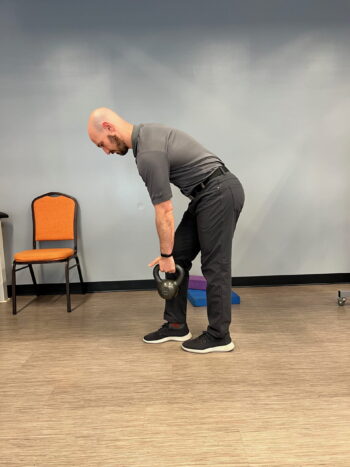
Traditional physical therapy advice resulting in a fragile spine

Have you been told to always keep your back straight and stiff when lifting? When it comes to preventing back pain, the truth is, it’s not as simple as that.

For years, the advice to lift with a “perfectly straight back” has been the go-to solution, but there’s no solid evidence that it reduces back pain or injury. Surprised? Let’s explore why this outdated advice might be holding you back and how back pain physical therapy can help you build a stronger, more resilient back.

Debunking the “Straight Spine” Rule

The idea of lifting with a straight, neutral spine has been considered the gold standard for decades. It seems logical: keep your back rigid to keep it safe. But studies reveal that this advice hasn’t reduced back injuries in the workplace. Why? Because back pain isn’t caused by a single factor like lifting posture.

Back Pain: A Multifactorial Issue

Back pain is influenced by many factors—age, fitness level, recovery habits, stress, and even sleep quality. If you’ve experienced back pain after lifting, chances are the issue wasn’t simply bending your spine. The root cause is often a combination of problems, like poor endurance, lack of strength, or inadequate recovery.

Physical therapy for back pain can help you address these factors by improving your overall strength and movement capacity, rather than just focusing on how you lift.

Why Avoiding Spinal Flexion Can Be Harmful

The advice to “never bend your back” can actually weaken your spine over time. Avoiding natural movements like bending or twisting may leave your back less prepared for real-world demands.

Think about it: everyday life involves movements like lifting a laundry basket, picking up a child, or twisting to grab something off a shelf. Avoiding these actions doesn’t protect you—it makes your back less adaptable and more vulnerable to injury.

Through physical therapy, you can safely reintroduce these movements and build the confidence and strength needed to handle life’s physical demands.

How to Build a Strong, Pain-Free Back

Preventing back pain isn’t about avoiding movement—it’s about building strength and resilience. Here’s how physical therapy can help:

  1. Train for Everyday Life: Your physical therapist will guide you through exercises that mirror real-world movements, like squats, deadlifts, and rotational lifts.
  2. Gradual Progression: With a personalized plan, you’ll start with lighter loads and progress over time, preparing your spine for various challenges.
  3. Movement Variety: Learn how to lift using different techniques—straight back for heavier loads, rounded back for lighter ones—to build adaptability and confidence.
  4. Listen to Your Body: If a movement feels painful, your therapist will help you modify it and reintroduce it as you get stronger.

The Role of Physical Therapy in Back Pain Recovery

If you’re recovering from a back injury, physical therapy for back pain can help you uncover the root cause of your discomfort and create a tailored plan to address it. This approach not only relieves pain but also prevents future issues by improving strength, mobility, and movement patterns.

Take Control of Your Back Pain Today

Rigid rules like “always lift with a straight back” oversimplify a complex issue. Instead of avoiding movement, embrace it. With the right guidance from physical therapy, you can prepare your back for life’s twists and turns while building strength and resilience.

If you’re ready to overcome back pain and get back to the activities you love—whether it’s the gym or everyday tasks—schedule an evaluation with one of our expert Doctors of Physical Therapy. Click here to get started!

Let’s build a stronger, pain-free back together. Because when it comes to your spine, you’re stronger than you think.

Avoid injuries with these sports physical therapy tips

What helps elite athletes avoid serious injuries and maintain peak performance? It’s not just skill or power—it’s their pillar strength. Pillar strength, commonly referred to as core strength, forms the foundation of efficient, injury-free movement. A strong pillar allows you to break through training plateaus, improve your performance, and significantly reduce your risk of injuries.

As the saying goes, “You can’t fire a cannon from a canoe.” Just like a cannon needs a stable base, your body needs a strong and stable pillar to generate and transfer power effectively.

What Does Pillar Strength Really Do?

Forget the idea of doing endless crunches or sit-ups to build a stronger core. Your pillar strength isn’t just about aesthetics—it’s about stabilizing the spine and pelvis while controlling forces generated by your arms and legs. When your pillar doesn’t do its job, energy leaks occur, reducing performance and increasing injury risk.

Example: The Sprinter

Picture a sprinter accelerating down the track. If their lower back arches excessively (anterior pelvic tilt), the spine can’t absorb or transfer the energy created by their legs. This results in their powerful hip extension being wasted. The root issue? Their spinal stabilizers aren’t working efficiently to counterbalance the forces from their hips.

Why Pillar Strength Matters in Sports Physical Therapy

Pillar strength is important in every direction of movement—not just forward and backward. Let’s break it down:

1. Rotational Strength (Transverse Plane)

Imagine a baseball pitcher winding up for a throw. They need to rotate their trunk efficiently to deliver a powerful and accurate pitch. Weakness in the transverse plane can cause “energy leaks,” reducing throwing velocity and increasing the risk of injury. This is a common issue we address in sports physical therapy, using rotational core drills to stabilize and strengthen this motion.

2. Lateral Strength (Frontal Plane)

Cutting, landing, or maintaining balance during sports relies heavily on frontal plane strength. Weakness here can lead to a hip drop (Trendelenburg sign) during single-leg movements, creating instability that puts stress on the knees. This instability is a key contributor to injuries like ACL tears, especially in youth athletes. In sports physical therapy, we include frontal plane exercises to improve single-leg stability and prevent these injuries.

Build a Strong Foundation with Sports Physical Therapy

At Cohen Health and Performance, our sports physical therapy programs in McLean and Bethesda focuses on developing pillar stability to enhance athletic performance and prevent injuries. Whether you’re recovering from an ACL reconstruction or aiming to reach new performance levels, building pillar strength across all planes of motion is critical.

Ready to Elevate Your Game?

Take the next step in your athletic journey with a Performance Physical Therapy Evaluation. Our expert team specializes in sports physical therapy to help you move better, perform stronger, and stay injury-free.

Click here to schedule your evaluation today!

Running Tips and Community Building with Coach Sweeney

Don’t miss this exciting edition of the CHP Spotlight Interview Series, featuring Dustin Sweeney, Co-Founder and Executive Director of Light Horse Track Club in Northern Virginia.

Light Horse Track Club is more than just a running team; it’s a vibrant community and a trusted resource for runners of all levels across Loudoun and Fairfax counties. Whether you’re just starting out on your running journey or you’re a seasoned marathoner, Light Horse offers a supportive and dynamic environment where every runner can thrive. Beyond building an inclusive team culture, the club hosts high-caliber races that unite the Northern Virginia running community.

In this interview, I sat down with Dustin to uncover how a strong culture and community can play a pivotal role in a runner’s experience and development. We discussed the ways Light Horse supports runners through community-driven training, social events, and tailored support, including advice on often-overlooked aspects of a runner’s regimen—areas where physical therapy for runners plays a crucial role. Dustin shared insights into how understanding the biomechanics of running and integrating effective running physical therapy can transform a runner’s performance, reduce injuries, and optimize endurance and speed.

We also dove into the importance of injury prevention and rehabilitation for runners, from novices to elites, emphasizing how running physical therapy can prevent common injuries, correct muscle imbalances, and improve running form. Dustin explained that Light Horse Track Club collaborates with local physical therapists to help runners address these challenges, ensuring they have the resources they need for sustained success.

One of the highlights Dustin shared was Light Horse Track Club’s upcoming Gala, a special fundraising event that supports their races and initiatives, which continue to elevate the running experience in Northern Virginia. This gala is more than a fundraiser; it’s a celebration of the local running community, offering a fantastic opportunity for members and supporters to connect, share their experiences, and support Light Horse’s unique programming.

Whether you’re a weekend jogger or training for elite competitions, this interview is packed with valuable insights into how community support and specialized running physical therapy can help you reach your goals. With practical takeaways for all runners, you won’t want to miss it!

Visit Light Horse Track Club’s website here for more information on their programs, races, and the upcoming gala!

What Performance Physical Therapist, Dr. Biddle, learned from breaking her leg

I’m thrilled to welcome Dr. Catherine Biddle to our physical therapy team in Bethesda. Dr. Biddle specializes in treating gymnasts, dancers, and athletes with hypermobility related conditions. As a former Division I gymnast at Northern Illinois University, she brings both expertise and personal experience in overcoming sports injuries.

She was kind enough to tell us about the injury that inspired her to become a sports physical therapist and what you can learn from her journey.

______________________________________________________________

At 15, I suffered a serious injury during gymnastics practice. While performing a skill called a blind full on bars, I turned too early, causing a fall from 12 feet onto concrete. The result? A broken fibula in three places and a dislocated tibia.

Two days later, I had surgery to insert a plate and eight screws in my leg. My doctors warned I might never compete at the same level again. As a gymnast for 13 years who was being actively recruited by colleges, this news was devastating. I felt lost—until I started physical therapy three weeks after surgery.

When I crutched into my first physical therapy session, feeling hopeless, my therapist did something powerful: she asked me how I was doing—not just physically, but emotionally and mentally. That conversation changed everything. She told me that while recovery wouldn’t be easy or fast, we would do everything we could to get me back to gymnastics. Thirteen months later, I joined a Division I gymnastics program and had a fulfilling collegiate career.

My injury taught me that the physical therapy journey is about more than just the body. It’s about mindset, support, and perseverance. The right therapist can make all the difference, helping you heal both physically and emotionally.

Most importantly, I learned that a surgeon’s prognosis isn’t the end of the story. With the right support system, a positive outlook, and hard work, you can overcome obstacles you never thought possible.

These lessons shape how I approach my work today. I focus on more than just my patients’ injuries—I consider how they’re feeling overall and what their goals are. Healing isn’t just about “fixing” the problem; it’s about helping people return to the activities they love.

So how do you know if you’ve found the right healthcare provider for you?

Ask questions!

Prior to your visit, prepare a list of the questions that are important to you. Your provider should be willing to answer all of your questions, even if they can’t give you a definitive answer at the moment.

Here are 3 questions that I advise asking.

1. Why did this happen, and how can we prevent it from happening again?
Understanding the cause of your injury helps ensure it doesn’t become a recurring issue.

2. What should I be doing at home?
Recovery extends beyond the clinic. Make sure you’re clear on what exercises or precautions you should follow at home.

3. How will we measure my progress?
Your goals should guide your recovery, not just standard benchmarks. Set clear expectations with your therapist to track meaningful progress.

Physical therapy is most effective when it’s a partnership. The more engaged you are in your recovery, the better your results will be. Asking these questions helps you take control of your health and build a stronger relationship with your therapist.

Interested in scheduling an appointment with me or a member of our team? Contact us!

-Dr. Catherine Biddle PT, DPT

Key Takeaways from a Fitness Competition

This past Saturday, I had the privilege of being the performance physical therapy sponsor at an incredible event to raise funds for breast cancer research—Girls Gone RX, hosted by our friends at Crossfit Route 7 in Tyson’s Corner.

From the moment I stepped through the doors, I could feel the energy. A throwback mix of NSYNC, Backstreet Boys, and Britney Spears filled the air, instantly taking me (and probably many others!) back to the days of Total Request Live on MTV.

But it wasn’t just the music that made this event memorable—there were some amazing takeaways from the competition that can apply to physical therapy, or any sport or workout routine. Here’s what stood out:

The Power of a Supportive Environment

One thing CrossFit does exceptionally well—especially at CrossFit Route 7—is foster a fun, supportive community. It was inspiring to see how excited everyone was to be spending their Saturday at the gym, whether they were competing or cheering on the athletes. The event was a women-only competition, yet both men and women were there in full force, cheering loudly from the sidelines.

The participants ranged from beginners to seasoned athletes. Some were lifting impressive amounts of weight, while others were simply excited to be part of the action. The diversity of skill levels only added to the event’s energy and made it even more inclusive. A supportive environment doesn’t just apply to fitness, it matters in healthcare and physical therapy as well.

Taking Warm-Ups Seriously

These athletes were no strangers to competition, and their warm-up routines showed it. Before each event, competitors spent significant time preparing, but these weren’t your typical, one-size-fits-all warm-ups. The exercises were specifically tailored to the movements required for each event.

For example, before an event involving barbell cleans, the athletes took time to perfect their form, using weights similar to what they’d be competing with. It was impressive to see how much attention was given to detail, and it served as a reminder that a good warm-up should transition you smoothly into your workout. By the time the event began, most of the athletes had already broken a sweat, minimizing the risk of injury.

Master the Basics

Most of the women competing had clearly spent countless hours honing their skills. CrossFit requires a blend of mobility, strength, and technical expertise. It’s tempting to jump straight into the fun aspects of a sport, but this event was a great reminder that you must master the prerequisite qualities of any activity first for long-term success.

Just like building a house, laying a strong foundation is key before adding the finishing touches. Whether you’re a beginner or a seasoned athlete, it’s essential to invest time in developing the movement patterns and technical skills that pave the way for long-term success and injury prevention.

A personalized movement assessment can make all the difference, helping you stay injury-free while enjoying your favorite sport. If you’re interested in learning more about how to get your own custom movement evaluation, contact us!

Grandma was wrong about this

Growing up, my grandma, Barbara, lived next door to us. She was a character—loving, funny, self-deprecating, and wise. I was lucky enough to spend time with her daily, soaking up her advice (whether I wanted it or not!). And while most of her advice was pure gold, there was one thing she got wrong—something I later discovered through my experience in sports physical therapy.

When I’d come home slouching, she would lovingly tell me to “stand tall” by bringing my shoulders down and back so that “all the girls could see my handsome grandson.” She certainly helped boost the confidence of an awkward middle schooler with buck teeth and a terrible haircut, but when it comes to posture, her advice wasn’t quite right.

You’ve probably heard the same thing: “pull your shoulders down and back” to stand tall and improve your posture. It sounds good, but through my work in sports physical therapy, I’ve learned that this advice can be counterproductive to how your shoulders are designed to work.

The Problem with “Shoulders Down and Back”

In sports physical therapy, we often encounter athletes and active individuals who believe that pulling their shoulder blades down and back improves posture. However, doing so actually prevents your shoulder blades from moving the way they should. Your shoulder blades (scapulae) are designed to move away from the midline of your body—a movement called protraction.

Protraction is crucial for everyday movements like reaching, throwing a ball, and pressing weights overhead. Restricting this natural movement by pulling the shoulder blades together can cause upper back tension and limit mobility—issues that are frequently addressed in sports physical therapy.

Why This Matters for Athletes

If you lift weights or participate in sports like baseball, football, or basketball, maintaining proper shoulder mobility is key. Through sports physical therapy, we see how athletes benefit from training movements that allow the shoulders to move naturally. Pinning your shoulder blades back limits your ability to build strength in outstretched positions, which are crucial for both athletic performance and injury prevention.

Great athletes need fluid, strong movements with their arms in extended positions. Constantly pulling the shoulder blades together limits the opportunity to build the functional strength required for peak performance in sports.

3 Exercises for Better Shoulder Mobility & Strength

As a sports physical therapist, here are three exercises I recommend to help athletes and active individuals improve shoulder mobility and build strength in these outstretched positions:

1. Core Push-Up – Build strength around the shoulder blades by actively pressing them away from the midline, which is essential for shoulder health in sports physical therapy.

2. Bottoms-up Kettlebell Press – This overhead pressing exercise forces the body to stabilize a kettlebell while pressing overhead, improving both shoulder mobility and strength.

3. Shoulder Flexion PAILs and Liftoffs – Develop strength in overhead positions where it can be challenging to maintain proper form and stability.

These exercises are staples in sports physical therapy to help train the shoulders to move more effectively, enhancing performance in sports and everyday activities.

Have Questions? Contact us!

×