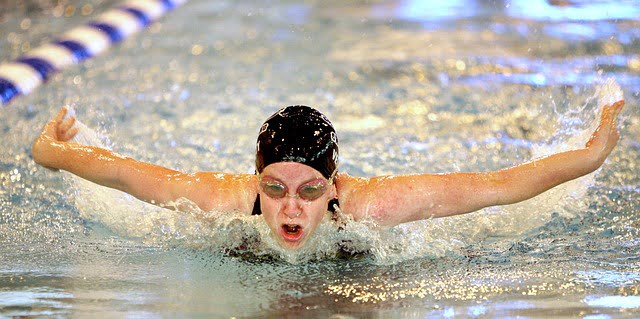
Why swimming doesn’t help you avoid physical therapy

“I kept getting injured, so I started swimming.”

Dr. Kelly Henry here!

My physical therapy patient was frustrated when she saw me for her first physical therapy appointment. She ran recreationally and loved her group exercise classes consisting of various strength exercises.

But she had been struggling through several different injuries for months and was looking for a safer exercise alternative.

She started swimming, thinking that she found her solution. Unfortunately, her optimism was short lived.

Although it is less impactful on our joints, swimming isn’t without its fair share of injuries and I see many in McLean as physical therapy clients.

In fact, the repetitive nature of swimming strokes can lead to a variety of overuse injuries, particularly among competitive athletes. Recognizing the unique demands of each stroke and tailoring rehabilitation and strength training exercises accordingly is crucial for optimizing performance and preventing injury recurrence.

Competitive swimming comprises four primary strokes: freestyle, backstroke, breaststroke, and butterfly. Each stroke involves different biomechanics and engages specific muscle groups. Just as different positions on a football team require specialized training, swimmers specializing in different strokes benefit from individualized approaches to injury management and prevention.

Today, let’s start with breaststroke.

Part 1: Breaststroke

Among the four competitive strokes, breaststroke stands out for its complexity and technical demands, making it challenging to master (but my favorite stroke!). Central to the breaststroke technique is a bilateral coordination of arm and leg movements, executed in a rhythmic, cyclical pattern. However, it is the intricacies of the kick that often pose the greatest hurdle for novice swimmers. To achieve a legal breaststroke kick, swimmers must be able to access positions of simultaneous hip external rotation, knee flexion, and ankle flexion. This culminates in a rapid hip internal rotation moment “whip kick”, and a powerful propulsion forward.

Muscles Engaged in Breaststroke:

Upper Body:

  • Pectoralis Major and Deltoids: Initiate the arm pull, driving the circular motion that propels the body forward.

Lower Body:

  • Quadriceps and Adductors: Power the kick, providing significant forward propulsion.
  • Hip Flexors: Facilitate the kicking motion, aiding in lifting and extending the legs.
  • Core and Lower Back: Essential for maintaining stability and body position throughout the stroke cycle.

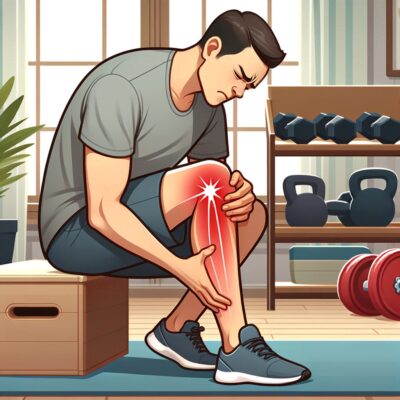
Despite its elegance, breaststroke is not without its risks. Medial knee pain and patellofemoral pain are common complaints among breaststrokers, stemming from the substantial demands placed on the knee, adductors, and quadriceps during the kick phase. Strengthening the hip rotators and hamstrings is crucial for mitigating these forces and promoting a strong internal rotation moment at the hips. Additionally, compensatory movements, such as excessive lumbar extension, can contribute to low back pain if left unaddressed.

To address and prevent knee pain, incorporating targeted exercises to strengthen the glutes, hamstrings, and adductors is essential. Consider integrating the following exercises into your training regimen:

  1. Side plank variations: Targets core/abductors

Easier:

Harder:

  1. RDL variations: Targets hip extension/hamstring strength

Easier:

Harder:

  1. Bridging progressions: Helps address low back and hip positioning with the knees bent

Easier:

Harder:

By addressing muscular imbalances and improving functional strength, swimmers can enhance performance, reduce the risk of injury, and optimize their experience in the water. Stay tuned for the next installment of our series, where we will explore the biomechanics and injury considerations of another iconic swimming stroke.

Low Back Pain Physical Therapy

Physical therapy stands as a cornerstone treatment for most variations of lower back pain.

Our approach involves specialized exercises aimed at improving the body’s ability to control intra-abdominal pressure (the pressure we use to stabilize our low back),  the lower back’s muscular endurance/loading capacity and conditioning the spine’s supportive structures.

Objectives for Therapeutic Intervention

The primary and secondary objectives for engaging in physical therapy for back discomfort are multi-tiered:

  • Alleviate pain in the lumbar region and any referred symptoms into the legs.
  • Improve functional capacity for day-to-day independence.
  • Improve dynamic spinal mobility.
  • Develop an exercise program designed to improve the low back’s stress tolerance

Don’t forget, the back often takes the brunt of the stress when other areas aren’t doing their job. These exercises are not isolated to the back but target the entire kinetic chain—interlinked segments of the body that collaborate for movement.

Therapeutic Outcomes

Patients in physical therapy first must get out of pain and return to their previous level of function.  Comprehensive studies reveal that physical therapy can improve symptoms of lower back pain by up to 60%.

Exercise for Low Back Pain Management

  1. Core Muscle Fortification

Central to mitigating lower back pain is the strengthening of core muscles, enveloping the abdomen, back, and the base of the lungs. A robust core ensures even weight distribution across the spine and optimal control of the intra-abdominal pressure that we use to stabilize the pain, thus mitigating pain. Targeted exercises like 90/90 hip lifts and bear positions are integral to this strengthening process.

  1. Dynamic Lumbar Stability

Mobility and strength in the lumbar region and legs are crucial for spinal support. Specific stretching exercises that teach the spine to move at each of its segments helps to strengthen pivotal muscles, fostering stability, control and pain alleviation.


  1. Cardiovascular Conditioning

Cardio exercises go beyond heart health—they rejuvenate spinal muscles, enhancing flexibility and mobility, essential for managing back pain. Activities such as walking and swimming are particularly effective.

  1. Postural Help

Optimal posture can significantly reduce strain, with exercises designed to teach patients how to “stack” their head, rib cage and pelvis over one another help to reduce strain on the spine and contributes to spinal stability.

A Collaborative Therapeutic Journey

A physical therapist’s role is vital in creating a program that educates and trains patients in the execution of these exercises.

Physical Therapy’s Applicability to Different Types of Back Pain

Most lower back conditions are amenable to physical therapy, barring urgent medical scenarios. The specifics of the pain and injury determine the therapy regimen, catering to conditions ranging from axial back pain to sciatica and postoperative recovery.

Program Duration and Complementary Therapies

The length of therapy depends on pain severity, often commencing with an eight-week guided program, followed by a home-based continuation. Back pain physical therapy might be augmented with other treatments such as massage, manual therapy, acupuncture, and in some cases, injections or medications, alongside self-treatments like heat and cold therapy for pain mitigation and tissue healing.

Physical Therapy FAQs: I’m Sore. Can I Still Train?

Today we have a special guest post from Dr. Kelly Henry. Dr. Henry is the clinic director and a sports physical therapist in our McLean facility. Enjoy!


“I’m sore – I shouldn’t train, right?”

As sports physical therapists and performance coaches, we frequently encounter this question, especially when people begin a new exercise regimen or return to activity after a break. Delayed Onset Muscle Soreness (DOMS) often accompanies these transitions, typically appearing 24-48 hours after activity.

Muscles ache, movement becomes uncomfortable, and tightness sets in. Despite the discomfort, DOMS is usually not a cause for concern. It’s simply a side effect of the muscle breakdown and the repair process that facilitates adaptation to exercise.

You obviously shouldn’t be training if you are sore right? Wrong! Training through DOMS offers several benefits:

  • Improved adaptation: Exercising in a fatigued state prompts muscles to adapt, leading to enhanced strength and endurance over time.
  • Temporary symptom relief: Exercise often temporarily alleviates DOMS symptoms as muscles warm up and blood flow increases, aiding in the repair process.
  • Enhanced recovery: Regular training can make muscles more resilient, reducing the frequency and duration of soreness and allowing for better adaptation to increased workloads.

However, rest days remain crucial. How sore is too sore? Here are some guidelines:

  • Does soreness diminish after your typical warm-up?
    • If yes, proceed with your planned workout.
    • If no, consider Active Recovery (low-intensity aerobic activity) or reducing training intensity.
  • If soreness persists after 10 minutes of Active Recovery, take a rest day.

If soreness is severe or persistent, or if you struggle to exercise without experiencing significant discomfort, it may be wise to seek additional assessment. Your sports physical therapist can evaluate your level of soreness to determine its root cause, adjust your exercise program to minimize discomfort, and ensure it aligns with your goals and capabilities.

Sports physical therapists can never assume

In our roles as sports physical therapists in McLean and Bethesda, we must be sure that athletes are fully ready to return to sport before finishing the physical therapy process. Otherwise, there is a high likelihood of re-injury.

Instead of relying on mere optimism and hope, we do everything possible to objectively ensure athletes are safely returning to the field. That’s why we leverage cutting-edge technology that provides precise insights into the capabilities of the physical therapy patients that we work with.

One of the muscles that we measure using this technology is the soleus muscle., a powerhouse in the lower leg that’s often overlooked during the sports physical therapy process. You might know it as one of the two calf muscles, and it’s a game-changer for athletes who sprint, run, or jump. Why? Because it’s the muscle that propels you forward, generating force through your foot and ankle.

When you’re active, your soleus muscle can handle up to six times your body weight! That’s a lot of stress, and it’s why injuries like muscle strains, ankle sprains, Achilles tendinopathy, or even post-ACL reconstruction issues often involve the soleus.

Studies show that athletes should generate 1.5 to 2 times their body weight per leg in an isometric test. It’s not just about recovery; it’s about understanding your body’s capabilities and pushing the limits safely.

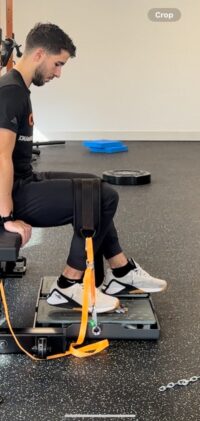
Below is a picture of Dr. Sam Kinney using our force deck technology to measure the force generation capabilities of his soleus muscle. The sensors within the plate underneath his foot is measuring exactly how much force he is expressing through it.

By integrating these sophisticated testing methods, we can paint a complete picture of calf and soleus strength. This insight allows us to spot weaknesses, tailor rehab strategies, and reduce the risk of future injuries. Ultimately, it’s about enhancing athletic performance in a way that’s both smart and effective.

Whether you’re an elite athlete or someone passionate about staying fit, understanding, and strengthening your soleus muscle is essential to unlocking your full potential.

If you are interested in learning more about how our sports technology can reduce your injury risk or help you recover from a current injury, contact us today!

X-Rays and MRIs don’t tell sports physical therapists the whole story

Medical images like X-Rays and MRIs are awesome and a helpful part of the sports physical therapy process. It’s like peering into the secret life of our bones and tissues, but sometimes what we see can be a bit startling.

Picture this: You’ve just got your X-Ray or MRI results. There’s a moment of truth, where you feel like your body’s betrayed you. Maybe you’re staring at an image that seems to scream ‘surgery!’ or ‘pain for life!’

But hold on – it’s not all doom and gloom.

X-Rays provide physical therapists with more general information, especially with bones. They show us the spacing between vertebrae in your back or if there’s a sneaky fracture hiding in there. But when it comes to the softer stuff – muscles, tendons, ligaments – they’re a bit out of their depth.

This is where the MRI comes in, providing more detailed information about our intervertebral discs and soft tissues. It’s high-resolution and insightful, but sometimes all this detail doesn’t help us.

Research has shown that many of us are walking around with meniscal tears in our knees or disc issues in our backs, completely unaware because we feel fine. Then there are times when we’re in pain, get scanned, and the images come back with a shrug – nothing significant.

When it  comes to back pain, about 90% of it is ‘non-specific’. Translation: even with all our tech, we can’t pinpoint the exact cause in most cases. So, do these images really matter?

Well, yes and no.

They’re super valuable when they align with what you’re feeling – when the story your body is telling matches the tale spun by the images. But if you’re holding an X-Ray or MRI report that’s making you second-guess your body’s capabilities, take a step back. It’s just one piece of a much larger puzzle.

Even if an image shows something that looks bad, it doesn’t mean you’re destined for surgery, or a life of pain or inactivity. Our bodies are incredible at adapting and healing. As physical therapists and sports performance coaches, we’re detectives in a way. We look for the root cause of the damage and focus on fixing it, not just the symptoms.

If you’ve got an X-Ray or MRI that’s got you worried, it is important to understand why these issues popped up in the first place and discover what you can do about them.

It’s not just about getting out of pain; it’s about getting back to living your life and doing the things you love, regardless of what the images say. So, keep moving, keep exploring, and remember, your body’s story is much more than a snapshot on a screen.

Is sitting the new smoking? Probably not. Physical therapist guest post!

Check out this awesome guest post by one of our amazing sports physical therapists, Dr. Samuel Kinney. Sam is a Doctor of Physical Therapy at our McLean, Virginia location. Enjoy!

-Zac

_______________________________________________________________

Many of our physical therapy patients grappling with lower back pain and hip discomfort find themselves stuck due to prolonged hours chained to their desks.

While some have experimented with sit-to-stand desks to break up static positions, this approach isn’t always effective. This strategy is rooted in the belief that sitting is a primary contributor to back pain, and standing will alleviate it.

However, scientific evidence doesn’t fully support sitting as a clear cause of back pain and an effective physical therapy recommendation. Claims circulating on the internet linking sitting to cardiovascular disease, diabetes, and cancer also lack conclusive backing.

If sitting isn’t the main culprit, what is? Scientific research suggests that a primary factor in back pain and related health issues isn’t excessive sitting but rather insufficient physical activity and exercise.

Those spending long hours seated at a desk without incorporating regular exercise tend to attribute their discomfort solely to sitting.

Let’s reframe the discussion. Sitting itself is not the problem, and it’s not equivalent to smoking. The real issue lies in the lack of activity and exercise during an 8-hour workday.

The solution I recommend is incorporating microbreaks or “movement snacks,” as I often mention to my patients. Many people adopt the Pomodoro Technique to enhance productivity. Essentially, you work for 25 minutes and then take a 5 minute break. Utilize those 5-minute breaks every 30 minutes or hour to move your body instead of staring at an Excel sheet.

These microbreaks should extend beyond merely stepping away from your workstation or engaging in casual conversations with your coworkers. They should involve activities that elevate your heart rate and promote joint mobility.

Here are some examples of microbreaks that we recommend to our physical therapy patients:

Boost your heart rate:

  • 1) Climb 3-5 flights of stairs.
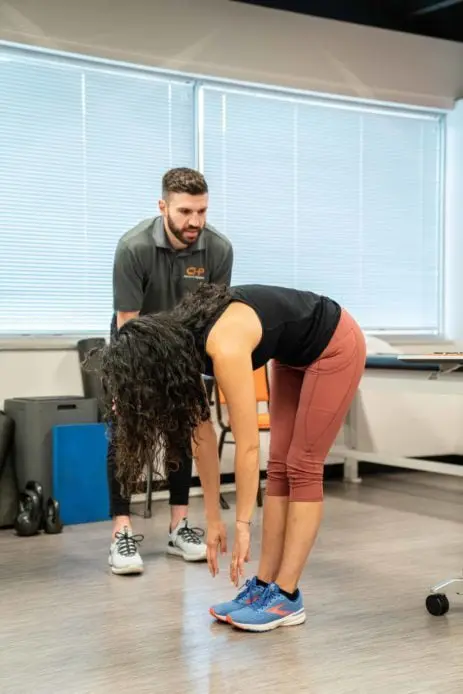
  • 2) Perform 5 reps of body weight squats, toe touches, and glute bridges.

Get your joints moving:

By incorporating these short, targeted breaks into your day, you can reduce the impact of extended periods of sitting and promote overall well-being. Remember, it’s not about demonizing sitting but about maintaining a balance between sedentary work and physical activity.

×