A more scientific approach to back pain physical therapy

In today’s fast-paced society, where the norm often involves juggling work, personal commitments, and social obligations, finding moments to relax can seem like a luxury.

Relaxation not only recharges our batteries but also plays a crucial role in enhancing outcomes in various areas, including physical therapy. However, this shift to a more sedentary lifestyle during breaks can have unintended consequences, particularly for those accustomed to being on the move. One common issue arising from extended periods of inactivity is back discomfort, a symptom familiar to many.

Research indicates a clear link between reduced daily movement and an increased risk of lower back pain. The human spine is engineered for movement, with the structures in our lower backs, especially our discs, relying on regular motion to receive proper nutrition and maintain blood flow. Being sedentary disrupts this essential process, potentially leading to discomfort and pain, especially for individuals with a history of lower back issues. During holiday seasons or any prolonged period of inactivity, the risk of experiencing lower back pain can significantly increase.

Given the increased risk of back pain associated with decreased activity, incorporating specific movements into one’s daily routine becomes paramount. These activities are not only designed to mitigate discomfort but also aim to activate the spine’s stabilizing mechanisms, fostering a healthier back. As a part of a “movement break,” the following exercises can offer significant benefits:

Spinal Segmentation: This involves performing spinal waves in each direction, aiming for three waves. The exercise promotes flexibility and mobility in the spine, encouraging each vertebra to move independently. This can help alleviate stiffness and improve circulation throughout the back

Kettlebell Windmill (do not use a kettlebell if you don’t have one available):


Physioball Rollouts: Complete 2-3 sets of five rollouts, incorporating a breath at the top of each repetition. This activity strengthens the core and lower back muscles, supporting spinal health and reducing the risk of pain.

For those who find themselves struggling with chronic back pain, it may be time to consider a more structured approach to recovery. Back pain physical therapy offers a tailored solution to address the root causes of pain, employing a variety of techniques to improve mobility, strengthen the back, and ultimately enhance one’s quality of life.

Physical therapy for back pain encompasses a comprehensive evaluation to determine the specific needs of each individual, followed by the creation of a personalized treatment plan.

This plan may include manual therapy, targeted exercises, education on proper body mechanics, and strategies for pain management. Physical therapists specialize in understanding the complexities of back pain and work closely with patients to develop effective strategies for relief and recovery.

If you’re looking to address your back pain effectively, consider reaching out to a physical therapy clinic. For residents in the McLean or Bethesda areas, our clinics are equipped with the expertise and resources needed to tackle chronic back pain head-on. By setting up an evaluation for back pain physical therapy, you’ll be taking a crucial step towards regaining comfort and mobility, allowing you to return to the activities you enjoy without being held back by pain.

Remember, back health is vital for overall well-being. Taking proactive steps through physical therapy can not only alleviate current discomfort but also prevent future episodes of back pain. As we continue to navigate the demands of modern life, let’s not forget the importance of movement and the significant impact it has on our physical health, especially when it comes to maintaining a strong and healthy back.
A physical therapist’s role in performance training

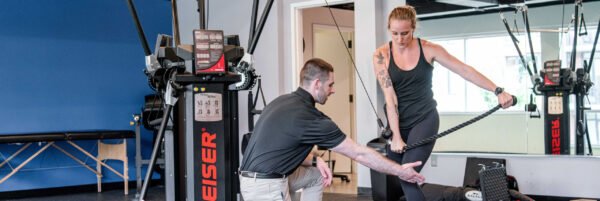
Physical therapy plays an integral role in the world of sports, particularly for young athletes navigating the challenges of high school sports.

After opening our new facility in Bethesda, my return to treating patients has once again shown me the critical role that physical therapy and physical therapists play in the health, recovery, and performance enhancement of these young individuals.

Our afternoons are bustling with the energy of high school athletes, many of whom bring a fervor and intensity to their training that, while commendable, often needs a more informed approach to be sustainable and beneficial in the long term.

The Role of Physical Therapists in Youth Sports

Physical therapists specialize in understanding the complex dynamics of the human body, especially how it heals, adapts, and improves with proper training and rehab. In the context of high school athletics, a physical therapist’s role transcends mere rehabilitation; it encompasses prevention, education, and performance optimization. We see a common thread among young athletes: a passion for their sport that sometimes leads to overzealous training habits.

Overtraining: The Pitfall of Youthful Exuberance

The notion of overtraining is not new, yet it remains a prevalent issue among high school athletes. The invincibility felt by the youth can often lead to pushing their limits, participating in multiple teams, and juggling a demanding academic schedule. This relentless pursuit of excellence, while admirable, can lead to compromised techniques and an elevated risk of injuries. Herein lies the importance of physical therapy – guiding these athletes towards more mindful, strategic approaches to training that emphasize recovery, technique, and balanced physical development.

The Overlooked Aspects of Performance Training

In the age of social media, the allure of “exciting” training routines is undeniable. Yet, it is the foundational aspects of youth sports performance training – such as mobility, stability, and foundational movement skills – that often go overlooked. The basics don’t get a lot of likes on Instagram!

Physical therapists are adept at identifying these gaps and implementing training regimens that address these vital components. Exercises like Forward Bounds and Forward Hops are examples of specific drills that we use to teach essential skills, highlighting the need for a nuanced approach to training that balances the exciting with the essential.

The Need for Individualized Training Programs

Another critical area where physical therapists make a significant impact is in the development of individualized training programs. High school athletes, particularly those recovering from injuries, require tailored programs that consider their unique needs, strengths, and weaknesses. Generic training programs often do not address these nuances, potentially hampering an athlete’s recovery and performance enhancement. A physical therapist’s expertise in creating customized training plans is invaluable, ensuring each athlete’s journey towards optimal performance is both efficient and safe.

Encouraging a Holistic Approach

For athletes motivated to excel, the guidance of a physical therapist can be transformative. It is not merely about correcting mistakes but fostering a holistic approach to training that integrates physical wellness, injury prevention, and performance optimization. Our training programs embody this philosophy, offering young athletes a comprehensive foundation upon which to build their sporting endeavors. To learn more about our training programs, click here!


Physical therapy and physical therapists occupy a central role in the health and performance of high school athletes. Through their expertise in rehabilitation, injury prevention, and performance training, they guide young athletes towards more sustainable, effective training practices. The lessons learned extend beyond the gym or field, instilling a mindset that prioritizes overall health, well-rounded development, and the long-term enjoyment of sports. As we continue to support these young athletes at our Bethesda and McLean facility, the value of physical therapy remains abundantly clear – it is not just about rehabilitation but about fostering a generation of athletes who are as healthy as they are talented.


How physical therapy created a better athlete

Let me share a story about one of my earliest sports physical therapy patients.

He was a natural athlete, excelling in basketball, baseball, and tennis, always standing out as the star of his teams.

But as he turned 16, something began to change. It was as if the world around him was speeding up, and for the first time, he found himself struggling to keep pace. His once unmatched speed during practice sprints started to lag; the basketball court, once his domain, saw him struggling to hold his ground against tougher opponents. Even his prized spot in the baseball lineup was contested and eventually claimed by a teammate. This was a turning point in his young career, a moment of realization that his natural talents alone were no longer enough to keep him ahead of the competition.

He was determined to reclaim his position.

On a perfect spring day, with the temperature at a crisp 65 degrees, he stood at the plate. The pitcher wound up, released the ball, and WHACK! He sent a rocket into left field and dashed down the first base line—only to suddenly clutch his right thigh and collapse to the ground.

This injury is what brought him to me for physical therapy, seeking help to recover and return to the field.

Our time together in physical therapy was marked by determination, learning, and growth. Over weeks of intense, personalized therapy sessions, we focused not just on recovery but on holistic improvement. His comeback was nothing short of extraordinary. He not only regained his spots on his teams but returned stronger, faster, and with a deeper appreciation for the fundamentals of athletic training.

Below is a video of one specific technique we used to help him boost his speed!

Our sessions were more than just about rehabilitation, physical therapy, and performance training; they were an educational journey. We delved into the importance of strength training, mobility exercises, and proper movement techniques—core principles that, in hindsight, might have prevented his injury. This experience led us to wonder: What if this foundational training had been part of his routine before the injury? Could the right preparation have helped him maintain his edge without the setback of injury?

While we can’t know the answers for sure (though I have my suspicions), I’m confident that with a stronger foundation of strength, mobility, and movement skills, he could have played even better.

This young athlete’s story is far from unique. It highlights a common theme in youth sports—a narrative of natural talent, unexpected challenges, and the journey to recovery and improvement. It’s a reminder of the critical importance of foundational training in the development of young athletes. To address this need, we’ve launched a program focused on educating young sports enthusiasts about the essentials of athletic training.

It’s a unique chance for young athletes to learn about strength, mobility, and movement skills that are key to excelling in sports and avoiding injuries.

To provide a personalized and engaging experience, we’re limiting the number of participants. So don’t delay—contact us to secure a spot. This is an investment in your child’s athletic future, one that could help them avoid injuries and achieve lasting success.

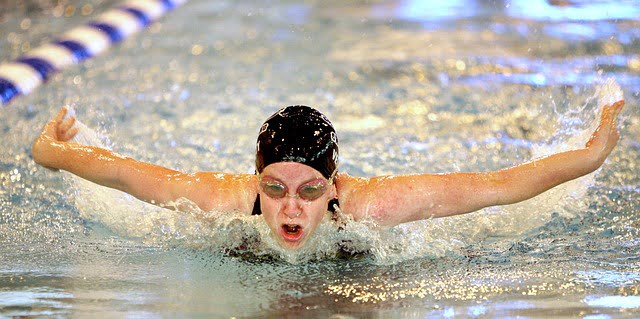
Physical therapy for swimmers part 2-butterfly

Up next in our four-part series of physical therapy and performance training articles for swimmers is what most deem the most physically demanding stroke – the butterfly!

Mastering this stroke requires a blend of technique, endurance, and mental focus. Like breaststroke, the butterfly is another bilateral stroke, requiring a cyclical pull, recovery, and body undulation. The timing of the stroke is often what tricks new swimmers and the upper body strength required to get both arms above the plane of the water simultaneously. Butterfly requires strong and powerful shoulder extension and adduction and enough lumbar and thoracic spine extension to power through each stroke.

If you’re a physical therapy or performance training nerd like us and want to know all of the muscles primarily used in butterfly…here, they are! But, if you just wish to know what you should do to improve your performance in the water or address an injury, skip this section to see the videos below!

Upper body:

  • Deltoids and Pectorals: As swimmers extend their arms forward and outward, the deltoids initiate the motion, while the pectorals provide additional power during the pull phase. These muscles work in tandem to initiate the pull-through.
  • Latissimus Dorsi: During the butterfly stroke, the lats play a crucial role in the pull phase, generating power as the arms sweep downward and outward. Strong lats provide the driving force behind each stroke, allowing swimmers to maintain momentum and glide through the water with fluidity.
  • Upper traps and Rotator Cuff: To start the butterfly pull, the arms must recover over the head. The upper traps and supraspinatus are responsible for the shrugging motion that brings your arms over the water for the proper starting position. The rotator cuff muscles also play a crucial role in maintaining shoulder stability when overhead.

Lower body:

  • Quadriceps and Hamstrings: The quadriceps at the front of the thighs and the hamstrings at the back work together to execute the simultaneous kicking motion characteristic of the dolphin kick. As swimmers kick from the hips, these muscles generate force, driving the legs up and down in a coordinated rhythm. The hamstrings work in the opposite direction, enabling swimmers to maintain a steady kick throughout the stroke, maximizing speed and efficiency in the water. Both muscles are responsible for an effective “up beat” AND “down beat” kick.
  • Gluteal Muscles: The gluteal muscles, including the gluteus maximus, medius, and minimus, provide additional power and stability during butterfly swimming. These muscles support the hips and pelvis, allowing for a smooth and controlled kicking motion and appropriate amounts of hip extension for a powerful kick up-beat.
  • Core Muscles: The core muscles, including the rectus abdominis, obliques, and transverse abdominis, provide stability and balance as swimmers move through the water. These muscles engage to maintain a streamlined body position and facilitate the undulating motion characteristic of the butterfly stroke. A strong core also helps transfer power from the upper body to the lower body, maximizing propulsion with each stroke.

Due to the heavy demand on the upper body and upper back, shoulder injuries are commonly seen in physical therapy for butterfliers. Ensuring proper strength of the rotator cuff, back, and chest muscles is crucial to prevent overuse injuries and appropriately manage the force required to swim an effective butterfly. Additionally, mobility through the cervical and thoracic spine is essential to avoid the need to compensate and put more stress elsewhere.

To target or prevent shoulder and back pain caused by swimming butterfly, implement the following exercises into your strengthening program:

1. Rotator cuff stabilizing drills: targets overhead strength

2. Plank variations: targets dynamic shoulder stability and core strength

If you are a swimmer looking for ways to optimize your performance in the water or address an injury in physical therapy, contact us to learn how much more you can do to step up your game!


Understanding and Managing Shoulder Pain in Physical Therapy

The Anatomy of Shoulder Pain: A Widespread Issue

Shoulder pain is far from rare, affecting an estimated 18% to 26% of adults. This statistic highlights the vast number of individuals who suffer from discomfort or limited mobility daily. The shoulder, with its remarkable range of motion, is a complex joint, but its flexibility also makes it particularly vulnerable to injury.

Physical therapy is often a lifeline in these situations. Think of a physical therapist as a skilled architect for the body, understanding the intricate relationships between the bones (humerus, clavicle, scapula) and the web of muscles, tendons, and ligaments that support them. Their expertise allows them to guide patients from pain to recovery, restoring both function and strength.

The Role of Physical Therapy: A Comprehensive Approach

Physical therapy is more than just exercises and treatments. It’s a comprehensive discipline that blends education, injury prevention, and rehabilitation into one. The goal is not only to alleviate pain but to equip patients with the tools to avoid future injuries. Physical therapy is as much about building awareness and adapting habits as it is about healing.

Acute vs. Overuse Injuries: Two Common Causes of Shoulder Pain

Shoulder injuries typically fall into two categories: acute and overuse. Acute injuries result from sudden, unexpected incidents that cause immediate pain, such as a fall or strain. Overuse injuries, however, develop gradually over time due to repetitive stress on the shoulder. Physical therapy addresses both types with a range of strategies designed to promote healing and prevent future harm.

Physical Therapy Techniques: A Toolkit for Shoulder Recovery

Physical therapists have an array of techniques to aid in the recovery and strengthening of the shoulder. These methods are carefully selected based on the specific nature of the injury:

– Ice and Heat Therapy: By applying cold or heat, physical therapists can control inflammation and promote healing. Ice is used to reduce swelling in the initial stages of injury, while heat helps relax tight muscles and increase blood flow after inflammation subsides.

– Manual Therapy: Using hands-on techniques, therapists can manipulate the shoulder to break up scar tissue, improve mobility, and reduce pain. This method enhances the joint’s overall function.

– Strengthening Exercises: Core to any recovery program, strengthening exercises are designed to target the muscles surrounding the shoulder. Building muscle support helps reduce the risk of future injuries. Here are three common exercises used to enhance shoulder strength.

– Joint Mobilization: Physical therapists use specific movements to increase the shoulder’s range of motion, ensuring that the joints work as they should.

– Electrical Stimulation: By using electrical currents to stimulate muscles, therapists can prevent muscle atrophy, manage pain, and accelerate muscle recovery.

– Taping: Techniques like athletic or kinesiology taping offer support to the injured area, promoting proper movement and aiding in the healing process.

Ergonomics and Activity Modification: Preventing Future Injury

A key aspect of physical therapy is prevention. Physical therapists assess patients’ daily activities and ergonomics, recommending adjustments that can significantly lower the risk of re-injury. Whether it’s modifying a workstation or changing posture habits, these small changes can make a big difference in shoulder health.

Customized Physical Therapy Plans: A Tailored Approach to Wellness

Physical therapy is not a one-size-fits-all solution. It’s a personalized process where the therapist collaborates with the patient to create a program tailored to their specific needs. The regimen is based on the severity of the injury, pain levels, and individual recovery goals, ensuring a precise and thoughtful path to restored function and resilience.

Taking the First Step: When to Seek Physical Therapy

Recognizing the right time to seek physical therapy is essential. If shoulder pain persists for more than a few days or interferes with daily activities, it’s important to consult a physical therapist. Early intervention can prevent minor issues from escalating into more severe problems.

What to Expect from Physical Therapy

Your first session with a physical therapist is a crucial step toward recovery. During this initial evaluation, the therapist will gather detailed information about your condition, assess the shoulder’s functionality, and develop a treatment plan designed to meet your specific goals.

Interested in scheduling an evaluation with one of our experts? Don’t wait—contact us today to take the first step toward relief and recovery!

Why swimming doesn’t help you avoid physical therapy

“I kept getting injured, so I started swimming.”

Dr. Kelly Henry here!

My physical therapy patient was frustrated when she saw me for her first physical therapy appointment. She ran recreationally and loved her group exercise classes consisting of various strength exercises.

But she had been struggling through several different injuries for months and was looking for a safer exercise alternative.

She started swimming, thinking that she found her solution. Unfortunately, her optimism was short lived.

Although it is less impactful on our joints, swimming isn’t without its fair share of injuries and I see many in McLean as physical therapy clients.

In fact, the repetitive nature of swimming strokes can lead to a variety of overuse injuries, particularly among competitive athletes. Recognizing the unique demands of each stroke and tailoring rehabilitation and strength training exercises accordingly is crucial for optimizing performance and preventing injury recurrence.

Competitive swimming comprises four primary strokes: freestyle, backstroke, breaststroke, and butterfly. Each stroke involves different biomechanics and engages specific muscle groups. Just as different positions on a football team require specialized training, swimmers specializing in different strokes benefit from individualized approaches to injury management and prevention.

Today, let’s start with breaststroke.

Part 1: Breaststroke

Among the four competitive strokes, breaststroke stands out for its complexity and technical demands, making it challenging to master (but my favorite stroke!). Central to the breaststroke technique is a bilateral coordination of arm and leg movements, executed in a rhythmic, cyclical pattern. However, it is the intricacies of the kick that often pose the greatest hurdle for novice swimmers. To achieve a legal breaststroke kick, swimmers must be able to access positions of simultaneous hip external rotation, knee flexion, and ankle flexion. This culminates in a rapid hip internal rotation moment “whip kick”, and a powerful propulsion forward.

Muscles Engaged in Breaststroke:

Upper Body:

  • Pectoralis Major and Deltoids: Initiate the arm pull, driving the circular motion that propels the body forward.

Lower Body:

  • Quadriceps and Adductors: Power the kick, providing significant forward propulsion.
  • Hip Flexors: Facilitate the kicking motion, aiding in lifting and extending the legs.
  • Core and Lower Back: Essential for maintaining stability and body position throughout the stroke cycle.

Despite its elegance, breaststroke is not without its risks. Medial knee pain and patellofemoral pain are common complaints among breaststrokers, stemming from the substantial demands placed on the knee, adductors, and quadriceps during the kick phase. Strengthening the hip rotators and hamstrings is crucial for mitigating these forces and promoting a strong internal rotation moment at the hips. Additionally, compensatory movements, such as excessive lumbar extension, can contribute to low back pain if left unaddressed.

To address and prevent knee pain, incorporating targeted exercises to strengthen the glutes, hamstrings, and adductors is essential. Consider integrating the following exercises into your training regimen:

  1. Side plank variations: Targets core/abductors

Easier:

Harder:

  1. RDL variations: Targets hip extension/hamstring strength

Easier:

Harder:

  1. Bridging progressions: Helps address low back and hip positioning with the knees bent

Easier:

Harder:

By addressing muscular imbalances and improving functional strength, swimmers can enhance performance, reduce the risk of injury, and optimize their experience in the water. Stay tuned for the next installment of our series, where we will explore the biomechanics and injury considerations of another iconic swimming stroke.

×