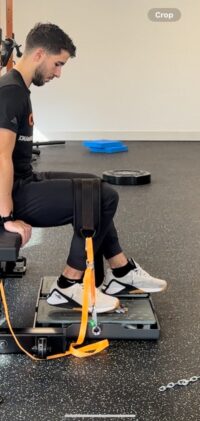
Struggling With A Calf or Achilles Injury? What You Need to Know


I’m now at that age where I have to start being more mindful of the nagging calf and Achilles injuries that seem to pop up for so many of us in our 30s, 40s, and beyond. Whether it’s rec league basketball, tennis, pickleball, or just hitting the gym hard, many active adults still love to move with intensity—but we may not have the same resiliency we had in our 20s.

At Cohen Health and Performance, we see it all the time in our physical therapy clinics: a fit, active individual suddenly sidelined by a calf strain. These types of injuries tend to be the first warning sign of lower leg issues that can creep up when we push our bodies beyond what they’re currently prepared to handle.

Why Calf Injuries Happen

A calf strain typically occurs when the loading tolerance of the muscle—its ability to handle force—is exceeded. It’s not always about being out of shape; in fact, many of our patients are in great cardiovascular condition. But if the calf and Achilles haven’t been progressively trained to handle specific types of force—like running, jumping, or quick direction changes—they’re vulnerable.

One of my patients recently told me they went on vacation and, without access to a gym, decided to start running more than usual. They felt fit, so why not? But shortly after, they messaged me with a calf strain. Their cardiovascular system may have been ready—but their calf muscles weren’t conditioned for that repetitive impact. That mismatch between perceived fitness and actual tissue readiness is a common reason we see these injuries in our physical therapy practice.

Physical Therapy for Calf and Achilles Recovery

So what do we do when a calf injury strikes? Or better yet—how can we prevent it?

The key lies in a progressive, personalized rehabilitation plan, and physical therapy plays a critical role in that process. Here’s how we typically approach it:

1. Start with Isometric Loading

We begin with isometric exercises, where the muscle contracts without changing length. This is a safe, low-threat way to begin reactivating the calf muscle after injury. Isometrics help reduce pain, improve blood flow, and reintroduce loading to the tissue without overstraining it. These are often the first steps in any effective physical therapy plan for a strained calf. For more information on isometric exercises, check out this article and video!

2. Progress to Full Range of Motion Drills

Next, we move into more dynamic exercises that take the muscle through a full range of motion. The calf needs to be able to both shorten and lengthen under load, especially if you want to return to activities like running or jumping. These movements are carefully progressed based on how the tissue responds.

3. Introduce Plyometric and Sport-Specific Drills

Once strength and mobility are restored, we introduce plyometric exercises to recondition the tissue for faster, more explosive movements. At this stage, we might use bands or assistance tools to reduce body weight until you’re ready to go full intensity.

Finally, we tailor the program to your sport or activity. Runners may progress to drills like A-skips and A-runs, while basketball or tennis players might focus on reactive jumping or lateral movement training.

Personalized Care is Key

No two injuries—or recoveries—are the same. That’s why every physical therapy plan at Cohen Health and Performance is built around your unique goals, limitations, and lifestyle. Whether you’re returning to a sport or just want to stay pain-free during weekend workouts, we’re here to help you move forward.

If you’ve recently dealt with a calf or Achilles injury—or you’re hoping to prevent one as you stay active into middle age—we’d love to help. Our physical therapy team specializes in helping active adults recover quickly, move better, and keep doing what they love.

Contact us to schedule your evaluation at our Bethesda or McLean location. Don’t let a nagging calf injury slow you down.
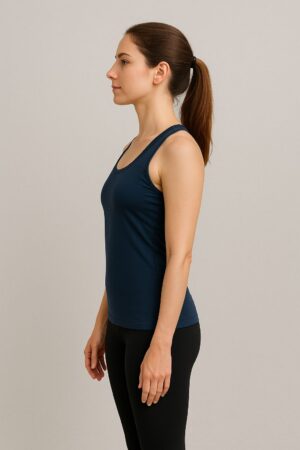
Why We Don’t Cue “Shoulder Blades Down and Back” (And How Physical Therapy Can Help)


Growing up, my Grandma Barbara was one of my favorite people. She lived right next door in a guest apartment, and every afternoon when I came home from school, she was there to greet me. If I walked in with a bit of a slouch—maybe from lugging around a heavy backpack all day—she’d call out, “Stand up straight! Pull your shoulder blades down and back!”

I know she meant well, and I bet you’ve heard similar advice from someone in your life too.

But here’s the thing: as much as I hate to say it, Grandma was wrong.

Why “Shoulder Blades Down and Back” Can Do More Harm Than Good

In physical therapy, we see a lot of people who have been told to constantly brace their shoulder blades down and back to “fix” their posture. While that advice might sound helpful, it often causes more problems than it solves.

The reality is that posture isn’t about locking your body into one rigid position. Slouching often happens because we’re tired or trying to conserve energy—not because our shoulder blades are out of alignment. Trying to force them into place just adds unnecessary tension and restricts healthy movement.

In our physical therapy clinics in Bethesda and McLean, we frequently help active adults correct these habits so they can move better, perform stronger, and live pain-free.

Your Shoulder Blades Were Built to Move

In sport, fitness, and life, your arms need freedom to move—whether you’re lifting weights, throwing a ball, or reaching overhead. Your shoulder blades are designed to support that movement by gliding up and out—not staying pinned back.

As physical therapists, we help patients retrain how their shoulder blades move with their body instead of against it. This improves posture, relieves shoulder pain, and supports stronger performance in the gym or everyday life.

3 Physical Therapy Exercises to Improve Posture and Shoulder Function

These are three of the most effective drills we use at Cohen Health and Performance to teach better posture, improve shoulder control, and support strong, pain-free movement.

1. Core Push-Up with Serratus Activation

Most people perform push-ups with their shoulder blades pulled back and their chest puffed out—but that’s not how your body naturally moves.
In physical therapy, we coach patients to reach their chest away from the floor to activate the serratus anterior. This helps stabilize the shoulder blades in a healthy position.

2. Overhead Press with Scapular Movement

Rather than bracing the shoulder blades, we encourage our patients to let them rotate upward naturally during pressing movements. This protects the shoulder joint and mimics how your body moves in real-life tasks and athletic performance.

3. Dumbbell Pullover for Trunk Positioning

This simple but powerful drill reinforces good trunk posture while allowing natural shoulder motion. We often include this exercise in warm-ups or between sets as part of a customized physical therapy or training plan.

Rethink Posture: A Better Cue

Instead of constantly thinking “shoulder blades down and back,” try this:
Imagine a string gently pulling you up from the top of your head.
This subtle cue can reorient your posture without adding tension or compromising your shoulder mobility.

And here’s the kicker—perfect posture isn’t the goal. At Cohen Health and Performance, our physical therapy team focuses on helping you move efficiently, stay strong, and avoid injury—because those things are what actually matter.

Physical Therapy Can Help You Move Better—Not Just Stand Straighter

If you’re struggling with shoulder pain, poor posture, or feeling like your workouts are hitting a wall, we’re here to help. Our physical therapy approach is personalized, movement-based, and designed for athletes and active adults who want to keep doing what they love—without pain or limitations.

Book an appointment here at our Bethesda or McLean location to get started.

Understanding Sciatica: How Physical Therapy Can Help You Find Relief


Sciatica is one of the most common issues we treat in physical therapy, especially among active adults. It’s not just a “back problem”—sciatic nerve pain can affect your entire lower body. Why? Because the sciatic nerve is the largest and longest nerve in the human body, stretching from your lower back through the hips, glutes, hamstrings, and all the way into your lower leg and foot.

When something irritates or compresses this nerve, it can lead to pain, numbness, tingling, or weakness—anywhere along its path.

Sciatic Nerve Pain: A Highway with Potential Roadblocks

Think of your sciatic nerve like a long, busy highway. This “road” passes through many key areas of the body—your spine, hips, glutes, hamstrings, and calves. Along the way, there can be roadblocks: tight muscles, joint dysfunction, or disc-related issues that compress or irritate the nerve.

Common culprits include:

  • Disc herniations in the lower back
  • Muscle tension in the glute or piriformis region
  • Scar tissue or soft tissue restrictions further down the leg

That’s why sciatica symptoms can vary so much. You might feel pain in your lower back, or it could shoot all the way down to your foot. This is exactly why seeing a trained physical therapist is so important—we’re trained to find where the issue is actually coming from, not just treat where it hurts.

Nerves Need to Move: Why Mobility Matters

Many people are surprised to learn that nerves need to move just like muscles and joints. The sciatic nerve must be able to glide and slide as your body moves. If its mobility is restricted, you may feel sharp pain, tightness, or tingling, even when there’s no actual structural damage.

A good way to think about this is with a piece of dental floss. If you gently pull one side of the floss while holding the other still, it moves freely. But if it gets stuck somewhere along the path, tension builds. The same can happen with your nerves.

Restoring nerve mobility is a key part of an effective physical therapy plan for sciatica.

Physical Therapy Techniques for Sciatica Relief

At Cohen Health and Performance, we often use nerve gliding exercises as part of a broader physical therapy program. These movements help restore the sciatic nerve’s ability to move through the tissues without restriction, reducing pain and improving function.

Here are two examples we often prescribe:

1. Supine Nerve Glide (Lying Down)

  • Repeat for 20 reps, 1–2 times a day.

2. Standing Nerve Slide (More Advanced)

  • Repeat for 15–20 reps.

These drills are gentle and should not be painful. They’re just one piece of a complete physical therapy approach designed to restore movement and reduce irritation of the sciatic nerve.

When to Seek Physical Therapy for Sciatica

If you’re experiencing any of the following, physical therapy can help:

  • Pain that radiates down your leg
  • Numbness or tingling in your lower body
  • Difficulty sitting, standing, or walking without discomfort
  • Weakness in your leg or foot

An experienced physical therapist can assess your mobility, strength, posture, and movement patterns to find the source of the problem—not just the symptoms. From there, we create a custom treatment plan to get you back to moving pain-free.

Take Control of Your Recovery

Sciatica doesn’t have to sideline you from the activities you love. With targeted physical therapy, many active adults see significant improvements in just a few sessions. Whether your goal is to get back to the gym, return to the tennis court, or simply move without pain—physical therapy can help you get there.

Need Help with Sciatica?
Book a evaluation with our team at Cohen Health and Performance here. We specialize in helping active adults and athletes resolve pain, improve movement, and get back to doing what they love—without limitations.

How Physical Therapy Can Help You Keep Training Through Shoulder Pain

For anyone dealing with a history of shoulder pain, getting a solid upper body workout can feel like a minefield. Bench presses, overhead presses, and pull-ups are staple movements in strength training, but they can start to feel off limits when your shoulder is not moving or functioning the way it should.

But here is the good news. Physical therapy and shoulder pain rehab can help you get back to doing what you love in the gym safely and effectively. For athletes and active adults looking for shoulder pain rehab in Bethesda, the right approach allows you to continue training while improving how your shoulder actually functions.

Why Overhead Movements Hurt

Many overhead exercises require a full range of motion at the shoulder. For that to happen, the shoulder joint is not working alone. It relies on a coordinated effort between your shoulder blade (scapula) and your rib cage to allow your arm to move overhead without pain or compensation.

What often gets overlooked is that the rib cage needs to move 360 degrees, expanding and compressing in both the front (anterior) and back (posterior). If it cannot, your scapula cannot rotate properly and your shoulder joint becomes restricted. This can lead to stiffness, discomfort, or pain.

This is something we frequently address in shoulder pain rehab programs, especially for athletes who want to continue lifting and training.

The Role of the Rib Cage in Shoulder Mobility

When you raise your arm overhead, your scapula upwardly rotates around your rib cage. If your rib cage lacks the ability to expand and compress, especially in the upper back or chest wall, that scapular movement becomes restricted. Over time this restriction limits your range of motion and contributes to shoulder pain.

In our Bethesda physical therapy clinic, one of the first things we assess in patients who need shoulder pain rehab is how well their rib cage moves. If we find restrictions, we often start with targeted breathing and mobility drills.

Two Foundational Drills We Recommend

Here are two exercises we commonly use with patients during shoulder pain rehab.

1. Hooklying Overhead Reach with Breathing

This drill helps facilitate sternal movement, which is the rise and fall of your chest bone. This motion is essential for true overhead mobility. By combining this position with focused breathing, you can restore movement in the front of the rib cage.

2. Quadruped or Seated Upper Back Expansion Drills

These drills are designed to open up the posterior rib cage. Breathing is key. You are directing air into the areas that need more movement so your scapula can glide properly when you lift your arm overhead.

These exercises do not just improve mobility. They create the foundation for rebuilding strength.

Build Strength in End Ranges

It is not enough to simply restore mobility. You also need to be strong in those new positions.

This is a key part of effective shoulder pain rehab. Many people regain movement but never build strength in those ranges. That is often why pain returns once they go back to training.

A well designed physical therapy program includes strengthening drills that target these vulnerable positions so your body can handle the demands of lifting, throwing, or overhead sports.

Smart Modifications You Can Make in the Gym

Even as mobility and strength improve, certain movements might still feel uncomfortable. Smart exercise modifications can help you continue training while your shoulder recovers.

Here are two adjustments we often recommend during shoulder pain rehab.

1. Recline Your Bench for Overhead Pressing

Instead of pressing from a fully upright 90 degree position, adjust your bench to around 70 degrees. This reduces the mobility demands on the shoulder while still allowing you to build strength.

2. Modify Your Pull Up Angle

If you find yourself arching your back or rowing yourself to the bar during pull ups, you may be compensating for limited mobility. Bands, assisted machines, or grip modifications can allow you to maintain a more vertical pull without irritating your shoulder.

Physical Therapy Is More Than Just Rehab

The best shoulder pain rehab programs are not just about reducing pain. They focus on helping you move better and train smarter.

Working with a physical therapist can help you:

  • Identify the root cause of shoulder pain

  • Restore proper movement and strength

  • Learn ways to train around limitations

  • Return to lifting and sport without recurring setbacks

For active adults and athletes searching for shoulder pain rehab in Bethesda, the goal is not simply to stop pain. The goal is to build a shoulder that is resilient enough for the demands of training.

Final Thoughts

Shoulder pain does not have to mean the end of upper body training. By improving rib cage mobility, strengthening end ranges, and making smart gym modifications, you can keep progressing while addressing the underlying problem.

If you are struggling with persistent shoulder pain, working with a physical therapist who understands strength training and performance can make all the difference.

If you are looking for shoulder pain rehab in Bethesda, our team focuses on helping athletes and active adults return to training stronger, more resilient, and pain free.

Contact us today to schedule a performance based physical therapy evaluation.

Back Squats & Back Pain: What Your Physical Therapist Wants You to Know

If You’re Dealing with Back Pain, Not All Squats Are Created Equal

In my physical therapy practice, I work with a wide range of athletes and active individuals dealing with back pain. Earlier today, I had a conversation with a local personal trainer who is about to start working with one of my patients—a patient currently in physical therapy for back pain.

We were collaborating on how to design a training program that supports their recovery. Naturally, the topic of squatting came up. It’s a staple in most fitness routines, but when you’re dealing with low back pain, the type of squat you choose can make a big difference.

Why Back Squats Might Not Be Ideal for Back Pain

Let’s get one thing clear: I’m not saying back squats are inherently bad. But when it comes to physical therapy for back pain, we have to weigh the risk-to-reward ratio of every exercise.

In a traditional back squat, the barbell rests behind the head. This positioning shifts the center of mass forward and often leads to excessive lumbar extension—or over-arching of the lower back. That posture increases spinal compression, limits hip mobility, and can aggravate existing pain.

For patients going through physical therapy for their back, this added pressure on the spine is something we want to avoid—not just for comfort, but for long-term recovery and performance.

Better Squat Alternatives for Back Pain Relief

In my work with patients, I often recommend squat variations that are more compatible with spine-friendly movement mechanics. Examples include:

  • Goblet Squats
  • Safety Bar Squats

These exercises shift the load in front of the body, promoting a more back-friendly spine position, stronger abdominal engagement, more open hips, and reduced stress on the lumbar spine.

In fact, many patients find that these alternatives not only feel better but allow their legs to work harder—because their back is no longer overcompensating for poor positioning.

What This Means for Back Pain Rehab

One of the most important principles in physical therapy for back pain is knowing what to modify and when. You don’t need to stop training—you just need to train smarter.

If you’ve struggled with low back pain in the past or are currently recovering from an injury, making small changes like adjusting your squat style can protect your spine while still building strength, muscle, and endurance.

Need Help with Your Training Program?

At our Bethesda and McLean clinic, we specialize in physical therapy for back pain and helping people return to high-level performance without re-injury. Whether you’re a weekend warrior, a competitive athlete, or someone simply trying to move pain-free, we’re here to help.

Simple contact us and we will take things from there.

Spring Break Travel Tips: How to Stay on Track with Physical Therapy While You’re Away


Spring break season has arrived here in the DC area, and for many active adults, that means hitting the slopes, heading to the beach, or hopping on a plane for some much-needed downtime. But if you’re currently in physical therapy, staying consistent with your rehab while traveling can feel like a challenge.

Good news: it doesn’t have to be.

Whether you’re recovering from an injury or working toward a performance goal, a few simple strategies can help you stay on track without sacrificing your vacation.

Travel Smart: Prioritize Your Physical Therapy Plan

Before you pack your bags, have a quick check-in with your physical therapist. Ask:

  • Which physical therapy exercises are the most important to keep up with while I’m away?
  • What minimal equipment do I need to bring, if any?

Often, it’s as simple as tossing a small resistance band in your suitcase or doing a few bodyweight movements in your hotel room. Your physical therapist can help you narrow it down to 2–3 key exercises that maintain your progress without adding stress to your travel plans.

Move More During Travel

Extended travel—whether by plane or car—can leave your body stiff and achy. One of the most common tips we give our physical therapy patients:

“The best posture is the one that keeps changing.”

While you’re en route:

  • Shift positions frequently
  • Fidget a little—switch from one hip to the other
  • On road trips, get out and move every few hours
  • On flights, stay hydrated (more water = more walks to the bathroom)

Pro tip: Sit in the front of the plane? Use the rear bathroom. Sitting in the back? Walk to the front. It’s a simple way to sneak in extra steps and reduce joint stiffness.

Reset with Mobility Once You Arrive

Even if you can’t move much while traveling, you can still hit the reset button when you arrive. One of the best tools we use in physical therapy to improve mobility after long periods of sitting?
CARs – Controlled Articular Rotations.

These movements help lubricate the joints and restore mobility by taking them through your available range of motion—perfect after hours in a cramped seat.

Try the Hip CAR video below —a great example of a mobility drill you can do anywhere: hotel rooms, Airbnbs, or even outside.

Make Physical Therapy Travel-Friendly

Your physical therapy routine shouldn’t weigh you down while you travel. With the right plan, you can maintain momentum, prevent setbacks, and still enjoy your time away.

Need help building a vacation-ready movement routine? We’re here for you.

Our team at Cohen Health and Performance can design a custom program that fits your destination, your equipment (or lack of it), and your goals.

×