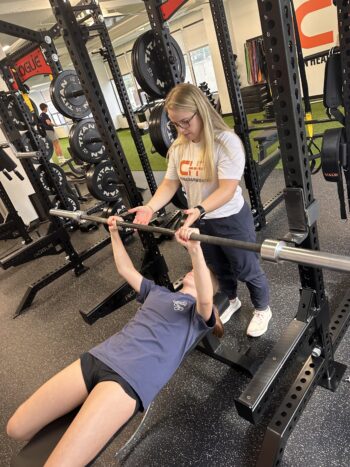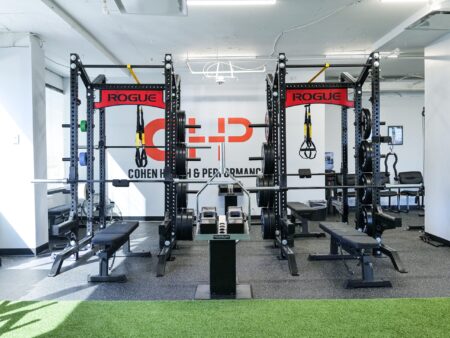
When I look back at the things I believed in college, I can’t help but laugh a little, especially when it comes to my views on weight training. At that time, I was all in on free weights and completely against using machines. If it didn’t involve a barbell or dumbbell, I didn’t want anything to do with it.
Fast forward to today, and my perspective has evolved. I still love free weights, but I’ve come to appreciate the value that machines can bring to a well-rounded training program. As a performance-focused physical therapy provider in McLean, I now help patients and athletes combine both methods for stronger, safer, and more effective results.
Why Free Weights Are So Valuable
Free weights will always have a place in great strength training programs. Exercises like squats, lunges, and deadlifts require balance, coordination, and total-body control. These movements train not just strength, but also stability and athleticism.
For example, a lunge closely mimics the way your body moves when you decelerate, cut, or plant during sports. This is one reason our sports physical therapy team in McLean uses these exercises with athletes returning to play after an injury. They have tremendous carryover to real-world movement.
The Case for Machines
That said, machines offer benefits that free weights can’t always match. For one, they’re less intimidating for beginners and have a lower learning curve. If you’re new to training or getting back into the gym after time off, machines allow you to move safely and confidently while you build your foundation.
But even for experienced athletes, machines have a valuable place. They make it possible to isolate specific muscles that may be weaker or underdeveloped. In physical therapy sessions here in McLean, we often see this after injuries.
Take knee injuries, for instance. It’s common for the quadriceps to lag behind the rest of the leg during recovery. A knee extension machine is an excellent way to directly target and rebuild that strength. By improving the muscle’s capacity to handle load, we help ensure that the knee and the athlete can perform at a high level without increased risk of re-injury.
How to Combine Both for Best Results
If you’ve ever walked into a gym where all you see are barbells, dumbbells, and kettlebells, you might think machines are “less effective” or even unnecessary. But the truth is that the most successful training programs use both free weights and machines strategically.
Free weights build functional strength and athleticism. Machines help strengthen weak links and support recovery. Together, they provide a complete approach that promotes performance, resilience, and long-term health.
Work with Our Physical Therapy Team in McLean
At Cohen Health and Performance, our physical therapy team in McLean specializes in helping active adults and athletes recover from injury, rebuild strength, and return to the activities they love. We take a scientific, individualized approach to training, using both free weights and machines when appropriate, to make sure every part of your body is prepared for the demands of your sport or lifestyle.
If you’d like help designing a program that’s customized to your needs, we’d love to help.
Contact us today to schedule an assessment and discover how our McLean physical therapy experts can help you train smarter, recover faster, and perform better.