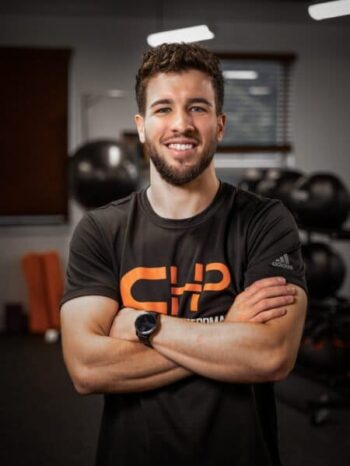
Guest post by Dr. Samuel Kinney, Performance Physical Therapist at Cohen Health & Performance – McLean
If you’re an athlete in the McLean area recovering from an ACL injury, you already know how demanding the process can be. At our sports physical therapy clinic in McLean, Dr. Samuel Kinney takes a page from one of football’s greats, Vince Lombardi, to help athletes master the fundamentals that make the difference between average recovery and peak performance.
Back to Basics: The Lombardi Lesson
Back in 1959, Vince Lombardi was hired to turn around the struggling Green Bay Packers. Reporters wanted to know his plan. Would he redesign the offense, invent new formations, or bring in something flashy and new?
His answer was simple: master the basics.
Lombardi believed football games were won not through trick plays but through relentless execution of fundamentals. Things like blocking and tackling done to perfection. His five championships speak for themselves.
Much like Lombardi’s approach, early-phase ACL rehab centers on the same idea: mastering the fundamentals. At Cohen Health & Performance in McLean, one of those core fundamentals is activation of the quadriceps muscle, a skill that’s often tougher than it sounds.
What’s Going On: The Quad Isn’t Just Weak. It’s Disconnected
After a knee injury such as an ACL tear or surgery, the muscle may look fine, but the nervous system that activates it can become inhibited.
This phenomenon is known as arthrogenic muscle inhibition (AMI) and it’s one of the biggest early obstacles we see in sports physical therapy McLean patients recovering from ACL injuries.
Here’s how it happens:
- Nerves within the injured ACL and joint become disrupted.
- Swelling, pain, and trauma trigger a protective response.
- That protection reduces the signal from the brain and spinal cord to the quadriceps.
The result: athletes think they’re activating the quad, but the signal isn’t strong enough to produce full contraction. Even during “quad sets” or knee extensions, the activation may fall short and recovery can stall.
Why It Matters
You might wonder, “If my athlete is lifting and making progress, what’s the problem?”
Here’s why early quad activation is critical:
- Stability: When the quad isn’t firing properly, the knee loses stability, raising the risk of reinjury or compensations at the hip or ankle.
- Performance: Even if strength returns, delayed activation impacts cutting, pivoting, and jumping mechanics, a split-second difference that affects performance.
- Longevity: Research shows quad activation issues can persist for months post-surgery if not addressed early.
For parents supporting their young athletes, this early stage sets the tone for safe, confident return-to-sport progressions.
How We Address It at Cohen Health & Performance in McLean and Bethesda
Our sports physical therapy team in McLean and Bethesda focuses on reconnecting athletes with their quads and rebuilding a strong, stable foundation:
- Early Stage — Control Swelling & Restore Motion
Swelling and pain inhibit the quad. We prioritize compression, elevation, and restoring full knee extension as quickly as possible to improve activation. - Early Activation — Get the Quad Turning On
Once cleared post-surgery, we begin re-educating the nervous system. Using neuromuscular electrical stimulation (NMES), we help re-establish the brain-to-muscle connection — a proven strategy to accelerate recovery. - Progressive Strengthening
When activation becomes consistent, we progress into strength training and functional movement patterns. The fundamentals never get skipped; reliable quad activation remains the base for every phase of rehab and performance.
How Parents Can Help at Home
Supporting your athlete’s recovery outside the clinic makes a huge difference:
- Ask about NMES: Ensure your child’s therapist includes NMES and teaches home use.
- Encourage consistency: Simple activation drills repeated daily rebuild the mind-muscle link.
- Watch their movement: Hesitation or favoring one leg can signal incomplete activation.
- Reinforce their home program: Progress continues between sessions — not just in the clinic.
At Cohen Health & Performance, we believe lasting results come from doing the basics exceptionally well — just like Lombardi preached.
If your athlete is recovering from an ACL injury, our sports physical therapy team in McLean and Bethesda are ready to help them move, feel, and perform at their best.
Cohen Health & Performance – McLean
Tailored ACL rehabilitation and performance physical therapy for athletes who want to come back stronger.
Contact us today to learn more about our individualized sports physical therapy McLean programs.
