Extension Related Back Pain with Hypermobility


If you’re an active adult or athlete with hypermobility, recovering from back pain can be especially frustrating. What works for most people—like stretching or simply “moving more”—can actually make things worse if your joints already move too much.

At Cohen Health and Performance, we often help hypermobile individuals recover from extension-related back injuries, which typically result from excessive compression of the spine during movement. You may have heard some of the more technical terms for these injuries—like spondylosis, spondylolisthesis, pars defects, or even stress fractures.

These types of injuries are common in athletes who spend a lot of time arching or extending through the low back—think gymnastics, dance, overhead lifting, and even running.

Why Hypermobility Needs a Different Approach

Hypermobility means your joints exceed normal range. While that can be an advantage in sports requiring flexibility, it places a higher demand on your muscles to create stability. This is especially important when it comes to the spine, where poor control can lead to repeated irritation or injury.

If you’re recovering from an extension-based back injury—one where backward bending has caused too much load through the joints in the spoine—your recovery needs to be just as specific as your condition.

How Physical Therapy Can Help

At Cohen Health and Performance, our physical therapists work directly with hypermobile patients to restore safe movement and prevent re-injury. Our approach focuses on:

  • Stabilizing the spine by improving deep core work
  • Distributing movement across the hips, shoulders, and thoracic spine rather than dumping into the low back
  • Progressively retraining lumbar extension, so it’s controlled and not reliant on end-range joint motion
  • Building strength to support hypermobile joints through all phases of movement

We don’t just chase flexibility or range—we build the foundation for controlled, purposeful movement that leads to long-term results.

Recovering Extension the Right Way

Extension is a normal and necessary part of athletic movement—but when it happens excessively or without control, it can lead to spinal compression and pain. Here’s how we approach it in the clinic:

  1. Train Core Control First
    Your core muscles are your spine’s best defense against compression. We teach you how to activate and coordinate these muscles—especially in positions of extension—so that your spine is protected, not overloaded.
  2. Use the Hips and Shoulders
    Movement should be shared—not isolated. Our physical therapists help you restore mobility and coordination in the hips and shoulders so that the lumbar spine isn’t forced to do all the work.
  3. Control Mid-Range Before Deep Range
    Hypermobility often comes with a tendency to hang out in end-range. We train you to control movement through more mid-range positions first, before carefully progressing to deeper extension with purpose and strength.
  4. Build Strategic Strength
    Strength is one of the most important tools in hypermobility rehab. We customize strength programs to support your spine and joints so you can move powerfully without pain.

Our Goal: Help You Stay Active, Pain-Free, and Performing

Whether you’re a gymnast, a weightlifter, or simply someone who likes to push yourself physically, we understand how important your activity is to you. At Cohen Health and Performance, we don’t just help you get out of pain—we help you move with confidence and longevity.
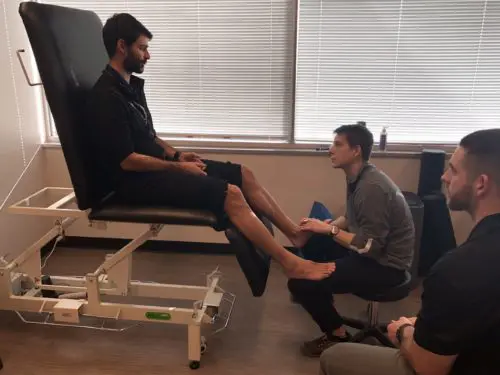
Supinated Feet: When a High Arch Can Be a Problem

If you’re an active adult who deals with a high arch, also known as a supinated foot, you may be unknowingly putting extra stress on your body—especially during running, jumping, and other high-impact activities. As a physical therapist (and someone with this exact foot type), I’ve seen firsthand how a rigid, high-arched foot can lead to aches, pains, and limitations from the ground up.

Let’s break down what’s really going on—and more importantly, what you can do about it.

Supination: What It Is and Why It Matters

Supination is a normal part of how we walk and run. As we push off from one foot to the other, our foot naturally shifts into a supinated position to create rigidity and drive forward momentum. But when that position becomes our default—not just a brief phase of gait—it can become a problem.

A supinated foot has an elevated arch that shifts most of your weight to the outside edge of the foot and the heel. This reduces your ability to absorb shock efficiently and limits how well you distribute force across your foot and up the chain to the knees, hips, and spine.

Over time, this pattern can lead to:

  • Foot and ankle pain
  • Knee irritation
  • Hip tightness or instability
  • Low back discomfort
  • Increased injury risk during sports or exercise

Why Physical Therapy Looks at the Whole Chain

At our physical therapy clinic, we don’t just look at the foot—we look at how your body moves as a whole. A rigid, supinated foot places the lower body in a position of external rotation, making it harder for your joints to absorb impact. This sets the stage for chronic stress and eventually injury.

Our goal is to help restore balance—both literally and figuratively—by teaching your body how to load more evenly and absorb force more effectively.

Choose the Right Shoes

One of the easiest places to start is your footwear. If you have a naturally high arch, it may be structural and unlikely to change. But the right shoes can help you feel more evenly grounded, which is essential for stability and performance.

Look for shoes that:

  • Provide cushioning
  • Let you feel your entire foot—not just the outside edge
  • Help you connect with the ground without feeling unstable

Think of it like lying on a bed of nails: when the pressure is evenly distributed, it’s safe. But if you take away some of that support? Ouch. The same applies to your foot—spread the load, reduce the risk.

Train Your Body to Shock Absorb

Beyond shoes, it’s critical to train your body to handle impact. Supinated feet often go hand-in-hand with limited internal rotation in the lower body—a movement pattern that’s essential for shock absorption.

One of our favorite starting exercises in physical therapy for this is a flexion-based squat with a ball or yoga block between the knees.


This helps:

  • Encourage proper knee alignment
  • Drive internal rotation through the hips
  • Teach your body how to enter a loaded, shock-absorbing position

From there, we’ll progress into dynamic drills like jumps, hops, and landing mechanics, all with a focus on controlled loading and healthy joint positioning.

Don’t Ignore the Signals

If you’ve had a history of ankle sprains, foot pain, or feel like your body just “can’t land well,” you may be compensating for a foot type that needs attention. The good news? There’s a lot we can do to help.

At Cohen Health and Performance, we specialize in physical therapy that addresses the root cause—not just the symptoms. If you’re tired of rigid feet, stiff joints, or recurring injuries, let’s talk. I’ve been able to treat this in myself, and we’ve helped countless athletes and active adults find relief and move better.

Need help with your foot mechanics or injury prevention?

Contact us today to schedule a consultation and learn how physical therapy can help you move, feel, and perform better—starting from the ground up.

Why Objective Strength Testing Is Essential in Physical Therapy

In the world of physical therapy, precision is everything—especially when it comes to helping athletes and active adults recover from injury and return to peak performance. Yet, many rehabilitation programs still rely heavily on outdated tools like manual muscle testing (MMT) to assess strength.

While MMT can offer a general idea of a patient’s capabilities, it lacks the objectivity, consistency, and sensitivity required for high-level performance and injury prevention. At Cohen Health and Performance, we believe it’s time to stop guessing and start measuring.

The Limitations of Manual Muscle Testing

Manual muscle testing is a common practice in many physical therapy clinics. A therapist applies pressure to a limb and grades the patient’s strength based on resistance. While this method may help screen for gross weakness, it’s highly subjective.

Key limitations include:

  • Lack of precision
  • Inability to detect small, yet important, strength deficits
  • Inconsistent results between therapists
  • No ability to track subtle changes over time

When returning an athlete to sport, especially after a major injury such as an ACL tear, rotator cuff strain, or ankle sprain, relying on manual testing alone can lead to premature clearance—and an increased risk of reinjury.

Objective Strength Testing in Modern Physical Therapy


Today’s leading physical therapy practices (like Cohen Health and Performance if I don’t say so myself) use objective strength testing tools to deliver data-driven care. Whether through isometric testing devices, force plates, or handheld dynamometers, the goal is the same: measure what matters and act on real data.

Benefits of objective testing include:

🔹 Identify muscular imbalances
Catch asymmetries or deficits in strength between limbs, which are often invisible with manual testing.

🔹 Set clear, measurable goals
Define baseline numbers and establish precise strength benchmarks for return-to-sport decisions.

🔹 Reduce risk of reinjury
Research shows that inadequate strength—especially side-to-side deficits—increases reinjury risk. Objective testing ensures no major gaps are left unaddressed.

🔹 Optimize recovery timelines
Tracking strength improvements over time allows therapists to adjust training loads and progressions with confidence, ensuring that recovery is both safe and efficient.

Why It Matters for You

Whether you’re an elite athlete or an active adult who wants to stay in the game, data matters. When your recovery is based on objective strength testing, you’re no longer relying on a therapist’s best guess—you’re following a personalized plan grounded in science.

At Cohen Health and Performance, our team uses cutting-edge tools and technology to assess your progress and guide your recovery every step of the way. We don’t just help you feel better—we ensure you’re performing better.

Ready to Get Measured?

If you’re serious about your recovery, performance, and long-term health, physical therapy with objective strength testing isn’t a luxury—it’s a necessity.

Reach out to us at our Bethesda or McLean clinic to schedule your evaluation and experience the difference that data-driven physical therapy can make.

Arm Care Day: The Physical Therapy Routine Every Baseball Player Needs

When you’re deep into a baseball season—logging innings, throwing bullpens, or playing back-to-back games—the demand on your arm is relentless. If you’re not prioritizing recovery and strength maintenance, performance drops… and injuries creep in.

At Cohen Health and Performance, we emphasize one key principle to our baseball athletes: Arm Care Days aren’t optional—they’re essential.

We specialize in physical therapy for baseball players, and one of the most valuable strategies we implement for shoulder and elbow health is a consistent arm care routine. Here’s what a proper Arm Care Day should include—and why it’s a game-changer for performance, injury prevention, and career longevity.

Soft Tissue Work: Restore Mobility and Promote Recovery

Baseball places repetitive stress on the shoulder, elbow, and surrounding tissues. That’s why the first step of any Arm Care Day at Cohen Health and Performance includes soft tissue work to:

  • Break up adhesions and reduce tissue restrictions
  • Improve shoulder and thoracic spine mobility
  • Stimulate blood flow to accelerate recovery between games

This is a foundational aspect of the physical therapy approach we use with our pitchers and field players alike.

Isolated Muscle Activation: Build Stability and Control

Throwing isn’t just about power—it’s about control. And that control starts with the small stabilizing muscles around the shoulder blade and rotator cuff.

Our physical therapy sessions on Arm Care Days focus on:

  • Rotator cuff activation
  • Strengthening the scapular stabilizers
  • Reinforcing neuromuscular coordination

This helps athletes maintain healthy mechanics, reduce stress on the shoulder joint, and build a resilient throwing arm.

Overload Eccentrics: Strengthen the Deceleration Phase

The highest forces in throwing happen after ball release—when your arm has to slow itself down. This is the phase that often leads to overuse injuries if not properly trained.

At Cohen Health and Performance, we use eccentric strengthening drills to:

  • Improve the capacity of the posterior shoulder and forearm
  • Build resilience in the tissues responsible for deceleration
  • Maintain strength under in-season fatigue

This strategy is a staple in our sports physical therapy programs for baseball athletes who want to keep their arms strong all season long.

Why Arm Care Days Matter

At Cohen Health and Performance, we often say:
“Arm care is injury prevention, performance enhancement, and career insurance—all rolled into one.”

Whether you’re a high school pitcher chasing a scholarship or a weekend warrior who still throws heat, prioritizing your arm health will:

  • Keep you on the field, not in the training room
  • Help you throw harder, longer, and with better control
  • Extend your playing career by minimizing injury risk

The Cohen Health and Performance Difference

We specialize in physical therapy for athletes—and that includes creating customized Arm Care routines that are tailored to your position, workload, and goals.

If you’re a baseball player who’s serious about staying healthy and performing at your best, it’s time to make Arm Care Days a consistent part of your training.

📍 Serving athletes across Bethesda and McLean, Cohen Health and Performance is your partner in long-term arm health.

Schedule an evaluation here and take the first step toward a stronger, healthier season.

×