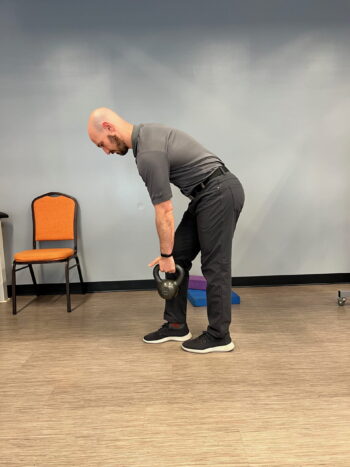
Speed Kills: tips to gain that extra edge

As a parent of a high school athlete aiming to compete at the collegiate level, you understand that speed can make all the difference. Faster athletes often outshine their competition, even in physical sports like football, where speed is a game-changer. Fortunately, there are proven ways to help your athlete enhance their speed and give them a competitive edge, whether they’re on the field, track, or court. Below are drills that we incorporate with our sports physical therapy and performance training clients.

Speed Training Essentials for Aspiring College Athletes

Boosting speed requires a comprehensive approach that goes beyond simply moving faster. Here are three key areas to focus on for your athlete’s speed development.

 1. Master the Basics

Just like any other skill, sprinting has specific techniques and the mechanics are where we start as sports physical therapists and performance coaches. Practicing sprint mechanics, such as proper foot strike, forward knee drive, and core activation, is fundamental to achieving an efficient stride. Incorporate drills that reinforce these mechanics, such as marching, skipping, and high-knee runs. These simple yet effective drills provide a strong foundation and encourage form that can help increase speed safely.

Recommended Drills:
– A March

– A Skips

– Stepover Drills (Shin Height)

2. Build Strength in Key Muscle Groups

Running fast requires strength, especially in muscles like the quads, hamstrings, calves, and core. Building strength in these areas is essential not only for speed but also for power, endurance, and injury prevention. Compound lifts and single-leg strength exercises targeting these muscle groups are highly effective in making strides more powerful and reducing the likelihood of injury.

Strength Training Exercises:
– Standing Hip Flexion With Band

– Front Foot Elevated Heel Raise

– Copenhagen Hold with Reach

3. Practice Accelerations and Sprint Drills

A well-rounded speed training program includes work on both acceleration and top-speed mechanics. Acceleration drills help athletes reduce the time it takes to reach their maximum speed, while sprint intervals build stamina for sustained performance. Integrating these drills into regular training can drastically improve an athlete’s on-field performance.

Suggested Speed Drills:
– Wall Acceleration Series

– Sprinter Step Up

Sprint Workouts:
– Flying 10s: Build speed over 20-30 yards, sprint for 10 yards, then slow down.
– 10×10: Sprint for 10 yards, then decelerate quickly; repeat 10 times.

Performance U: A Program for Aspiring College Athletes

For parents of high school athletes dreaming of college-level sports, consider our Performance U small group training program. Performance U is designed specifically to help young athletes develop the speed, strength, and stamina needed to excel at the collegiate level. Your athlete will receive a personalized performance assessment and a custom-designed speed and strength program, coached by our expert team. They’ll train in a supportive, small-group environment that combines personalized attention with the camaraderie of a team.

Give your athlete the best possible foundation for their college sports career. Performance U offers everything they need to stay ahead of the competition and stand out to college scouts. If you are interested, contact us here!

Running Tips and Community Building with Coach Sweeney

Don’t miss this exciting edition of the CHP Spotlight Interview Series, featuring Dustin Sweeney, Co-Founder and Executive Director of Light Horse Track Club in Northern Virginia.

Light Horse Track Club is more than just a running team; it’s a vibrant community and a trusted resource for runners of all levels across Loudoun and Fairfax counties. Whether you’re just starting out on your running journey or you’re a seasoned marathoner, Light Horse offers a supportive and dynamic environment where every runner can thrive. Beyond building an inclusive team culture, the club hosts high-caliber races that unite the Northern Virginia running community.

In this interview, I sat down with Dustin to uncover how a strong culture and community can play a pivotal role in a runner’s experience and development. We discussed the ways Light Horse supports runners through community-driven training, social events, and tailored support, including advice on often-overlooked aspects of a runner’s regimen—areas where physical therapy for runners plays a crucial role. Dustin shared insights into how understanding the biomechanics of running and integrating effective running physical therapy can transform a runner’s performance, reduce injuries, and optimize endurance and speed.

We also dove into the importance of injury prevention and rehabilitation for runners, from novices to elites, emphasizing how running physical therapy can prevent common injuries, correct muscle imbalances, and improve running form. Dustin explained that Light Horse Track Club collaborates with local physical therapists to help runners address these challenges, ensuring they have the resources they need for sustained success.

One of the highlights Dustin shared was Light Horse Track Club’s upcoming Gala, a special fundraising event that supports their races and initiatives, which continue to elevate the running experience in Northern Virginia. This gala is more than a fundraiser; it’s a celebration of the local running community, offering a fantastic opportunity for members and supporters to connect, share their experiences, and support Light Horse’s unique programming.

Whether you’re a weekend jogger or training for elite competitions, this interview is packed with valuable insights into how community support and specialized running physical therapy can help you reach your goals. With practical takeaways for all runners, you won’t want to miss it!

Visit Light Horse Track Club’s website here for more information on their programs, races, and the upcoming gala!

What Performance Physical Therapist, Dr. Biddle, learned from breaking her leg

I’m thrilled to welcome Dr. Catherine Biddle to our physical therapy team in Bethesda. Dr. Biddle specializes in treating gymnasts, dancers, and athletes with hypermobility related conditions. As a former Division I gymnast at Northern Illinois University, she brings both expertise and personal experience in overcoming sports injuries.

She was kind enough to tell us about the injury that inspired her to become a sports physical therapist and what you can learn from her journey.

______________________________________________________________

At 15, I suffered a serious injury during gymnastics practice. While performing a skill called a blind full on bars, I turned too early, causing a fall from 12 feet onto concrete. The result? A broken fibula in three places and a dislocated tibia.

Two days later, I had surgery to insert a plate and eight screws in my leg. My doctors warned I might never compete at the same level again. As a gymnast for 13 years who was being actively recruited by colleges, this news was devastating. I felt lost—until I started physical therapy three weeks after surgery.

When I crutched into my first physical therapy session, feeling hopeless, my therapist did something powerful: she asked me how I was doing—not just physically, but emotionally and mentally. That conversation changed everything. She told me that while recovery wouldn’t be easy or fast, we would do everything we could to get me back to gymnastics. Thirteen months later, I joined a Division I gymnastics program and had a fulfilling collegiate career.

My injury taught me that the physical therapy journey is about more than just the body. It’s about mindset, support, and perseverance. The right therapist can make all the difference, helping you heal both physically and emotionally.

Most importantly, I learned that a surgeon’s prognosis isn’t the end of the story. With the right support system, a positive outlook, and hard work, you can overcome obstacles you never thought possible.

These lessons shape how I approach my work today. I focus on more than just my patients’ injuries—I consider how they’re feeling overall and what their goals are. Healing isn’t just about “fixing” the problem; it’s about helping people return to the activities they love.

So how do you know if you’ve found the right healthcare provider for you?

Ask questions!

Prior to your visit, prepare a list of the questions that are important to you. Your provider should be willing to answer all of your questions, even if they can’t give you a definitive answer at the moment.

Here are 3 questions that I advise asking.

1. Why did this happen, and how can we prevent it from happening again?
Understanding the cause of your injury helps ensure it doesn’t become a recurring issue.

2. What should I be doing at home?
Recovery extends beyond the clinic. Make sure you’re clear on what exercises or precautions you should follow at home.

3. How will we measure my progress?
Your goals should guide your recovery, not just standard benchmarks. Set clear expectations with your therapist to track meaningful progress.

Physical therapy is most effective when it’s a partnership. The more engaged you are in your recovery, the better your results will be. Asking these questions helps you take control of your health and build a stronger relationship with your therapist.

Interested in scheduling an appointment with me or a member of our team? Contact us!

-Dr. Catherine Biddle PT, DPT

Key Takeaways from a Fitness Competition

This past Saturday, I had the privilege of being the performance physical therapy sponsor at an incredible event to raise funds for breast cancer research—Girls Gone RX, hosted by our friends at Crossfit Route 7 in Tyson’s Corner.

From the moment I stepped through the doors, I could feel the energy. A throwback mix of NSYNC, Backstreet Boys, and Britney Spears filled the air, instantly taking me (and probably many others!) back to the days of Total Request Live on MTV.

But it wasn’t just the music that made this event memorable—there were some amazing takeaways from the competition that can apply to physical therapy, or any sport or workout routine. Here’s what stood out:

The Power of a Supportive Environment

One thing CrossFit does exceptionally well—especially at CrossFit Route 7—is foster a fun, supportive community. It was inspiring to see how excited everyone was to be spending their Saturday at the gym, whether they were competing or cheering on the athletes. The event was a women-only competition, yet both men and women were there in full force, cheering loudly from the sidelines.

The participants ranged from beginners to seasoned athletes. Some were lifting impressive amounts of weight, while others were simply excited to be part of the action. The diversity of skill levels only added to the event’s energy and made it even more inclusive. A supportive environment doesn’t just apply to fitness, it matters in healthcare and physical therapy as well.

Taking Warm-Ups Seriously

These athletes were no strangers to competition, and their warm-up routines showed it. Before each event, competitors spent significant time preparing, but these weren’t your typical, one-size-fits-all warm-ups. The exercises were specifically tailored to the movements required for each event.

For example, before an event involving barbell cleans, the athletes took time to perfect their form, using weights similar to what they’d be competing with. It was impressive to see how much attention was given to detail, and it served as a reminder that a good warm-up should transition you smoothly into your workout. By the time the event began, most of the athletes had already broken a sweat, minimizing the risk of injury.

Master the Basics

Most of the women competing had clearly spent countless hours honing their skills. CrossFit requires a blend of mobility, strength, and technical expertise. It’s tempting to jump straight into the fun aspects of a sport, but this event was a great reminder that you must master the prerequisite qualities of any activity first for long-term success.

Just like building a house, laying a strong foundation is key before adding the finishing touches. Whether you’re a beginner or a seasoned athlete, it’s essential to invest time in developing the movement patterns and technical skills that pave the way for long-term success and injury prevention.

A personalized movement assessment can make all the difference, helping you stay injury-free while enjoying your favorite sport. If you’re interested in learning more about how to get your own custom movement evaluation, contact us!

Grandma was wrong about this

Growing up, my grandma, Barbara, lived next door to us. She was a character—loving, funny, self-deprecating, and wise. I was lucky enough to spend time with her daily, soaking up her advice (whether I wanted it or not!). And while most of her advice was pure gold, there was one thing she got wrong—something I later discovered through my experience in sports physical therapy.

When I’d come home slouching, she would lovingly tell me to “stand tall” by bringing my shoulders down and back so that “all the girls could see my handsome grandson.” She certainly helped boost the confidence of an awkward middle schooler with buck teeth and a terrible haircut, but when it comes to posture, her advice wasn’t quite right.

You’ve probably heard the same thing: “pull your shoulders down and back” to stand tall and improve your posture. It sounds good, but through my work in sports physical therapy, I’ve learned that this advice can be counterproductive to how your shoulders are designed to work.

The Problem with “Shoulders Down and Back”

In sports physical therapy, we often encounter athletes and active individuals who believe that pulling their shoulder blades down and back improves posture. However, doing so actually prevents your shoulder blades from moving the way they should. Your shoulder blades (scapulae) are designed to move away from the midline of your body—a movement called protraction.

Protraction is crucial for everyday movements like reaching, throwing a ball, and pressing weights overhead. Restricting this natural movement by pulling the shoulder blades together can cause upper back tension and limit mobility—issues that are frequently addressed in sports physical therapy.

Why This Matters for Athletes

If you lift weights or participate in sports like baseball, football, or basketball, maintaining proper shoulder mobility is key. Through sports physical therapy, we see how athletes benefit from training movements that allow the shoulders to move naturally. Pinning your shoulder blades back limits your ability to build strength in outstretched positions, which are crucial for both athletic performance and injury prevention.

Great athletes need fluid, strong movements with their arms in extended positions. Constantly pulling the shoulder blades together limits the opportunity to build the functional strength required for peak performance in sports.

3 Exercises for Better Shoulder Mobility & Strength

As a sports physical therapist, here are three exercises I recommend to help athletes and active individuals improve shoulder mobility and build strength in these outstretched positions:

1. Core Push-Up – Build strength around the shoulder blades by actively pressing them away from the midline, which is essential for shoulder health in sports physical therapy.

2. Bottoms-up Kettlebell Press – This overhead pressing exercise forces the body to stabilize a kettlebell while pressing overhead, improving both shoulder mobility and strength.

3. Shoulder Flexion PAILs and Liftoffs – Develop strength in overhead positions where it can be challenging to maintain proper form and stability.

These exercises are staples in sports physical therapy to help train the shoulders to move more effectively, enhancing performance in sports and everyday activities.

Have Questions? Contact us!

The rise of the “Dad bod”

In recent years, professional sports have witnessed an intriguing shift. Athletes like Patrick Mahomes and Luka Dončić are redefining what it means to succeed at the highest levels, demonstrating that elite performance is no longer solely tied to having a shredded, lean physique. Instead, a new focus has emerged on functional athletic physical therapy and performance-based training, which emphasizes improving sports-specific skills and recovery over aesthetic goals.

The rise of “dadbods” among some of the world’s greatest athletes marks a departure from the long-standing belief that athletes must conform to a particular body type to succeed. While these athletes may not fit the traditional image of being hyper-muscular or ultra-lean, their success lies in their ability to excel through explosive movements, agility, and endurance—qualities enhanced through a combination of performance training and specialized athletic physical therapy.

The Role of Athletic Physical Therapy in Modern Training

Athletic physical therapy has become increasingly important in optimizing the performance of elite athletes. This shift represents a growing recognition of the value of recovery, injury prevention, and the enhancement of functional movement patterns. Through tailored physical therapy sessions, athletes can address muscle imbalances, improve joint mobility, and rehabilitate from injuries in a way that supports their overall athletic performance.

For example, athletes who focus on building vertical jumps, sprinting speed, and endurance use power-based training methods that allow them to excel in their respective sports. These techniques are often complemented by physical therapy, which helps to minimize fatigue, prevent overuse injuries, and ensure that the body can handle the demands of high-intensity competition.

By integrating athletic physical therapy into their routine, athletes can maintain peak condition throughout a long season without the risk of burnout. This is in stark contrast to bodybuilding, where the focus is on muscle isolation and aesthetics, often at the expense of functional performance and injury prevention.

Functional Movements and Sport-Specific Training

Athletes design their training around the specific demands of their sport, focusing on compound, functional movements that replicate on-field actions. From ball throws to sled pushes, these exercises build dynamic strength, coordination, and stamina—key components of athletic success. In conjunction with athletic physical therapy, this approach ensures that athletes not only build the strength needed to dominate in their sport but also stay resilient against injuries.

Athletic physical therapy is particularly useful when addressing issues related to biomechanics. Functional movement screens are commonly used to identify any movement patterns that may predispose an athlete to injury. By correcting these through targeted physical therapy exercises, athletes can enhance their range of motion, improve posture, and ensure that they can perform at their best without sacrificing their long-term health.

While hypertrophy (muscle building) still plays a role in an athlete’s training, the primary focus is on developing muscle mass that supports agility, explosiveness, and the specific demands of their sport. Athletic physical therapy supports this process by ensuring that the muscles, tendons, and ligaments are properly conditioned to handle the stresses of athletic performance.

Evolving Nutrition and Conditioning Strategies

Nutrition strategies in professional sports have also evolved alongside the rise of performance-based training. While bodybuilders typically go through extreme bulking and cutting phases to achieve a particular physique, athletes prioritize maintaining a consistent body fat percentage that allows them to perform at their best. In this context, athletic physical therapy also plays a crucial role by ensuring that the body is adequately nourished and recovered, ready for the rigors of competition.

Athletes focus not on achieving a specific look but on sustained performance, allowing them to remain at their peak over extended periods. Similarly, their conditioning programs are designed to maximize cardiovascular efficiency and sport-specific endurance rather than simply burning fat. Whether it’s high-intensity interval training (HIIT) or tailored conditioning, their approach is centered on enhancing stamina and durability for the long season ahead.

A New Mindset in Athletic Training

The rise of athletes prioritizing performance over aesthetics sends a powerful message, particularly to youth athletes: skill development, functional strength, and injury prevention should always come first. Athletic physical therapy helps ensure that athletes can maintain their physical health while improving their performance, proving that chasing an idealized body image is less relevant to success in sports. Instead, mental resilience, recovery, and athletic ability are the true markers of success.

As more athletes embrace this mindset, the field of athletic physical therapy is expected to grow in importance, continuing to evolve alongside the training methodologies that emphasize performance and health over aesthetics. If you’re interested in finding the best athletic physical therapy and performance training solutions, contact us to learn more about our upcoming performance training groups, launching soon!

×