Single-Leg Strength Training Exercises That Reduce Your Risk of Injury

Years of performance physical therapy have revealed that running injuries are often caused by repetitive stress injuries when running. The better you can control the adverse effects of repetitive stress, the fewer injuries you’ll get as a result.

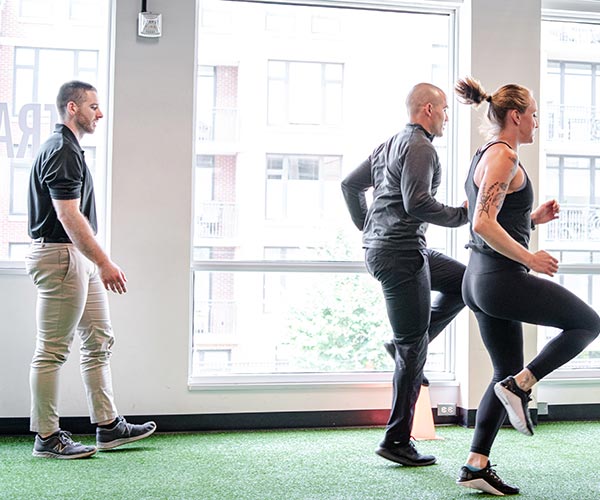
One simple way to control repetitive stress is by implementing single-leg strength training exercises into your training. The benefits of these exercises are numerous. Not only will single-leg exercises increase a runner’s ability to shock absorb in a single leg position, but they’ll also decrease ground contact times, resulting in faster pacing. Lastly, because of your improved capacity to handle stress, your risk of injury is diminished.

Here are some great single-leg exercises to start incorporating into your strength training routine:

  1. Single-Leg Snapback

Single-leg snapbacks help runners improve footstrike mechanics and better understand the impact of different body positions.

Single Leg Snapback

  1. Single-Leg RDL’s

The single-leg RDL is a perfect exercise to train the glutes and hamstrings effectively. This exercise also helps eliminate strength imbalances between the left and right sides of the body, increasing lower-body stability and protecting the knee from injury.

Single Leg RDLs

  1. Single-Leg Bounding Drills

Bounding drills are great for improving force absorption qualities when running or jogging. These drills will help enforce proper trunk, hip, leg positioning, and control needed to land stably on every stride. There are a couple of great bounding drills, but our favorites are Single Leg Forward Bound + Stick⁠, Single-Leg Forward Triple Bound + Stick, and the SL Lateral Bound + Stick⁠.

Single Leg Bounding

Are You Ready to Start Running Again? This Self Assessment will Help!

Are You Ready to Start Running Again? This Self Assessment Will Help 

If ankle injuries occur, it’s important to give your body time to recover. That said, how do you know when you’re ready to run again? This short self-assessment is used in sports physical therapy in Bethesda and Chevy Chase to gauge when patients are ready to return to running after an injury.

  1. Do you have enough dorsiflexion?

Dorsiflexion is the action of moving the foot upwards towards the shin. The degree of dorsiflexion in the foot/ankle plays a major role in avoiding injury, increasing speed, and improving efficiency.

We recommend dorsiflexion of 15 degrees or more before a return to running.

  1. The single-leg hop test

Can you perform a single-leg hop (at least a couple feet) with a soft, steady landing that’s similar between both feet? Athletic physical therapists frequently use the single-leg hop test to determine the patient’s ability to return to high-level athletics after an injury.

https://www.youtube.com/watch?v=ZxvJ7iRawh0

In addition to comparing your results to the accept recovery rates, it’s important to measure how your ankle feels when performing a single-leg hop test. Ideally, the pain level during the test should be 0/10.

  1. Is cardiovascular health good enough?

After several weeks or months of inactivity, there’s a good chance the patient’s cardiovascular health has declined. To return to running safely, it’s important to increase running time and distance gradually. This ensures the body has enough time to adapt to the added stress of running again.

Injuries are bound to happen at some point. The key is to give your body enough time to recover by making sure you don’t return too soon. By following this simple self-assessment, you’ll help ensure you don’t re-injure yourself by returning before your body is ready.

A Physical Therapist’s View: How Does LeBron’s Ankle Injury Impact His Season?

Los Angeles Lakers star LeBron James is out “indefinitely” after suffering a high ankle sprain in a recent game against the Atlanta Hawks. “Indefinitely” paired with “high ankle sprain” is usually a bad sign in the sports world. However, from a performance physical therapy and performance training perspective, LeBron’s injury would likely have been much worse had it not been for his rigorous off-season training program.

A high ankle sprain occurs when there’s tearing or damage to the ligaments (known as the syndesmosis) located above the ankle. Less common than low ankle sprains, high ankle sprains caused by a sudden turning, cutting, or twisting motion. Athletes playing high-impact sports that require frequent running and jumping, such as basketball, soccer, football, and lacrosse, are at higher risk for these more severe sprains.

The average recovery for high ankle sprains can take significantly longer than typical sprains. In general, it takes roughly 6–8 weeks to fully, though it can take up to 3 months in severe cases. LeBron is expected to be out “indefinitely” as he recovers from his recent injury. However, given his intense training and recovery regime, it’s likely that he’ll be back on the court sooner than expected.

After watching the gruesome video of Solomon Hill tripping into LeBron’s ankle, it would have been easy to assume a severe injury. However, LeBron’s off-season training program may have kept his ankle sprain from becoming something more serious. Still dominant in his 18th year in the NBA, LeBron’s continued focus on training and recovery is very apparent. For the past 16 years, LeBron has worked with trainer Mike Mancias, who helped LeBron continue to dominate by focusing on nutrition, mobility, and strength training.

Most people think that strength training can prevent injuries. However, strength training often just prevents injuries from becoming more serious. It’s hard to avoid certain things from happening in a game. That said, off-season training can help prevent injuries from becoming severe.

Two Common Reasons You Have Neck Pain (And How to Fix It)

Neck pain is a common complaint of people seeing a physical therapist in Chevy Chase or Bethesda. Although a variety of different factors can cause it, two of the most common explanations of neck pain and discomfort are rib cage stiffness or overtraining.

One effective treatment of neck pain can be to reduce any rib cage stiffness that may be causing a lack of mobility below the neck. The muscles of the upper back and shoulders attach directly to the neck and can cause tension when unable to expand freely. To have pain-free neck mobility, the rib cage must be able to expand 360 degrees.

One simple method to improve rib cage stiffness is with a breathing exercise such as Rockback Breathing off an elevated surface (see below).

Rockback Breathing on a Bench

Another common cause of neck pain in our patients is overtraining. When patients disregard the warning signs and continue to push themselves, there is an increased stress response throughout the body. This causes the accessory respiratory muscles to work harder, thus developing neck stiffness and discomfort.

If overtraining is the issue, it can help take a couple of days to give your body time to rest and recharge. Similarly, it can be invaluable to work directly with a professional to ensure overtraining doesn’t become a long-term issue. Although it’s enticing to continue to train harder, you can usually achieve better results by giving your body more opportunity to recover.

When your neck pain has persisted for longer than a few weeks, it’s time to meet with a professional who can help identify more subtle reasons for the discomfort. If you’re in the Bethesda or Chevy Chase area, our physical therapists can help you get back to living your life pain-free!

Make the most of your visit: 3 questions to ask your physical therapist

Whether you’re attending in-person or virtual physical therapy, your success largely depends on how engaged and involved you are in the process. A physical therapist’s role is to identify issues, develop a personalized treatment plan, and guide you toward recovery. However, as the patient, your active participation is just as crucial. Asking the right questions during your sessions can empower you to take control of your health and recovery journey.

Here are three essential questions to ask your physical therapist to ensure you get the most out of your sessions in McLean or Bethesda.

1. Why Did This Happen, and How Can We Prevent It from Happening Again?

One of the key goals of physical therapy is not just to treat the symptoms but to address the root cause of your pain or injury. Whether it’s a recurring injury, chronic pain, or post-surgery rehabilitation, understanding *why* the issue occurred in the first place is crucial to preventing it from becoming a long-term or recurring problem.

By asking your physical therapist about the underlying cause, you’ll gain insights into the factors that contributed to the issue—whether it’s poor posture, repetitive strain, muscle imbalances, or even lifestyle habits. With this knowledge, you and your PT can develop a plan to not only treat the current problem but also take proactive steps to ensure it doesn’t happen again. This might include correcting your movement patterns, strengthening weak areas, or making adjustments to your daily activities.

2. What Should I Be Doing at Home to Support My Recovery?

Physical therapy sessions are often limited to a few hours per week, but your recovery continues long after you leave the clinic. The majority of your time will be spent outside of the physical therapist’s office, which is why it’s critical to know what exercises, stretches, or adjustments you should be doing at home.

Ask your physical therapist for a clear and detailed home exercise program that complements your in-person treatment. This plan should be tailored to your specific needs and capabilities, ensuring you’re doing the right movements to support your progress. A good physical therapist will not only show you the exercises but also explain why they are important, how to perform them correctly, and how often you should do them.

On the flip side, it’s equally important to know what not to do. Certain activities or movements could slow down your recovery or even worsen your condition. By clarifying both the “dos” and “don’ts,” you’ll feel more confident in managing your rehabilitation at home.

3. How Can You Measure and Ensure I’ll Make Progress?

The ultimate goal of physical therapy is to make meaningful progress toward your recovery goals, whether that’s reducing pain, improving mobility, or returning to your favorite activities. However, many healthcare systems focus on generic benchmarks, such as returning to basic activities of daily living (ADLs) or reaching a general “baseline.”

While these objectives are important, physical therapy should go beyond just meeting minimum standards—it should be about helping you achieve your personal goals. By asking how your progress will be tracked and measured, you set the expectation that the focus is on your individual needs, not just generalized outcomes set by insurance companies.

Your physical therapist should provide a clear roadmap for your recovery, outlining the specific milestones and indicators they’ll use to track your progress. This could include improved range of motion, increased strength, reduced pain levels, or functional abilities tied to your lifestyle. Regular check-ins and reassessments will ensure that your treatment stays on track and is adjusted as needed.

Physical therapy is a partnership, and the more actively engaged you are, the better your results will be. By asking thoughtful questions and staying informed, you’ll not only deepen your understanding of your treatment plan but also enhance your ability to manage your health outside of therapy sessions.

Athletic injury rates are on the rise

As the weather warms up, COVID-19 cases decline, and spring sports resume, many young athletes are eager to return to their favorite activities. While the excitement to get back on the field is high, it’s crucial to prepare your body properly to avoid injuries and maintain good health. In the Bethesda and Chevy Chase areas, proper performance training can make all the difference between a dream season and being sidelined.

After a long break from sports, the risk of injury is elevated because the body isn’t accustomed to the demands of sport-specific activities. That’s why it’s essential to spend time before the season starts preparing both mentally and physically for peak performance.

Research shows that strength and conditioning training can reduce sports injuries by 33% and overuse injuries by nearly 50%. Therefore, it’s important to begin with simple, manageable exercises to get back in shape and stay injury-free.

A smart approach to preseason training starts with individual sport-specific drills focused on conditioning. From there, athletes can gradually progress to drills with a partner or opponent. Eventually, they can increase their activity level to include team drills, scrimmages, and full game play. This gradual increase in activity, similar to what is seen in professional and collegiate sports, allows the body to adapt and handle the cumulative stress.

The best way to develop a sport-specific training program that meets an athlete’s individual needs is to consult a professional who can tailor the program to their unique strengths and weaknesses. If you’re looking to optimize your performance after a long offseason or recovery from injury, consider seeking performance training in Bethesda or Chevy Chase to kickstart your dream season.

Here’s to a fantastic new season—don’t forget to enjoy it!

×