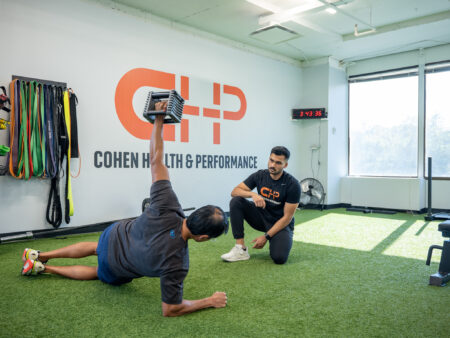
At Cohen Health & Performance, continuing education is not just something we encourage. It is built into how we operate.
Every quarter, we close both of our clinics so our entire team can come together for our CHP Summit. These days are dedicated to learning from one another, discussing the latest research, and finding new ways to better serve the athletes and active adults who trust us with their care.
As a physical therapist in Bethesda or physical therapist in McLean, staying current with the latest evidence allows us to deliver the highest quality rehabilitation and performance training possible.
One of this quarter’s presentations focused on a topic that every athlete and parent should understand: the importance of in-season strength training.
Why athletes should continue strength training during the season
A common misconception is that athletes should stop lifting weights once games begin. Many worry that strength training will leave them sore, tired, or negatively affect performance on the field.
The research tells a different story.
According to the latest evidence presented during our CHP Summit, athletes can begin losing measurable strength and power after just two to three weeks without resistance training. These declines are even greater in younger athletes, who have not yet built years of training adaptations.
Even elite athletes experience significant strength losses after only a few weeks away from the weight room.
The takeaway is simple: maintaining strength during the season matters.
One session per week may be enough
The good news is that maintaining strength does not require spending hours in the gym.
Research suggests that even one quality strength training session each week can help athletes maintain many of the gains they built during the offseason. If schedules allow, two sessions per week can be even more beneficial.
Rather than performing dozens of exercises, athletes should prioritize compound movements such as:
- Squats
- Deadlifts
- Bench press
- Rows
- Split squats
These exercises train multiple muscle groups simultaneously and provide the greatest return on time invested.
In-season strength training can reduce injury risk
Perhaps the biggest reason to continue strength training during the season is injury prevention.
When athletes maintain their strength and power, they are better prepared to tolerate the physical demands of practices and games. Research has shown that athletes who continue strength training experience significantly lower injury rates than those who stop lifting altogether.
Even if an injury does occur, stronger athletes often return to play faster because they have maintained more of the physical qualities needed during rehabilitation.
For athletes competing nearly year-round, maintaining strength is one of the simplest ways to stay available throughout the season.
Quality matters more than quantity
An effective in-season program does not need to be complicated.
Instead of adding more exercises, focus on:
- Four to five compound movements
- At least one challenging working set for each exercise
- Proper technique
- Adequate recovery between sessions
The goal during the season is not necessarily to make dramatic strength gains. It is to preserve the hard work completed during the offseason while supporting performance and reducing injury risk.
Why continuing education matters at Cohen Health & Performance
At Cohen Health & Performance, our quarterly CHP Summits allow every clinician to stay current with the latest sports science research and apply those findings directly to patient care.
Whether you are working with a physical therapist in Bethesda or a physical therapist in McLean, you can be confident that your treatment plan is built on current evidence and tailored to your individual goals.
Looking for guidance with your in-season training?
If you’re an athlete preparing for a busy season, or a parent wondering how your child should balance practices, games, and strength training, we’re here to help.
Our team designs individualized in-season strength programs that help athletes maintain performance, reduce injury risk, and stay ready when it matters most.
Whether your goal is to compete at a higher level, stay healthy throughout the season, or recover from an injury, the right training plan can make all the difference.
