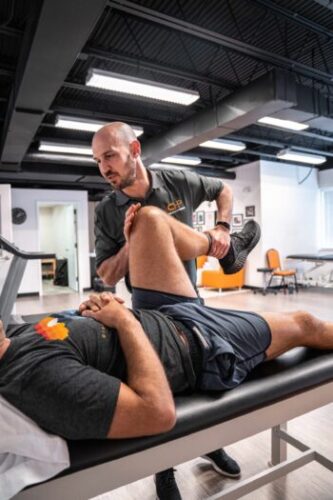
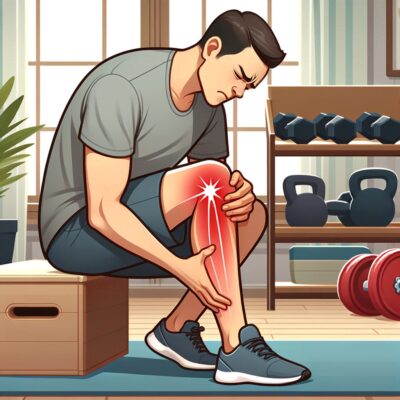
Your Physical Therapy Guide to Knee Pain Relief

Is Your Knee Pain Trying to Tell You Something? Here’s When to Listen

Knee pain doesn’t always shout—it often whispers.

Maybe it started as a dull ache after a workout or a twinge when walking down stairs. It’s easy to brush it off, thinking some rest and ice will do the trick. And sometimes, it does. But what happens when the pain lingers longer than expected?

That’s when it’s time to listen more closely—and consider physical therapy as your next step.

Why Physical Therapy Should Be Your First Stop for Knee Pain

When knee pain doesn’t go away within a few days—or even worsens—it’s easy to assume you need to see an orthopedic specialist right away. But here’s the truth: a qualified physical therapist is often the best place to start.

Not only is knee pain physical therapy more accessible and cost-effective than many medical appointments, but sports-trained physical therapists can also help identify the root cause, guide treatment, and decide if additional medical care is needed.

If your knee discomfort lasts more than a week or starts interfering with your daily activities, it’s time to schedule an evaluation.

Common Causes of Knee Pain Physical Therapy Can Help

Every knee injury is unique, and so is its solution. Below are several conditions we treat regularly with great success at Cohen Health and Performance:

Meniscus Injuries

The meniscus cushions your knee joint and is prone to tearing—especially in sports or twisting movements. In many cases, physical therapy can match the results of surgery, improving strength, mobility, and long-term function without going under the knife.

Knee Ligament Sprains

Injuries to the ACL, MCL, or other ligaments often benefit from a structured rehab plan. A combination of support (like bracing), strengthening, and functional exercises can help you return to your normal routine safely and confidently.

Osteoarthritis (OA)

If you have stiff, achy knees in the morning or after sitting, you may be dealing with OA. Physical therapy helps strengthen the muscles around your joint, improve mobility, and reduce the stress on the knee—giving you better control over symptoms without relying solely on medications.

Patellofemoral Pain Syndrome

This condition, often felt as pain around the kneecap, can stem from many sources: muscle imbalances, poor mechanics, or even your footwear. A skilled physical therapist will assess the entire kinetic chain—from hips to feet—to develop a personalized treatment plan that addresses the root cause.

Post-Fracture Rehab

If you’ve suffered a knee fracture, physical therapy is essential for restoring normal motion, rebuilding strength, and safely transitioning back to walking, stairs, and eventually higher-level activities.

Signs Your Knee Pain Needs Immediate Medical Care

While most types of knee pain are appropriate for physical therapy, some situations call for immediate medical attention. Contact your doctor if you experience:

  • Inability to bear weight or straighten your knee
  • Noticeable deformity or severe swelling
  • Feeling like your knee might “give out”
  • Persistent redness and warmth
  • Intense tenderness in your calf (possible sign of a blood clot)
  • Fever or general malaise along with swelling (could indicate infection)

Choosing the Right Knee Pain Physical Therapy Provider

Not all physical therapists are the same. When dealing with a knee injury, make sure you work with someone who:

  • Specializes in sports and orthopedic rehab
  • Understands the demands of your lifestyle or sport
  • Builds custom plans based on your goals and movement patterns

At Cohen Health and Performance, we bring elite-level care to active adults and athletes across Bethesda and McLean. Whether you’re looking to avoid surgery, recover from injury, or simply move better with less pain, our team is here to help.

Let’s Get You Moving Again

Don’t let knee pain limit your life. If it’s been nagging you for more than a few days, or you’re tired of managing it on your own, we’re ready to help.

Book your physical therapy evaluation at our McLean or Bethesda location today—and take the first step toward lasting relief.
Still Struggling with Knee Pain? Why Physical Therapy May Be the Missing Link

At Cohen Health and Performance, we recently worked with an athlete who came to us months after injuring his knee during a workout at the gym. After seeing his doctor, he was told there was nothing structurally wrong—no damage on imaging, no major red flags. The advice? Take a couple of weeks off and slowly return to exercise.

Fast forward several months, and he was still modifying workouts and struggling with lingering pain and frustration.

Sound familiar?

This scenario is incredibly common—especially among active individuals dealing with chronic knee pain. Whether you’re a weekend warrior, a gym enthusiast, or a competitive athlete, you may have been told to rest, stretch, or foam roll your way out of pain. And yet, the discomfort persists.

Why Traditional Approaches Often Fall Short

Most general advice focuses on reducing symptoms—not solving the root cause. Many rehab programs stop as soon as pain decreases or when daily activities become tolerable again. But for those who want to lift heavy, sprint, or change direction on the field, this simply isn’t enough.

Effective therapy for knee pain needs to go beyond the basics. It should train your knees to handle the specific stresses of your sport or activity.

For example, sports that involve cutting and multidirectional movement place your knees in angled, high-force positions. If your rehab never prepares you for those forces—if your shin is never loaded at those angles during training—you’re setting yourself up for continued breakdown.

The Importance of Load-Specific Training

To truly recover and thrive, the tendons and muscles around the knee—especially the patellar tendon and quad tendon—must be reconditioned to tolerate the demands of real movement. Whether you’re jumping, landing, or squatting under load, your knees must be gradually exposed to the stresses they’ll face in the real world.

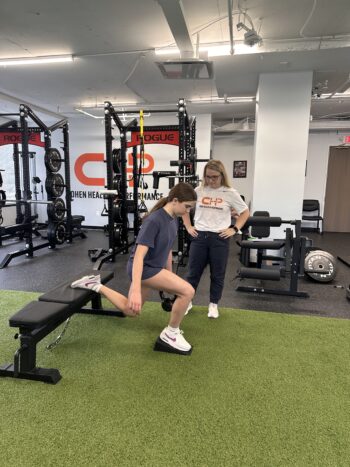
That’s why our rehab process includes drills and exercises tailored to your goals. Below is an example from our specialist, Dr. Cat, demonstrating exercises that teach the knee how to absorb and produce force under real-world conditions.

By gradually increasing load and focusing on the angles and demands of your sport, we prepare the knee—and the entire lower body—to handle life beyond the treatment table.

Don’t Let Knee Pain Linger

If you’ve been dealing with chronic knee issues, tried resting, icing, stretching, or following online exercise videos with no real progress, it’s time to dig deeper. At Cohen Health and Performance, we take a comprehensive look at your movement patterns, strength, mobility, and sport-specific demands to uncover why your knee pain persists—and how therapy for knee pain in Bethesda can fix it for good.

We don’t just want to help you feel better.

We want to get you back to training, competing, and living life without limitations.

Ready to Get to the Root of Your Knee Pain? 
Contact us today to schedule a comprehensive evaluation and find out how therapy for knee pain can help you move better, feel stronger, and finally leave knee pain behind.

Why Shoulder Injuries Are So Complex

At Cohen Health and Performance, we specialize in physical therapy in Bethesda and physical therapy in McLean for active adults and athletes who want to get back to the activities they love. One of the most common mistakes we see in traditional care—yes, even among other physical therapists—is a failure to appreciate how complex the shoulder really is.

The shoulder is the most mobile joint in the entire body. That’s what makes it so essential: reaching, throwing, lifting, pushing, and pulling all require freedom of motion. But that same mobility also opens the door to a ton of possible compensations and dysfunctions when something isn’t moving well.

Your Shoulder Isn’t Just a “Ball-and-Socket”

Think of your shoulder like a golf ball sitting on a tee. The ball is your humeral head (upper arm bone), and the tee is the glenoid (part of your shoulder blade or scapula). But that “tee” isn’t grounded into the earth—it’s actually floating on your rib cage. That means your shoulder’s stability is influenced by your rib cage shape, position, and even how you breathe.

Most providers stop at the shoulder joint itself. But for us at Cohen Health and Performance, whether it’s physical therapy in McLean or physical therapy in Bethesda, we know that treating shoulder pain means looking beyond the joint.

If the shoulder blade doesn’t sit securely on the rib cage, the muscles around it—like the upper traps or rhomboids—often work overtime to stabilize things, leading to tightness, knots, and nagging pain in the upper back or neck.

The Rib Cage is the Unsung Hero


One of the foundational drills we use to retrain shoulder mechanics involves placing your forearms on the wall. Here’s the key:

  • Straight line from wrist to elbow
  • Externally rotate through the shoulders
  • Use your rib cage—not your arms—to press back into the shoulder blades. Perform 5 breaths in this position.

A cue we love: Imagine a hot poker hovering in front of your sternum. Your job? Pull away from it without slumping forward. This activates a crucial muscle called the serratus anterior, which helps anchor your scapula and sets the stage for clean, pain-free movement.

Getting the Shoulder Blade Moving Again


Once you’ve created a supportive rib cage, the shoulder blade (scapula) can do its job again—mainly rotating upward as your arm reaches overhead.

A simple but effective exercise to improve this scapular movement is Downward Dog:

  • Start in a push-up (or all 4’s) position
  • Press away from the floor with your hands
  • Drive your chest toward your knees
  • Focus on feeling the shoulder blades rotate upward and outward

This kind of targeted movement work is exactly what we emphasize in our programs for physical therapy in Bethesda and physical therapy in McLean. Without proper scapular motion, your rotator cuff is forced to overwork—and that’s when breakdowns happen.

What About the Rotator Cuff?

Only after we’ve addressed rib cage position and scapular movement do we move to the rotator cuff. By this point, rotator cuff exercises are finally in the right environment to be effective—rather than just throwing rubber band exercises at a deeper problem that hasn’t been solved yet.

Final Thoughts: There’s Hope for Your Shoulder

If you’ve had shoulder treatment in the past and it didn’t work—or if you’ve been dealing with shoulder pain for months or even years—don’t lose hope.

The truth is, shoulder pain is multifactorial. It can stem from poor rib cage positioning, scapular movement limitations, limited mobility, or underdeveloped rotator cuff function. And many healthcare providers simply don’t take the time to look at all of these layers.

That’s where we come in.

If you’re looking for expert-level physical therapy in Bethesda or physical therapy in McLean that goes beyond surface-level care, contact us today. Our team of Doctors of Physical Therapy will work with you to get to the root of your shoulder pain and get you back to doing what you love—stronger and smarter than ever.

Having a 6-Pack Is Overrated?!

When it comes to fitness, the six-pack — those visible abs known as the rectus abdominis — gets all the glory. But from a physical therapy and spine health standpoint, it’s time we set the record straight: having a 6-pack is overrated.

At Cohen Health and Performance, we frequently work with active adults and athletes who want to prevent or recover from back pain, improve their core stability, and get more out of their workouts. A key misconception many bring in is the belief that the rectus abdominis is the holy grail of core strength.

Let’s break that myth down.

What the Rectus Abdominis Really Does

The rectus abdominis runs from your ribcage to your pelvis, right down the front of your abdomen. It’s the most superficial abdominal muscle — meaning it’s closest to the surface — which is why it’s the one you see in the mirror. But it’s not the most functional when it comes to spinal support or back pain prevention.

Its attachment points on the ribcage and pelvis are small and weak compared to deeper abdominal muscles. This means it doesn’t do a great job controlling how your ribcage and pelvis align — a key part of keeping your spine supported during movement.

The Real Core Stabilizers: What Actually Helps with Back Pain

At Cohen Health and Performance, where we provide sports physical therapy in McLean and Bethesda, we focus heavily on training the deeper core muscles that make a real difference:

-Transverse abdominis: The deepest abdominal muscle, wraps around your torso like a corset.
-Obliques: Help with rotation, side bending, and crucially, stabilizing your ribcage and pelvis.
-Diaphragm and pelvic floor: Work in sync with your core to manage internal pressure and support the spine.

These deeper muscles have stronger connections to your ribcage and pelvis and play a much greater role in controlling spinal position — making them essential for back pain relief and injury prevention.

How We Teach Patients to Engage the Right Muscles

Many people struggle to “find” or activate these deeper muscles because they’ve been trained — often unknowingly — to only rely on superficial muscles like the 6-pack.

One of the first drills we teach many of our physical therapy patients in Bethesda and McLean is something you can try at home:

1. Lie on your back with knees bent and feet flat.
2. Breathe in through your nose.
3. Exhale slowly through your mouth — as long as you possibly can.
4. As you exhale fully, you should feel your ribs draw down and in — and your deeper abs engage.
5. Hold that feeling for 5 seconds at the end of the exhale.
6. Try to quietly breathe in without losing that muscle engagement and repeat this cycle 5 times

This is often the first step toward building true core control — and a key part of our rehab process for those dealing with chronic or recurrent low back pain.

How This Applies to Movement and Exercise

Once you learn how to activate those deeper muscles, we help you bring that control into movement:

-Lifting one leg at a time while lying down
-Overhead arm motions while continuing to feel your deep abdominals
-Transitioning to standing drills like squats or deadlifts
-Returning to sport or high-level athletic performance

This progressive, intelligent approach is what sets our physical therapy practice in Bethesda and McLean apart — and what helps our patients get long-term results, not just temporary relief.

 Struggling with Back Pain? Want Smarter Core Training?

If you’ve been dealing with low back pain, poor posture, or feel like your workouts just aren’t translating to improved performance or comfort, it may be time to train your core smarter, not harder.

Our Doctors of Physical Therapy in Bethesda and McLean can help you:

-Eliminate chronic or nagging back pain
-Improve core strength and stability
-Optimize your breathing and movement patterns
-Return to sport, the gym, or simply a pain-free life

Ready to Get Started?

If you are looking to move and feel better, don’t waste time chasing six-pack abs. Schedule an appointment with our team at Cohen Health and Performance in Bethesda or McLean, VA and start building a strong, functional core that actually protects your back and enhances your performance. Click here to  get started!

What Africa’s Maasai Tribe Can Teach Us About Movement

After recently returning from an unforgettable trip to Tanzania and Kenya, I’ve found myself reflecting on more than just the incredible wildlife we encountered on safari. The people also left an imprint — particularly the Maasai tribe, whose way of life offers some insights into human movement and performance.

As a sports physical therapist and business owner serving active individuals in both Bethesda and McLean, I’m always observing movement through the lens of biomechanics, environment, and long-term physical resilience. And the Maasai tribe? They’re a living example of how environment and development shape the human body’s capacity for movement.

The Barefoot Reality

The Maasai grow up immersed in motion — running, walking, jumping, and herding cattle amidst unpredictable terrain and wild animals like lions and hyenas. What’s even more fascinating? They do all of this in traditional sandals they make themselves — minimalistic by our standards, offering little support compared to today’s athletic shoes.

Yet despite the lack of external support, they move efficiently and powerfully, as they developed this way from birth. Their feet, ankles, and lower limbs were conditioned over years to tolerate the high forces of running and jumping — essentially barefoot.

What This Means for Us in Bethesda or McLean

In our society, we’re influenced by very different environmental forces. We spend most of our time on concrete and hard surfaces, not grasslands. Most of us wore structured shoes as children, so our feet developed differently from those of the Maasai.

That’s why trends like barefoot running, inspired by books like “Born to Run”, need to be approached thoughtfully. While the intention behind minimal footwear and natural movement is often positive, our bodies may not be ready for that shift without a smart, progressive plan.

At our performance physical therapy clinics in Bethesda and McLean, we help patients understand how to safely incorporate barefoot-style training — but we do so within the context of their unique background, history, and goals. What works for someone raised in rural Kenya might not be the best place to start for someone who’s been training on gym floors or running on paved roads their whole life.

Context Is Everything

Whether it’s about footwear, mobility drills, strength work, or running technique, context matters. What’s optimal for one person may lead to injury in another — especially when their musculoskeletal system hasn’t adapted to a new stimulus.

That’s where expert guidance can make all the difference.

Looking to Train Smarter?

If you’re experimenting with new training strategies, transitioning to minimalist footwear, or just looking for ways to optimize performance while preventing injury, our team at Cohen Health and Performance would love to help.

We specialize in physical therapy for active adults and athletes in both McLean and Bethesda, helping bridge the gap between rehab, performance, and long-term health.

Contact us today to schedule an evaluation and get expert guidance on how to move better, train smarter, and thrive in your own environment.


You Don’t Just Have a “Bad Back”

At Cohen Health and Performance, I’ve had the privilege of helping countless individuals overcome chronic back pain—pain that’s persisted for months, years, or even decades. One thing I hear often is:
“I just have a bad back.”

But what does that really mean?

Rethinking the “Bad Back” Mindset

Many people are told by well-meaning professionals—or after seeing a concerning X-ray or MRI—that they’ll just have to “live with” back discomfort. But here’s the truth: imaging findings don’t always match up with pain levels.
You can have a “perfect” MRI and still feel miserable. Or, your imaging might show disc herniations or degeneration, yet you feel completely fine. So if structure alone doesn’t explain back pain, what does?

Pain is more than a picture. It’s a response. And in the case of chronic back pain, your body may be responding by stiffening up the spine to protect it—like putting a cast on a broken arm. The problem? That constant “splinting” or bracing over time can cause its own set of issues.

Why Movement Matters in Back Pain Physical Therapy

Your spine isn’t one long, fragile bone—it’s a series of small vertebrae stacked like building blocks, designed to move segmentally, much like a slithering snake. When your back stiffens due to prolonged discomfort or fear of movement, you lose that segmental motion. This not only limits function but also reduces the nutrition your joints and discs receive through movement.

One of the first things we focus on in back pain physical therapy and back pain rehab is restoring this movement. I often teach clients a drill called spinal segmentation, where the goal is to regain control by moving one segment of the spine at a time. It doesn’t need to be perfect—it just needs to reconnect your brain to your body’s natural movement capacity.

Stability: Learning to Support Your Spine (Without Leaning on It)

Alongside restoring movement, spinal stability is just as important. Many people with long-term back pain unknowingly rely on their spine for support—even during basic daily activities—rather than using their core muscles.

A favorite exercise of ours to teach spinal stability is the bear position hold. In this position, the goal is to support your body using your abdominal muscles rather than “hanging” on your spine. We coach patients to keep their belly button from dropping and to create tension through their core—retraining them to stabilize without compressing or bracing their spine unnecessarily.

Once this is mastered, we integrate that same feeling of stability into more functional movements like squats or weightlifting, encouraging patients to “feel their abs” supporting them rather than overusing their back.

Breaking the Chronic Pain Cycle

If you’ve been dealing with back pain for a long time, you may have started to believe that nothing will change—that this is just how it is. But that belief is part of what holds people back.

At Cohen Health and Performance, we’ve found that the most effective approach to chronic back pain is an active one—helping you learn how to move better, build control, and load your body in a way that restores trust and function.

Back pain physical therapy and back pain rehab in McLean isn’t about avoiding movement. It’s about restoring movement—and giving you the tools to do the things that matter to you, without fear or limitation.

Ready to Reclaim Your Life from Chronic Back Pain?

If you’re tired of being told you have a “bad back” and want to explore what’s really possible with the right plan, we’re here to help. Reach out to schedule an evaluation or check out more of our educational content on our YouTube page, where we demonstrate exercises and share strategies that have helped countless people just like you.

Let’s stop managing your pain—and start changing your story.

×