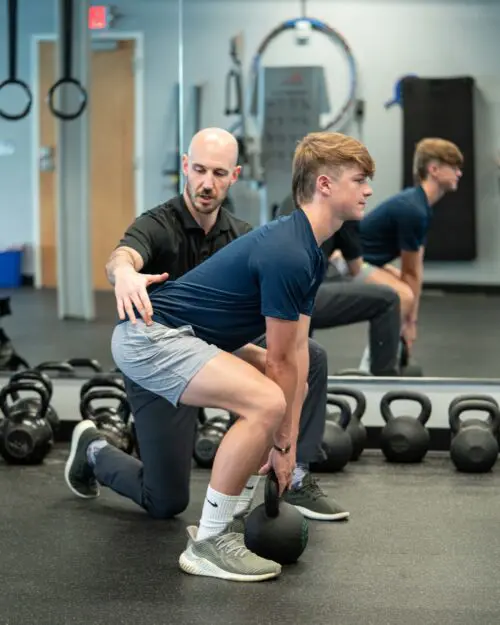
3 training mistakes made by young athletes

After opening our new facility in McLean in December, I jumped back into treating sports physical therapy patients.

Our busiest time was in the afternoon when we saw high school athletes.

Many of these young athletes were training independently in the weight room, and I needed them to change their approach for physical therapy to be successful.

While each athlete needed to change something different, there were three mistakes that I found many were making.


Overtraining

Oh, to be young. Many high school athletes feel invincible and, as a result, push themselves too hard. More is only sometimes better, especially when they are playing on several different teams simultaneously with a demanding school schedule. Constantly pushing the limits causes poor technique in the weight room and increased risk of injury. A more thoughtful approach to strength and performance training will provide the opposite result and reduce injury risk!


Ignoring the basics

Understandably, many young athletes want to focus on the exciting stuff. Lifting heavy weights is exciting and competitive. But improving mobility and foundational movement skills. Not so much.

Building strength on a foundation of poor mobility and movement skills is a recipe for injury.

Can your athlete touch their toes without bending their knees or perform a deep bodyweight squat without falling over? How about a pushup without their chest rising before their trunk?

Below are a couple of exercises we use to address these problems before adding heavy weights.

Lateral step down

Core pushup


Lack of Individualization

Many high school athletes follow generic training programs that don’t consider their individual needs, strengths, and weaknesses. While this works for some, an athlete recovering from an injury is unique and needs a training program tailored to their specific goals and abilities.


If you have an athlete motivated to make the most of their ability, they could be falling for many of the same mistakes.

Contact us if you want a personally designed strength training program.

This program may be all your athlete needs to avoid these common mistakes and take their performance to another level!
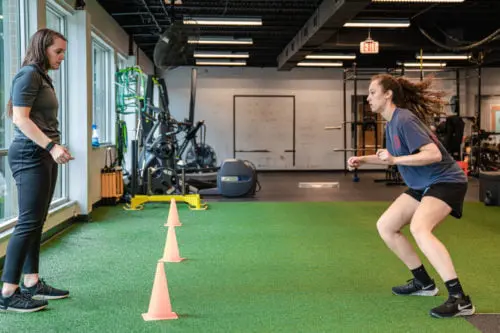
3 exercises athletes must master before college

During physical therapy school at Northeastern University, I volunteered as an assistant strength and conditioning coach with varsity athletics.

Summer was the most exciting time as first-year student-athletes came to campus to begin their team’s strength and conditioning program.

Our strength and conditioning and sports physical therapy staff quickly understood which athletes had experience in the weight room and which did not.

The athletes with limited weight room experience seemed lost. They didn’t know how to perform the required exercises and were notably weaker than their teammates.

Their coaches quickly learned about this, putting them at a disadvantage compared to their teammates working in the weight room before attending college.

Here are three exercises to help your athlete gain an advantage over their teammates.

Deadlift

Core pushup

Lateral stepdown

Does your athlete dream of playing a sport in college? Are they looking to get ahead of their competition? 

If so, don’t miss this opportunity to join our rising-star summer performance program. In this program, your athlete will be coached through a customized program that will transform them into a stronger, faster, and more explosive athlete. Contact us to learn more!

Bob’s rehab journey from injury to college athletics

Bob was a talented high school lacrosse player with dreams of playing at a Division 1 college. However, despite his ideal size and athletic ability, he wasn’t attracting any interest from college coaches.

The issue wasn’t his talent or drive—it was his injury history. Bob had been plagued by various injuries over the past two seasons, and it was affecting his ability to stay on the field consistently. His history of injuries was the major reason coaches were hesitant to recruit him.

He had already visited multiple doctors and physical therapists but couldn’t seem to stay healthy long enough to make an impact. Frustrated and doubting his chances of ever getting recruited, Bob came to us seeking help.

When we first saw Bob, he was dealing with both ankle and knee injuries that had been bothering him for months. Our sports physical therapy process started with a thorough assessment of his lower body’s range of motion, strength, and movement patterns. We also evaluated his ability to perform the specific movements required in lacrosse.

It quickly became clear that he had significant movement limitations in his ankles and hips, which were causing him to compensate during running and training. These compensations had become ingrained in his movement habits, further reinforcing his limitations and contributing to his recurring injuries.

We worked with Bob to restore proper motion in his ankles and hips, and taught him specific drills to retrain his body to move naturally without compensating.

Once his mobility improved, we shifted our focus to rebuilding his strength, speed, and explosiveness. Our role began to transition from physical therapists to performance trainers. We developed a tailored gym program to help Bob regain his athletic edge and enhance his overall performance.

Three months later, Bob was ready to return to the field for his high school lacrosse season. Although he was nervous about getting back to playing, he was eager to show his coaches the progress he had made.

After his first practice, Bob called me, excited. His coach had pulled him aside to ask what he had been doing during the off-season. Bob had completely outperformed his teammates, returning stronger, faster, and more explosive than ever before.

Fast forward a year, and Bob earned a Division 1 lacrosse scholarship, fulfilling his dream.

If your athlete shares similar aspirations of playing at the collegiate level, reach out to us and join our Performance U Training Program! Let us help your athlete stay healthy, improve performance, and reach their full potential.

Maximizing your child’s chance of earning a college scholarship

ONE person has the final decision in determining if your athlete will receive a scholarship to play college sports. The coach.

Coaches are most concerned with keeping their jobs or earning job opportunities at more prominent programs.

If your athlete can help a college coach with either, a scholarship may be coming their way!

On the other hand, coaches hate inconsistency. When talented players cannot play consistently, a coach can’t trust that they can win consistently, and inconsistent winning equals a lack of job security.

What is the number 1 reason an athlete is unable to play? You guessed it, injury.

I remember speaking to a college football coach in Texas who told me that he would rather have a good player that is consistently healthy than a great player who is always in physical therapy and injury prone. He went on to say that he likes players who overcame an injury and stayed healthy afterward. To the coach, this indicated a strong work ethic, a resilient mindset, and commitment to the physical therapy and performance training process. 

A comprehensive strength training program is best for athletes to stay healthy or overcome a lengthy injury history. Now that summer is here, this is the perfect time for your athlete to get started!

But finding the best strength training solution can be challenging. You should look for three things in your athlete’s strength training program.

  1. Qualified and Experienced Coaches: Look for coaches with a track record of working in your athletes’ sport or discipline. They should demonstrate a strong understanding of exercise science and sport-specific training.
  2. Individualized Program Design: A quality strength training program is tailored to the specific needs and goals of the athlete. Look for programs that start with an individualized assessment to identify strengths, weaknesses, and areas of improvement. The program should be designed to address your athlete’s unique characteristics.
  3. Goal Alignment: Your athlete’s strength training program should align with their goals and sport. Look for programs that incorporate exercises, training methods, or progressions relevant to your athlete’s sport. 

Are you interested in finding the best summer training program for your athlete? 

If so, contact us to participate in our rising-star training assessment.

This assessment will show you and your athlete the secret to helping them avoid injury and take their performance to the next level. 

The Secret to Recruitment for College Sports

College coaches are most concerned with keeping their jobs or earning job opportunities at more prominent programs.

If your athlete can help a college coach with either, a scholarship may be coming their way!

On the other hand, coaches hate inconsistency. When talented players cannot play consistently, a coach can’t trust that they can win consistently, and inconsistent winning equals a lack of job security.

What is the number 1 reason an athlete is unable to play? You guessed it, injury.

I remember speaking to a college football coach in Texas who told me that he would rather have a good player that is consistently healthy than a great player who is injury prone. He went on to say that he likes players who overcame an injury and stayed healthy afterward. To the coach, this indicated a strong work ethic and resilient mindset.

A comprehensive strength training program is best for athletes to stay healthy or overcome a lengthy injury history. This is a large component of the sports physical therapy process in Bethesda and McLean. Now that summer is here, this is the perfect time for your athlete to get started!

But finding the best strength training solution can be challenging. You should look for three things in your athlete’s strength training program.

  1. Qualified and Experienced Coaches: Look for coaches with a track record of working in your athletes’ sport or discipline. They should demonstrate a strong understanding of exercise science and sport-specific training.
  2. Individualized Program Design: A quality strength training program is tailored to the specific needs and goals of the athlete. Look for programs that start with an individualized assessment to identify strengths, weaknesses, and areas of improvement. The program should be designed to address your athlete’s unique characteristics.
  3. Goal Alignment: Your athlete’s strength training program should align with their goals and sport. Look for programs that incorporate exercises, training methods, or progressions relevant to your athlete’s sport.

Are you interested in finding the best summer training program for your athlete? Contact us!

CHP Spotlight Interview with Dr. Jamie Grossman

What can you do to prevent common upper and lower body injuries? When is it time for you to see an orthopedic surgeon? Are there surgical procedures that can preserve the lifespan of a joint? 

I sat down with Dr. Jamie Grossman to tackle these questions and more in the latest CHP Spotlight Interview series edition. Dr. Grossman is an orthopedic surgeon with OrthoVirginia specializing in the field of joint preservation. Her areas of interest include sports medicine, joint reconstruction, and hip preservation.

The mission of the CHP Spotlight Interview Series is to share information with you from local experts in the fields of sports medicine, physical therapy, personal training, and sports performance. Now, more than ever, a seemingly infinite amount of information is available, and finding credible information is challenging. But we have good news. We are here to help you find the best information about physical therapy, personal training, and sports medicine from experts in Bethesda, Chevy Chase, DC, McLean, and Northern Virginia.

If you or someone you love has had a shoulder, hip, or knee injury, don’t miss this interview! 

To learn more about Dr. Grossman, click here and check out our interview below!

×