Unlocking mobility

Do your hips or lower back feel tight when you squat? Do your shoulders feel stiff when you try to raise your arms overhead, or do your ankles feel restricted during certain movements? These are common complaints seen regularly in the field of sports physical therapy.

Mobility issues like these are often frustrating, but they aren’t random. In fact, it’s your body—and more specifically, your nervous system—deliberately limiting your range of motion. That stiff muscle you feel is your body’s way of protecting itself or adapting to the physical demands placed on it.

As a physical therapist, I frequently reflect on my experiences working with elite athletes, particularly during my time with the National Basketball Association (NBA). Many of these athletes experienced ankle mobility restrictions, which were a natural adaptation to their sport. Their constant sprinting, jumping, and cutting movements—often performed with their heels rarely touching the ground—caused their bodies to adapt in a way that improved performance but at the cost of mobility.

In these athletes, the tissues around their ankles functioned like tight springs, making them more explosive without requiring excessive energy expenditure. While these adaptations allowed them to excel on the court, they also came with trade-offs, limiting ankle mobility. Over time, these performance-enhancing adaptations can lead to increased risk of injury if mobility is sacrificed too much.

When Does an Adaptation Become a Problem?

Adaptations like limited ankle mobility can be beneficial for specific movements or sports. However, when these adaptations go too far, they can put you at a higher risk for injury.

The key question is: How do we know when adaptations have gone too far?

The answer is simple: when the body can no longer perform the basic movements required by your daily life or sport. At this point, your joints have less mobility than necessary, and that’s when you begin to experience discomfort, stiffness, or injury.

For instance, a basketball player who spends most of their time on the balls of their feet may lose the ability to properly flex their ankles. This lack of mobility may not seem like an issue during the game, but it can lead to compensations elsewhere in the body, causing lower back pain, knee problems, or even an Achilles injury. Similarly, if your shoulders are stiff when lifting weights, it might not be the weights that are causing pain, but rather the shoulder’s inability to move through its full range of motion due to overuse or compensatory patterns.

How Can Physical Therapy Help?

One of the core principles of physical therapy is identifying and addressing these movement limitations before they turn into bigger problems. By targeting areas of the body that have adapted too far, physical therapy helps restore balance between mobility and stability.

At its core, mobility isn’t just about increasing flexibility or stretching. It’s about teaching your body how to move in a variety of ways. This is especially important for athletes and active individuals who have developed specific movement strategies over time. For example, if you primarily engage in forward-motion activities (like running or cycling), your body may over-adapt to these movements and lose the ability to move comfortably in other directions.

The Importance of Varying Your Movements

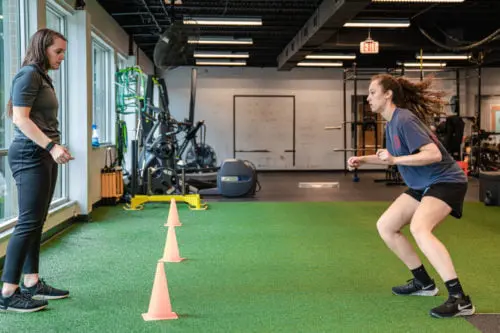
To counteract these adaptations, I encourage athletes and patients alike to incorporate daily exercises that challenge their bodies to move outside of their typical patterns. By regularly practicing movements that are different from their usual routines, individuals can maintain better overall mobility and reduce the risk of overuse injuries.

For example, I recently worked with a patient who had limited shoulder mobility. This patient experienced stiffness when raising their arms overhead due to years of repetitive shoulder movements. I introduced a daily shoulder mobility drill to improve their range of motion and reduce the risk of injury.

In another case, I advised a runner to incorporate lateral movement drills into her routine to counterbalance the constant forward motion of running. This allowed her to develop strength and mobility in muscles that weren’t being used as much, ultimately improving her performance and reducing her risk of injury.

Try These Mobility Drills for Better Movement

Here are a couple of examples of the mobility drills I often prescribe:

These exercises are simple but effective ways to restore mobility and ensure that your body doesn’t over-adapt to a single movement pattern.

Ready to Improve Your Mobility?

If you’re tired of feeling tight, stiff, or restricted during your favorite activities, physical therapy can help you restore balance and improve your movement. Whether it’s your hips, back, shoulders, or ankles causing trouble, understanding and addressing the root cause of your mobility limitations is the first step to feeling better and moving more freely.

Would you like to discover daily exercises and routines that can help you improve your mobility and overall performance? Contact us today to schedule an evaluation and get started on the path to better movement!

When You Should Be Using a Workout Machine

Workout machines like the prone hamstring curl are underutilized in the sports performance setting and often get a bad rap in the sports physical therapy industry. I have heard people (physical therapists, strength coaches, running coaches, personal trainers, etc.) say negative things about using machines for a variety of different reasons.

“Machines are not functional. Humans should provide their own stability and not rely on a machine to do it for them.”

“X, Y, or Z machine isolates only one area of the body and we do not move 1 area at a time in real life.”

The support that machines provide, allowing people to focus on working one area has many advantages when used appropriately.

Even athletes can benefit from using machines.

High level sprinting requires an athlete to have a great deal of hamstring strength as the muscle is in a shortened position (when the knee is fully bent).

During the recovery phase of sprinting (as the leg is being brought back to the front of the body) the heel should be as close to the athlete’s bottom as possible. As this motion begins, the hip is a relatively extended position.

The prone hamstring curl trains end range hamstring strength when the hip is in this position. Dr. Cohen even pauses briefly in this video when at the end of the movement to stress this position.

During this exercise, the machine will dictate the movement however remember to use your abs to prevent the lower back from extending during any portion of the exercise.

There is no such thing as a good or bad exercise. Almost every exercise is appropriate when used properly. The key is to be clear on the desired outcome of the drill and how to implement it most effectively into your training routine.

Would you like to learn how to design your training most effectively to best accomplish your goals? If so, contact us to receive a customized training program designed specifically for you!

Physical Therapy Didn’t Work…

I tried physical therapy and it didn’t work.

Many of our patients in Bethesda have seen other physical therapists prior to seeing us. In their previous physical therapy experiences, they did not achieve the results that they were looking for and are coming to us for answers.

Personally, I love working with these people because they continue to believe that our profession can help them. However, negative experiences in physical therapy often cause many others to lose faith in the profession.

Perhaps you are one of these people. If so, I don’t blame you as I once was in your shoes!

When I was in High School, I experienced a quadricep injury that was impacting my ability to play football.

I went to my local physical therapy practice searching for help in overcoming this injury and play in my junior season. It was going to be my first season starting on both offense and defense causing this injury to constantly remain in the front of my mind.

My introduction to physical therapy was not what I had hoped for, and I now realize that my physical therapists were not taking great care of me (to learn more about how you can determine if this is the case, see my latest blog here).

Luckily, I was still able to play in my season and was back to 100% by the middle of the year. However, I can’t help but wonder if I would have been fully healthy to start the season if I saw a different physical therapist.

Like all other professions, the physical therapy industry has great professionals and poor ones. Furthermore, some physical therapists specialize with athletes, some with cardiac patients and others with people living in nursing homes.

As a result, my hope is that instead of saying “I tried physical therapy and it didn’t work”, you say “This physical therapist or physical therapy practice didn’t provide the results that I was looking for and I need to find someone that is a better fit for what I need.” 

The truth about stretching and physical therapy

Many people believe that sports physical therapy and performance training should involve a significant amount of stretching. However, every aspect of injury rehabilitation or athletic training needs to serve a clear and specific purpose. When was the last time you paused and asked yourself, “What do I hope to gain from stretching this area?” or “Does this particular muscle even need to be stretched?”

The truth is, like most things in physical therapy, the answer isn’t black and white—it depends. To understand whether stretching is appropriate, you first need to know why a muscle has become stiff or tight in the first place.

Why Do Muscles Become Stiff?

Muscles can become stiff when they are held in a shortened position for extended periods of time. For example, if you spend most of your day sitting or standing in the same position, your muscles may “lock up” in that position and feel tight. Another common cause of stiffness is repetitive movement—when you continually perform the same motions without incorporating enough variety into your routine.

So, if your day involves repetitive tasks or being in a static posture for hours on end, stretching might temporarily relieve the stiffness, but it won’t address the root cause. The solution to “tight” muscles often lies in incorporating more varied movement into your daily routine.

Stretching Without Purpose: A Common Mistake in Physical Therapy

One of the biggest misconceptions in physical therapy is that stretching is always the answer to stiffness or discomfort. However, stretching a muscle without addressing the underlying reason it became stiff is like putting a bandage over the problem—it may help in the short term, but it won’t fix the issue.

For example, in many cases, a muscle might become stiff to protect the body from injury. This is particularly common with back pain. When your back muscles tighten up, they are often responding to underlying instability or strain in the spine. Stretching those muscles could actually make the problem worse by compromising the body’s natural protective mechanisms, increasing your risk of injury.

A Smarter Approach to Stretching in Physical Therapy

Next time you think about stretching a stiff muscle, ask yourself this important question: “Why is this muscle stiff in the first place?” In physical therapy, we focus on identifying and treating the root cause of muscular tightness, rather than just addressing the symptoms. Often, incorporating more variety into your daily movements or addressing imbalances through targeted exercises is a far more effective approach than simply stretching.

Remember, physical therapy is about **rehabilitation with purpose**. Instead of stretching without knowing why, work with a physical therapist who can help you identify the root cause of stiffness and develop a plan to address it safely and effectively. This will not only help you overcome your current discomfort but also reduce your risk of future injuries.

The first drills that we teach to youth athletes

It is essential to understand the demands placed onto the body when working in a sports physical therapy, injury rehabilitation, and performance training setting.

Sports and weight training require athletes to control the body when moving rapidly.

If an athlete wishes to own the “stack” (stacking of our head, rib cage and pelvis over one another) and protect their lower back they must be capable of doing so when performing high velocity movements.

When youth athletes first train, we use medicine ball drills to teach this ability.

The medicine ball chest pass is a great drill to teach this capability. During this the drill, the athlete is generating enough velocity to propel the ball into the wall and back. As this occurs, it can be easy to lose the “stack” requiring the athlete demonstrate a higher of level of body control.

After mastering the chest pass, it is time to bring the arms overhead. More trunk strength and control are required with this movement and the ability to manage intra-abdominal pressure is further challenged. Check out this exercise here.

These are just a couple of the exercises that we incorporate into the training sessions and warmups for our youth athletes.

If you interested in learning more about the summer training options for youth athletes at CHP,  please contact us!

Is Your Doctor (or physical therapy clinic) Taking Care of You?

Recently, I joined my mother-in-law for a visit to a physician’s office.

The physician she saw has a solid reputation and is known as a “go-to” expert in his field.

During the visit he spent a total of 5 minutes with my mother-in-law, glossing over test results and providing very brief recommendations.

He appeared to be speaking as fast as he could so that he could finish the visit and to get to his next patient. After his rushed explanation, we attempted to ask questions, which he answered while backing out of the room.

Sadly, experiences like this are very common in the world of healthcare and I do not blame the healthcare providers because they oftentimes are not left with much of a choice.

The health insurance industry consistently reduces reimbursement to health care providers, forcing them to schedule more patients within a fixed time period. As a result, the quality of care suffers, and everything becomes less personalized.

This also occurs in physical therapy, forcing many clinicians to resort to “cookie cutter” protocols.

If you go to Physical Therapy because of lower back pain then you get put on the lower back pain protocol, shoulder pain=shoulder protocol, etc.

Many times, this works, however, it is not the best choice for those looking to live an active, pain free, and healthy life.

For this reason I typically seek out practitioners that are out of network with health insurance as it enables them to provide me with the highest quality of care possible. In this approach I am treated like an individual and I get to ask all the questions that I would like so that I can a better understanding of my health.

We are out of network providers here at Cohen Health and Performance. We strive to get the best possible results for our patients in the least number of visits, while also providing the education necessary to prevent future issues from occurring.

People can feel better, move better, and enjoy an active lifestyle.  Our mission at CHP will always be to take the best possible care of our patients and that is why we are out of network with health insurance.

Interested in learning more about how this approach can help you? Contact us here!

×