Running Tips and Community Building with Coach Sweeney

Don’t miss this exciting edition of the CHP Spotlight Interview Series, featuring Dustin Sweeney, Co-Founder and Executive Director of Light Horse Track Club in Northern Virginia.

Light Horse Track Club is more than just a running team; it’s a vibrant community and a trusted resource for runners of all levels across Loudoun and Fairfax counties. Whether you’re just starting out on your running journey or you’re a seasoned marathoner, Light Horse offers a supportive and dynamic environment where every runner can thrive. Beyond building an inclusive team culture, the club hosts high-caliber races that unite the Northern Virginia running community.

In this interview, I sat down with Dustin to uncover how a strong culture and community can play a pivotal role in a runner’s experience and development. We discussed the ways Light Horse supports runners through community-driven training, social events, and tailored support, including advice on often-overlooked aspects of a runner’s regimen—areas where physical therapy for runners plays a crucial role. Dustin shared insights into how understanding the biomechanics of running and integrating effective running physical therapy can transform a runner’s performance, reduce injuries, and optimize endurance and speed.

We also dove into the importance of injury prevention and rehabilitation for runners, from novices to elites, emphasizing how running physical therapy can prevent common injuries, correct muscle imbalances, and improve running form. Dustin explained that Light Horse Track Club collaborates with local physical therapists to help runners address these challenges, ensuring they have the resources they need for sustained success.

One of the highlights Dustin shared was Light Horse Track Club’s upcoming Gala, a special fundraising event that supports their races and initiatives, which continue to elevate the running experience in Northern Virginia. This gala is more than a fundraiser; it’s a celebration of the local running community, offering a fantastic opportunity for members and supporters to connect, share their experiences, and support Light Horse’s unique programming.

Whether you’re a weekend jogger or training for elite competitions, this interview is packed with valuable insights into how community support and specialized running physical therapy can help you reach your goals. With practical takeaways for all runners, you won’t want to miss it!

Visit Light Horse Track Club’s website here for more information on their programs, races, and the upcoming gala!

Runners, don’t make this mistake

It is no secret that runners must complete a strength training program as part of their physical therapy and cross training routine, in addition to their running. Whether through social media, talking with your running friends or coach, or simply your own intuition, every runner has heard that they should be strength training. But is it as simple as picking up a 10-pound dumbbell and knocking out a few squats and deadlifts? Of course not.

There are so many benefits that strength training can offer a runner. Here’s just a few:

  • Decreased risk of injury
  • Improved running efficiency
  • Stronger tendons

Most runners we work with are endurance junkies, they love the feeling of pushing their bodies hard for long periods of time and the feeling of their heart pumping. A big mistake runners often make with their strength training is trying to make it feel like an endurance event, either by doing sets of 20-30 reps or doing circuit-style training with minimal rest.

One key variable is needed to effectively achieve the previously mentioned benefits of strength training: load. Strength training needs to be heavy, challenging the targeted muscles and tendons far beyond what they encounter regularly; otherwise, those tissues have no reason to adapt and get stronger.

Strength training for runners should focus on moderate to heavy weights that allow 6-10 repetitions per set. This range optimizes muscular strength by optimizing the intensity required for muscle adaptation. Additionally, adequate rest between sets (typically 1-2 minutes) allows muscles to recover and perform optimally during subsequent sets.

Remember, the goal of strength training for runners is not to mimic the cardiovascular demands of running but rather to complement it by building foundational strength and resilience in key muscle groups. By prioritizing proper form, progressively increasing the intensity, and allowing for adequate recovery, runners can maximize the benefits of their strength training regimen and enjoy improved performance and longevity in their running careers. Below is an example of a quick lower-body strength training session I recently created for a runner.

A) Heels elevated kettlebell cleans: 2×5

B) Safety Bar Squats (heavy): 3 sets of 6

C1) Kickstand RDL with a dumbbell: 3×8/side

C2) Weighted lateral step downs: 3×8/side

**C1 and C2 are a superset (perform 1 set of the first exercise, then the first exercise of the next exercise before resting and performing round 2)

D1) Prone Hamstring Curls: 3×12

D2) Double leg resisted calf raises (3 seconds on the way down): 3×12

So, next time you hit the gym or dedicate time to strength training at home, focus on lifting heavier weights with proper form and ample rest. Your body will thank you with increased durability and efficiency on the road or trail.

Speaking of durability, we are excited to announce our Running Technique and Performance Lab this Saturday at 10am at our McLean location. We’ve made some thrilling updates! This workshop is a must-attend for any runner aiming to prevent injuries and achieve new personal records this running season. Don’t miss out!

Learn more and sign up by clicking here!

Couch to 5k and Beyond: Role of Physical Therapy in your running journey

Incorporating physical therapy into the regimen of a runner offers a comprehensive approach to not only mitigate the risk of injury but also to enhance performance, ensure proper rehabilitation post-injury, and maintain overall physical well-being. The expertise of physical therapists in movement science makes them indispensable in guiding runners through the complexities of training, recovery, and performance optimization. Here’s an expanded look at why physical therapy for runners is pivotal at every level.

Comprehensive Injury Prevention

The foundation of a successful running career, regardless of one’s goals, is the ability to stay injury-free. Physical therapists play a crucial role in this aspect by offering:

1. Preventative Assessments: Through detailed evaluations, physical therapists identify potential risk factors for injuries. These assessments delve into a runner’s biomechanics, including stride analysis, foot strike patterns, and overall body alignment. By pinpointing inefficiencies and imbalances, therapists can prescribe targeted interventions to correct these issues before they lead to injury.

2. Strength and Conditioning Advice: Runners benefit from tailored strength and conditioning programs designed by physical therapists to address specific weaknesses or imbalances. Strengthening the muscles used in running and those that offer stabilization can significantly reduce the risk of common injuries like IT band syndrome, Achilles tendinitis, and runner’s knee.

Effective Rehabilitation Strategies

When injuries do occur, physical therapy offers a path to recovery that is both efficient and focused on preventing future issues.

1. Personalized Rehabilitation Programs: Each runner’s injury and physical condition are unique, necessitating a customized approach to rehabilitation. Physical therapists design these programs to target the specific needs of the runner, employing a variety of techniques to accelerate recovery and ensure the injury heals properly.

2. Technique Modification and Education: Beyond addressing the immediate injury, physical therapists educate runners on proper running techniques and modifications to prevent re-injury. This education often includes adjustments to running form, strategies for effective warm-up and cool-down routines, and guidance on how to increase training load safely.

Performance Enhancement

Physical therapy isn’t just for recovering from injuries; it’s also about achieving peak performance.

1. Efficiency Improvements: By analyzing a runner’s biomechanics, physical therapists can identify areas for improvement that can lead to more efficient running mechanics. Enhancements in stride length, cadence, and posture can help runners use their energy more effectively, translating into better performance.

2. Customized Training Plans: Understanding the fine balance between training and recovery is vital for any runner looking to improve. Physical therapists can outline training plans that incorporate adequate rest, cross-training, and targeted exercises to build strength and endurance without overtraining.

Holistic Approach to Runner’s Health

Physical therapists look beyond the mechanical aspects of running, considering the whole person to foster optimal health and performance.

1. Nutrition and Lifestyle Counseling: Proper nutrition, hydration, and sleep are paramount for runners. Physical therapists can offer guidance on these aspects, ensuring that runners are not only training effectively but also supporting their bodies with the right fuel and rest.

2. Stress and Mental Health Management: The mental aspect of running and recovery from injury is often as challenging as the physical. Physical therapists provide support and strategies to manage stress, enhance mental resilience, and maintain motivation—key components for long-term success in running.

3. Longevity in Running: By addressing issues early, providing targeted interventions, and educating runners on proper self-care, physical therapists help ensure a long and healthy running career. This includes adapting training and recovery strategies as runners age or as their goals and physical condition change.

Building a Supportive Community

1. Ongoing Support and Motivation: The journey of a runner is filled with highs and lows. Physical therapists stand as a constant source of professional advice, encouragement, and support. They celebrate the victories and provide perspective and solutions when challenges arise, making them invaluable partners in achieving running goals.

The Bottom Line

The role of physical therapy in running extends far beyond mere injury recovery. It encompasses a holistic approach to the runner’s health, aiming not only for the immediate resolution of injuries but also for the long-term prevention of issues, performance enhancement, and overall well-being. Physical therapists employ a multifaceted strategy that includes biomechanical analysis, personalized training and rehabilitation plans, lifestyle adjustments, and mental health support to help runners achieve their goals.

For runners, investing in physical therapy is investing in their passion, ensuring they can pursue it safely, effectively, and joyfully for years to come. Whether you’re just starting out, looking to smash personal bests, or aiming to run well into the future, physical therapy offers the tools, knowledge, and support to make those goals a reality. In the world of running, where every step counts, physical therapy ensures those steps are taken with confidence, strength, and resilience.

A missing piece of a runners training program

In the world of running and endurance sports, the integration of strength training into a regular fitness routine is not just beneficial; it’s essential. This article delves into the importance of strength training for runners, exploring how it enhances performance, the most effective approaches to take, and specific methods that yield the best results.

The Significance of Strength Training for Runners

Strength training goes beyond merely increasing muscle mass; for runners, it’s a critical component in improving overall performance, efficiency, and reducing injury risk. By focusing on core strength, lower body power, single-leg stability, and explosiveness, runners can significantly enhance their running mechanics. This not only leads to faster and more efficient running but also plays a vital role in injury prevention by ensuring the body can handle the repetitive impact of running.

Triple Extension: A Key Focus

A particularly effective method within strength training for runners is the emphasis on triple extension. This concept mirrors a critical moment in running – the propulsion phase, where the back leg pushes off the ground. Triple extension involves the simultaneous extension of the ankle, knee, and hip joints. This action is fundamental to creating a powerful stride transition, thereby enhancing the force generated with each step.

Practical Applications of Triple Extension

Incorporating triple extension into your strength training regimen can be transformative. Here are some practical exercises that focus on this concept:

Wall Load and Lift


This exercise is incredibly versatile, making it suitable for warm-ups, strength sessions, or even as a drill to refine triple extension coordination. It helps in reinforcing the proper alignment and mechanics needed for an effective push-off in running.

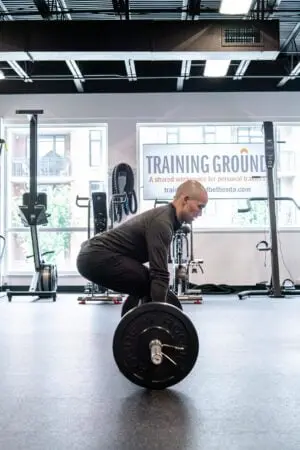
Explosive Deadlifts

By incorporating speed and explosiveness into traditional deadlifts, this exercise bridges the gap between standard weightlifting and running mechanics. It emphasizes the power generation aspect of the triple extension, crucial for improving running speed.

Kettlebell Swings

A staple in many strength training programs, kettlebell swings can be particularly beneficial for runners when modified to mimic the running dynamics. By using lighter weights and focusing on swift extension at the hips, knees, and ankles, this exercise directly translates to improved running performance.

Why Strength Training Matters

The benefits of strength training for runners are multifaceted. It’s not just about running faster; it’s about running smarter. Strength training:

  • Improves Running Economy: By increasing muscle strength and power, runners can achieve greater efficiency, meaning they use less energy to maintain the same pace.
  • Enhances Endurance: Stronger muscles can handle the demands of long-distance running more effectively, delaying the onset of fatigue.
  • Reduces Injury Risk: A well-rounded strength training program increases muscle and joint resilience, making runners less susceptible to common running injuries.

Conclusion

Incorporating strength training into a runner’s regimen is crucial for enhancing performance, efficiency, and injury prevention. Focusing on exercises that promote triple extension can significantly improve the power and mechanics of a runner’s stride. By embracing a comprehensive strength program that includes exercises like wall loads and lifts, explosive deadlifts, and kettlebell swings, runners can unlock their full potential. Ultimately, strength training is not just a supplement to running; it’s a cornerstone of a well-rounded running program.

Fitness watches: what stats should you care about?

Dr. Kelly Henry here. I work with lots of runners in McLean as physical therapy and performance training clients. We all know a runner who is obsessed with their watch, and with all the technology these days, your fitness watch can tell you just about anything.

This is informative and overwhelming at the same time.

So many statistics are provided, but how many of them are relevant? And if they are relevant, what do they mean? After doing a deep dive into my own watch (a Garmin Venu Square), and some market research on other running watches’ statistics, here is what you should care about:

Resting heart rate 

What this means: How fast your heart beats when you are not doing any activity.

Why you should care: A normal heart rate ranges from 50-100 beats per minute, but more importantly, your watch is learning what is normal for you. Fitness watches usually do a good job of tracking this. Knowing your resting heart rate is a good indicator for helping you determine what your heart rate should be when you’re exercising. A raised heart rate can indicate a number of things, but regarding your training, it can indicate overtraining and a lack of recovery.

Heart rate zones 

What this means: Most fitness trackers divide your heart rate into Zones 1-5. These are determined based on your resting heart rate and a hypothetical maximum heart rate derived from a standard calculation.

Why you should care: You can use your heart rate zones to guide the intensity of your training. Most of your workouts should be performed in Zones 2-4. If you are performing cardiovascular exercise, exercising in Zones 1-3 will provide more of an aerobic benefit (lower intensity, longer duration), whereas Zones 4-5 should focus more on anaerobic systems and power development (fast runs, sprints, or interval training). If you aim to address certain improvements (speed vs. endurance), using heart rate zones can be a great objective way to determine how to adjust your perceived effort. Keep in mind heart rate can be impacted by other factors, including heat and time of training.

Cadence 

What this means: Simply put, cadence is how many steps you are taking in one minute. Aka, how fast your feet are moving.

Why you should care: Measuring cadence helps to make you aware of your stride length and energy expenditure while running. A longer stride often results in a lower cadence and vice versa. Research has shown that patients with knee pain after running often benefit from a shortened stride by increasing stride length. An ideal cadence for most people is 170-180bpm (beats per minute).

Distance 

What this means: How far you ran/walked/moved.

Why you should care: Tracking distance ensures that you are progressing your exercise appropriately and is one of the main things runners care about. While some people prefer time-based exercise, distance may be easier to track if you are working on maintaining a consistent pace. Tracking distance over time is important to ensure there is adequate training volume and can prevent over or under-training. Generally, you should aim for a ratio between 0.80-1.20 when comparing month-to-month averages. This means that the weekly average of this month’s distance is not less than 80% or more than 120% of the weekly average of last month’s distance. Your watch should calculate your weekly mileage for you! Use this mileage in the following formula:

(Week 1 distance + Week 2 distance + Week 3 distance + Week 4 distance) / 4 = Average Workload)
Then divide this number by the average workload from the previous month. This is more accurate for more experienced runners, while less experienced runners or those who run shorter distances may be able to increase their distance more liberally.

Heart Rate Variability (HRV)

What this means: The variation in time between heartbeats. Although our heartbeat is often described as a metronome, it is not. There are small differences in the intervals between each of your heartbeats, which are impacted by your sympathetic nervous system. HRV depends on multiple readings, including core body temperature, circadian rhythm, metabolism, and sleep cycle, to make the best estimate.

Why you should care: In a broad scope, increased HRV can be correlated with better aerobic fitness (if there is no underlying pathology). While it’s difficult to properly measure HRV strictly from a wearable, it can indicate training adaptations and improvements in cardiovascular health. HRV is good supplemental data but shouldn’t be the basis for any training changes since the sensitivity of this measurement is limited, and the most accurate HRV reading will come from a controlled clinical setting. Multiple comorbidities can impact HRV, including chronic pain, inflammation, insomnia, concussions, depression and anxiety, and other stress.

These 5 statistics only scratch the surface of what your fitness watch can do for you. If you are a runner searching for an advantage over your competition, schedule a consultation by replying to this email. In this consultation, she will help you determine how to use technology to your advantage and other ways to improve your performance.

What do I do if my athlete got injured?

What Should My Athlete Do After an Injury? How Can They Safely and Quickly Get Back on the Field?

To answer these questions, let’s explore the sports physical therapy process for one of the most common soft tissue injuries in soccer: a quad strain. For more details on soft tissue injuries and the differences between strains and sprains, check out last week’s article here.

Soccer players are prone to soft tissue injuries due to the sport’s high demands of sprinting, kicking, and sharp directional changes. Kicking injuries are particularly common, with the rectus femoris muscle, part of the quadriceps group, being the most frequently injured.

The rectus femoris muscle spans both the hip and knee. When an athlete winds up to kick a soccer ball, this muscle quickly stretches and contracts to execute the kick. Any muscle that repeatedly lengthens and shortens rapidly, especially across multiple joints like the hip and knee, is at a higher risk of injury.

Immediately following an injury, the athlete should be evaluated by a physical therapist or sports medicine physician to assess the severity and determine the appropriate course of action. While imaging can be useful, it’s not always necessary.

The rehabilitation process for a muscle strain can be broken down into three distinct phases:

1. Injury Management Phase

The goals of this phase are to reduce pain and inflammation, restore the muscle’s range of motion, and reintroduce pain-free functional movements. While the injured tissues need time to heal, complete rest isn’t the answer. Light strengthening exercises and mobility drills are essential to stimulate the healing process, making early physical therapy crucial.

Examples of early-phase exercises for a quad strain might include:

– Isometric knee extension with hip extended

– Split squat isometric

– Single-leg bear hold

Once athletes regain a full range of motion without pain and can perform basic bodyweight movements, they move on to the next phase of rehabilitation. Unfortunately, traditional physical therapy often stops here, leaving many athletes struggling to bridge the gap between rehab and full performance.

2. Strength Training Phase

At the beginning of this phase, many athletes still face significant strength deficits.

Strength training is vital for improving the quality of the injured tissue and reducing the risk of reinjury. This is the time to hit the weight room.

Strength training exercises for an athlete recovering from a rectus femoris or quad strain might include:

– Reverse Nordic curls

– Lateral step downs

– Safety squat bar step-ups

3. Sport-Specific Training

What must the injured tissue be able to do for a safe return to sport?

This phase of rehab demands a deep understanding of the athlete’s sport, ensuring the injured area is prepared for the challenges ahead.

Since the rectus femoris is often injured due to continuous, rapid lengthening and shortening, this movement pattern must be replicated and trained during rehab to prepare the athlete for the demands of soccer.

Some examples of exercises used in this phase might include:

– Alternating split squat jumps

– Banded deceleration drills


While these three phases apply to all muscle strains, the recovery timeline varies based on factors such as the injured body part, the severity of the injury, and other individual factors.

If your athlete is dealing with a muscle strain, it’s essential to schedule an appointment with a physical therapist or sports medicine physician as soon as possible. Early treatment has been shown to get athletes back on the field faster and more effectively. If you suspect that you or your child has a muscle strain, schedule an evaluation with us right away.

×