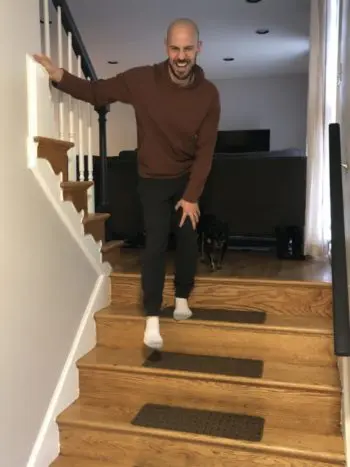
Runners: How To Vary Your Training to Optimize Your Results!

Implementing variety into training is something that is commonly underutilized and overlooked among recreational runners. This is often the topic of conversation after we perform our running analysis or within a sports physical therapy session.

Varying speed, intensity, and distance can be a useful tool in run training, whether you’re training for a big race or just getting back into it.

Running at different speeds or intensities allows you to vary which muscles and tissues you are repeatedly straining. When you sprint, your technique is going to look very different than when you are going for a long, slow jog.

Including both in your training helps you to disperse the stress of the workout over more tissues, and can help prevent overuse injuries! Some examples of what this variety might look like: 

  1. High Intensity Interval Training (HIIT) runs: “sprint” training! Work to rest intervals should be greater (1:4, 1:5). For example. sprinting for 10 seconds and walking/jogging for 50 seconds. Repeat for 10-15 minutes. Great for a track or grassy field! 
  2. Interval training: longer bouts of faster running, not as intense as a full sprint. Work to rest ratios are going to look more even (2:3, 1:1 or 2:1 ratios). For example, fast running for 1-2 minutes, jogging for 2-3 minutes, repeat for 10-15 minutes. 
  3. Tempo training: usually done as a “long run”. Pick a pace, and try to stick to it throughout the duration of your run. Distances should be specific to what your goals are!
  4. Using Rate of Perceived Exertion (RPE) Scale: If you don’t know what pace time is right for you, start with RPE! You can use a scale of 0-10, with 0 being completely at rest and 10 being a sprint as fast as you can possibly go. Fast bouts of HIIT training should be performed at an RPE of 8-10, whereas interval training should be closer to RPEs of 5-8. An example of an RPE scale can be found here 

In addition to preventing injuries, adding sprints and interval training can help increase muscle mass, cardiovascular endurance, and improve your ability to cover more distance in a shorter amount of time. If you’re finding that you’re constantly dealing with the same injury, consistent soreness in one muscle group, or you just want to shake up your training, a performance physical therapist can help find the right running program for you! 


What Does It Mean To Be “Out of Alignment?”

“My body feel out of alignment.”

“My <insert healthcare professional here> said that my hips are off.”

“I think I just need to be adjusted.”

These are examples of a few of the comments that patients may express in physical therapy or other injury rehabilitations settings.

The belief that we are like a vehicle that needs to be re-aligned is often the fault of the healthcare industry, including physical therapy.

In the past, healthcare providers would tell their patients that a part of their body is out of alignment and needs to be adjusted to put it back in place. They explain that this is the reason for any discomfort that may be present.

Thankfully, this is no longer taught by most healthcare providers as this thought process has been disproven.

Our bodies are incredibly resilient.

Our joints do not simply fall out of alignment. In fact, our bodies are designed to move and if we were constantly “in line”, it would be impossible to move anywhere!

So, what is happening when an area of our body feels “off”?

As we perform a movement repetitively, compensations and movement limitations become more noticeable.

One area of the body may be moving excessively, while another area of the body may be moving too little.  For example, if your ankle mobility is limited during a squat, you will move excessively at the hips to pick up the slack, causing more stress in that area. As a result, pain, or the feeling of being out of alignment may occur in the hips/pelvis.

If you feel “off” or have been told that you are out of alignment, the solution is likely to begin with discovering what movement limitations may have led to this feeling in the first place. This information can then be used to teach you strategies to move and feel better!

Are you interested in discovering what solutions may be right for you? Contact us to find out more about our physical therapy services!

Do I Need Surgery?

This is a very common question in physical therapy and injury rehabilitation settings .

As humans we think of ourselves as machines. Something is broken and needs to be fixed.

However, we are not machines, and surgeons are not mechanics that fix something broken. In fact, they are closer to janitors “cleaning up” accumulated damage that was created by something else.

A recent literature review published in the prestigious journal, JOSPT, found no evidence to support having surgery versus non-surgical interventions and 9 different areas of the body were researched! The study can be found here.

Now before we jump to conclusions, surgery is an essential part of healthcare.

It is the best option after trauma occurs that causes structural damage which will prevent the body from functioning as required for sport or daily life. Examples include broken bones that are displaced, as well as tendon or ligament ruptures like ACL or Achilles tears.

Surgery may also be a solution to chronic pain or injury that has not improved with non-surgical interventions such as physical therapy.

In the instances described above surgery is utilized as a last resort or because of significant, clear structural damage which can be reliably repaired.

Research, such as the article referenced previously, commonly shows poor long-term outcomes for surgery because we are commonly led to believe that surgery “fixes” the issue.

Surgery does not address the root causes of an injury and it is essential to learn is what caused the damage requiring surgery in the first place. As a result, we can address the root causes of pain, injury, or tissue damage before surgery, hopefully avoiding it altogether. If surgery is still warranted, then the factors that lead to it must be addressed in the post-operative process. If not, we will continue to see more studies like the one referenced in this article showing poor outcomes from surgery.

As the saying goes, if we don’t learn from history, we are bound to repeat it!

Unlocking mobility

Do your hips or lower back feel tight when you squat? Do your shoulders feel stiff when you try to raise your arms overhead, or do your ankles feel restricted during certain movements? These are common complaints seen regularly in the field of sports physical therapy.

Mobility issues like these are often frustrating, but they aren’t random. In fact, it’s your body—and more specifically, your nervous system—deliberately limiting your range of motion. That stiff muscle you feel is your body’s way of protecting itself or adapting to the physical demands placed on it.

As a physical therapist, I frequently reflect on my experiences working with elite athletes, particularly during my time with the National Basketball Association (NBA). Many of these athletes experienced ankle mobility restrictions, which were a natural adaptation to their sport. Their constant sprinting, jumping, and cutting movements—often performed with their heels rarely touching the ground—caused their bodies to adapt in a way that improved performance but at the cost of mobility.

In these athletes, the tissues around their ankles functioned like tight springs, making them more explosive without requiring excessive energy expenditure. While these adaptations allowed them to excel on the court, they also came with trade-offs, limiting ankle mobility. Over time, these performance-enhancing adaptations can lead to increased risk of injury if mobility is sacrificed too much.

When Does an Adaptation Become a Problem?

Adaptations like limited ankle mobility can be beneficial for specific movements or sports. However, when these adaptations go too far, they can put you at a higher risk for injury.

The key question is: How do we know when adaptations have gone too far?

The answer is simple: when the body can no longer perform the basic movements required by your daily life or sport. At this point, your joints have less mobility than necessary, and that’s when you begin to experience discomfort, stiffness, or injury.

For instance, a basketball player who spends most of their time on the balls of their feet may lose the ability to properly flex their ankles. This lack of mobility may not seem like an issue during the game, but it can lead to compensations elsewhere in the body, causing lower back pain, knee problems, or even an Achilles injury. Similarly, if your shoulders are stiff when lifting weights, it might not be the weights that are causing pain, but rather the shoulder’s inability to move through its full range of motion due to overuse or compensatory patterns.

How Can Physical Therapy Help?

One of the core principles of physical therapy is identifying and addressing these movement limitations before they turn into bigger problems. By targeting areas of the body that have adapted too far, physical therapy helps restore balance between mobility and stability.

At its core, mobility isn’t just about increasing flexibility or stretching. It’s about teaching your body how to move in a variety of ways. This is especially important for athletes and active individuals who have developed specific movement strategies over time. For example, if you primarily engage in forward-motion activities (like running or cycling), your body may over-adapt to these movements and lose the ability to move comfortably in other directions.

The Importance of Varying Your Movements

To counteract these adaptations, I encourage athletes and patients alike to incorporate daily exercises that challenge their bodies to move outside of their typical patterns. By regularly practicing movements that are different from their usual routines, individuals can maintain better overall mobility and reduce the risk of overuse injuries.

For example, I recently worked with a patient who had limited shoulder mobility. This patient experienced stiffness when raising their arms overhead due to years of repetitive shoulder movements. I introduced a daily shoulder mobility drill to improve their range of motion and reduce the risk of injury.

In another case, I advised a runner to incorporate lateral movement drills into her routine to counterbalance the constant forward motion of running. This allowed her to develop strength and mobility in muscles that weren’t being used as much, ultimately improving her performance and reducing her risk of injury.

Try These Mobility Drills for Better Movement

Here are a couple of examples of the mobility drills I often prescribe:

These exercises are simple but effective ways to restore mobility and ensure that your body doesn’t over-adapt to a single movement pattern.

Ready to Improve Your Mobility?

If you’re tired of feeling tight, stiff, or restricted during your favorite activities, physical therapy can help you restore balance and improve your movement. Whether it’s your hips, back, shoulders, or ankles causing trouble, understanding and addressing the root cause of your mobility limitations is the first step to feeling better and moving more freely.

Would you like to discover daily exercises and routines that can help you improve your mobility and overall performance? Contact us today to schedule an evaluation and get started on the path to better movement!
When You Should Be Using a Workout Machine

Workout machines like the prone hamstring curl are underutilized in the sports performance setting and often get a bad rap in the sports physical therapy industry. I have heard people (physical therapists, strength coaches, running coaches, personal trainers, etc.) say negative things about using machines for a variety of different reasons.

“Machines are not functional. Humans should provide their own stability and not rely on a machine to do it for them.”

“X, Y, or Z machine isolates only one area of the body and we do not move 1 area at a time in real life.”

The support that machines provide, allowing people to focus on working one area has many advantages when used appropriately.

Even athletes can benefit from using machines.

High level sprinting requires an athlete to have a great deal of hamstring strength as the muscle is in a shortened position (when the knee is fully bent).

During the recovery phase of sprinting (as the leg is being brought back to the front of the body) the heel should be as close to the athlete’s bottom as possible. As this motion begins, the hip is a relatively extended position.

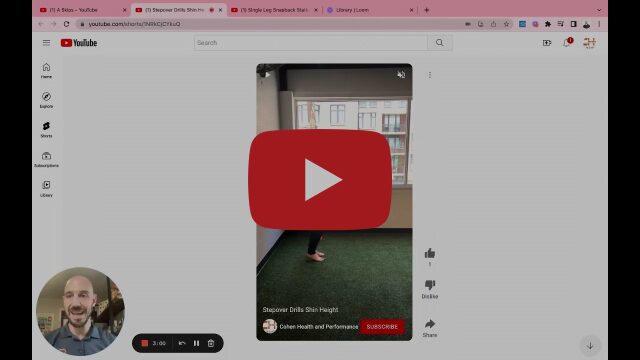
The prone hamstring curl trains end range hamstring strength when the hip is in this position. Dr. Cohen even pauses briefly in this video when at the end of the movement to stress this position.

During this exercise, the machine will dictate the movement however remember to use your abs to prevent the lower back from extending during any portion of the exercise.

There is no such thing as a good or bad exercise. Almost every exercise is appropriate when used properly. The key is to be clear on the desired outcome of the drill and how to implement it most effectively into your training routine.

Would you like to learn how to design your training most effectively to best accomplish your goals? If so, contact us to receive a customized training program designed specifically for you!

1 Trick to Perfect Running Foot Strike Position

If you ever experience back pain when running, are a runner that has been to physical therapy, or are curious about foot strike position, this article is for you!

One of my favorite workshops to conduct is the CHP Running Technique and Performance lab. I have a blast throughout the workshop, but the Q&A portion is my favorite. I have gotten the opportunity to answer many different questions which have forced me to expand my knowledge and has helped me to create a better workshop over time.

While the questions that I receive consistently differ, one topic remains consistent. Someone inevitably asks about foot strike position and my answer often surprises them.

There is no correct foot strike position.

Among other things, foot strike position is dependent on an individual’s body dimensions (limb length as an example) and the position of the body above.

While we cannot change your anatomy, we can change the position, aka the posture, of our bodies.

A “stacked” posture will facilitate a foot strike that occurs directly underneath the body. This foot strike position results in a more efficient stride and minimal stress to the body. To learn about the stack, check out a previous article that I wrote on Learn to Stack Like a Snowman.

Attempt the drill below to feel what it is like to have a stacked posture while running.

  • Grab a partner and ask him/her/they to stand behind you (you are also standing)
  • Have your partner press down on your shoulders with a moderate amount of force and do not let them squish you
  • As you resist them you should feel your abs engage and feel as if you are standing tall
  • Next, attempt to shift your weight onto 1 leg and pick up your opposite foot while resisting the force of your partner
  • Try the other leg

For a video on this drill, click here.

After performing this drill, you should have a better sense of your optimal running posture. Try to replicate this feeling the next time you go on a run!

×