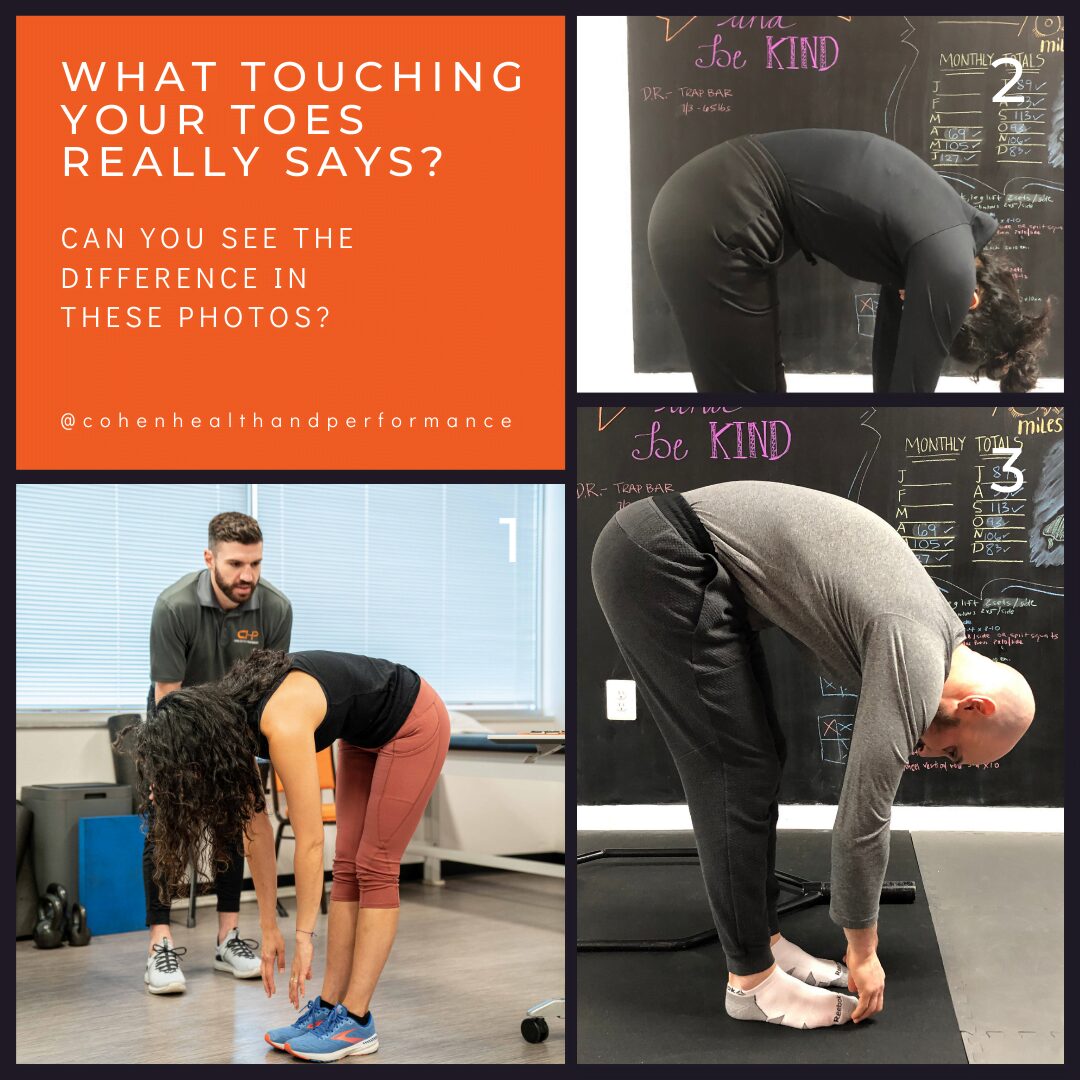
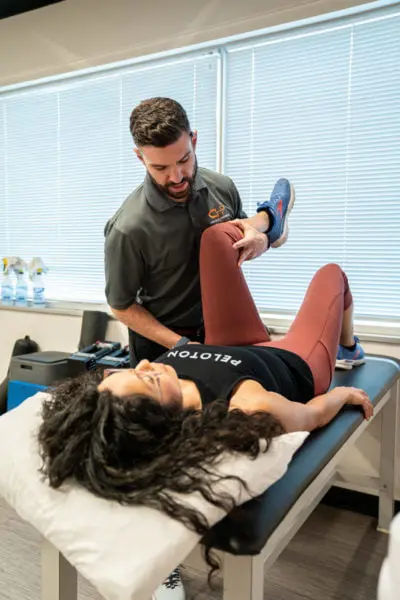
Why a physical therapist doesn’t recommend stretching

“My shoulder feels tight.” “My hip flexors are tight; I need to stretch them.”

These are common complaints we hear in physical therapy.

While these descriptions aren’t wrong—after all, no one can argue with how you feel—they can sometimes lead to misconceptions about how to address the problem.

The sensation of “tightness” often arises as the body’s way of protecting areas that are vulnerable to injury. When a part of the body is unstable, the nervous system responds by creating stiffness in the surrounding muscles to safeguard it. For example, the hamstrings, which attach to the pelvis, might feel tight in someone with low back pain. This tightness occurs as the muscles stiffen to provide added stability to the pelvis.

In this case, simply stretching the hamstrings won’t solve the problem. The individual needs to learn how to stabilize their back, perhaps by mastering the stack (find out how to do that here) and strengthening the trunk muscles accordingly. Once the underlying issue is addressed, the hamstrings can finally relax.

This is just one example of why a muscle might feel tight, but it’s important to understand that tightness can stem from various causes—and the solution is rarely just to stretch!

If you’re dealing with tight, uncomfortable muscles, it’s time to uncover the root cause. Contact us today to schedule an evaluation and discover how you can finally resolve those tight muscles!

What’s the deal with my ankle popping?

When your knuckles pop, your ankle cracks, or your hip makes that strange noise, do you ever wonder, “Is that bad?” Should you see a sports physical therapist or doctor about it?

Well, there’s no need to worry—it’s probably not a big deal if you’re not experiencing any pain when it happens.

I have this quirky habit every morning as soon as I get out of bed. I keep my right heel on the floor and move my knee over my toes until I feel and hear a pop in the back of my heel. It freaks out my wife, Deb, every time.

The cracking or popping in a joint is similar to the sound of pressure being released from a soda bottle. Over time, pressure builds up within a joint, and for some people, it feels good to release it. That’s the noise you’re feeling and hearing.

However, if you experience pain when the pop occurs or if the area feels unstable, it’s important to reach out to us. We can help determine the root cause of these issues and whether any treatment is necessary.

We’ll assess if your pain is related to arthritis, overuse, or another movement-related issue that we can address through physical therapy, with exercises you can do at home.

Here are a few questions to ask yourself. If you answer “yes” to any of these, it might be time to seek help:

1) Is the popping I feel painful?
2) Has there been a recent injury to this area?
3) Does this area feel unstable?
4) Do I have weakness in this area?

You might not even need to visit the office—a phone call could be enough. Check out our homepage here and click on the “free phone consultation” tab!

What Stretch Should You Be Doing?

Ten years ago, flexibility and stretching were all the rage, as well as a large component of the standard course of treatment in sports physical therapy. Many people had stretching in their daily routines, either as an athlete being told to stretch before and after practice from a coach, in a yoga studio by an instructor, or by a physical therapist in order to decrease pain. Now, the phrase “mobility” has been posted everywhere. “How to increase hip mobility to help improve your deadlift”, “Stretching Routines for Runners” and “is your ankle mobility plateauing your squat depth?” headlines can be seen from instagram and tiktok to google ads. But what is the difference between the two? Are they the same thing? What happened to the importance of stretching?

For starters, stretching or flexibility is the ability for a person to get into a position passively keeping one joint in mind. So if you want to bend down, are your hamstrings flexible and stretched out enough for you to touch your toes? To improve your flexibility, you stretch or lengthen your muscles to be able to achieve a goal.

On the other hand, mobility is the amount of active movement you have to reach a goal. For example with the “is your ankle mobility plateauing your squat depth” headline, can your ankle move enough and allow you to achieve a lower squat at your knees and your hips? To improve mobility, you typically need to target the joint itself, rather than the muscle tightness limiting a movement in stretching, in order to create more space for the bones to move on each other.

So how do you know if you cannot touch your toes due to muscle limitations, like in flexibility restrictions, or due to mobility issues? Like most questions in the physical therapy world, the answer is it depends. Physical therapists have a series of tests that can determine if the joint is unable to achieve a desired position due to muscle stiffness, joint tightness or an inability to control the motion that the body already has.

Below is an assessment and exercise that we use for many of our patients experiencing back pain. This helps us to determine the movement capabilities of the spine, including where it may be moving too much and/or not enough.

Once you figure out where your limitations are coming from, it is time to determine if you need to improve them. While these are hard questions to answer in a blog post, this is something that a physical therapist can help you distinguish by using various tests.

If this sounds like something you are interested in learning more about, contact us to receive a customized exercise program to improve either your flexibility or mobility (or both!).

What Touching Your Toes Really Says

Can you see the difference in these photos? The toe touch is a simple test that is often performed in injury rehabilitation and sports physical therapy settings.

However, important parts of this test are commonly missed. Simply touching your toes doesn’t tell the whole story. If you can touch your toes, great, however there are different ways that you can get there.

Have you stretched your hamstrings to such a degree that they allow you to nearly palm the floor? 

If you are a gymnast that may be a great thing. However field sport athletes (ex. Lacrosse, football, basketball, baseball) and weight lifters need a level of hamstring stiffness for explosive movement. 

Is your lower back straight or does it flex into more of a C curve to allow you to more easily touch your toes? Is your lower back bending in certain areas but not in others?

Your lower back consists of multiple bones (vertebrae) that are stacked on top of each other. Our backs are built this way to allow for movement of one segment on the next. However many times these small movements do not occur and the lower back moves as one unit. The result is a lower back that looks straight in places despite being bent over. Over time, a lack of lower back  movement can increase the risk for injury.

The toe touch is a great test and can be made even better when directed by a professional with a trained eye.

Contact us for more information about how a customized movement assessment may help you optimize your training and avoid injury!

Is Mobility Overrated?

Mobility has become a popular buzzword in the sports physical therapy community in Bethesda and Chevy Chase. While it is an important aspect of health and fitness, could mobility be getting more attention than it actually deserves?

What Is Mobility?

The term “mobility” refers the quantity of available movement — and how freely and efficiently you’re able to do so. Popularized by the sports physical therapy and training community, mobility is important for everyone, whether you’re an elite athlete or a busy working Mom.

Mobility is an important part of a well-designed injury rehabilitation and prevention program. It is also used to improve the quality of life for our physical therapy patients in Chevy Chase and Bethesda.

While very important, many experts feel that the booming popularity of mobility overshadows several other key health factors. In particular, the added focus on mobility often leads to a lack of attention on other important health factors, such as strength, cardiovascular health, and other global health behaviors.

What The Mobility “Craze” Makes Us Overlook

Although mobility is an important aspect of a healthy body, mobility alone won’t provide the quick fix you might be looking for. Instead, there are several complex contributing factors that need to be properly managed to improve your overall health.

Strength Training

Lean body mass and strength are some of the greatest indicators of the overall health of an individual. In fact, according to a study done by Harvard University, something as simple as grip strength can help measure an individual’s risk of heart attack, stroke, or cardiovascular disease.

Focusing on mobility alone overlooks the importance of strength training. According to The Mayo Clinic, strength training can help you manage or lose weight, increase metabolism, protect your joints and ligaments, and improve your ability to do everyday activities.

Cardiovascular Exercise

Another important measure of the overall health of an individual is cardiovascular fitness. A simple way to gauge cardiovascular health is by measuring your resting heart rate — the number of times your heart beats per minute when not physically active.

Although the normal range of a resting heart rate is between 50–100 beats per minute, a resting heart rate greater than 90-100 BPM can put unnecessary strain on the heart. A high resting heart rate has even been linked to high blood pressure, cholesterol, and even heart disease.

By solely focusing on mobility, cardiovascular health may be overlooked.

Global Health Behaviors

Outside of strength and cardio training, there are several other important contributing factors to an individual’s health — specifically sleep, nutrition, and social connection.

Sleep plays a crucial role in your physical health. Not only does sleep heal and repair your muscles, heart, and blood vessels, but a recent study discovered done by the National Heart, Lung, and Blood Institute discovered a link between sleep deficiency and an increased risk of heart disease, kidney disease, diabetes, and high blood pressure.

Final Thoughts

All in all, mobility is only one aspect of staying healthy and active — it isn’t the only thing that should be focused on. Health is achieved through the successful balance of multiple variables, including mobility, strength training, cardiovascular exercise, and various other global health behaviors.

If you’re looking for a comprehensive program to improve your health, fitness, and quality of life, our physical therapy team in Bethesda and Chevy Chase can help. Contact us today for a free consultation!
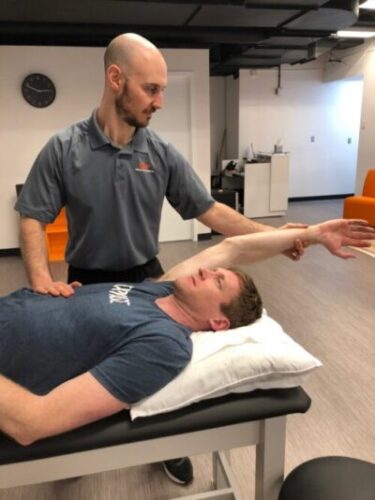

Why Some Warmups Aren’t Useful

As performance physical therapists in Bethesda and Chevy Chase, we work within a very knowledgeable and active community.  Our clients and patients understand the importance of warming up.

Warming up is commonly touted as essential for anyone wishing to avoid injury during exercise, performance training, or running.

We agree with this statement; however, warmup routines are often implemented in a non-productive way.

There is a time and place for everything, however this does not mean that you need to stretch, roll around on the ground, and perform “activation” drills prior to being ready for exercise.

In addition to increasing total body temperature, a warmup routine should prepare the body for the specific workout that is going to take place. For this reason, we call warming up “movement preparation.” The body is being prepared to move!

Movement preparation should include drills that train the skills necessary for the day’s workout. Many times, these drills will look similar to the exercises within that day’s work out.

If you are getting ready to run, perform activities that practice things necessary to run effectively. If you are going to lift weights, practice movements similar to the lifts you are going to perform (ie. If you are going to squat, then squat in your warmup!).

This advise applies regardless of whether you are healthy, injured, in performance physical therapy, or training for performance.

Below are 2 drills that we often use during movement preparation prior to running. Each drill practices single leg balance, the ability to shock absorb on one leg, and trunk rotation. These are all attributes necessary for running.

Single leg knee to chest
Forward lunge with cross connect

Furthermore, if you have been sitting at a desk for the majority of the day, you may need a more comprehensive warmup. On the other hand, if you have an active job requiring you to move in a variety of different ways then your warmup may not need to be as comprehensive.

Movement preparation is necessary, however it is essential to be purposeful, rather than mindlessly performing the same thing before every workout.

×