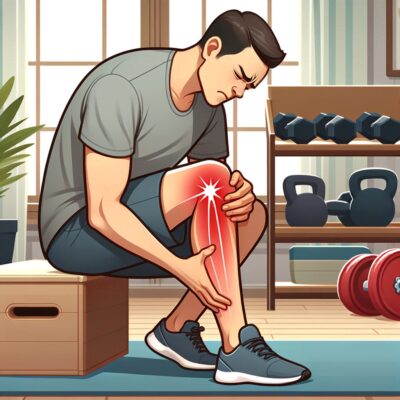
Why Turf Fields May Increase ACL Injury Risk for Young Athletes

Across the DC area, more and more young athletes are playing on artificial turf fields. From soccer and football to lacrosse, turf has become a necessity for many schools and clubs because of the heavy field usage and changing weather conditions.

But there is one important thing athletes and parents should know: research has shown that ACL injuries occur more frequently on artificial turf compared to natural grass.

At our clinics, we frequently work with athletes recovering from knee injuries through both lacrosse rehab McLeanservices and treatment with a physical therapist Bethesda athletes trust for sports injuries and performance training.

Why Turf Fields May Increase ACL Injury Risk

One of the biggest differences between turf and grass is how the playing surface interacts with the athlete’s footwear.

On natural grass, there is usually a little more “give” when an athlete plants and rotates. The cleat can move slightly through the surface, which helps absorb some of the twisting forces.

On turf, however, the surface tends to grip the shoe much more firmly. That means rotational forces can travel directly up into the knee instead of being partially absorbed by the ground.

This is one reason why non-contact ACL injuries are often associated with turf sports.

Why This Matters for Lacrosse Athletes

For athletes participating in cutting and pivoting sports like lacrosse, soccer, and football, these rotational forces become especially important.

In our lacrosse rehab McLean programs, we frequently help athletes improve:

  • Lower body strength
  • Landing mechanics
  • Deceleration control
  • Rotational stability
  • Movement efficiency

These qualities help athletes better tolerate the demands of turf surfaces and reduce injury risk.

Footwear Matters More Than You Think

One important factor many athletes overlook is wearing the correct shoes for the playing surface.

Cleats designed specifically for grass may grip too aggressively on turf, increasing the stress placed on the knee. Turf-specific footwear can sometimes help reduce this issue by allowing for more controlled movement on the field.

Fatigue Can Increase Injury Risk

Turf fields also tend to become significantly hotter than grass fields, especially during warmer months.

This can increase fatigue levels during games and tournaments. As athletes fatigue, movement quality and mechanics often begin to decline, which may increase the risk of injuries such as ACL tears.

This is why proper conditioning, hydration, and recovery are critical throughout the season.

The Importance of Warm-Ups and Training

Warm-ups should never be skipped, especially for athletes playing on turf.

Programs like FIFA 11+ have been shown to help reduce injury risk by improving movement preparation, balance, and neuromuscular control.

Working with a physical therapist Bethesda athletes trust can also help identify movement limitations, strength deficits, and mechanics that may place additional stress on the knees during sport.

The Goal Is Reducing Risk, Not Eliminating Sport

Turf fields are likely here to stay, particularly in high-use areas like the DC region.

The goal is not to avoid sports or avoid competition. The goal is to give athletes the tools they need to stay healthy and perform at their best.

With proper strength training, movement preparation, recovery, and footwear selection, athletes can significantly improve their ability to handle the demands of turf sports safely.

If your athlete is dealing with knee pain, recovering from an ACL injury, or looking for guidance on injury prevention, our team provides individualized care through both lacrosse rehab McLean services and sports-focused treatment with a physical therapist Bethesda athletes and parents trust.

Why Are ACL Injuries So Common in Female Athletes—and What Can Be Done?


This weekend, I came across an article that caught my eye: “A WNBA Veteran Becomes the Latest Player to Suffer an ACL Tear.” The athlete mentioned was Katie Lou Samuelson of the Seattle Storm—shockingly, the third player on her team to suffer an ACL tear before the WNBA season even begins.

As a physical therapist who works with athletes of all levels, this hit home. ACL injuries are far too common, especially among female athletes. According to the American Journal of Sports Medicine, females are 4 to 8 times more likely to suffer an ACL tear compared to their male counterparts playing the same sport. Even more alarming—over 70% of these injuries are non-contact. That means they’re not the result of a collision, tackle, or fall. They just happen—or so it seems.

But these injuries are not freak accidents. There are clear biomechanical and muscular risk factors that we, as physical therapy professionals, can help address.

Understanding the Risk Factors

One of the most commonly discussed reasons for higher ACL injury rates in females is anatomical structure, particularly the Q-angle—the angle formed by the hip and knee. Due to a generally wider pelvis, many female athletes have a more pronounced Q-angle, which can result in the thighs angling inward (valgus alignment). This creates a greater tendency for the femur to internally rotate and adduct, particularly during high-speed or high-impact movements like jumping, cutting, or landing.

When combined with muscle imbalances, such as strong quadriceps and weak hamstrings or glutes, the risk increases. A poor quadriceps-to-hamstring strength ratio can reduce the knee’s ability to stabilize itself, leaving the ACL vulnerable to tearing under stress.

How Physical Therapy Can Reduce the Risk of ACL Injuries

Preventing ACL injuries is not just about stretching or doing a few leg exercises. A comprehensive physical therapy approach includes:

1. Strengthening the Right Muscles

To protect the knee, we must target the muscles that slow down internal rotation and adduction of the femur—primarily the glutes and deep hip rotators. Strengthening the hamstrings, calves, and core also plays a vital role in protecting the knee joint.

2. Improving Muscle Coordination and Timing

Being strong isn’t enough. Athletes must be able to generate force quickly, particularly during sport-specific movements. That means physical therapy needs to go beyond the weight room.

We bring our athletes to our turf space to practice jumping, landing, cutting, and acceleration drills that simulate real-game scenarios. We analyze landing mechanics and correct faulty movement patterns before they show up on the court or field.

3. Using Data to Guide Programming

Every athlete we work with is evaluated using force plates and other sports technology to understand how their body handles force and movement. This data helps us create a personalized plan to address the specific deficits or imbalances that could lead to an ACL injury.

The Bottom Line: ACL Injury Prevention Starts with Smart Physical Therapy

ACL injuries are devastating. They can take an athlete out of the game for a year or longer. But the good news is—there are things you can do to reduce the risk.

If you are the parent of a female athlete or an athlete yourself and you’re serious about protecting your knees, now is the time to take action. Our ACL prevention programs at Cohen Health and Performance are tailored to each athlete and built on the principles of scientific assessment, personalized physical therapy, and performance training.

📞 Contact us today to schedule an assessment and give yourself the best shot at staying healthy, strong, and on the field.

Why most sports physical therapy for ACL injuries is incomplete

Picture this: Four months ago, you underwent surgery to repair a torn ACL (anterior cruciate ligament) in your knee, and you’ve been diligently attending sports physical therapy ever since. Initially, you were on crutches, with a swollen knee that barely moved. But after several weeks of physical therapy, you regained full range of motion and relearned how to walk normally. You’ve even started running again and are eagerly anticipating the day you can return to practice or the activities that make you feel like an athlete!

But then, your physical therapist informs you that you’re being discharged from therapy…

This scenario is common because insurance companies often don’t classify return-to-sport activities as “medically necessary.” As a result, most traditional physical therapy clinics don’t offer return-to-play programs.

I refer to this crucial stage of recovery as “the gap.” The gap represents the period between completing physical therapy and beginning performance or personal training.

Many athletes aren’t actually ready to return to their sport when they’re discharged from physical therapy because they haven’t yet bridged this gap between rehabilitation and peak performance.

At this stage, athletes may be pain-free, have full knee range of motion, and even have regained much of their strength. However, they still need to train their knee to use that strength explosively and withstand the demands of cutting, jumping, and sprinting.

Unfortunately, many athletes skip this vital phase of ACL recovery, returning to their sport before their knee is fully prepared. This significantly increases the risk of re-injuring the repaired ACL or even damaging the other knee.

Programs designed to help athletes bridge this gap typically start with tests to assess how close they are to returning to their sport. These tests often include hops, agility drills, and movements specific to the athlete’s sport.

In our Bridge The Gap ACL program, we begin with the single-leg hop test. Research suggests that the surgically repaired leg should be at least 90% as strong as the unaffected leg before engaging in sport-specific activities. Ideally, both sides should be equal before an athlete resumes full practice.

Below is an example of a single-leg hop test.


Sports physical therapists use the results of these tests to create a tailored training program that combines elements of physical therapy, strength and conditioning, and sports performance.

Research indicates that the earliest an athlete can safely return to play after ACL surgery is around nine months (even longer for younger athletes). For this reason, most bridge-the-gap programs last between 2-4 months.

Interested in learning whether our Bridge the Gap ACL Program is right for you? If you or your child is recovering from an ACL repair, contact us to find out more!

×