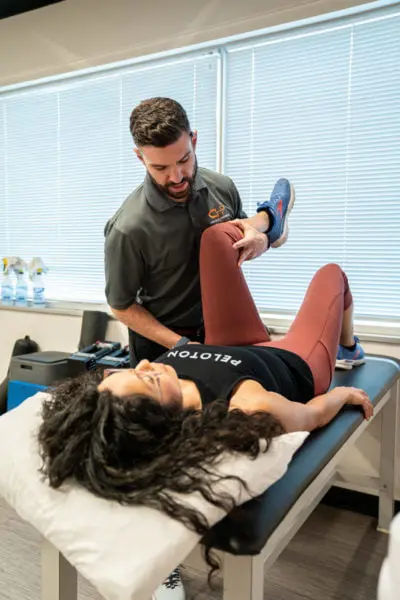
What Stretch Should You Be Doing?

Ten years ago, flexibility and stretching were all the rage, as well as a large component of the standard course of treatment in sports physical therapy. Many people had stretching in their daily routines, either as an athlete being told to stretch before and after practice from a coach, in a yoga studio by an instructor, or by a physical therapist in order to decrease pain. Now, the phrase “mobility” has been posted everywhere. “How to increase hip mobility to help improve your deadlift”, “Stretching Routines for Runners” and “is your ankle mobility plateauing your squat depth?” headlines can be seen from instagram and tiktok to google ads. But what is the difference between the two? Are they the same thing? What happened to the importance of stretching?

For starters, stretching or flexibility is the ability for a person to get into a position passively keeping one joint in mind. So if you want to bend down, are your hamstrings flexible and stretched out enough for you to touch your toes? To improve your flexibility, you stretch or lengthen your muscles to be able to achieve a goal.

On the other hand, mobility is the amount of active movement you have to reach a goal. For example with the “is your ankle mobility plateauing your squat depth” headline, can your ankle move enough and allow you to achieve a lower squat at your knees and your hips? To improve mobility, you typically need to target the joint itself, rather than the muscle tightness limiting a movement in stretching, in order to create more space for the bones to move on each other.

So how do you know if you cannot touch your toes due to muscle limitations, like in flexibility restrictions, or due to mobility issues? Like most questions in the physical therapy world, the answer is it depends. Physical therapists have a series of tests that can determine if the joint is unable to achieve a desired position due to muscle stiffness, joint tightness or an inability to control the motion that the body already has.

Below is an assessment and exercise that we use for many of our patients experiencing back pain. This helps us to determine the movement capabilities of the spine, including where it may be moving too much and/or not enough.

Once you figure out where your limitations are coming from, it is time to determine if you need to improve them. While these are hard questions to answer in a blog post, this is something that a physical therapist can help you distinguish by using various tests.

If this sounds like something you are interested in learning more about, contact us to receive a customized exercise program to improve either your flexibility or mobility (or both!).

Unlocking mobility

Do your hips or lower back feel tight when you squat? Do your shoulders feel stiff when you try to raise your arms overhead, or do your ankles feel restricted during certain movements? These are common complaints seen regularly in the field of sports physical therapy.

Mobility issues like these are often frustrating, but they aren’t random. In fact, it’s your body—and more specifically, your nervous system—deliberately limiting your range of motion. That stiff muscle you feel is your body’s way of protecting itself or adapting to the physical demands placed on it.

As a physical therapist, I frequently reflect on my experiences working with elite athletes, particularly during my time with the National Basketball Association (NBA). Many of these athletes experienced ankle mobility restrictions, which were a natural adaptation to their sport. Their constant sprinting, jumping, and cutting movements—often performed with their heels rarely touching the ground—caused their bodies to adapt in a way that improved performance but at the cost of mobility.

In these athletes, the tissues around their ankles functioned like tight springs, making them more explosive without requiring excessive energy expenditure. While these adaptations allowed them to excel on the court, they also came with trade-offs, limiting ankle mobility. Over time, these performance-enhancing adaptations can lead to increased risk of injury if mobility is sacrificed too much.

When Does an Adaptation Become a Problem?

Adaptations like limited ankle mobility can be beneficial for specific movements or sports. However, when these adaptations go too far, they can put you at a higher risk for injury.

The key question is: How do we know when adaptations have gone too far?

The answer is simple: when the body can no longer perform the basic movements required by your daily life or sport. At this point, your joints have less mobility than necessary, and that’s when you begin to experience discomfort, stiffness, or injury.

For instance, a basketball player who spends most of their time on the balls of their feet may lose the ability to properly flex their ankles. This lack of mobility may not seem like an issue during the game, but it can lead to compensations elsewhere in the body, causing lower back pain, knee problems, or even an Achilles injury. Similarly, if your shoulders are stiff when lifting weights, it might not be the weights that are causing pain, but rather the shoulder’s inability to move through its full range of motion due to overuse or compensatory patterns.

How Can Physical Therapy Help?

One of the core principles of physical therapy is identifying and addressing these movement limitations before they turn into bigger problems. By targeting areas of the body that have adapted too far, physical therapy helps restore balance between mobility and stability.

At its core, mobility isn’t just about increasing flexibility or stretching. It’s about teaching your body how to move in a variety of ways. This is especially important for athletes and active individuals who have developed specific movement strategies over time. For example, if you primarily engage in forward-motion activities (like running or cycling), your body may over-adapt to these movements and lose the ability to move comfortably in other directions.

The Importance of Varying Your Movements

To counteract these adaptations, I encourage athletes and patients alike to incorporate daily exercises that challenge their bodies to move outside of their typical patterns. By regularly practicing movements that are different from their usual routines, individuals can maintain better overall mobility and reduce the risk of overuse injuries.

For example, I recently worked with a patient who had limited shoulder mobility. This patient experienced stiffness when raising their arms overhead due to years of repetitive shoulder movements. I introduced a daily shoulder mobility drill to improve their range of motion and reduce the risk of injury.

In another case, I advised a runner to incorporate lateral movement drills into her routine to counterbalance the constant forward motion of running. This allowed her to develop strength and mobility in muscles that weren’t being used as much, ultimately improving her performance and reducing her risk of injury.

Try These Mobility Drills for Better Movement

Here are a couple of examples of the mobility drills I often prescribe:

These exercises are simple but effective ways to restore mobility and ensure that your body doesn’t over-adapt to a single movement pattern.

Ready to Improve Your Mobility?

If you’re tired of feeling tight, stiff, or restricted during your favorite activities, physical therapy can help you restore balance and improve your movement. Whether it’s your hips, back, shoulders, or ankles causing trouble, understanding and addressing the root cause of your mobility limitations is the first step to feeling better and moving more freely.

Would you like to discover daily exercises and routines that can help you improve your mobility and overall performance? Contact us today to schedule an evaluation and get started on the path to better movement!

What Touching Your Toes Really Says

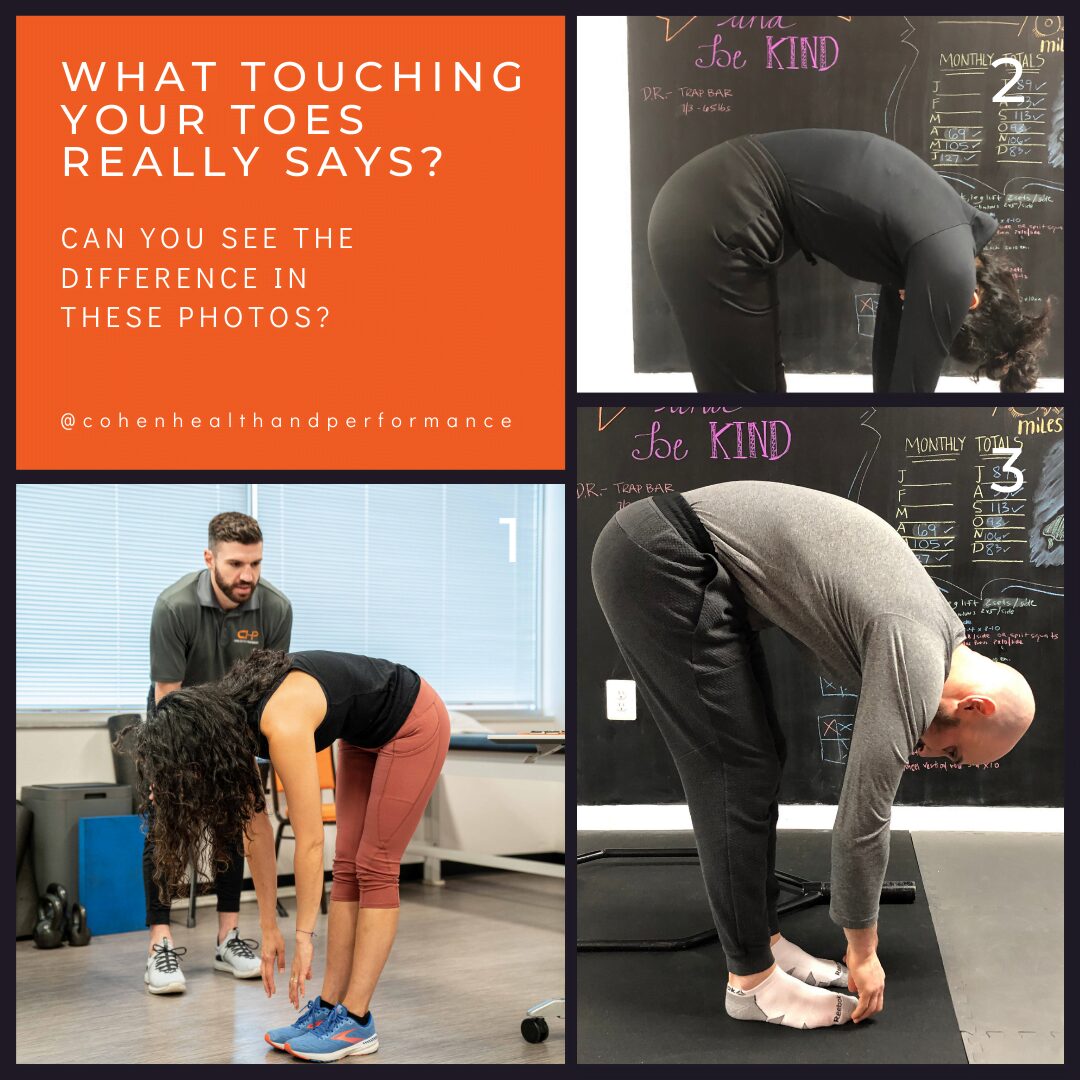
Can you see the difference in these photos? The toe touch is a simple test that is often performed in injury rehabilitation and sports physical therapy settings.

However, important parts of this test are commonly missed. Simply touching your toes doesn’t tell the whole story. If you can touch your toes, great, however there are different ways that you can get there.

Have you stretched your hamstrings to such a degree that they allow you to nearly palm the floor? 

If you are a gymnast that may be a great thing. However field sport athletes (ex. Lacrosse, football, basketball, baseball) and weight lifters need a level of hamstring stiffness for explosive movement. 

Is your lower back straight or does it flex into more of a C curve to allow you to more easily touch your toes? Is your lower back bending in certain areas but not in others?

Your lower back consists of multiple bones (vertebrae) that are stacked on top of each other. Our backs are built this way to allow for movement of one segment on the next. However many times these small movements do not occur and the lower back moves as one unit. The result is a lower back that looks straight in places despite being bent over. Over time, a lack of lower back  movement can increase the risk for injury.

The toe touch is a great test and can be made even better when directed by a professional with a trained eye.

Contact us for more information about how a customized movement assessment may help you optimize your training and avoid injury!

Is Mobility Overrated?

Mobility has become a popular buzzword in the sports physical therapy community in Bethesda and Chevy Chase. While it is an important aspect of health and fitness, could mobility be getting more attention than it actually deserves?

What Is Mobility?

The term “mobility” refers the quantity of available movement — and how freely and efficiently you’re able to do so. Popularized by the sports physical therapy and training community, mobility is important for everyone, whether you’re an elite athlete or a busy working Mom.

Mobility is an important part of a well-designed injury rehabilitation and prevention program. It is also used to improve the quality of life for our physical therapy patients in Chevy Chase and Bethesda.

While very important, many experts feel that the booming popularity of mobility overshadows several other key health factors. In particular, the added focus on mobility often leads to a lack of attention on other important health factors, such as strength, cardiovascular health, and other global health behaviors.

What The Mobility “Craze” Makes Us Overlook

Although mobility is an important aspect of a healthy body, mobility alone won’t provide the quick fix you might be looking for. Instead, there are several complex contributing factors that need to be properly managed to improve your overall health.

Strength Training

Lean body mass and strength are some of the greatest indicators of the overall health of an individual. In fact, according to a study done by Harvard University, something as simple as grip strength can help measure an individual’s risk of heart attack, stroke, or cardiovascular disease.

Focusing on mobility alone overlooks the importance of strength training. According to The Mayo Clinic, strength training can help you manage or lose weight, increase metabolism, protect your joints and ligaments, and improve your ability to do everyday activities.

Cardiovascular Exercise

Another important measure of the overall health of an individual is cardiovascular fitness. A simple way to gauge cardiovascular health is by measuring your resting heart rate — the number of times your heart beats per minute when not physically active.

Although the normal range of a resting heart rate is between 50–100 beats per minute, a resting heart rate greater than 90-100 BPM can put unnecessary strain on the heart. A high resting heart rate has even been linked to high blood pressure, cholesterol, and even heart disease.

By solely focusing on mobility, cardiovascular health may be overlooked.

Global Health Behaviors

Outside of strength and cardio training, there are several other important contributing factors to an individual’s health — specifically sleep, nutrition, and social connection.

Sleep plays a crucial role in your physical health. Not only does sleep heal and repair your muscles, heart, and blood vessels, but a recent study discovered done by the National Heart, Lung, and Blood Institute discovered a link between sleep deficiency and an increased risk of heart disease, kidney disease, diabetes, and high blood pressure.

Final Thoughts

All in all, mobility is only one aspect of staying healthy and active — it isn’t the only thing that should be focused on. Health is achieved through the successful balance of multiple variables, including mobility, strength training, cardiovascular exercise, and various other global health behaviors.

If you’re looking for a comprehensive program to improve your health, fitness, and quality of life, our physical therapy team in Bethesda and Chevy Chase can help. Contact us today for a free consultation!

Why Is Your Mobility Limited?

Do you feel limited in your hips when attempting a squat like the gentleman above? Or perhaps your shoulders feel stiff when you try to raise your arms overhead? Maybe it’s your ankle mobility that’s holding you back?

No matter where your mobility issues arise, it’s actually your body—more specifically, your brain—that’s intentionally causing this. You might feel tightness in a muscle, tendon, or joint, but this is simply your body’s way of creating more rigidity to better handle the physical demands you place on it regularly.

I often reflect on the many players I’ve worked with in the National Football League. A significant number of them had restricted ankle mobility, particularly in dorsiflexion (the ability to pull the top of the foot upward). These athletes were constantly sprinting, pushing, cutting, and accelerating, which required them to stay on the balls of their feet. Their heels rarely touched the ground, leading their calves and Achilles tendons to operate in a consistently shortened position. The brain smartly adapted to this by creating stiffness in the calves, which enhanced the elastic, spring-like properties of the muscle. This adaptation allowed them to use less energy and push off more quickly since they were already close to the starting position.

While this adaptation was beneficial for performance, it often led to imbalances when left unchecked, putting them at risk for various injuries. Their bodies essentially “forgot” how to move in a more controlled, less extreme manner. This “all or nothing” movement pattern works well for the high-intensity demands of sports but can become problematic when relied upon off the field.

This concept applies to all of us. Our brains will adapt and limit mobility in different areas if we continuously train our bodies in only one way.

Don’t get me wrong—our bodies need to know how to generate power for sports or training. However, we also need to ensure that we’re not overly reliant on these patterns and that we can move in various ways.

That’s why I often encourage athletes and patients to include exercises in their training that don’t require excessive strain. You shouldn’t need to grit your teeth or tense every muscle in your body to accomplish a task. If you do, it indicates a lack of movement efficiency.

Stretching alone won’t resolve this issue because we cannot overpower the nervous system. Instead, the best approach is to address the root cause of mobility restrictions by incorporating the strategies mentioned above.

×