This Made Me Roll My Eyes

The medical profession, sports physical therapy included, is good at giving out bandaids.

To illustrate this point, let me tell you a story about my best friend.  He lives in LA and takes advantage of all it has to offer. The guy can’t sit still. He hops in the ocean to go open water swimming in the morning and goes on hikes or trail runs in the evenings/weekends. 75 degrees and sunny every day must be nice…

On another beautiful, 75-degree day, he was running on a dirt trail to the top of Runyon Canyon and suddenly felt a sharp pain in the inside of his right knee. As he kept running, the pain increased. He decided to turn around, limp down the trail, and make an appointment with his Doctor. He saw his Doctor the next week and was told to take Advil and “take it easy”. This was when he called his favorite performance physical therapist…

My friend has known me since I was 10 years old and could feel me rolling my eyes.

Have you ever been told only to rest as a solution to an injury? This isn’t bad advice but it is a band-aid. It stops the bleeding without solving the reason the bleeding is occurring in the first place!

Pain occurs when the amount of stress placed upon the body exceeds the body’s tolerance of it.

So what is causing this stress to accumulate? It could be over-training, insufficient sleep, poor nutrition or a variety of other factors. Most likely it is a combination of many different things.

The root cause of pain must be addressed if you hope to feel better, stay better, and exercise consistently.

It is essential for your Doctor or Performance Physical Therapist to answer these questions and provide a plan to address them. If you are ready to finally solve the root causes of your pain and injury, contact us now!

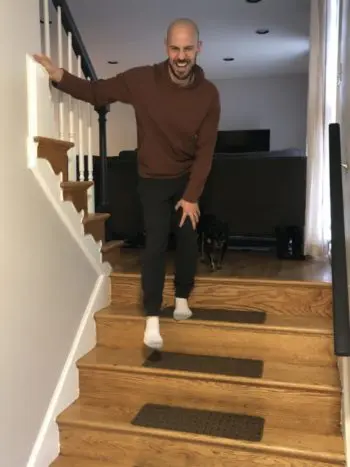
3 Easy Exercises for Happy Knees

I can’t stand doing warmups. There I said it. Even though I’m a sports physical therapist both in Bethesda and McLean (yup, we opened our new location in McLean, Virginia!), and I know better, I just want to get into my workout without spending 15 minutes doing boring drills.

If you are anything like me, you want to spend the least amount of time warming up without increasing your risk of injury.

One way to reduce the amount of time that you need to warmup your knees are with home exercises that prepare your knees to handle more stress. Our athletic physical therapy patients (both youth athletes and active adults) see us in Bethesda and McLean for help with knee pain that limits them in the gym and/or out on the field. We commonly recommend that people perform drills that build the capacity of what the knees can handle. This means that the knees will be capable of handling more stress and be ready to go as soon as you walk into the gym.

Check out the videos below where I breakdown 3 drills that you can do at home for happy, healthy, and strong knees!

These are just a few examples of drills that help you with knee pain. If you are serious about finally solving the knee pain that is forcing you to modify your favorite workouts, don’t hesitate and contact us today to schedule an appointment in McLean or Bethesda. The root cause of your knee pain is unique and it is unlikely that the cookie cutter program you found online will do the job. We will show you exactly where your knee pain is coming from and provide a customized performance physical therapy plan to address it!

Don’t Trust Your Pain

We have all experienced physical pain (in fact, my own history of low back pain is what interested me in sports physical therapy).

Maybe you injured your back lifting weights. Perhaps you hurt you shoulder playing catch with your kids. You may have irritated your knee when training for a marathon.

You decide to see your doctor, physical therapist, or medical provider of choice. They then prescribe the recommended treatment or “plan of care.”

Throughout the course of treatment, you determine if you are getting better by monitoring your pain. Is it decreasing? Is it staying the same or getting worse? If your pain is improving, the treatment is working. If not, it is failing. Pretty straight forward.

That is the way that standard physical therapy views treatment but is short sighted.

Modifying your daily activities or exercise routines will help pain quickly improve in the short term but the root causes of the pain remain. This is when many people stop going to physical therapy or performing their home exercise routine.

This pain-free period of time provides the body with an opportunity to address the root causes of pain. This is essential if you wish to prevent it from returning in the future while returning to full activity.

Pain is a prediction made by the brain. When pain continuously occurs during a movement or activity, the body learns to expect it. This expectation must lessen for pain to ultimately disappear during aggravating activities. If you really want to nerd out on pain science, check out this article by my friend and fellow physical therapist, Zac Cupples.

Imagine that you have lower back pain every time that you attempt to lift something off the floor such as deadlifting a barbell in the gym or emptying dishes out of the dishwasher.

The brain has an expectation that this bent over position will hurt. Therefore, similar positions must be experienced without pain. Does this mean that you should start deadlifting on day 1 of treatment. Absolutely not. The best solution is to start with something less threatening and build from there. Below is an example of a great activity that physical therapy patients with low back pain start with.

The brain will then determine that these positions are not threatening, ultimately reducing risk of pain in the future while facilitating a full return to active life.

If you are an active adult ready to solve chronic pain for good, contact us to receive a customized home exercise program today!

Is Sports Specialization Dangerous for Youth Athletes?

There comes a point in every youth athlete’s life when it’s time to choose “your sport”. Whether they’re a recreational team player, or a state champion, life gets pretty busy juggling multiple sports and activities. But when is that time, and are there dangers to specializing too early or too late? Can we become a good athlete, but prevent injuries (thus avoiding physical therapy!) and burnout at the same time?

There are a few guidelines we can follow in order to help draw a line when too much is too much. Guidelines are in place in order to prevent acute and overuse injuries in children and adolescents. While younger athletes can often “bounce back” fast, more serious injuries can ruin a season before it even starts. Here’s a few things to consider when signing your athlete up for sports:

1. Avoid over-specialization by signing up for multiple sports in a year. Just like with any activity, repeating the same stressors over and over can make you more susceptible to injury. Stay active and stay involved by choosing multiple sports.
2. “Hours per age” rule. Your child should not train more hours of one sport per week than their numerical age. (Example: a 14 year old swimmer should swim less than 14 hours per week)
3. Limit practice to 1.5 hours per day, and competition to 3 hours per week.
4. Have 1-2 rest days from sport practice/competition per week.
5. Young athletes should have up 3 months off per year, in 1 month increments of a break from organized sport.
6. Focus on form and technique before intensity.

Appropriately managing activity volume, and knowing when to take an injury seriously is hard work. Communicating with your primary care provider, pediatrician, coaches, athletic trainer, or physical therapist when something doesn’t feel right can be a useful tool to ensuring season-long success.

But most importantly, sport should be fun!

Reference:

https://www.acsm.org/docs/default-source/files-for-resource-library/6-ways-to-reduce-overuse-and-burnout-injuries-in-young-athletes.pdf?sfvrsn=acc88c52_2


×