3 training mistakes made by young athletes

After opening our new facility in McLean in December, I jumped back into treating sports physical therapy patients.

Our busiest time was in the afternoon when we saw high school athletes.

Many of these young athletes were training independently in the weight room, and I needed them to change their approach for physical therapy to be successful.

While each athlete needed to change something different, there were three mistakes that I found many were making.


Overtraining

Oh, to be young. Many high school athletes feel invincible and, as a result, push themselves too hard. More is only sometimes better, especially when they are playing on several different teams simultaneously with a demanding school schedule. Constantly pushing the limits causes poor technique in the weight room and increased risk of injury. A more thoughtful approach to strength and performance training will provide the opposite result and reduce injury risk!


Ignoring the basics

Understandably, many young athletes want to focus on the exciting stuff. Lifting heavy weights is exciting and competitive. But improving mobility and foundational movement skills. Not so much.

Building strength on a foundation of poor mobility and movement skills is a recipe for injury.

Can your athlete touch their toes without bending their knees or perform a deep bodyweight squat without falling over? How about a pushup without their chest rising before their trunk?

Below are a couple of exercises we use to address these problems before adding heavy weights.

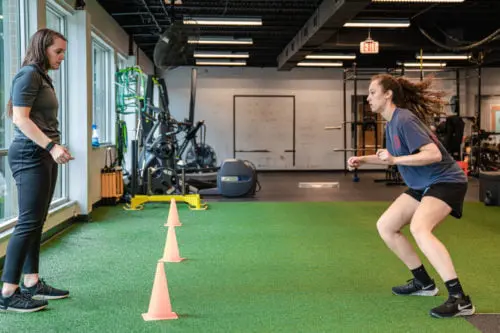
Lateral step down

Core pushup


Lack of Individualization

Many high school athletes follow generic training programs that don’t consider their individual needs, strengths, and weaknesses. While this works for some, an athlete recovering from an injury is unique and needs a training program tailored to their specific goals and abilities.


If you have an athlete motivated to make the most of their ability, they could be falling for many of the same mistakes.

Contact us if you want a personally designed strength training program.

This program may be all your athlete needs to avoid these common mistakes and take their performance to another level!
3 exercises athletes must master before college

During physical therapy school at Northeastern University, I volunteered as an assistant strength and conditioning coach with varsity athletics.

Summer was the most exciting time as first-year student-athletes came to campus to begin their team’s strength and conditioning program.

Our strength and conditioning and sports physical therapy staff quickly understood which athletes had experience in the weight room and which did not.

The athletes with limited weight room experience seemed lost. They didn’t know how to perform the required exercises and were notably weaker than their teammates.

Their coaches quickly learned about this, putting them at a disadvantage compared to their teammates working in the weight room before attending college.

Here are three exercises to help your athlete gain an advantage over their teammates.

Deadlift

Core pushup

Lateral stepdown

Does your athlete dream of playing a sport in college? Are they looking to get ahead of their competition? 

If so, don’t miss this opportunity to join our rising-star summer performance program. In this program, your athlete will be coached through a customized program that will transform them into a stronger, faster, and more explosive athlete. Contact us to learn more!

My shoulder pops. Is that bad?

I call these rice crispies. Snaps, crackles, and pops are typical in the shoulder and a concern for many physical therapy patients.

Rice crispies occur in the shoulder for many reasons. The shoulder joint has the most range of motion in the entire body. But with great mobility comes great responsibility!

The large amount of motion in the shoulder provides many ways to compensate. If the quality of shoulder movement is poor, it risks becoming unstable. Excellent movement quality is challenging in such a mobile joint, so the shoulder is commonly injured.

But before you worry too much about rice crispies in the shoulder, ask yourself if it is painful. If it is painless, it may only be a harmless joint noise known as crepitus, simply pressure released from the joint. Crepitus is what happens when you crack your knuckles.

But, if there is pain with the noise, consider seeing a physical therapist like our team here at CHP.

Movement compensations in the shoulder and repetitive use can irritate several tissues within the shoulder. One example is rotator cuff tendinitis, which is a common sports physical therapy injury in Bethesda and McLean.

Tendons are the cords that connect muscle to bone. The rotator cuff tendons can become worn down over time, much like the sole of a shoe that eventually wears apart. If left untreated, the result is a tearing of the rotator cuff tendon, resulting in increased pain and an inability to exercise or train fully. Limitations can progress further, affecting sleep, strength, and the ability to use the arm with daily activities.

The most important thing is to figure out why the pain or rice crispies started in the first place.

Small rotator cuff tears, arthritis, and joint damage is expected within the shoulder. But there is still a great deal that you can do (without surgery) to get out of pain and back to performing the activities that you love.

A great sports physical therapist will help you identify the root cause of your symptoms so that you can continue to exercise and enjoy your active lifestyle.

Contact us if you have questions about how we can help you with shoulder pain/popping and get you back to doing the activities you love.

This is why your back pain isn’t going anywhere

Let me tell you about a past physical therapy patient who saw me in our Bethesda and McLean facilities. We’ll call him John. John is a hard-working guy that had been struggling with back pain for years. It started with pain while weight training and eventually prevented him from standing for more than 20 minutes at one time. His inability to stand was a major problem because his job required him to be on his feet constantly. 


He had been to doctors, physical therapists, and chiropractors. He tried foam rolling, changing his desk setup, and even those strange massage gun-looking things. 


That is when he came to see me for a more “sports approach” to physical therapy.


I began our session by asking him questions about his back; I could sense that he had heard them before. But my following questions grabbed his attention.


He had not received these questions before, and I asked about his sleep habits, use of technology, and stress. These questions created our “aha moment” as we realized the following areas needed to improve if he wanted to conquer his back pain in physical therapy.  


A Poor Night’s Sleep

Sleep is the best recovery tool that we have. Research has shown that sleep quality improves outcomes in chronic pain patients, especially with back pain.


We first made sure that John had a high-quality mattress. A poor-quality bed can leave your back feeling worse due to a lack of support. Most people with back pain tolerate a firmer mattress best. Be sure to test multiple mattresses and determine the best and most comfortable ones. 


John’s final sleeping recommendation was simple—no more sleeping on his stomach. Sleeping on your stomach increases the compression on your lower back. Sleeping on your side or back can be extremely challenging when you are not used to it. But it will become much easier over time.


Addiction to Technology

John was spending way too much time looking at screens.

According to recent research, the average person spends about nine hours per day using electronic devices, which increases tension in several areas, like the lower back.


We started by setting realistic limits on John’s use of technology. We gave him a technology curfew of 9 pm (he couldn’t use his phone after 9 pm). Phones, iPads, and TVs contain blue light, suppressing melatonin production, a hormone essential for quality sleep. 


Reduce Stress

The body is resilient, but it can only handle so much physical and emotional stress. Research indicates that people struggling with anxiety and depression are more likely to experience a few orthopedic pains, including lower back pain.


After discussing this with John, he mentioned that he had enjoyed meditation but didn’t have enough time to keep it up. Because he enjoyed meditating, I suggested he try one of the many great apps with short, 5-minute meditations. 


Suppose meditation doesn’t work for you. No big deal! Search for one thing you enjoy, which reduces your stress, and implement that into your daily routine. Walking outside does that for me. Rain or shine, I ensure I get at least a couple of walks in a day.


As John worked to address these issues, we created a comprehensive physical therapy plan to help his back. Combining all these factors allowed him to recover and return to work and his active lifestyle fully. 


Back pain is a complex issue, influenced by many factors. But that is a good thing because that provides many ways that experts can help. If you have back pain that won’t go away, don’t hesitate to contact us so that we can help you find solutions. 

What I learned by going to the ER

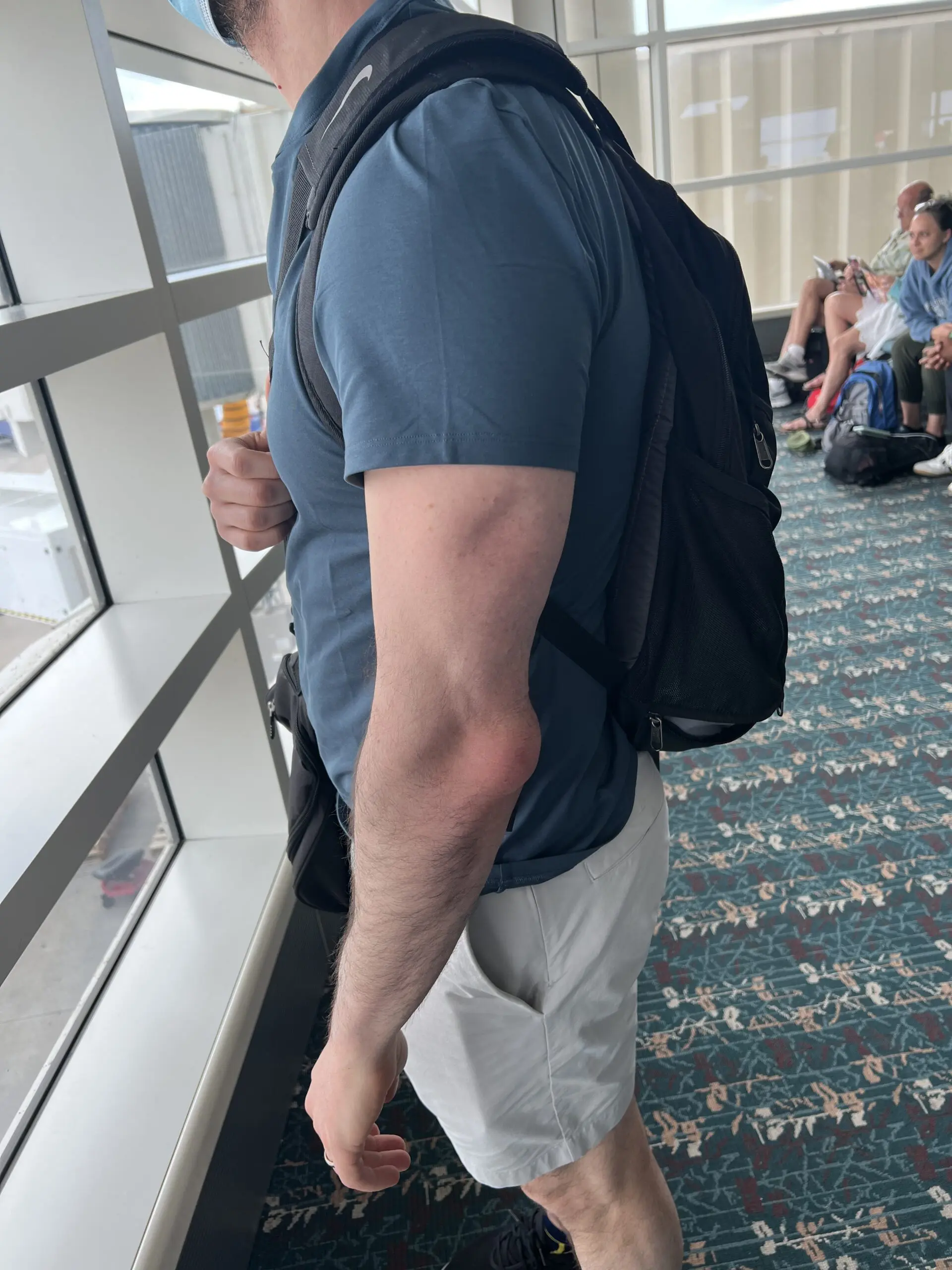
I woke up for the final day of a conference I had traveled to in Orlando. My wife, Deb, joined me for the trip, and the first thing I heard from her was, “What happened to your elbow?!”

I had a golf ball-sized bump on the back of my elbow, consistent with Olecranon Bursitis. I remember one of my professors in physical therapy school calling it “Popeye elbow.” This typically occurs because of a trauma or infection, and there hadn’t been any trauma, so it must have gotten infected, which needs to be treated immediately.

We flew back home that afternoon and went right to the emergency room. After waiting a few hours, they confirmed the infection, prescribed antibiotics, drained my elbow, and recommended that I consistently maintain compression on the area.

But I wasn’t confident in the recommendations….

The PA that treated me had a lot on her plate. She was running from room to room, and I could sense she was providing general recommendations because this wasn’t her area of expertise.

So, I later texted some of my colleagues here in McLean and Bethesda within the physical therapy/medical field, and they confirmed my suspicions.

The antibiotic I was prescribed was not the best option for my type of infection, and these areas of swelling should never be wrapped in compression garments.

This is not the fault of the people of the ER. I greatly respect their expertise, the stressful environments they work in, and the fantastic work they do to help so many people. This just wasn’t their area of expertise.

In fact, they did the most critical part of their job. They kept me safe until I could see a specialist.

Elbow conditions such as mine were his area of expertise. His recommendations were specific and clear, and most importantly, he took his time so that I could ask any questions I had.

What a refreshing experience. My doctor was present, and I didn’t feel like his hand was on the doorknob the entire time as he tried to leave quickly.

It is impossible to provide excellent care when we are rushing. As physical therapists, we learn so much just by being present. One of the first things I tell our doctoral students is that our patients will give us all the clues if we slow down, listen, and ask great questions.

Are your healthcare providers doing that? Can you ask all the questions that you have?

What about when you aren’t in their clinic? It’s normal to forget to ask something during an appointment. Will they answer your question promptly when you aren’t in their office?

If you need help, contact me to connect you with the right healthcare provider. I’ve made it a mission to connect with the healthcare community around the DMV because that will help us better serve you.

As healthcare consumers, we can see whomever we want. Look for an expert that provides you with the type of care that you expect to receive!

Why I’ve Been Training Like a Bodybuilder

If there is one thing that natural bodybuilders (aka those that don’t take steroids) know, it is how to build muscle.

One of my friends is a personal trainer and natural bodybuilder, and can compete with those that aren’t “natural” by being super bright, with a deep understanding of the science of hypertrophy (fancy word for building muscle).

Muscle helps protect against injury, and as physical therapists, we need to understand how to help our patients build more when necessary.

What better way to learn than to test yourself? All physical therapists should try it on themselves first, right? My friend and I have been designing my training routine for the past year, and my back feels great.

As many of you know, my history of low back pain, beginning as a collegiate athlete, led me to become a physical therapist. In the past, strenuous weight training programs would irritate it. But I have been training harder than ever over the past year and feeling great.

People often experience back pain as they use their backs to support or lift weights. If I was using my back during an exercise, I wasn’t placing enough stress on my muscles to stimulate growth.

It is easy to cheat as exercises become more challenging. Maintaining quality technique when tired is a great way to remain resilient to injury. Check out this video for more on this.

Besides reducing injury risk and building strength, adding muscle is helpful for other reasons, including:

  1. Increased metabolism: More muscle equals a higher metabolic rate. This doesn’t just mean your body will burn more calories at rest. A higher metabolic rate provides more sustainable energy to the body throughout the day.
  2. Decreased fall risk: Increased muscle mass helps to reduce fall risk in the elderly population, and it is best to start this process early.
  3. Reduced risk of chronic disease: Increasing muscle mass has been shown to help reduce the risk of chronic diseases such as diabetes and heart disease. Muscle tissue helps to regulate blood sugar levels, blood pressure, and cholesterol.

Ready to join me and enter a bodybuilding competition?! Just kidding. That is not necessary, but there is a lot we can learn from unexpected places!

×