3 exercises I don’t do anymore

A few weeks ago, I was catching up with a former physical therapy colleague from our time working with professional athletes.

We laughed about how we used to work out every day at 5:30 am before the athletes got to the facility. We took turns designing the training programs that we used to torture ourselves with so early in the morning.

After our conversation, I thought that looking at our old training programs would be interesting. I noticed three popular exercises that I don’t do anymore both personally and professionally with my patients as a sports physical therapist in Bethesda and McLean.

  1. Planks: Other exercises do a better job of strengthening the core and working the abs. Planks are typically performed with straight legs, which helps support the body with the legs, not the abs. It is also an easy exercise to cheat by allowing the belly to sag slightly toward the ground. As this occurs, the body is supported by the hip flexor musculature and the lower back instead of the abs. Try performing a bear variation instead!
  2. Barbell Back Squats: This exercise can be done effectively but requires many qualities to perform correctly. Minor limitations in shoulder range of motion, thoracic spine extension, hip mobility, and ankle flexibility result in much strain to the lower back and other areas. I’ve found that I can strengthen my lower body very effectively with exercises that have a lower risk. GobletZercher, or SafetySquats are usually better options unless you are a powerlifter or a collegiate athlete.
  3. Upright Rows: The upright row fails the risk vs. reward equation. You can create the benefits of this exercise with other, lower-risk exercises. The upright row forces the shoulder into combined flexion and internal rotation as it lifts a weight. Doing so is stressful to the shoulder and isn’t worth the risk. Dumbbell pressing variations like this are a better option.

What is the goal of this exercise? That is the question I ask myself as I design training and physical therapy programs for my patients/clients. Typically, the goal is to increase strength, build muscle, or prevent injury. If a different exercise is more effective at reaching those goals or can deliver the same result with less risk, that is the better option.

Maybe I Do Hate Stretching…

Zac, why do you hate stretching?

I received this question during a physical therapy session recently, which admittedly made me chuckle. I don’t hate stretching, but we overrate its importance (physical therapists included).

Like most people, when you think of stretching, you think of static stretching. This type of stretching involves holding a stretch for an extended period.

Come to gyms like the one I train at, and you will see most people doing this form of stretching before they exercise.

Research has shown that static stretching performed before physical activity may negatively affect performance and does nothing to reduce injury risk. It temporarily decreases muscle strength and power and reduces muscle stiffness, essential for joint control and protection.

But stretching feels good. I agree, so I recommend that you perform your favorite stretches when you are done with your workout.

So, what should I do to warm up before exercise?

Dynamic stretching and drills specific to the activity you are about to perform.

This type of warmup involves moving your body through its full range of motion, mimicking the movements of the activity you are about to perform. This helps increase heart rate and body temperature and improves coordination, balance, and neuromuscular control.

Below are 2 drills I often use on my upper body days, followed by 2 more that I commonly use on lower body days with both physical therapy and personal training clients.

Upper Body

  1. Kettlebell Windmill
  2. Sidelying Arm Bar

Lower Body

  1. Sissy Squat
  2. Heels Elevated Clean

Interested in receiving a custom-designed warmup routine from our Doctors of Physical Therapy to help you reduce your injury risk while preparing you to perform at your best? Contact us to learn more!

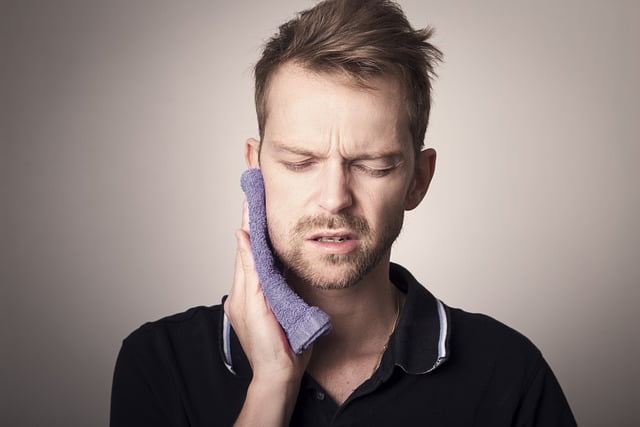
My jaw pops, is that bad?

Have you noticed joints making more noise as you have gotten older? One of the strangest ones is the random popping I get in my jaw.

Does that ever happen to you? If so, and if it is painful, you may want to investigate it (our physical therapy team in McLean and Bethesda treats this!). 

Open and close your mouth while feeling in front of your ears. Search until you feel the joint moving, called your temporomandibular joint (TMJ). This joint allows you to open and close your mouth and move your jaw from side to side.

The TMJ has a small shock-absorbing cartilage disc between the jawbone and your skull. If this disc moves out of alignment or there is arthritis in the joint, clicking, popping, and pain can occur.

The alignment of the TMJ is a product of everything below it. When I see physical therapy patients experiencing TMJ pain, I first check the position of the head, neck, and rib cage and look at posture. Check out this article to learn more about how to get your head, rib cage, and pelvis in the proper position.

This sometimes corrects TMJ pain, but we can’t stop here. Here are some factors that may also need to be addressed.

  1. Malocclusion: Malocclusion is when the teeth do not fit together correctly, resulting in jaw misalignment. This is when your dentist needs to work with your physical therapist as part of the healthcare team!
  2. Stress: Teeth clenching is associated with stress. Caring for your mental health is essential to helping TMJ issues. Many dentists also suggest nightguards for those of us that clench when sleeping.
  3. Chewing gum: stay away!
  4. Posture, especially while working: What posture is best? Does that even exist? Check out an article I wrote on that here.

Popping, clicking, and jaw pain is most likely a result of several different factors. TMJ issues usually require a healthcare team such as a physician, physical therapist, and dentist. Popping and clicking without pain likely isn’t much to worry about. Still, please see a healthcare provider if pain is associated with it.

At CHP, our physical therapists we evaluate patients with TMJ discomfort. If you or anyone you know would like help solving these challenging problems, contact us today!

3 Tips to Help You Find the Best Shoe

Minimalist shoes, running shoes, cross-training sneakers, weightlifting shoes. As sports physical therapists, personal trainers and performance coaches in McLean and Bethesda, we are asked all sorts of footwear questions. If you are like me, and do several different things, it may seem that you need a special shoe for each activity.

In my closet you can find running, hiking, cross-training, basketball, and special weightlifting shoes. But these days I mostly use 1 pair for all of my training.

I’m more of a generalist now. I dabble in many different things but spend most of my “fitness time” exercising in the gym. Sorry ego, my days of being a specialist are behind me.

If you are training for a particular sport or are a high-level runner, you are a specialist and likely need a special shoe for your sport (and the footwear recommendations in a sports physical therapy setting will be different). But if you are a generalist like me, you need a shoe that is comfortable, designed for your foot type, and can do everything that you need.

Here are 3 things that you should look for to choose the right shoe for you.

  • It must have a firm and snug heel cup. Your heel sits at the base of the shoe, in a place called the heel cup. The heels cup should fit snugly around your heel and should not be much wider than your heel itself. This prevents your heel from sliding within the shoe, which may negatively impact foot mechanics.
  • The shoe must have a toe break that bends where you toes bend. Place your shoe on the ground and hold it there. Pull the front of your shoe up from under it. The folding point of the shoe should be located where your toes bend. If your shoe folds at another location, your shoe is not accommodating to the mechanics of your foot and can lead to breakdown within the structure of the foot itself.
  • You should be able to feel the entirety of both your feet on the ground as you are standing still in your shoes. People are often unable to feel their arches, which results in more stress on the areas that have more contact with the ground.

There are 26 bones and 30 joints within the foot. This results in many ways that our foot can compensate but these 3 tips can help solve these issues.

Would you like help finding the right brand and model shoe for you? Our performance physical therapy team would be happy to provide you with recommendations based on the brands and models that are on the market right now!

What’s the deal with my ankle popping?

When your knuckles pop, your ankle cracks, or your hip makes that strange noise, do you ever wonder, “Is that bad?” Should you see a sports physical therapist or doctor about it?

Well, there’s no need to worry—it’s probably not a big deal if you’re not experiencing any pain when it happens.

I have this quirky habit every morning as soon as I get out of bed. I keep my right heel on the floor and move my knee over my toes until I feel and hear a pop in the back of my heel. It freaks out my wife, Deb, every time.

The cracking or popping in a joint is similar to the sound of pressure being released from a soda bottle. Over time, pressure builds up within a joint, and for some people, it feels good to release it. That’s the noise you’re feeling and hearing.

However, if you experience pain when the pop occurs or if the area feels unstable, it’s important to reach out to us. We can help determine the root cause of these issues and whether any treatment is necessary.

We’ll assess if your pain is related to arthritis, overuse, or another movement-related issue that we can address through physical therapy, with exercises you can do at home.

Here are a few questions to ask yourself. If you answer “yes” to any of these, it might be time to seek help:

1) Is the popping I feel painful?
2) Has there been a recent injury to this area?
3) Does this area feel unstable?
4) Do I have weakness in this area?

You might not even need to visit the office—a phone call could be enough. Check out our homepage here and click on the “free phone consultation” tab!

Runners: don’t miss this part of your training!

Looking to Boost Your Running Performance Without Increasing Volume?

If you’re searching for ways to enhance your running performance without endlessly increasing your mileage, you’re not alone—many of our physical therapy clients in Bethesda have the same goal!

It’s a common misconception that the only path to becoming a better runner is by running farther and faster. While this might ultimately be the aim, strength training is a crucial element in improving overall fitness and race performance.

Incorporating strength training into your regular exercise routine has been proven to enhance running economy (efficiency!) and prevent injuries. These two factors are vital for long-term running success and are consistently emphasized in physical therapy.

More specifically, strength training reduces the risk of injury and boosts muscular endurance. Research shows that regular strength training improves a runner’s speed and VO2 max—the maximum amount of oxygen your body can utilize during exercise.

However, to reap these benefits, it’s important that a runner’s strength training program is properly designed and tailored to their individual goals and characteristics.

Fortunately, most runners share similar objectives: to run faster, run farther, and avoid injury. Strength training programs for runners should therefore focus on exercises that enhance running-specific qualities.

But with so many exercise options available, where do you begin? Starting on your own can be overwhelming.

That’s why we’re offering a FREE workshop designed to teach you the strength training program that will elevate your performance to the next level.

All ages and skill levels are welcome!

×