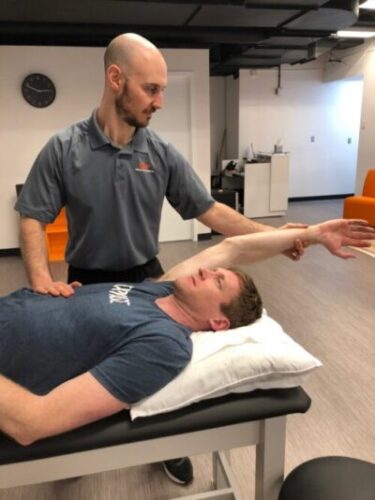
Shoulder pain rehab in Bethesda: How to keep lifting when your shoulder hurts

If you’ve been lifting weights for years, there is a good chance you’ve experienced shoulder pain at some point.

Maybe your shoulder feels irritated during bench press. Maybe overhead pressing has become uncomfortable. Or perhaps pull-ups leave your shoulder feeling cranky for the rest of the day.

The good news is that shoulder pain does not always mean you need to stop training.

One of the goals of effective shoulder pain rehab in Bethesda is helping athletes and active adults continue progressing toward their goals while reducing unnecessary stress on the shoulder joint.

While shoulder pain is common among lifters, it’s also one of the most common reasons athletes seek shoulder pain rehab in Bethesda and sports physical therapy in Chevy Chase. The goal is not simply to eliminate pain. It’s to identify why the shoulder became irritated and create a plan that allows you to continue training whenever it is appropriate.

Why athletes seek shoulder pain rehab in Bethesda

Shoulder pain is often multifactorial.

When evaluating someone for shoulder pain rehab in Bethesda, we may assess:

  • Rotator cuff strength and function
  • Shoulder blade control
  • Mobility limitations
  • Rib cage and trunk positioning
  • Training volume and recovery
  • Exercise technique and movement patterns

All of these factors can influence how the shoulder handles stress in the gym.

While addressing the root cause is important, we can often make simple training modifications that allow athletes to continue training while their shoulder recovers.

Shoulder pain rehab in Bethesda: Rethinking overhead pressing

Traditional overhead pressing requires significant mobility and control throughout the shoulder complex.

For many lifters dealing with shoulder discomfort, moving directly overhead can increase irritation.

A great alternative is the landmine press.

Because the arm moves slightly in front of the body rather than directly overhead, the shoulder often has more room to move comfortably while still allowing you to build strength and muscle.

For many athletes, this modification provides many of the benefits of pressing with significantly less irritation.

Pull-up modifications for shoulder pain

Pull-ups are another exercise that can sometimes aggravate shoulder symptoms.

One simple adjustment is switching from a pronated grip, where the palms face away from you, to a neutral grip, where the palms face each other.

This position is often more shoulder-friendly and allows many athletes to continue training without discomfort.

If pull-ups remain painful, exercises such as half-kneeling lat pulldowns can provide a similar training stimulus while placing the shoulder in a more comfortable position.

Bench press adjustments during shoulder pain rehab

Bench press is one of the most common exercises associated with anterior shoulder pain.

Often, the issue occurs when the elbows travel too far behind the body at the bottom of the lift, increasing stress on the front of the shoulder.

One simple modification is limiting the range of motion.

Using a foam pad, bench block, or other spacer can reduce how far the bar travels without significantly affecting strength or muscle-building benefits.

Even reducing the range of motion by an inch can make a noticeable difference for some lifters.

The goal is not to avoid exercise

A common misconception is that shoulder pain rehab means avoiding challenging exercises.

In reality, the goal is often the opposite.

Effective shoulder pain rehab in Bethesda focuses on identifying why the shoulder became irritated in the first place while finding ways to keep you active and progressing toward your goals.

Sometimes that means strengthening the shoulder. Sometimes it means improving mobility. Sometimes it means making temporary modifications to your training.

Most often, it involves a combination of all three.

Whether you’re preparing for a powerlifting meet, training for your next CrossFit competition, or simply trying to stay active, working with a clinician who understands strength training can make a significant difference. Our team provides both shoulder pain rehab in Bethesda and sports physical therapy in Chevy Chase, helping active adults and athletes recover while continuing to pursue their performance goals.

Get help with shoulder pain rehab in Bethesda

If shoulder pain is limiting your workouts, sports performance, or daily activities, you do not necessarily need to stop doing the things you enjoy.

The right assessment and treatment plan can help identify the root cause of the issue while providing practical strategies that keep you moving.

At Cohen Health & Performance, we help athletes, lifters, and active adults overcome shoulder pain and return to training with confidence. Whether you’re looking for shoulder pain rehab in Bethesda or sports physical therapy in Chevy Chase, our team can help you recover, improve your movement, and get back to the activities you enjoy.

If you’re ready to get back to lifting without shoulder pain, schedule an evaluation with our team today.

How Physical Therapy Can Help You Keep Training Through Shoulder Pain

For anyone dealing with a history of shoulder pain, getting a solid upper body workout can feel like a minefield. Bench presses, overhead presses, and pull-ups are staple movements in strength training, but they can start to feel off limits when your shoulder is not moving or functioning the way it should.

But here is the good news. Physical therapy and shoulder pain rehab can help you get back to doing what you love in the gym safely and effectively. For athletes and active adults looking for shoulder pain rehab in Bethesda, the right approach allows you to continue training while improving how your shoulder actually functions.

Why Overhead Movements Hurt

Many overhead exercises require a full range of motion at the shoulder. For that to happen, the shoulder joint is not working alone. It relies on a coordinated effort between your shoulder blade (scapula) and your rib cage to allow your arm to move overhead without pain or compensation.

What often gets overlooked is that the rib cage needs to move 360 degrees, expanding and compressing in both the front (anterior) and back (posterior). If it cannot, your scapula cannot rotate properly and your shoulder joint becomes restricted. This can lead to stiffness, discomfort, or pain.

This is something we frequently address in shoulder pain rehab programs, especially for athletes who want to continue lifting and training.

The Role of the Rib Cage in Shoulder Mobility

When you raise your arm overhead, your scapula upwardly rotates around your rib cage. If your rib cage lacks the ability to expand and compress, especially in the upper back or chest wall, that scapular movement becomes restricted. Over time this restriction limits your range of motion and contributes to shoulder pain.

In our Bethesda physical therapy clinic, one of the first things we assess in patients who need shoulder pain rehab is how well their rib cage moves. If we find restrictions, we often start with targeted breathing and mobility drills.

Two Foundational Drills We Recommend

Here are two exercises we commonly use with patients during shoulder pain rehab.

1. Hooklying Overhead Reach with Breathing

This drill helps facilitate sternal movement, which is the rise and fall of your chest bone. This motion is essential for true overhead mobility. By combining this position with focused breathing, you can restore movement in the front of the rib cage.

2. Quadruped or Seated Upper Back Expansion Drills

These drills are designed to open up the posterior rib cage. Breathing is key. You are directing air into the areas that need more movement so your scapula can glide properly when you lift your arm overhead.

These exercises do not just improve mobility. They create the foundation for rebuilding strength.

Build Strength in End Ranges

It is not enough to simply restore mobility. You also need to be strong in those new positions.

This is a key part of effective shoulder pain rehab. Many people regain movement but never build strength in those ranges. That is often why pain returns once they go back to training.

A well designed physical therapy program includes strengthening drills that target these vulnerable positions so your body can handle the demands of lifting, throwing, or overhead sports.

Smart Modifications You Can Make in the Gym

Even as mobility and strength improve, certain movements might still feel uncomfortable. Smart exercise modifications can help you continue training while your shoulder recovers.

Here are two adjustments we often recommend during shoulder pain rehab.

1. Recline Your Bench for Overhead Pressing

Instead of pressing from a fully upright 90 degree position, adjust your bench to around 70 degrees. This reduces the mobility demands on the shoulder while still allowing you to build strength.

2. Modify Your Pull Up Angle

If you find yourself arching your back or rowing yourself to the bar during pull ups, you may be compensating for limited mobility. Bands, assisted machines, or grip modifications can allow you to maintain a more vertical pull without irritating your shoulder.

Physical Therapy Is More Than Just Rehab

The best shoulder pain rehab programs are not just about reducing pain. They focus on helping you move better and train smarter.

Working with a physical therapist can help you:

  • Identify the root cause of shoulder pain

  • Restore proper movement and strength

  • Learn ways to train around limitations

  • Return to lifting and sport without recurring setbacks

For active adults and athletes searching for shoulder pain rehab in Bethesda, the goal is not simply to stop pain. The goal is to build a shoulder that is resilient enough for the demands of training.

Final Thoughts

Shoulder pain does not have to mean the end of upper body training. By improving rib cage mobility, strengthening end ranges, and making smart gym modifications, you can keep progressing while addressing the underlying problem.

If you are struggling with persistent shoulder pain, working with a physical therapist who understands strength training and performance can make all the difference.

If you are looking for shoulder pain rehab in Bethesda, our team focuses on helping athletes and active adults return to training stronger, more resilient, and pain free.

Contact us today to schedule a performance based physical therapy evaluation.

×