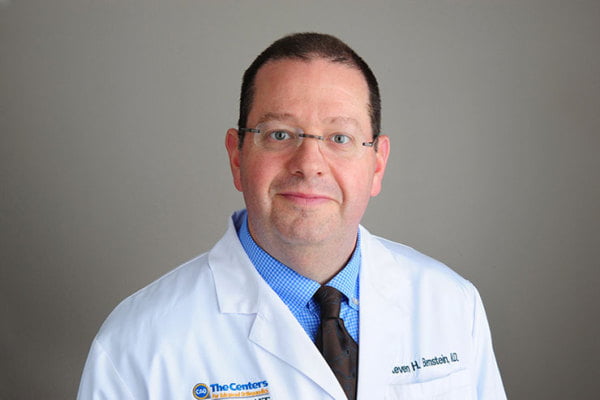
CHP Spotlight Interview with Dr. Steven Bernstein

How long will my athlete be in sports physical therapy after their ACL repair?

What’s going on with Aaron Rodgers? Can he really rehab his achilles repair in 14 weeks?

What is the one thing that you can do to play your sport for as long as possible?

I recently interviewed Dr. Steven Bernstein to tackle these questions and more in the latest edition of the CHP Spotlight Interview series. Dr. Bernstein practices orthopedic surgery with Summit Orthopedics, focusing on sports medicine. He specializes in arthroscopic surgery of the knee, shoulder and ankle. 

The mission of the CHP Spotlight Interview Series is to share information with you from local experts in the fields of sports medicine, physical therapy, personal training, and sports performance. Now, more than ever, a seemingly infinite amount of information is available, and finding credible information is challenging. But we have good news. We are here to help you find the best information about physical therapy, personal training, and sports medicine from experts in Bethesda, Chevy Chase, DC, McLean, and Northern Virginia.

If you or someone you love has had a shoulder, hip, or knee injury, don’t miss this interview! 

To learn more about Dr. Bernstein, click here and check out our interview below!
CHP Spotlight Interview with Orthopedic Surgeon, Dr. Ronald Paik

I recently had the pleasure of interviewing Dr. Ronald Paik from the Nirschl Orthopaedic Center on the latest edition of the CHP Spotlight Interview Series. The mission of the CHP Spotlight Interview Series is to share information with you from the greatest experts in the fields of sports medicine, sports physical therapy, personal training, and performance. Now, more than ever, there is a seemingly infinite amount of information available and finding the most credible information is a challenge. The good news is that we are here to help you find the best information related to physical therapy, personal training, and sports medicine from experts surrounding us in Bethesda, Chevy Chase, DC, McLean and Northern Virginia.

If you or someone you love has had a shoulder, elbow or knee injury, don’t miss this interview! Dr. Paik explains what you can do if you have experienced a shoulder, elbow or knee injury and what risk factors you can address right now to reduce your risk of injury. He goes on to share when surgery may be appropriate and when conservative options like physical therapy are a better choice. If you are a baseball player, field sport athlete, or weekend warrior, this is for you.

Dr. Paik is an orthopedic surgeon and sports medicine physician specializing in treating complex disorders of the shoulder, elbow, and knee. His goal is to pursue non-operative treatments, like physical therapy when possible, but he is experienced in advanced arthroscopic procedures, surgical repair and reconstruction, and total joint replacements.

To learn more about Dr. Paik, click here and check out our interview below!
Performance training for knee pain

When your knees are acting up, how could using them more possibly help? Many of our patients have the same concerns during the injury rehabilitation process, especially when they first start physical therapy.

Knee pain often stems from a reduced ability to tolerate stress. This stress can occur during activities like squatting, lunging, running, or jumping.

Every tissue in the body has a certain stress tolerance—the amount of stress or load it can handle before pain or injury occurs. When this tolerance decreases, it takes less stress to cause discomfort or injury. However, when the tissue’s loading tolerance increases, it can withstand more stress. In sports physical therapy, finding the right balance between these factors is crucial.

The only way to increase a tissue’s loading tolerance is through training—or in other words, applying stress to the tissue!

The key is to apply the right amount of stress to the targeted tissues. Too little stress won’t prompt the body to adapt, while too much could lead to further injury.

It’s similar to weight training. To build stronger muscles, you need to lift weights, which stresses the muscles. This stress triggers an adaptation, allowing the muscles to handle more in the future.

In cases of chronic knee pain, people often avoid loading the knees. Over time, this avoidance leads to a decrease in the loading tolerance of the tendons and tissues around the knees. As tolerance decreases, the likelihood of pain increases, creating a snowball effect.

We can reverse this by introducing pain-free exercises that challenge the tissues around the knees. Isometric exercises, which involve holding a challenging position for a set period, are particularly effective.

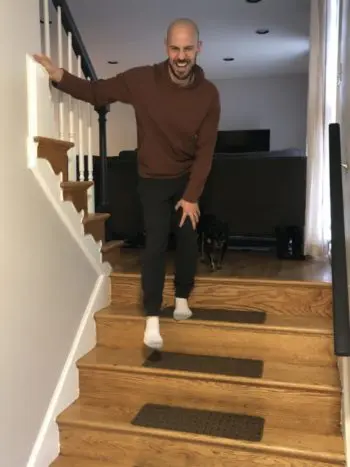
Another type of exercise that often benefits those with chronic knee pain is eccentric exercises. These exercises work the tissues as they lengthen slowly. One of my favorites, which we frequently use, is the Eccentric Step Up.

When dealing with knee pain, there aren’t inherently “good” or “bad” exercises. The goal is to find the exercises that apply the right amount of stress so the surrounding tissues adapt appropriately.

Our team of Performance Physical Therapists would love to help you find the best exercise routine to improve your knees’ loading tolerance. Contact us to receive a comprehensive home program tailored to you!

P.S. Don’t forget to subscribe to our YouTube channel and check out our new and improved Instagram page @cohenhealthandperformance!

×