If you watched NFL football 9 days ago, you probably saw the heartbreaking moment when Colts quarterback Daniel Jones ruptured his Achilles in what had been shaping up to be a breakout season. The kind of year that shapes a career in an instant.
What made it even more concerning is that he had been playing for weeks with a fractured fibula in the opposite leg. And while we’ll never know for certain if one injury caused the other, the situation highlights an important truth:
Your body reacts to injury as a system, not as a single joint or muscle.
This same pattern is something we see every day at our sports physical therapy clinics in McLean and Bethesda.
Pain Is Often Not the Real Problem
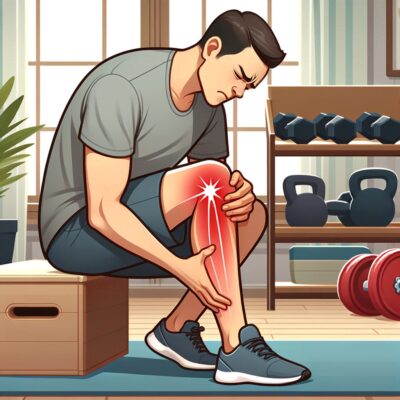
One of the biggest misconceptions in injury recovery is assuming pain always means something is wrong exactly where it hurts.
Your body is a chain. When one link is weak or restricted, the rest of the chain absorbs stress.
At our
Sports Physical Therapy McLean and
Sports Physical Therapy Bethesda clinics, we commonly see:
• An ankle injury showing up later as knee pain
• Hip stiffness leading to low back issues
• A stiff upper back contributing to shoulder pain
A stressed area may feel like the problem, but it often is just compensating for another weakness elsewhere.
Young Athletes Should Not Copy Pro Athletes
Professional athletes live in a different world.
Playing is their job. The reward may be millions of dollars, championships, and career-defining moments.
For high school athletes, the goal should not be to sacrifice long-term health to win the next game. The goal is development, confidence, and staying healthy for years to come.
At our McLean and Bethesda sports physical therapy locations, we help families and athletes make smart decisions every day about when it is okay to push through discomfort and when the risk is simply not worth it.
The Most Common Risk We See: Incomplete Rehab
Most re-injuries don’t happen from a freak accident.
They happen when athletes return before their bodies are truly ready.
We regularly see athletes who can:
- Run straight
- Jog pain-free
- Walk normally
But cannot yet:
- Cut safely
- Decelerate under control
- Jump and land with good mechanics
- Handle full game-speed movements
Pain may be gone, but the body may still be under-prepared for the stresses of sport.
If you’re interested in our approach, check out our program for
High School Athlete Injury Rehabilitation — where rehab is not just about healing, but restoring movement, strength, and readiness.
The Right Question to Ask
Instead of asking:
“Can I play?”
A better question is:
“Can I move the way my sport demands without compensating?”
At our sports physical therapy clinics in Bethesda and McLean, return-to-play decisions are based on far more than pain relief.
We evaluate strength, symmetry, movement quality, coordination, and readiness for sport-specific stresses.
How Technology Helps Us Make That Decision — Not Guesswork
One of the biggest advantages we offer is our use of advanced technology for return-to-play testing and performance evaluation. No more guessing if someone “feels fine.” We get objective data.
We’ve written more about this on our dedicated page for How Technology Is Changing Sports Physical Therapy in Bethesda and McLean.
Here’s how that technology helps:
- Precise movement analysis to catch compensations
- Strength and power testing to verify balanced return
- Data on jump mechanics, landing, and force absorption
- Objective criteria for return-to-play. Not opinions
That means when we clear an athlete for sport again, we can be confident they’re ready for the demands ahead. Not just based on feeling or judgment but on real, measurable performance.
How Sports Physical Therapy in McLean and Bethesda Can Help
If your athlete is coming back from an injury and something still doesn’t feel right, but you’re not sure why, they deserve answers.
At Cohen Health and Performance, we provide:
- One-on-one sports physical therapy
- Strength, mobility, and performance testing using advanced technology
- Sport-specific rehab progressions
- Return-to-play guidance based on data and movement quality
Whether you are searching for sports physical therapy McLean or sports physical therapy Bethesda, our mission is simple:
Keep athletes healthy now and strong for the future.
Toughness is admired in sports. Preparation and smart decisions are what prevent injuries.
The best athletes aren’t the ones who ignore pain.
They are the ones who listen to their body early and fix the problem before it becomes a season-ending setback.
Looking for sports physical therapy in McLean or Bethesda?
If you are unsure whether your athlete is truly ready to return from injury or want a professional evaluation before letting them get back into full sport, we’d love to help.
Visit:
• https://cohenhp.com/mclean-va/
• https://cohenhp.com/bethesda-md/
Because staying on the field isn’t just about grit.
It’s about preparation, smart rehab, and long-term health.

