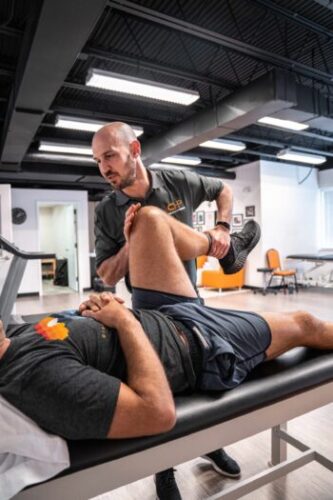
As we get older, some degree of wear and tear in the knees is normal. Degenerative changes in cartilage, meniscus tissue, and other structures are a natural part of aging and years of activity.
However, when people hear terms like “degenerative tear” or “bone-on-bone” after an MRI, many immediately assume surgery is the only option.
The reality is often more nuanced.
Recent research published in the New England Journal of Medicine found that surgery for certain degenerative meniscus tears did not produce better outcomes than placebo surgery. This highlights the importance of exploring conservative treatment options first, especially through knee rehab and knee pain physical therapy.
Why Imaging Does Not Always Tell the Full Story
MRI findings can sound alarming, but structural changes on imaging do not always correlate with pain or function.
Many active adults have degenerative changes in their knees without experiencing significant symptoms.
The important question is not simply what the MRI shows. The more important question is:
How well does the knee move, tolerate load, and function during daily activities?
This is where effective knee rehab becomes critical.
The Goal of Knee Pain Physical Therapy
The purpose of knee pain physical therapy is not just to reduce discomfort temporarily. The goal is to improve how the knee moves and functions so it can better tolerate the demands placed on it.
Whether you want to:
- Exercise without pain
- Return to sports or running
- Lift weights comfortably
- Hike or stay active
- Simply move through daily life more easily
The knee must have the mobility, strength, and control necessary to handle those activities.
Why Knee Mobility and Control Matter
The knee is more complex than many people realize.
While we often think of the knee as simply bending and straightening, it also has rotational components that are important for normal movement.
In knee rehab, we often work on improving:
- Joint mobility
- Rotational control
- Movement coordination
- Strength through functional positions
- Loading tolerance
One example is using controlled articular rotation drills, sometimes called knee CARs, to help patients improve awareness and control of all the movements the knee is capable of performing.
Building the Knee’s Load Capacity
Another major focus of knee pain physical therapy is improving the knee’s ability to tolerate stress.
Pain often develops when the demands placed on the knee exceed what the joint and surrounding tissues are prepared to handle.
Through progressive strengthening and loading strategies, knee rehab helps build resilience in the muscles, tendons, and joint structures surrounding the knee.
This can improve function, reduce irritation, and help people return to the activities they enjoy.
Surgery Should Often Be the Last Resort
There are certainly situations where surgery may be necessary. However, many degenerative knee conditions respond very well to conservative treatment.
Before pursuing an invasive procedure, it is important to fully explore options like:
- Knee pain physical therapy
- Strength training
- Mobility work
- Activity modification
- Progressive loading programs
In many cases, addressing movement limitations and improving the knee’s tolerance to activity can significantly improve symptoms without surgery.
The Bottom Line
Degenerative changes in the knee are common as we age, but they do not automatically mean surgery is required.
A well-designed knee rehab program can help improve movement, strength, and overall function while reducing pain and helping you stay active long term.
If you are dealing with knee pain, wear and tear, or degenerative changes, exploring knee pain physical therapy first may help you avoid unnecessary procedures and improve the long-term health of your knee.

