I felt stuck

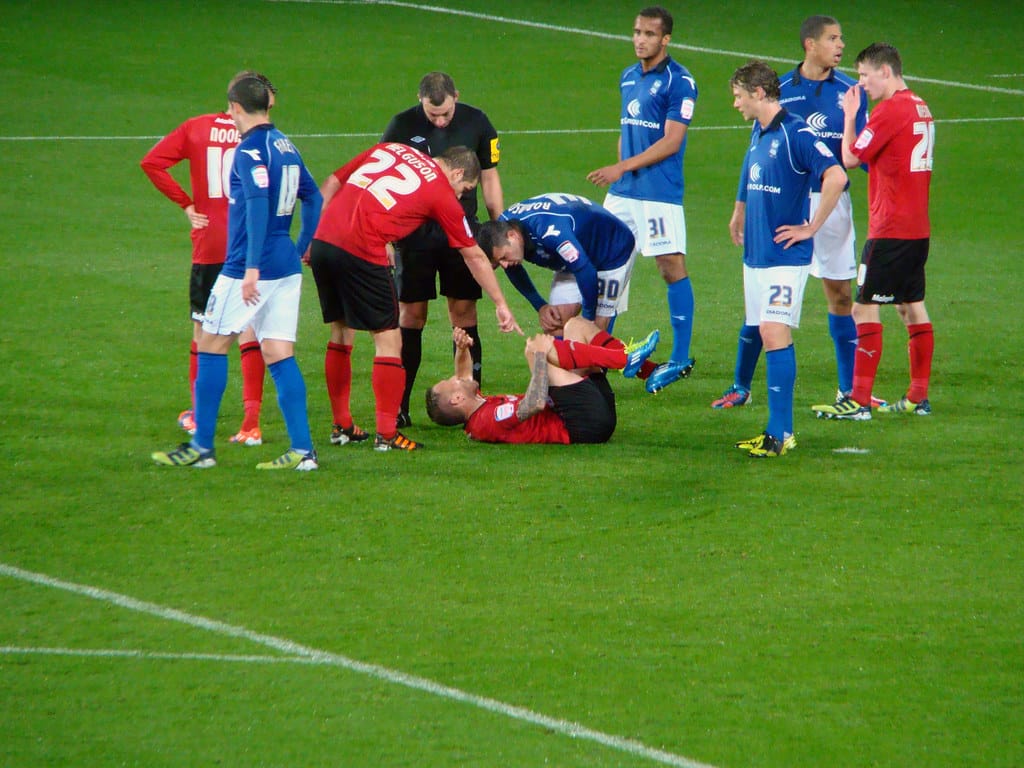
Times have certainly changed, haven’t they? Just look at all that hair! And it seems like they couldn’t do much about the sun glare on picture day either…

“I really need to stretch more. Should I try Yoga?”

“Everyone’s talking about how Pilates strengthens your core. Maybe I should take a class?”

“I know strength training is crucial, but where do I even begin?”

If you’ve ever had thoughts like these when thinking about exercise, you’re not alone.

The world of health, fitness, sports physical therapy, and injury rehabilitation can feel massive and even a bit daunting. I remember a time when I was unsure about how to approach my own fitness journey.

After wrapping up my college football career, I no longer had coaches designing my training plans. No more structured practices, conditioning workouts, weightlifting sessions, or recovery routines that typically involved stretching, foam rolling, yoga, and light cardio.

With no clear direction, I stuck with what I knew best: lifting weights, following my old off-season routine, and adding a couple of conditioning sessions each week.

After a few weeks of this, I stopped and asked myself a simple but important question: “Why?”

Why was I training this way? What were my goals now? And what were the most effective ways to achieve them? After reflecting and writing down my thoughts, I realized that my training program no longer aligned with my new goals.

My football days were behind me, and it was time to focus on staying healthy long-term.

At the same time, I still enjoyed strength training and the feeling of being strong. Plus, I was working toward becoming a Certified Strength and Conditioning Specialist (CSCS), so I needed to practice what I preached (this was all before I entered sports physical therapy school).

I ultimately designed a new strength training program that focused on increasing strength and muscle mass while also enhancing my mobility. The goal was to feel strong and stay healthy.

This approach worked because I took a moment to slow down and ask myself a few basic questions.

When was the last time you did that? Ask yourself these questions:

– What are the outcomes I want from my training? Do I want to be stronger? Have less discomfort? Improve my mobility? Be honest with yourself.
– What are the best methods to achieve these outcomes?
– If I don’t know the answer to the above, who can help guide me?

As question three suggests, you don’t need to figure it all out on your own. There are experts available who can help you reach your goals, but only you can determine what those goals are.

Once you have that clarity, our team of sports physical therapists in Bethesda and McLean is here to help. Along with being Doctors of Physical Therapy, our Performance Physical Therapists are also Certified Strength and Conditioning Specialists. We specialize in helping injured athletes recover and get back to doing what they love.

3 Indications You Should Ignore a Social Media Post

Today there is more access to information then ever. This access to information is no more prevalent than in the realms of health, medicine, fitness/performance, or any other area of athletic physical therapy.  Anyone with a social media account can quickly find thousands of posts related to these topics which creates a whole new challenge.

Because everyone can promote themselves as an expert on social media, it is essential to have a discerning eye for quality information. Unfortunately, social media platforms, such as Instagram, do not promote posts based on the validity of the information presented.

Amongst such a vast array of information, how do you determine when you should ignore a social media post related to health, fitness, or performance physical therapy information?

  • The presenter speaks in absolutes. Commonly the best answer that a professional can give you is “it depends.” The reason for this is that a person’s experience is context dependent and is the result of several different factors that must be considered together. For example, stretching or improving mobility is often promoted as a “fix” for a given injury. However, this does not apply to those that have more important problems to solve or possess full range of motion in the area being discussed. For more information on this topic, check out our post on Is Mobility Overrated? Furthermore, it is impossible to know of every possible factor that could be contributing to pain, injury, limitations, or challenges. Therefore, even the best among us cannot claim to be 100% certain, especially on social media.
  • The information is unnecessarily complicated. An expert can take a complex topic and break it down so that it makes sense to you. Overly complicated terminology and unnecessary use of medical jargon are red flags that the presenter may not fully understand the material being presented.
  • Promoting personal success stories as evidence. Personal success stories are anecdotal. The definition of anecdotal is “not necessarily true or reliable, because based on personal accounts rather than facts or research.” Many medical and fitness professional post personal success stories as evidence for the validity of their method, approach, or something that they are attempting to market. This ignores all the other factors that may have contributed to these results (see #1 above). Even if the results being presented are valid, it only applies to the person being shown. Quality research commonly requires thousands of trials before being considered valid. A case study of 1 or 2 people only applies to the people being referenced and ignores your unique circumstances.

**Bonus: If a presenter promotes “quick fixes”, run!

Discerning quality from poor information is very challenging in the modern age. Everyone can promote themselves as an expert, however there are several ways to determine when it is best to ignore a presenter. These are just a few of several ways that you can do so.


Photo Credits

“Social Media” by MySign AG is licensed under CC BY 2.0

Is Mobility Overrated?

Mobility has become a popular buzzword in the sports physical therapy community in Bethesda and Chevy Chase. While it is an important aspect of health and fitness, could mobility be getting more attention than it actually deserves?

What Is Mobility?

The term “mobility” refers the quantity of available movement — and how freely and efficiently you’re able to do so. Popularized by the sports physical therapy and training community, mobility is important for everyone, whether you’re an elite athlete or a busy working Mom.

Mobility is an important part of a well-designed injury rehabilitation and prevention program. It is also used to improve the quality of life for our physical therapy patients in Chevy Chase and Bethesda.

While very important, many experts feel that the booming popularity of mobility overshadows several other key health factors. In particular, the added focus on mobility often leads to a lack of attention on other important health factors, such as strength, cardiovascular health, and other global health behaviors.

What The Mobility “Craze” Makes Us Overlook

Although mobility is an important aspect of a healthy body, mobility alone won’t provide the quick fix you might be looking for. Instead, there are several complex contributing factors that need to be properly managed to improve your overall health.

Strength Training

Lean body mass and strength are some of the greatest indicators of the overall health of an individual. In fact, according to a study done by Harvard University, something as simple as grip strength can help measure an individual’s risk of heart attack, stroke, or cardiovascular disease.

Focusing on mobility alone overlooks the importance of strength training. According to The Mayo Clinic, strength training can help you manage or lose weight, increase metabolism, protect your joints and ligaments, and improve your ability to do everyday activities.

Cardiovascular Exercise

Another important measure of the overall health of an individual is cardiovascular fitness. A simple way to gauge cardiovascular health is by measuring your resting heart rate — the number of times your heart beats per minute when not physically active.

Although the normal range of a resting heart rate is between 50–100 beats per minute, a resting heart rate greater than 90-100 BPM can put unnecessary strain on the heart. A high resting heart rate has even been linked to high blood pressure, cholesterol, and even heart disease.

By solely focusing on mobility, cardiovascular health may be overlooked.

Global Health Behaviors

Outside of strength and cardio training, there are several other important contributing factors to an individual’s health — specifically sleep, nutrition, and social connection.

Sleep plays a crucial role in your physical health. Not only does sleep heal and repair your muscles, heart, and blood vessels, but a recent study discovered done by the National Heart, Lung, and Blood Institute discovered a link between sleep deficiency and an increased risk of heart disease, kidney disease, diabetes, and high blood pressure.

Final Thoughts

All in all, mobility is only one aspect of staying healthy and active — it isn’t the only thing that should be focused on. Health is achieved through the successful balance of multiple variables, including mobility, strength training, cardiovascular exercise, and various other global health behaviors.

If you’re looking for a comprehensive program to improve your health, fitness, and quality of life, our physical therapy team in Bethesda and Chevy Chase can help. Contact us today for a free consultation!

Exercise Snacking: A Simple Approach To Aging That Can Actually Improve Muscle Function

It’s no secret that finding time to exercise gets more difficult with age. As professional, family, and personal responsibilities stack up, it becomes more and more challenging to find time to get to the gym or exercise.

As part of the aging process, our performance physical therapy patients also tend to lose muscle mass and function. One well-known combatant of muscle loss is resistance training, though it does require access to both exercise equipment and the time to work out.

If you find yourself struggling to get to the gym as you’re getting older, there’s good news! A recent study from The Centre for Sport in Chesterfield, UK, concluded that short bouts of exercise spread throughout the day are an effective method to improve muscle function in a time-efficient manner.

“Exercise snacking,” as the study coined, is the process of breaking down exercise into short sessions throughout the day. During the 28-day study, individuals doing a twice daily home-based exercise snacking program improved their lower limb muscle function and size compared to a control group. In addition, not only did their maximum leg pressing power increase, but those who followed the exercise snacking program also improved their 60-second sit-stand scores.

Although the study is still being examined, the data suggests that “exercise snacking,” or short bouts of exercise, may be a promising strategy to improve muscle function in older adults. Something as simple as a short walk could do the trick.

If you often struggle to find time to exercise, “exercise snacking” is a super time-efficient method to combat the side effects of aging while staying in shape.

For a more personalized approach, our virtual physical therapy team in Chevy Chase can help! Contact us today for a free consultation.

Why the Frequency of ACL Injuries are on the Rise

“Bellamy Knee Injury” by joncandy is licensed with CC BY-SA 2.0.

Over the past month, our physical therapy clinic in Bethesda has seen an increase in the number of people recovering from ACL injuries and repairs. Although this is a sign that sports are returning to normal, there are some important things to keep in mind when dealing with an ACL injury.

The ACL, also known as the Anterior Cruciate Ligament, is the tissue found in the knee joint that connects the thighbone (femur) to the shinbone (tibia). These ligaments run diagonally in the middle of the knee, controlling the back and forth motion and provide rotational stability.

ACL injuries commonly occur in sports involving sudden movements or changes of direction, such as soccer, football, or basketball. The anterior cruciate ligament can be injured in several ways, including:

  • Rapid changes in direction
  • Sudden stopping movements
  • Slowing down while running
  • Incorrect landing from jumping
  • Direct collision or contact, such as a tackle in football.

Depending on the severity of the ACL injury, treatment can include rest and rehabilitation exercises to regain stability and strength. In severe cases, surgery may be required to replace the torn ligament.

According to Mike Reinold, a leading physical therapist, there are a few important steps to take after surgery:

  • Diminish pain and swelling after surgery using compression wraps, ice, and compression machines.
  • Restore full knee extension through a variety of range of motion and stretching exercises.
  • Gradually improve knee flexion with further stretching and functional movements such as mini-squats and lunges.
  • Maintain patellar mobility with soft tissue mobilization around the knee.
  • Restore volitional quad control using neuromuscular electrical stimulation (NMES) on the quad following the ACL surgery.
  • Restore independent ambulation by improving the ability to walk without limitations or a limp.

Although ACL injuries are impossible to avoid, a proper training program can help to reduce the risk of an ACL injury. If an injury does occur, our performance training and physical therapy clinic in Bethesda will get you back to normal in no time!

Make the most of your visit: 3 questions to ask your physical therapist

Whether you’re attending in-person or virtual physical therapy, your success largely depends on how engaged and involved you are in the process. A physical therapist’s role is to identify issues, develop a personalized treatment plan, and guide you toward recovery. However, as the patient, your active participation is just as crucial. Asking the right questions during your sessions can empower you to take control of your health and recovery journey.

Here are three essential questions to ask your physical therapist to ensure you get the most out of your sessions in McLean or Bethesda.

1. Why Did This Happen, and How Can We Prevent It from Happening Again?

One of the key goals of physical therapy is not just to treat the symptoms but to address the root cause of your pain or injury. Whether it’s a recurring injury, chronic pain, or post-surgery rehabilitation, understanding *why* the issue occurred in the first place is crucial to preventing it from becoming a long-term or recurring problem.

By asking your physical therapist about the underlying cause, you’ll gain insights into the factors that contributed to the issue—whether it’s poor posture, repetitive strain, muscle imbalances, or even lifestyle habits. With this knowledge, you and your PT can develop a plan to not only treat the current problem but also take proactive steps to ensure it doesn’t happen again. This might include correcting your movement patterns, strengthening weak areas, or making adjustments to your daily activities.

2. What Should I Be Doing at Home to Support My Recovery?

Physical therapy sessions are often limited to a few hours per week, but your recovery continues long after you leave the clinic. The majority of your time will be spent outside of the physical therapist’s office, which is why it’s critical to know what exercises, stretches, or adjustments you should be doing at home.

Ask your physical therapist for a clear and detailed home exercise program that complements your in-person treatment. This plan should be tailored to your specific needs and capabilities, ensuring you’re doing the right movements to support your progress. A good physical therapist will not only show you the exercises but also explain why they are important, how to perform them correctly, and how often you should do them.

On the flip side, it’s equally important to know what not to do. Certain activities or movements could slow down your recovery or even worsen your condition. By clarifying both the “dos” and “don’ts,” you’ll feel more confident in managing your rehabilitation at home.

3. How Can You Measure and Ensure I’ll Make Progress?

The ultimate goal of physical therapy is to make meaningful progress toward your recovery goals, whether that’s reducing pain, improving mobility, or returning to your favorite activities. However, many healthcare systems focus on generic benchmarks, such as returning to basic activities of daily living (ADLs) or reaching a general “baseline.”

While these objectives are important, physical therapy should go beyond just meeting minimum standards—it should be about helping you achieve your personal goals. By asking how your progress will be tracked and measured, you set the expectation that the focus is on your individual needs, not just generalized outcomes set by insurance companies.

Your physical therapist should provide a clear roadmap for your recovery, outlining the specific milestones and indicators they’ll use to track your progress. This could include improved range of motion, increased strength, reduced pain levels, or functional abilities tied to your lifestyle. Regular check-ins and reassessments will ensure that your treatment stays on track and is adjusted as needed.

Physical therapy is a partnership, and the more actively engaged you are, the better your results will be. By asking thoughtful questions and staying informed, you’ll not only deepen your understanding of your treatment plan but also enhance your ability to manage your health outside of therapy sessions.

×