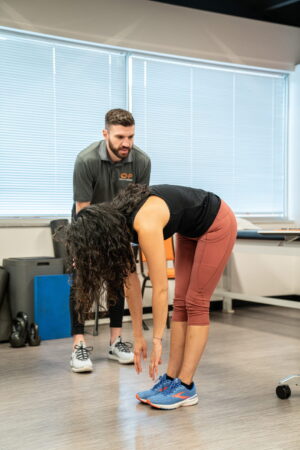
Learn to keep back pain at bay!

Does back pain keep creeping up during your workouts?

You’re not alone—back pain is one of the most common issues people face, especially when they lead an active lifestyle. Whether you’re an athlete, weekend warrior, or just someone trying to stay fit, back pain can significantly hinder your performance and even discourage you from exercising altogether. In fact, back pain is one of the leading reasons people seek physical therapy.

Think of your body like a high-performance car engine. If you let that engine sit idle for too long without maintenance, it starts to misfire. And when you push yourself during workouts without addressing these underlying issues, that’s when the back pain flares up. Many people continue this cycle of inactivity and painful workouts, but there is a better way to break free from this loop.

Physical therapy for back pain at Cohen Health and Performance is specifically designed to identify the root causes of your discomfort. Often, back pain arises from muscle imbalances, lack of core strength, limitations in movement variability, or faulty loading patterns. The goal of physical therapy for people with back pain back pain is to address these issues through a combination of exercises, manual therapy, and education. Our Doctors of physical therapy are experts in movement and biomechanics, meaning they can pinpoint the exact source of your pain and help you make targeted improvements.

Here’s the good news: you don’t need to completely overhaul your lifestyle! A few small but significant adjustments, like discovering new movement strategies, strengthening your core, and improving your mobility, can help relieve pain and prevent it from returning. Physical therapy can teach you how to safely modify your workouts, reduce strain on your back, and build resilience so you can train harder and longer—without the risk of injury.

At Cohen Health and Performance, we specialize in helping active people with physical therapy plans that are personalized to fit their specific needs. Whether you’re dealing with chronic back pain or recent discomfort, our evidence-based approach focuses on long-term relief and injury prevention. We emphasize hands-on techniques, combined with functional exercises that improve strength, mobility, and posture, so you can move freely without pain.

We invite you to join us for a FREE, hands-on workshop where we’ll teach you 3 game-changing strategies to reduce back pain and keep your workouts pain-free. Our expert team will walk you through simple but effective techniques commonly used in back pain physical therapy to help you manage discomfort and optimize your performance.

“Keep Training from Being a Pain in the Back”
Saturday, October 5th at 9 am

Cohen Health and Performance – McLean
1401 Chain Bridge Rd., Suite 203
McLean, VA 22101

There are only 10 more spots available, so don’t miss out on this opportunity to learn practical techniques from trained physical therapists. This workshop will empower you to take control of your pain and equip you with the tools to train safely and effectively. By incorporating these back pain physical therapy strategies, you’ll not only reduce pain but also improve your overall health and fitness performance.

Reserve your spot now and put an end to back pain while taking your training to the next level!

Looking forward to seeing you there!

How physical therapy helped my back

In life, sometimes our greatest challenges end up leading us to our most valuable lessons. That was certainly the case for me when an unexpected back injury abruptly ended my college football career. At the time, it felt like everything I had worked for was slipping through my fingers. Little did I know, this injury would be a turning point that not only introduced me to the world of physical therapy but also set me on a lifelong journey of health, healing, and helping others.

Physical therapy became my path to recovery and taught me that our bodies are incredibly resilient when given the right care and attention. Years later, I’m still working to maintain my back health, even after being told I might need spine surgery. And the best part? Today, I feel stronger than ever.

The Power of Physical Therapy in Back Recovery

One of the core concepts I learned in physical therapy is the importance of maintaining the “stack” of the body. This term refers to properly aligning your head, rib cage, and pelvis. Imagine a snowman where each ball is stacked neatly on top of the other. If one of the balls starts rolling out of place, the entire snowman is at risk of falling. Similarly, when any part of our alignment gets disrupted—whether it’s the head, rib cage, or pelvis—it can lead to back pain.

An inability to maintain the stack is a common problem for people recovering from back injuries. Through physical therapy, I learned exercises to restore and maintain this balance, ensuring that my body remains in safe positions even during challenging movements.

3 Exercises to Maintain Back Health

I’ve incorporated many exercises into my routine over the years, but these three drills have been particularly helpful as of late:

1. Kettlebell Pullover

2. Physioball Rollout

3. Wall-Supported Bear March

These three exercises have become staples in my warm-up routine. They not only help me maintain my back health but also prepare my body for more intense workouts by ensuring that my core is activated and my stack is on point!

Join Me for a Free Back Pain Workshop!

If you’ve ever struggled with back pain or found it difficult to train without back discomfort, I want to help. Join me for a FREE workshop where I’ll share my “go-to” drills that can help you reduce back pain and strengthen your body.

– When: Saturday, October 5th at 9 AM
– Where: Cohen Health and Performance-McLean

During this session, we’ll dive deep into these exercises, as well as other essential physical therapy techniques, to help you get your body back on track. Whether you’ve had a back injury in the past or are simply looking to optimize your health, this workshop will give you the tools you need to succeed.

Spots are limited—there are only 15 available, so don’t wait to sign up! If you’re ready to eliminate back pain for good and take control of your health, this is the perfect opportunity.

Click HERE for more information and to reserve your spot.

Is there a perfect sitting posture?

The Truth About Sitting Posture: Physical Therapy Tips for Preventing Neck and Back Pain

When it comes to preventing neck and back pain, most people have heard the usual advice: sit up straight, keep your feet flat on the floor, and support your lower back. While these tips can be helpful, they don’t tell the full story of how to sit comfortably for long periods.

The truth is, there’s no such thing as a “perfect” sitting posture, and that’s a key principle in physical therapy. In fact, the best sitting posture is one that constantly changes. Our bodies are designed to move, not remain still for long periods, whether we’re sitting, standing, or lying down. Just as you naturally shift your weight when standing, sitting should involve frequent adjustments to prevent discomfort and long-term issues.

Why Static Sitting Causes Problems

When we sit for long periods—especially while working or focusing on a task—we tend to lock into one position. This prolonged stillness can lead to tension, stiffness, and ultimately pain, particularly in the neck and lower back. This is where physical therapy plays a vital role: teaching us how to adjust our habits and posture to reduce the strain on our bodies.

Sitting in one static posture for too long, even if it’s “perfect,” is not ideal. The key is to introduce small, consistent movements that engage the muscles and reduce pressure on certain parts of your body. It’s not about sitting in one way forever; it’s about finding ways to keep your body active, even while seated.

Physical Therapy-Backed Tips for Comfortable Sitting

Here are two simple yet highly effective tips that can help you sit more comfortably during long periods of work or study:

1. Keep Moving: Small Adjustments Make a Big Difference
While it might seem counterintuitive, fidgeting while sitting can be beneficial. Making small adjustments—such as shifting your weight from side to side, crossing and uncrossing your legs, or adjusting the height of your chair—helps prevent muscle tension from building up.

Physical therapists often recommend this kind of regular movement because it engages different muscle groups, reducing strain on your lower back and neck. The more often you change your posture, the less likely you are to experience discomfort later in the day.

In fact, if you’re experiencing ongoing pain from sitting too long, a consultation with a physical therapist could help you learn more personalized movement strategies to relieve discomfort and prevent future issues.

2. Give Your Eyes a Break: The 20/20/20 Rule
There’s a strong connection between extended screen time and discomfort in the upper body, particularly around the neck, shoulders, and eyes. This is known as visual strain, and it’s a common issue in today’s digital world. When your eyes are fixed on a screen for long periods, it leads to tension that can affect your entire posture.

To alleviate this, optometrists  recommend the 20/20/20 rule: every 20 minutes, take a 20-second break and look at something 20 feet away. This helps relax the muscles in your eyes and reduces tension in your upper body.

Incorporating this simple practice into your routine can significantly reduce the risk of neck and shoulder pain, especially if you spend a lot of time in front of a computer.

If you’re experiencing discomfort from long hours of sitting at work or school, I have great news. We’re offering a Low Back Pain Workshop on Saturday, October 5th at 9 AM. This workshop is perfect for anyone struggling with back pain and looking for immediate solutions that can be implemented at home or work.

During the workshop, we’ll cover practical strategies from physical therapy that you can use right away to relieve low back pain, improve your posture, and keep your body active—even when sitting for long periods.

Interested? Click here to sign up and get more information!

The most common sports injury in physical therapy right now

Physical Therapy for Fall Sports: Preventing Soft Tissue Injuries in High School Athletes

As fall sports kick into high gear, it’s no surprise that we’re seeing an increase in soft tissue injuries at our Bethesda and McLean physical therapy clinics. This trend is particularly noticeable among athletes involved in sports like football and soccer, where dynamic, multi-directional movements are essential. These activities often lead to soft tissue injuries, especially in the hip region, making physical therapy a crucial component of an athlete’s recovery and injury prevention strategy.

The Importance of Hip Muscle Balance in Physical Therapy

Field sport athletes rely heavily on their hip muscles to perform the various movements required in their sports. Unlike athletes who primarily run in straight lines, such as sprinters, these athletes need strong and balanced hip muscles to manage the demands of quick lateral movements, sudden stops, and directional changes. This is where physical therapy plays a vital role in maintaining muscle balance and preventing injuries.

The hip is controlled by four primary muscle groups:

– Glutes and Hip Flexors: Manage forward and backward movement.
– Abductors: Located on the outside of the hip, these muscles control side-to-side or lateral movements.
– Adductors: Found in the groin or inner thigh, these muscles also control lateral movement.

Sports that involve significant lateral movements, such as hockey and field sports, place additional stress on the abductors and adductors. If these muscles are not properly conditioned and balanced, overuse or strain injuries can occur, making physical therapy essential for maintaining strength and preventing injuries.

The Critical Strength Ratio in Sports Physical Therapy

One key aspect of physical therapy for athletes is ensuring a balanced strength ratio between the adductors and abductors to reduce the risk of groin injuries. Ideally, athletes should aim for a 1:1 strength ratio between these muscle groups. Research in physical therapy has shown that when the adductor-to-abductor strength ratio drops below 0.8, the risk of sustaining a groin strain increases by 17 times.

Maintaining this balance is crucial because an imbalance can lead to one group of muscles being overworked and more susceptible to injury. For instance, if the adductors are significantly weaker than the abductors, a common issue identified during physical therapy assessments, they may not provide adequate support to the hip during lateral movements, leading to a higher risk of groin injury.

Strengthening Exercises in Physical Therapy to Prevent Groin Injuries

To reduce the risk of groin injuries, athletes should focus on strengthening both the adductors and abductors through targeted exercises in their physical therapy routine.

1. Copenhagen Plank for Adductor Strength

– Objective: Strengthen the inner thigh muscles (adductors).
– How to Perform: Aim for 3 sets of 30-45 second holds.
– Why It Works: This exercise is highly effective at building up the adductor muscles, which are crucial for stability and control during lateral movements, a key focus in physical therapy.

2. DNS Side Plank for Hip Abductor Strength

– Objective: Strengthen the outer hip muscles (abductors).
– How to Perform: Try 3 sets of 12 reps.
– Why It Works: This exercise helps develop the abductor muscles, which are essential for maintaining balance and power during side-to-side movements, a critical part of physical therapy for athletes.

Ongoing Physical Therapy Assessment and Training

It’s important for athletes to regularly assess their hip strength throughout the season as part of their physical therapy routine. Hip strength can fluctuate due to the demands of the sport, making it essential to continually work on these muscles beyond regular practice sessions. Scheduling an assessment with a sports physical therapy specialist can provide valuable insights into an athlete’s hip strength and highlight areas that may need additional focus.

For athletes beginning fall sports, reducing the risk of groin injuries should be a top priority. By maintaining a balanced strength ratio between the adductors and abductors, and by incorporating targeted physical therapy exercises into their training routine, athletes can significantly decrease their risk of injury. This proactive approach not only helps prevent injuries but also enhances overall performance on the field or rink.

Remember, in sports, as in life, balance is key. By focusing on the strength and balance of your hip muscles through physical therapy, you’re setting yourself up for a successful and injury-free season.

If you or your athlete has suffered an injury at the start of this fall season, now is the time to take action. Contact us for a physical therapy assessment to understand the issue, address it effectively, and prevent it from escalating into a bigger problem that may keep you off the field longer.

A physical therapist in the wild! 3 of my personal upper body warmups

Incorporating overhead pressing exercises into my weight training routine is something I really enjoy, but I often find them a bit challenging.

My overhead mobility isn’t as good as I’d like it to be, and a significant reason for that is my stiff chest. I have a mild case of pectus excavatum, commonly known as bowl chest. This condition causes the sternum-the bone at the center of the chest-to remain depressed, creating difficulties during overhead movements.

While this condition varies in severity, it often leads to difficulties during overhead movements due to the restricted ability of the sternum to rise when pressing or reaching overhead. In an ideal scenario, the sternum should lift as you inhale and lower as you exhale. However, for individuals with pectus excavatum or a generally stiff chest, this natural movement is hindered, making overhead exercises more challenging.

It’s not just those with pectus excavatum who face these challenges. Many people develop tight chest walls from modern lifestyle habits such as prolonged sitting, slouching, carrying heavy backpacks, or simply spending too much time hunched over a desk. These habits can cause stiffness in the chest, limiting overhead mobility and increasing the risk of injury during exercises like the overhead press.

Physical therapy offers a comprehensive approach to improving overhead mobility, particularly for those dealing with stiff chests. Traditional stretching methods might not be effective in addressing the underlying issues that restrict movement. Instead, targeted exercises and warm-up drills can be instrumental in loosening the chest, enhancing mobility, and ensuring that the body is well-prepared for the demands of weight training.

Three Effective Warm-Up Drills for Improved Overhead Mobility

To address these challenges, incorporating specific warm-up drills into your routine is crucial. Here are three exercises that can help improve overhead mobility, especially for those struggling with a stiff chest:

1. Crab on Elbows: This exercise is designed to open up the chest and promote better sternum mobility. By supporting yourself on your elbows in a crab-like position, you can stretch the chest and prepare it for the demands of overhead pressing.

2. Hooklying Overhead Reach: In this exercise, you lie on your back with your knees bent and reach overhead. The goal is to enhance the connection between your breathing and your chest movement, encouraging the sternum to rise and fall with each breath. This drill not only improves mobility but also reinforces proper breathing techniques that are essential during overhead movements.

3. Yoga Pushup*: Combining the elements of a traditional pushup with yoga-inspired movements, the yoga pushup is excellent for improving overall shoulder and chest mobility. It helps in engaging the entire upper body while emphasizing the importance of controlled breathing and proper form.

The Importance of a Tailored Warm-Up Routine

A tailored warm-up routine that addresses specific areas of stiffness or weakness can significantly improve your performance and reduce the risk of injury. In physical therapy, we emphasize the importance of being intentional about your warm-ups. By incorporating exercises like the crab on elbows, hooklying overhead reach, and yoga pushup, you can specifically target areas that need improvement, ensuring that your body is fully prepared for the workout ahead.

Moreover, these exercises are not just about getting ready for the workout; they are about making long-term improvements in mobility and strength. Over time, consistent practice of these drills can lead to better overhead mobility, reduced discomfort, and enhanced performance in your weight training routine.

For anyone facing challenges with overhead pressing due to a stiff chest or conditions like pectus excavatum, physical therapy offers a range of solutions that can make a significant difference. By incorporating targeted warm-up drills into your routine, you can improve your overhead mobility, reduce the risk of injury, and enjoy the full benefits of your weight training regimen. Remember, being intentional about your warm-up is not just a preparation—it’s a critical part of your journey toward better physical health and performance.

This made physical therapist, Dr. Sneh, sad

Dr. Sneh, a great sports physical therapist and proud Minnesota native, is an avid Minnesota Vikings fan. This year, the Vikings drafted their quarterback of the future, JJ McCarthy, and the excitement among their fans is palpable. McCarthy has shown promising performance so far in the preseason—a time when rookies often struggle to find their footing.

Unfortunately, following his most recent preseason game, reports emerged that McCarthy had sustained a knee injury that would require surgery to repair a torn meniscus.

I commend the Vikings’ approach to handling McCarthy’s injury, as it offers valuable insights into how we should approach injuries in high school athletes.

The meniscus is a C-shaped piece of cartilage in the knee, acting as a shock absorber between the femur (thigh bone) and the tibia (shin bone). When an athlete suffers a meniscus tear that cannot be rehabilitated, they face three primary options:

  1. Rest and Physical Therapy: This is the preferred option. The best surgery is the one that doesn’t need to happen, and that wisdom extends far beyond knee injuries. A skilled physical therapist, especially one experienced with athletes, begins by reducing pain, inflammation, and swelling, before moving on to restore range of motion and strength. Next, they guide the athlete through normal functional activities like walking and running, eventually progressing to sport-specific exercises.In addition, one of the most overlooked aspects of physical therapy is identifying the root cause of the injury. Why did it happen in the first place? Is there anything that can be done to reduce the risk of it happening again? A truly effective sports physical therapist has not completed their job until these questions are answered and addressed. It’s not just about returning to the “previous level of function”—sometimes, that may not be good enough!
  2. Meniscectomy (Trimming the Torn Parts): In some cases, the meniscus tear cannot be repaired, and the damaged parts must be trimmed away in a procedure known as a meniscectomy. The upside is that recovery from this surgery is relatively quick, with athletes often returning to play in as little as 4-6 weeks, provided they receive proper post-operative physical therapy. However, the downside is that trimming the meniscus means there’s less cartilage left to protect the knee, which can increase the risk of early-stage arthritis and future knee discomfort.
  3. Meniscus Repair (Fixing the Tear): If the meniscus can be repaired, this is generally the preferred option. During a meniscus repair, the torn pieces are stitched together, restoring the knee’s structure as closely as possible to its pre-injury state. This approach reduces the risk of early-stage arthritis and long-term complications but requires a lengthy rehabilitation process. Athletes often do not return to full sports participation until a year after the surgery.

McCarthy and the Vikings’ medical team chose to pursue a meniscus repair for his injury.

While Dr. Sneh was disappointed that he won’t be seeing his team’s promising young quarterback on the field this season, he was heartened by the team’s decision to prioritize McCarthy’s long-term health.

In professional sports, long-term health outcomes for players are often overshadowed by the immediate pressures to get back in the game. Historically, many athletes have opted for a meniscectomy—despite the poor long-term outcomes—because it allowed them to return to play faster.

During my time working with retired professional football players in Texas, I witnessed firsthand the consequences of these rushed decisions. Athletes who were at the peak of their careers just 10-20 years ago are now struggling with basic mobility. Many wake up in constant pain, even though they’re only in their 30s or 40s. I’ll never forget meeting a young man, someone I had watched on TV less than a decade earlier, who had already undergone a knee replacement.

While these are extreme examples, there’s much to learn from the Vikings’ approach to McCarthy’s injury.

The long-term health of young athletes must always be prioritized. It’s easy for a high school game or a college showcase to feel like the Super Bowl, but there will always be another opportunity.

We strive to instill this perspective in our athletes, though it can be challenging when an upcoming game or season feels like the most important thing in their world.

Prioritizing a young athlete’s long-term health may seem like common sense, but the reality can be complex. How can you be sure that an athlete isn’t risking their future by playing now?

That’s where we come in.

Many athletes seek our expertise for an assessment to determine if they’re ready to return to play without jeopardizing their long-term health and goals. If you have concerns about an athlete in your life this upcoming fall season, you know where to find us!

×