Should You Train Through Pain? A Guide for Athletes and Parents

If you are an athlete or the parent of a high school athlete, you already know that pain shows up sooner or later. Soreness, stiffness, and the occasional ache are all part of training hard. But knowing when to push through pain and when to stop is where many athletes get stuck.

As a sports physical therapy team working with athletes in Bethesda and McLean, we see this problem every single day. Athletes often choose one of two extremes. They either ignore the pain completely and keep pushing or they shut everything down at the first sign of discomfort. Neither approach helps you perform your best or stay healthy.

There is a much better way to understand pain during training. We teach our athletes a simple and effective system that helps them stay safe, stay active, and stay on the field. It is the traffic light system for pain.

Understanding Pain Like a Traffic Light

Green Light Pain

Green light pain is mild, dull, and harmless. Sometimes your knee feels a little stiff when you start warming up or you notice a small ache when you first walk into the gym. Once you start moving, the discomfort fades. It does not change how you move and your body feels the same or even better the next day.
If this sounds familiar, you are good to keep training. This type of pain is extremely common in active athletes and often improves with movement.

Yellow Light Pain

Yellow light pain is more noticeable. It may slightly alter your movement or force you to compensate. It might get worse as you load the area or repeat certain exercises.
This is the time to modify your training rather than stopping completely. For example, if squats bother your knee at a certain depth, you might switch to split squats or use a machine based variation. You might also decrease the weight, reduce the number of reps, or shorten the range of motion.
The key is that whatever modification you choose should not make things worse during the workout or afterward.

Red Light Pain

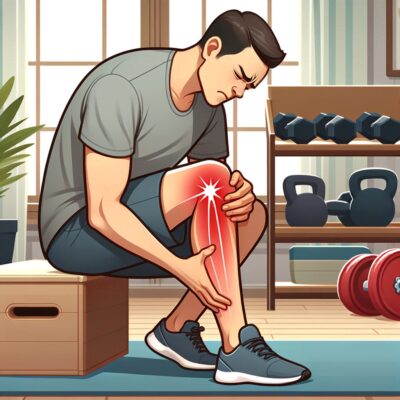
Red light pain is a clear warning sign. This pain is sharp, intense, or unstable. It might come with tingling, catching, popping, or sudden weakness. It clearly worsens during exercise and forces you to move differently.
When you experience red light pain, you need to stop immediately and have it evaluated. Continuing to train through these symptoms can turn a small issue into a much bigger one.

The 24 Hour Rule Every Athlete Should Use

No matter what type of pain you feel, the next day is the real test. Symptoms should return to baseline or feel better within 24 hours of your workout.
If your pain is worse the next day, especially with yellow light pain, you need to modify further or choose a different exercise the next time. If symptoms continue to worsen, it is time to get assessed by a sports physical therapy specialist.

When to Seek Professional Help

If you are not sure whether your pain is green, yellow, or red light pain, or if you already know your symptoms are limiting your performance, you should have it evaluated.

Our physical therapy clinics in Bethesda and McLean work with athletes every day to help them understand their pain, train safely, and get back to the activities they love. Sports physical therapy is not just about treating injuries. It is about helping athletes stay in motion, stay strong, and stay confident.

If you or your athlete is unsure what the next step should be, we would love to help you figure it out. The right guidance can keep you out of harm’s way and help you continue progressing toward your goals.

What Do ACL Rehab and Vince Lombardi Have in Common?

Guest post by Dr. Samuel Kinney, Performance Physical Therapist at Cohen Health & Performance – McLean

If you’re an athlete in the McLean area recovering from an ACL injury, you already know how demanding the process can be. At our sports physical therapy clinic in McLean, Dr. Samuel Kinney takes a page from one of football’s greats, Vince Lombardi, to help athletes master the fundamentals that make the difference between average recovery and peak performance.

Back to Basics: The Lombardi Lesson

Back in 1959, Vince Lombardi was hired to turn around the struggling Green Bay Packers. Reporters wanted to know his plan. Would he redesign the offense, invent new formations, or bring in something flashy and new?

His answer was simple: master the basics.

Lombardi believed football games were won not through trick plays but through relentless execution of fundamentals. Things like blocking and tackling done to perfection. His five championships speak for themselves.

Much like Lombardi’s approach, early-phase ACL rehab centers on the same idea: mastering the fundamentals. At Cohen Health & Performance in McLean, one of those core fundamentals is activation of the quadriceps muscle, a skill that’s often tougher than it sounds.

What’s Going On: The Quad Isn’t Just Weak. It’s Disconnected

After a knee injury such as an ACL tear or surgery, the muscle may look fine, but the nervous system that activates it can become inhibited.

This phenomenon is known as arthrogenic muscle inhibition (AMI) and it’s one of the biggest early obstacles we see in sports physical therapy McLean patients recovering from ACL injuries.

Here’s how it happens:

  • Nerves within the injured ACL and joint become disrupted.
  • Swelling, pain, and trauma trigger a protective response.
  • That protection reduces the signal from the brain and spinal cord to the quadriceps.

The result: athletes think they’re activating the quad, but the signal isn’t strong enough to produce full contraction. Even during “quad sets” or knee extensions, the activation may fall short and recovery can stall.

Why It Matters

You might wonder, “If my athlete is lifting and making progress, what’s the problem?”

Here’s why early quad activation is critical:

  • Stability: When the quad isn’t firing properly, the knee loses stability, raising the risk of reinjury or compensations at the hip or ankle.
  • Performance: Even if strength returns, delayed activation impacts cutting, pivoting, and jumping mechanics, a split-second difference that affects performance.
  • Longevity: Research shows quad activation issues can persist for months post-surgery if not addressed early.

For parents supporting their young athletes, this early stage sets the tone for safe, confident return-to-sport progressions.

How We Address It at Cohen Health & Performance in McLean and Bethesda

Our sports physical therapy team in McLean and Bethesda focuses on reconnecting athletes with their quads and rebuilding a strong, stable foundation:

  1. Early Stage — Control Swelling & Restore Motion
    Swelling and pain inhibit the quad. We prioritize compression, elevation, and restoring full knee extension as quickly as possible to improve activation.
  2. Early Activation — Get the Quad Turning On
    Once cleared post-surgery, we begin re-educating the nervous system. Using neuromuscular electrical stimulation (NMES), we help re-establish the brain-to-muscle connection — a proven strategy to accelerate recovery.
  3. Progressive Strengthening
    When activation becomes consistent, we progress into strength training and functional movement patterns. The fundamentals never get skipped; reliable quad activation remains the base for every phase of rehab and performance.

How Parents Can Help at Home

Supporting your athlete’s recovery outside the clinic makes a huge difference:

  • Ask about NMES: Ensure your child’s therapist includes NMES and teaches home use.
  • Encourage consistency: Simple activation drills repeated daily rebuild the mind-muscle link.
  • Watch their movement: Hesitation or favoring one leg can signal incomplete activation.
  • Reinforce their home program: Progress continues between sessions — not just in the clinic.


At Cohen Health & Performance, we believe lasting results come from doing the basics exceptionally well — just like Lombardi preached.

If your athlete is recovering from an ACL injury, our sports physical therapy team in McLean and Bethesda are ready to help them move, feel, and perform at their best.

Cohen Health & Performance – McLean
Tailored ACL rehabilitation and performance physical therapy for athletes who want to come back stronger.

Contact us today to learn more about our individualized sports physical therapy McLean programs.

What Pro Athletes Teach Us About Sports Physical Therapy

Before moving to the DMV, I spent several years in Dallas, Texas working for a company called EXOS, a world-renowned leader in sports performance and sports physical therapy. If you haven’t heard of them, EXOS works with some of the best athletes in the world. NFL players, Major League Baseball athletes, professional basketball players, and Olympians across multiple sports.

When I first started there, I assumed these elite athletes recovered faster from injuries simply because they were the best of the best. They’re in the top 1% of their sport, with incredible genetics and access to every resource imaginable. Daily rehab sessions, personalized nutrition, and world-class sports medicine teams.

And yes, all of those factors help.
But over time, I realized something bigger: what really sets these athletes apart isn’t just their access to care. It’s their approach to sports physical therapy.

1. They Start Rehab Immediately After Injury

When most people get injured, they wait.
Work, family, and other commitments get in the way, and rehab gets pushed to “next week.” But delaying treatment allows stiffness, swelling, and compensations to set in, making recovery longer and more frustrating.

Professional athletes don’t wait. They start sports physical therapy almost immediately after injury. Their therapists get the injured area moving safely and within pain-free limits right away. Early motion helps maintain mobility, reduces swelling, and speeds up recovery.

The lesson for the rest of us?
The sooner you start rehab, the sooner you’ll get back to the activities that matter most.

2. They Treat Rehab Like Training

Elite athletes view every rehab session like a workout. They track everything. Strength, volume, reps, and intensity, just like they would in the weight room. Every session has purpose and measurable progress.

At Cohen Health and Performance, that’s exactly how we approach sports physical therapy. We track objective progress through force-plate testing, strength metrics, and movement quality. Every session builds on the last, helping athletes and active adults see small, consistent gains that add up to big results over time.

The takeaway:
Your rehab shouldn’t be random. Treat it with the same focus and structure you’d give your training program.

3. They Trust the Process and Don’t Rush the Return

By the middle of every football season, nearly every player is dealing with something. Many could technically “play,” but smart teams and medical staffs know that coming back too soon increases the risk of re-injury and more time lost in the long run.

The same principle applies to anyone going through sports physical therapy. You might feel better after a few sessions, but that doesn’t mean your body is fully ready for the demands of your sport or activity. Strength, power, and control need to be rebuilt gradually so you can perform confidently without setbacks.

That’s why we test and track readiness. So you don’t just get cleared; you get truly ready.

4. They Build a Team Around Their Recovery

No professional athlete recovers alone. They have a team. Physical therapists, athletic trainers, physicians, strength coaches, and family, all communicating and working toward the same goal.

Your team might look a little different, but the principle is the same. Recovery works best when everyone is aligned: you, your physical therapist, your doctor, and even your support system at home. When everyone’s working together, you stay accountable and make steady, confident progress.

Bringing a Pro Athlete Mindset to Your Recovery

You don’t have to be a professional athlete to benefit from sports physical therapy. The same mindset that helps the pros get back on the field can help you get back to the gym, the court, or the activities you love most.

Start early.
Stay consistent.
Track your progress.
Trust the process.
And surround yourself with the right team.

If you’re looking for expert-level sports physical therapy in Bethesda or McLean, our team at Cohen Health and Performance is here to help. We work with athletes and active adults every day to recover faster, move better, and perform at their best, on and off the field.

Why Wearing a Boot After an Ankle Sprain Can Make Things Worse

If you’ve been active most of your life, chances are you’ve sprained your ankle at some point. Maybe you went to urgent care, saw an orthopedist, or even a physical therapist in McLean, and were told to wear a walking boot.

It sounds logical to protect the injury, reduce swelling, and prevent further damage. But here’s the truth: in most cases, that advice can actually slow down your recovery and make it harder to return to the sports and activities you love.

When Is a Walking Boot Actually Necessary?

There’s a time and place for a walking boot. If you have a severe (grade 3) ankle sprain or a fracture, a short period in a boot may be appropriate to stabilize the joint and protect the tissues while they heal.

But those cases are rare. The majority of ankle sprains we see at our physical therapy clinic in McLean are mild to moderate. In these situations, wearing a boot can do more harm than good.

Why a Boot Can Make Your Ankle Worse

When you immobilize the ankle too soon, the muscles around it stop doing their job. The boot provides a false sense of stability, which causes your stabilizing muscles to become weaker and less responsive.

Over time, this leads to:

  • Muscle deconditioning and weakness around the ankle and foot
  • Reduced proprioception (your body’s ability to sense position and balance)
  • Joint stiffness that alters your walking and running mechanics
  • Compensations in other joints like your knees, hips, and lower back

All of these issues make it harder to get back to your sport — and increase your risk of re-injury.

What You Should Do Instead

If your sprain isn’t severe, you want to get the ankle moving early — safely and within a pain-free range of motion.

At Cohen Health and Performance in McLean, our physical therapists guide athletes through a structured plan that focuses on:

  1. Restoring range of motion as soon as possible
  2. Rebuilding strength through those ranges
  3. Progressing to weight-bearing activities that retrain balance and coordination
  4. Integrating dynamic drills like single-leg squats and plyometrics
  5. Preparing for sport-specific demands (cutting, sprinting, decelerating, etc.)

Whether you’re a runner, tennis player, or field-sport athlete, this approach ensures your ankle not only heals but becomes stronger and more resilient than before the injury.

The Smart Way to Recover from an Ankle Sprain

Even though ankle sprains are common, they shouldn’t be ignored. Trying to “play through” the pain or relying on a boot too long can lead to chronic instability, recurring injuries, and even new pain elsewhere in the body.

The best thing you can do is get a proper evaluation from a licensed physical therapist who understands the specific demands of your sport or activity.

At Cohen Health and Performance, our team helps athletes and active adults in McLean and Bethesda recover faster, move better, and perform at a higher level, without unnecessary time in a boot.

Ready to Get Back on Your Feet?

If you’ve recently sprained your ankle or are still dealing with stiffness and pain from an old injury, we’d love to help.

👉 Schedule an evaluation today and get a customized plan designed to help you return to what matters most. Pain-free movement, strength, and confidence on your feet.


Surgeon Says “You’re Cleared.” What That Really Means

At Cohen Health and Performance, we see this all the time.

A patient walks in excited because their orthopedic surgeon just told them, “You’re cleared.”

For the athlete or for a parent of a young athlete that sounds like great news. It feels like full steam ahead, time to get back to the field, the court, or the gym.

But being cleared by your surgeon doesn’t necessarily mean your body is ready for the demands of your sport.

That’s where our team at Cohen Health and Performance, providers of expert physical therapy in Bethesda, comes in.

What Your Surgeon Means by “Cleared”

When your surgeon clears you, it’s a medical milestone. It means:

  • The surgery was successful.
  • Imaging and MRI results look good.
  • Your range of motion has returned.
  • You’ve regained a basic level of strength.

In other words, your surgeon’s focus is on whether the surgical site has healed and whether you’re safe to start progressing again. Their job is to make sure the repair looks good, moves well, and passes basic checks.

But that doesn’t mean your body is fully prepared for the demands of your sport.

Why “Cleared” Doesn’t Always Mean “Ready”

Let’s take a closer look at what happens in those follow-up visits.

Your surgeon might test your strength by asking you to hold your arm or leg in a fixed position while they apply pressure. If you can resist them without pain or weakness, that box gets checked.

The problem? That’s not how sports work.

Sports are dynamic. You’re not holding a static position. You’re cutting, sprinting, jumping, landing, throwing, or reacting at high speed. Your body must not only produce force but also control and absorb it repeatedly and efficiently.

That’s where the real risk lies after surgery. An athlete may appear strong in basic tests, but when it’s time to decelerate from a sprint or land from a jump, their body might not yet have the capacity to handle those forces safely.

Without that preparation, the risk of reinjury or injury elsewhere in the body skyrockets.

How Physical Therapy Bridges the Gap

This is exactly where advanced sports physical therapy in Bethesda plays a critical role.

At CHP, our job isn’t just to make sure your range of motion and strength look good on paper. It’s to determine if your body can handle the high-speed, high-load, fatigue-driven conditions of your sport.

We use a combination of clinical expertise and advanced sports technology, including VALD Force Plates, A-frames, and dynamometers to objectively measure how your body performs.

Some of the key things we assess include:

  • Force production: How much power can you generate through your repaired side?
  • Deceleration control: Can you safely slow your body down after a sprint or jump?
  • Symmetry: Are you unconsciously favoring one side more than the other?
  • Fatigue performance: Do you maintain good control and power when you’re tired?

These metrics tell us whether your body is actually ready for competition—not just whether your surgery has healed.

Every Sport Has Different Demands

One of the most important things we teach our patients is that every sport has its own movement and performance prerequisites.

A swimmer’s shoulder rehab will look completely different from a soccer player recovering from an ACL surgery.

A tennis player’s shoulder must tolerate explosive, high-velocity end-range movements.

A football player must absorb and redirect massive amounts of force.

That’s why at CHP, no two return-to-sport plans look the same. We build individualized programs that mirror the specific stresses and skills of your sport, helping you return not just healthy, but stronger, faster, and more resilient than before.

Fatigue: The Hidden Factor Behind Re-injury

Another key area we focus on is how your body performs when tired.

It’s easy to look great when you’re fresh but most injuries don’t happen during warm-ups. They happen when fatigue sets in late in the game, when your muscles and nervous system are under stress.

That’s why we test your ability to maintain strength, stability, and control under fatigue.

If your repaired side starts to fail once you’re tired, your risk of reinjury increases dramatically.

By building up work capacity and fatigue tolerance, we help you finish strong, no matter the score or the quarter.

The CHP Difference

At Cohen Health and Performance, our approach to physical therapy in Bethesda is centered on one goal: helping athletes safely and confidently return to the activities they love.

We combine one-on-one care, advanced testing technology, and individualized programming to make sure every athlete we work with is truly ready, not just medically cleared.

If you’ve been cleared by your surgeon but want to be confident that your body is ready for the next step, we’d love to help.

Contact us at Cohen Health and Performance today to learn more about our individualized physical therapy programs in Bethesda and McLean designed to help athletes move, feel, and perform at their best.

Free Weights vs. Machines: What’s Best for Your Training?

When I look back at the things I believed in college, I can’t help but laugh a little, especially when it comes to my views on weight training. At that time, I was all in on free weights and completely against using machines. If it didn’t involve a barbell or dumbbell, I didn’t want anything to do with it.

Fast forward to today, and my perspective has evolved. I still love free weights, but I’ve come to appreciate the value that machines can bring to a well-rounded training program. As a performance-focused physical therapy provider in McLean, I now help patients and athletes combine both methods for stronger, safer, and more effective results.

Why Free Weights Are So Valuable

Free weights will always have a place in great strength training programs. Exercises like squats, lunges, and deadlifts require balance, coordination, and total-body control. These movements train not just strength, but also stability and athleticism.

For example, a lunge closely mimics the way your body moves when you decelerate, cut, or plant during sports. This is one reason our sports physical therapy team in McLean uses these exercises with athletes returning to play after an injury. They have tremendous carryover to real-world movement.

The Case for Machines

That said, machines offer benefits that free weights can’t always match. For one, they’re less intimidating for beginners and have a lower learning curve. If you’re new to training or getting back into the gym after time off, machines allow you to move safely and confidently while you build your foundation.

But even for experienced athletes, machines have a valuable place. They make it possible to isolate specific muscles that may be weaker or underdeveloped. In physical therapy sessions here in McLean, we often see this after injuries.

Take knee injuries, for instance. It’s common for the quadriceps to lag behind the rest of the leg during recovery. A knee extension machine is an excellent way to directly target and rebuild that strength. By improving the muscle’s capacity to handle load, we help ensure that the knee and the athlete can perform at a high level without increased risk of re-injury.

How to Combine Both for Best Results

If you’ve ever walked into a gym where all you see are barbells, dumbbells, and kettlebells, you might think machines are “less effective” or even unnecessary. But the truth is that the most successful training programs use both free weights and machines strategically.

Free weights build functional strength and athleticism. Machines help strengthen weak links and support recovery. Together, they provide a complete approach that promotes performance, resilience, and long-term health.

Work with Our Physical Therapy Team in McLean

At Cohen Health and Performance, our physical therapy team in McLean specializes in helping active adults and athletes recover from injury, rebuild strength, and return to the activities they love. We take a scientific, individualized approach to training, using both free weights and machines when appropriate, to make sure every part of your body is prepared for the demands of your sport or lifestyle.

If you’d like help designing a program that’s customized to your needs, we’d love to help.

Contact us today to schedule an assessment and discover how our McLean physical therapy experts can help you train smarter, recover faster, and perform better.

×