Why Strength Training is the Missing Piece in Your Running Program

Today we have a special guest post from Dr. Elizabeth Farmer, our newest Performance Physical Therapist at Cohen Health and Performance Bethesda!

As a performance physical therapist and avid long-distance runner, I’m no stranger to the aches and pains that can threaten to derail a training plan or race goal. Over the years, both in my own training and while working with runners at Cohen Health and Performance, a leading provider of physical therapy in Bethesda, I’ve noticed something important: most “overuse injuries” are really under-preparedness injuries.

When aches or pains arise during training, it’s often because the body isn’t fully prepared for the stress of increased mileage or intensity. The good news? With the right guidance, you can build the strength and resilience needed to handle those demands, helping you run stronger and stay injury-free.

The Role of Strength Training in Preventing Running Injuries

Even the best running programs can fall short if they don’t include one key ingredient: strength training.

At Cohen Health and Performance, our Bethesda physical therapy team help runners develop strong, balanced, and durable bodies that can handle the demands of training. Strength training improves muscular endurance, running economy, and speed while significantly lowering the risk of injury.

How to Incorporate Strength Training Into Your Running Plan

Whether you’re a beginner or a seasoned marathoner, here are a few guidelines our performance physical therapists recommend:

1. Start Strength Training in the Off-Season

If you’ve never lifted before, the off-season is the perfect time to begin. It gives your body time to adjust (and recover from that initial soreness!). Studies show that it takes roughly 6–8 weeks to see true strength improvements, so the earlier you start, the better prepared you’ll be when race training ramps up.

Building the habit in your off-season also makes it easier to maintain strength workouts once your running mileage increases, a key principle we teach at Cohen Health and Performance through our Bethesda physical therapy and performance programs.

2. Keep Hard Days Hard, and Easy Days Easy

Your goal should be to complement your running, not compete with it. We recommend stacking your strength workouts after your harder running days (like hills, intervals, or long runs). This allows your easier runs or rest days to stay truly easy and promotes recovery.

A good rule of thumb: always lift after running, not before, so you can perform your key running workouts with fresh legs.

3. Intensity Matters: Choose the Right Rep Range

If you’re short on time, focus on higher-intensity, lower-rep movements. Aim for 2–3 sets of 6–12 reps at a difficulty level that feels like a 6–9 out of 10 on the effort scale. You should only feel capable of 2–3 more reps with good form at the end of each set.

This approach helps you get the most benefit from your workouts without spending hours in the gym, a philosophy we emphasize with our runners seeking sports physical therapy in Bethesda.

4. Essential Strength Exercises for Runners

Here are four lower-body exercises we often prescribe at Cohen Health and Performance to help runners build strength, stability, and resilience:

1️⃣ Single-Leg Depth Drop – Builds resilience when absorbing landing forces.

2️⃣ Bulgarian Split Squat (Front Heel Float) – Improves unilateral quad, glute, and hamstring strength while also challenging calf stability.

3️⃣ Copenhagen Plank – Strengthens the adductors and core to support pelvic control.

4️⃣ Side Plank with Leg Lift – Targets hip stabilizers, crucial for preventing “under-preparedness” injuries.

Looking for Physical Therapy Near You in Bethesda?

If you’re a runner dealing with nagging aches or simply want to improve performance, our team at Cohen Health and Performance in Bethesda can help. We specialize in sports physical therapy, strength training for runners, and performance optimization, all under one roof.

Our Doctors of Physical Therapy provide one-on-one, 60-minute sessions designed to help you move better, recover faster, and perform your best.

Ready to take your training to the next level?

Contact us to schedule your session today and experience why so many athletes searching for physical therapy near them in Bethesda trust us to keep them healthy and strong.


Sports Physical Therapy Tips: How to Bench Press Without Shoulder Pain

The bench press is one of the most popular exercises in the gym. Walk into almost any weight room on a Monday and you’ll see athletes and adults alike lining up to get their reps in. But as common as the bench press is, it’s also one of the leading causes of shoulder pain in athletes and active adults.

At Cohen Health and Performance, we see this all the time in our sports physical therapy practice. Athletes love the bench, but their shoulders don’t always agree. The reason comes down to how the exercise locks the shoulder blades against the bench, reducing natural movement and placing extra stress on the front of the shoulder joint. Over time, this stress can lead to irritation, nagging pain, and even more serious injuries.

Why the Bench Press Can Cause Shoulder Pain

Unlike push-ups, where the shoulder blades are free to move, the bench press pins them down. That restriction limits mobility through the shoulder complex, forcing certain joints and tissues to pick up the slack. For many athletes, that means increased stress on the AC joint or the front of the shoulder. The result? Pain and frustration that keep you from training the way you want.

Sports Physical Therapy Solutions for the Bench Press

The good news is that with a few simple changes, you can still bench press effectively while protecting your shoulders. Here are the modifications we often recommend in sports physical therapy settings:

  • Narrow Your Grip
    A slightly closer grip can take pressure off the AC joint and reduce pain.
  • Slow Down the Tempo
    Adding a pause at the chest helps eliminate the painful “bounce” effect many lifters experience.
  • Limit Range of Motion
    Using a chest pad or switching to a floor press reduces how far you lower the bar, which in turn decreases stress on the shoulders.
  • Switch Implements
    Dumbbells usually allow for a more natural arm path and are often better tolerated than a barbell.
  • Adjust Angles
    Keep your arms closer to a 45-degree angle instead of flaring them out wide, and vary bench positions (incline/decline) to spread out the stress.

When Modifications Aren’t Enough

Sometimes these adjustments aren’t enough. If you have limited shoulder mobility or strength deficits in key stabilizing muscles, the bench press will still feel uncomfortable. That’s where a physical therapist near you plays a critical role. A sports physical therapist can assess movement restrictions, identify weak links, and design a personalized plan to restore pain-free strength.

At Cohen Health and Performance, our team of Doctors of Physical Therapy specializes in helping athletes and active adults get back to training without pain. Whether it’s the bench press, squats, or sport-specific training, our goal is to keep you doing what you love, safely and at your best.

If you love the gym but shoulder pain is holding you back, don’t just push through it. Small changes can make a big difference—and if you need deeper solutions, a physical therapist near you can get you back to pressing stronger, healthier, and pain-free.

ACL Physical Therapy: How We Determine When It’s Safe to Return to Sport

Guest Post by Dr. Ethan Lennox, ACL Rehabilitation Specialist at Cohen Health and Performance (CHP)

One of the toughest challenges athletes face after ACL surgery is knowing whether they are truly ready to return to play. Getting this wrong can have serious consequences, not only a higher risk of re-tearing the repaired ACL, but also the possibility of injuring the other knee or sustaining a completely new lower body injury.

If you’re an athlete, parent, or coach navigating the ACL recovery process, this guide will walk you through the objective criteria that determine readiness for a safe return.

Why Time Alone Isn’t Enough

A safe return to sport after ACL surgery isn’t about simply waiting 6, 9, or 12 months. At CHP, our ACL physical therapy program goes beyond the calendar. We use specific benchmarks for strength, movement quality, knee health, and confidence.

For athletes in cutting or pivoting sports, we typically recommend at least 9–12 months before full competition, as research shows that early return carries a much higher risk of re-injury. Our goal is not just to “clear” an athlete, but to build a durable return that lasts.

What Really Determines Readiness?

1. Strength

Strength is the foundation of ACL physical therapy. But it’s not just about moving heavy weight in the gym. The question is:

  • Can the athlete produce strength quickly in the chaos of sport?
  • Can they tolerate the workload of practices and games?

We focus heavily on restoring quadriceps strength to sport-specific demands, not just symmetry between legs. A common benchmark is ≥ 3.0 Nm/kg of knee-extension torque relative to body weight. Symmetry matters, but hitting an absolute strength threshold is what keeps knees safe during high-speed stops and cuts.

2. Force-Plate Testing

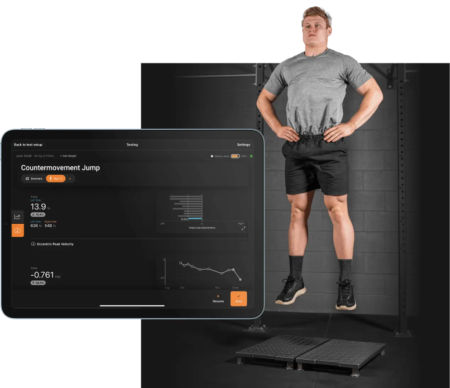
Traditional field tests often miss hidden deficits. At CHP, our ACL physical therapy program uses force-plate technology to analyze how each leg produces and absorbs force during jumps, landings, and change-of-direction tasks. To learn more about our forceplates,  check out this link.

We track asymmetry (aiming for ≤10%) and test both when athletes are fresh and fatigued. This helps us individualize rehab, catch weaknesses before they become injuries, and make safer clearance decisions.

3. Movement Quality

Numbers matter, but how an athlete moves under fatigue is just as critical. During ACL rehab, we look for:

  • Controlled deceleration
  • Proper knee and hip alignment
  • Strong trunk stability
  • Quiet, efficient landings at game speed

By combining movement analysis with force-plate data, we ensure athletes are not just strong on paper—but resilient in real game conditions.

4. Knee Health

A successful ACL recovery also depends on the joint’s response to load. Non-negotiables include:

  • Full, pain-free range of motion
  • No swelling or irritation after training
  • Zero “giving way” episodes

If the knee flares up as we increase intensity, we scale back. Just because the calendar says “9 months” doesn’t mean the knee is ready.

5. Confidence

Physical readiness means little without mental readiness. At CHP, our ACL physical therapy program uses validated questionnaires like the ACL-RSI (Return to Sport after Injury) to track confidence. Scores in the mid-60s or higher, paired with strong physical metrics, usually indicate safe readiness.

We also coach mindset—helping athletes rebuild trust in their body is just as important as rebuilding strength.

Clearance Does Not Mean Full Game Readiness

“Cleared” to return to sport means an athlete can begin practicing. It does not mean they’re ready for full minutes or their pre-injury role. Building back to game-day fitness requires another 6–12+ weeks of gradual progression:

  1. Non-contact practice and controlled drills
  2. Controlled contact with planned rest
  3. Increased intensity and practice density, monitoring workload
  4. Gradual introduction of limited game minutes

This measured progression is how we prevent setbacks and ensure long-term success.

How CHP Puts It All Together

At Cohen Health and Performance, our clearance testing includes:

  • Strength testing with precise benchmarks
  • Force-plate assessments for braking and propulsion
  • Movement quality reviews under fatigue
  • Knee health evaluation for calm, stable joints
  • Confidence tracking for mental readiness

From there, we design a stepwise return-to-play plan that gradually increases training load and game minutes while monitoring next-day knee response.

Our philosophy is simple: earn the right to do more, then prove you can repeat it.

If you or your athlete is recovering from ACL surgery, don’t settle for a clearance based only on time or basic hop tests. A true ACL physical therapy program should integrate strength, force-plate data, movement analysis, joint health, and confidence.

At CHP, our ACL specialists are committed to helping athletes not only return safely, but come back stronger than before.

If your athlete is working toward a safe, confident return to sport, our ACL rehabilitation team would love to guide the process. Contact us here.

What Your Patient Experience Tells You About Your Provider

When I first moved to the DC area, I had to find a new dermatologist. With pale skin and a bald head, I knew I needed someone I could rely on. What I didn’t expect was just how different the experience of healthcare could be from one provider to the next.

My first attempt went something like this:
I called the office, asked for an appointment, and was told the soonest available was six weeks away. When I explained that I had a conflict, I was told it would actually be six months before I could get in. Not exactly encouraging but I made it work.

When I finally arrived for the appointment, no one looked up from behind the desk, no one greeted me, and I was handed a clipboard without so much as a “thank you.” When the doctor did see me, it was for maybe three minutes. He seemed rushed, didn’t answer my questions, and was clearly just trying to get to the next patient.

Unfortunately, this kind of experience is all too common in healthcare.

Later, I found another dermatologist, and the difference was night and day. The staff answered the phone with warmth, greeted me by name when I arrived, and the doctor took the time to listen. She didn’t spend tons of time with me, but she was present, thorough, and made me feel valued.

The way you’re treated during the process often reflects the quality of care you’ll receive.

How We Approach Care at Cohen Health and Performance

At Cohen Health and Performance (CHP), we’ve built our model of care around the kind of experience every patient deserves. If you’re looking for physical therapy near you in Bethesda,  here’s what makes us different:

Here’s what makes us different:

  • One-on-One Sessions: Every appointment is a full hour with your Doctor of Physical Therapy—no bouncing between patients, no rushing.
  • Personal Connection: We know your name when you walk in, and we take pride in making every patient feel welcome.
  • Full Presence: During your session, our entire focus is on you. We answer your questions, explain the “why” behind your program, and adjust as needed.
  • Between-Session Support: Need something outside of your appointment? Our team is available through our patient portal or a quick call to make sure you’re supported every step of the way.

Whether you’re an athlete recovering from injury, an active adult wanting to stay strong, or a parent helping your child navigate youth sports, your experience matters just as much as the treatment itself.

Choosing Physical Therapy in Bethesda

If you’re looking for physical therapy in Bethesda, we encourage you to ask yourself:

  • Do they listen to me?
  • Do they treat me like a person, not a number?
  • Are they invested in my success inside and outside the clinic?

At CHP, our answer to all three is a resounding yes.

So if you want a healthcare team that’s truly in your corner—committed to your goals, your progress, and your overall experience—we’d love to help.

Contact us today to schedule your first session and see what makes Cohen Health and Performance different.

Maybe You Don’t Need Rotator Cuff Surgery After All…

When someone hears the words “rotator cuff tear,” the first thought is often surgery. But many people with rotator cuff tears (even full-thickness ones) get better without ever going under the knife. At Cohen Health & Performance, we see this every day, and the latest research continues to back it up.

What the Research Says About Rotator Cuff Tears

At the Mid-Atlantic Shoulder and Elbow Symposium, Dr. John Kuhn of Vanderbilt University presented a study following nearly 500 patients with rotator cuff tears. His team found that 75% of patients improved with physical therapy alone—even when the tears were large or full-thickness, as long as they were atraumatic (developed over time, not from a sudden injury).

Even more impressive? These results held up over 10 years. Many patients regained shoulder function, reduced their pain, and returned to the activities they enjoyed, without surgery.

Other studies show that even when rotator cuff repairs are performed, the repaired tissue often re-tears. Surprisingly, many patients still feel better functionally after rehab. This suggests that the real difference-maker may be the physical therapy and rehabilitation process, not just the surgery itself.

Why Rotator Cuff Physical Therapy Works

So how does physical therapy help when the rotator cuff itself is damaged? At CHP, our shoulder physical therapy programs focus on much more than just the torn tendon. We work to strengthen and coordinate the entire shoulder complex, including:

  • Rotator cuff strengthening: Targeted exercises to build resilience in the cuff itself.
  • Scapular control: Training the muscles around the shoulder blade to support the shoulder joint effectively.
  • Trunk and core integration: Teaching your body how to move as a unit so your shoulder isn’t overloaded during sports or daily activities.

By improving strength, mechanics, and control, we help the shoulder function more efficiently, reducing pain and restoring performance, even in the presence of a tear.

When Surgery Still Makes Sense

Of course, surgery isn’t off the table for everyone. In cases of traumatic injury (like falling directly on the arm), or when physical therapy fails to provide relief, surgical repair may be the right option. But in many cases, trying shoulder physical therapy first is the safer, more effective, and less invasive choice.

Should You Try Physical Therapy Before Surgery?

If you have shoulder pain or a diagnosed rotator cuff tear, you don’t have to rush into surgery. The best next step is often a structured program of shoulder physical therapy.

The worst-case scenario? It doesn’t solve the issue, and surgery becomes necessary.
The best-case scenario? You avoid surgery altogether and get back to the activities you love—stronger than before.

If you are ready to take the next step, contact us and schedule your evaluation to solve your shoulder pain and return to the activities that you love.

Get It Girl (new program announcement)!


Today we have a special guest post and announcement from Dr. Catherine Biddle!

Dr. Biddle here. As a former collegiate gymnast, I know firsthand how essential weightlifting and targeted strength training are to athletic success—both individually and as a team. Unfortunately, when I was a high school athlete, those benefits were not emphasized. At the time, the common misconception that females shouldn’t—or didn’t need to—be in the weight room was still very present. Looking back, I believe that missing out on proper strength training contributed to the major injuries that sidelined me and kept me away from the sport I loved (at least this gave me more experience on the patient side of physical therapy!).

That’s exactly why I created Get It Girl—a small-group strength training program designed specifically for girls ages 11–14 who want to build confidence, train safely, and unlock their full athletic potential.

In this program, your daughter will get:

  • 8 Weeks of In-Person Coaching — Focused on strength, technique, and safe movement.
  • 4-Week At-Home Plan — To keep making progress between sessions.
  • Exercise Video Library — Step-by-step demos with form cues she can use anytime.

Spots are extremely limited—only 5 spots remain—so don’t wait. Click here now to learn more, reserve your daughter’s place and give her the foundation she needs to stay safe, grow stronger, and thrive in her sport.

If you have any further questions, feel free to reply to this email as well.

Don’t let this opportunity pass by—help your daughter build the strength and confidence she deserves!

-Dr. Catherine Biddle

×