Why Powerlifters Don’t Move Laterally

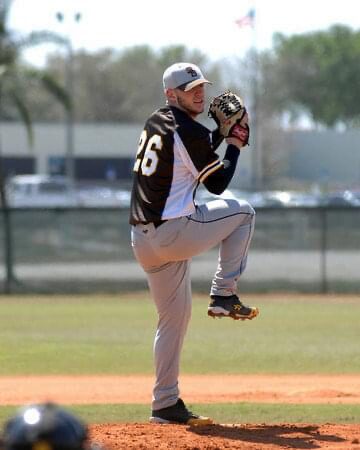
As most physical therapists will tell you, powerlifters typically do not demonstrate great multidirectional movement skills. Why would they?

Training for any sport is all about specificity.

The goal of a powerlifter is to squat, deadlift or bench press more weight. Their training reflects this and as a result, they become better at those lifts. Any movement qualities that do not contribute to helping perform in these lifts are likely to suffer because they are not useful to the sport.

In fact, any unnecessary movement may be detrimental to their sport because it takes energy away from what is most important.

One way to prevent unnecessary movements from occurring is to reduce the capability of doing so in the first place!

Elite level powerlifters often do not even possess the prerequisite movement capabilities to efficiently move laterally.  That wouldn’t be helpful to their performance!

The highest level of performance in any sport often requires physiological adaptations that set the body up for the greatest level of success in that specific activity. Many times, this means that unrelated movement capabilities will diminish.

While this is helpful for short term performance, when taken too far, a reduction in movement options can increase the risk for injury. A lack of movement capabilities results in a limited number of ways the body can minimize physical stress.

How do we know that the body has lost too many movement options? Overuse injuries begin to accumulate, and signs of discomfort start to present themselves.

The best solution for any athlete looking to improve their performance in particular sport is to visit a professional that can assess their capabilities and personal risk profile. Our team of Doctors of Physical Therapy at Cohen Health and Performance specializes in just that.

Contact us today to learn more!

Where You May Be Cheating Your Pushups (Video Included)

Let’s stop cheating our pushups and making the injury rehabilitation process more challenging! 

There is a simple way to make our pushups easier. Allow for your shoulder blades to pinch together and limit the motion’s range of motion . Less distance required for the push up=less effort. 

However, is this better for you?

Allowing your shoulder blades to pinch together excessively when performing a pushup places more strain onto the shoulder joint and may lead you to a physical therapy clinic like ours. Because the shoulder blades are pinched together, they are no longer able to move effectively and contribute to the exercise. More strain is placed onto the shoulder joint as it is forced to pick up the slack. 

Correcting this common compensation may prevent you from “repping out” the same number of pushups however you will get more out of the exercise. In addition, your shoulders will be healthier in long run!

The video below helps to illustrate this difference.

Video 1: The shoulder blades immediately come together.

Video 2: Begins by reaching away from the floor thus helping the shoulder blades to start in a more protracted (spread apart) position. From there they move slowly together as the body descends to the floor and spread apart again on the way back to the starting position.

What Is That Hip Pinch?

Have you ever experienced an annoying “pinchy” sensation in the front of your hip? Many patients are referred to physical therapy for other regions of the body (back pain being the most common) and mention this uncomfortable sensation in passing.

Typically this occurs with movements like deep squatting. This “pinch” occurs as the ball of the hip (the femoral head) glides forward excessively and presses against the soft tissues located in the front of the joint.

This forward movement is normal however it is important be mindful of where the socket of the joint (acetabulum) is positioned as well.

Often times, pinching occurs in the front of the hip due to a poorly positioned hip socket.

The good news is that we can reposition the hip socket so that your hip does not pinch as easily!

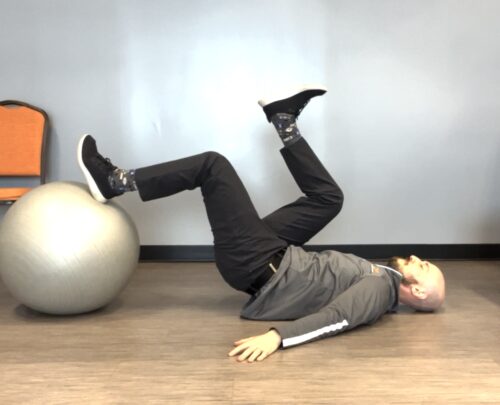
There are many great drills that help with this however the Shifted Single Leg 90/90 Hip Lift is a great one to start with (this is also a great movement to get the hips/pelvis moving before running). In this video, the left hip socket is being oriented into a position that will result in less pinching.

  1. Start by lying on your back with hips/knees bent at 90 degrees and feet on a wall
  2. Slowly pull your heels down towards the ground as you reach your knees towards the ceiling. Your tailbone will slowly lift off of the ground and you should begin feeling your hamstrings working.
  3. Without moving your feet, shift 1 hip/knee down as the other hip/knee shifts up. As you shift one hip/knee down, ensure that you are pulling towards the ground with that heel. You should feel that specific hamstring cooking at this point!
  4. Pick the opposite foot up off the wall while maintaining the hip shift
  5. Hold this position while taking a relaxed breath in through the nose, followed by a long exhale out through the mouth before pausing for 5 seconds. Perform this for 5 cycles.

As with all exercises, they should be specifically tailored to your particular needs and unique physical qualities. Schedule a FREE phone consultation with a member of our physical therapy team on our website to determine how to most effectively implement an exercise like this into your program!

How a physical therapist trains with back pain

Back pain is one of the most common issues encountered in sports physical therapy and injury rehabilitation, especially among runners. Those with sensitive lower backs often need to carefully manage the total amount of activity they perform over time.

It’s particularly important to pay attention to exercises that involve significant axial loading, which refers to weight bearing directly down onto the spine.

Exercises with high axial loading, such as barbell squats, typically involve supporting the weight on the shoulders.

For individuals with back pain, it’s crucial to keep the volume of axial loading reasonable. However, reducing the number of exercises that can be performed may limit progress for those who want to achieve their fitness goals.

The trap bar squat is an excellent exercise that targets the legs and, when executed correctly, keeps the back feeling great.

Here’s how to do it:

1. Set up a trap bar with a box placed in the center.
2. Stand on the box and position yourself inside the trap bar.
3. Exhale to engage your core by bringing the ribs down and activating your abs.
4. Inhale as you squat down by pushing your knees forward to reach the bar—this is not a deadlift!
5. If needed, reset your abs, take the slack out of the bar, and stand tall as you exhale.
6. Repeat.

Contact us to learn more about improving your gym performance while maintaining a healthy lower back!


Performance training for knee pain

When your knees are acting up, how could using them more possibly help? Many of our patients have the same concerns during the injury rehabilitation process, especially when they first start physical therapy.

Knee pain often stems from a reduced ability to tolerate stress. This stress can occur during activities like squatting, lunging, running, or jumping.

Every tissue in the body has a certain stress tolerance—the amount of stress or load it can handle before pain or injury occurs. When this tolerance decreases, it takes less stress to cause discomfort or injury. However, when the tissue’s loading tolerance increases, it can withstand more stress. In sports physical therapy, finding the right balance between these factors is crucial.

The only way to increase a tissue’s loading tolerance is through training—or in other words, applying stress to the tissue!

The key is to apply the right amount of stress to the targeted tissues. Too little stress won’t prompt the body to adapt, while too much could lead to further injury.

It’s similar to weight training. To build stronger muscles, you need to lift weights, which stresses the muscles. This stress triggers an adaptation, allowing the muscles to handle more in the future.

In cases of chronic knee pain, people often avoid loading the knees. Over time, this avoidance leads to a decrease in the loading tolerance of the tendons and tissues around the knees. As tolerance decreases, the likelihood of pain increases, creating a snowball effect.

We can reverse this by introducing pain-free exercises that challenge the tissues around the knees. Isometric exercises, which involve holding a challenging position for a set period, are particularly effective.

Another type of exercise that often benefits those with chronic knee pain is eccentric exercises. These exercises work the tissues as they lengthen slowly. One of my favorites, which we frequently use, is the Eccentric Step Up.

When dealing with knee pain, there aren’t inherently “good” or “bad” exercises. The goal is to find the exercises that apply the right amount of stress so the surrounding tissues adapt appropriately.

Our team of Performance Physical Therapists would love to help you find the best exercise routine to improve your knees’ loading tolerance. Contact us to receive a comprehensive home program tailored to you!

P.S. Don’t forget to subscribe to our YouTube channel and check out our new and improved Instagram page @cohenhealthandperformance!

What Touching Your Toes Really Says

Can you see the difference in these photos? The toe touch is a simple test that is often performed in injury rehabilitation and sports physical therapy settings.

However, important parts of this test are commonly missed. Simply touching your toes doesn’t tell the whole story. If you can touch your toes, great, however there are different ways that you can get there.

Have you stretched your hamstrings to such a degree that they allow you to nearly palm the floor? 

If you are a gymnast that may be a great thing. However field sport athletes (ex. Lacrosse, football, basketball, baseball) and weight lifters need a level of hamstring stiffness for explosive movement. 

Is your lower back straight or does it flex into more of a C curve to allow you to more easily touch your toes? Is your lower back bending in certain areas but not in others?

Your lower back consists of multiple bones (vertebrae) that are stacked on top of each other. Our backs are built this way to allow for movement of one segment on the next. However many times these small movements do not occur and the lower back moves as one unit. The result is a lower back that looks straight in places despite being bent over. Over time, a lack of lower back  movement can increase the risk for injury.

The toe touch is a great test and can be made even better when directed by a professional with a trained eye.

Contact us for more information about how a customized movement assessment may help you optimize your training and avoid injury!

×