I felt stuck

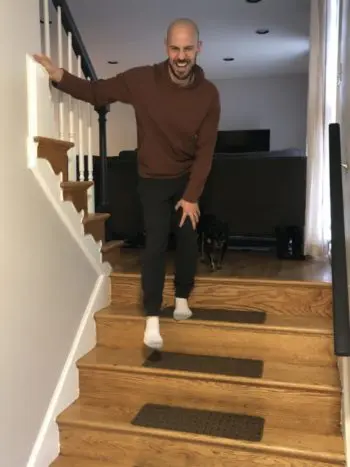
Times have certainly changed, haven’t they? Just look at all that hair! And it seems like they couldn’t do much about the sun glare on picture day either…

“I really need to stretch more. Should I try Yoga?”

“Everyone’s talking about how Pilates strengthens your core. Maybe I should take a class?”

“I know strength training is crucial, but where do I even begin?”

If you’ve ever had thoughts like these when thinking about exercise, you’re not alone.

The world of health, fitness, sports physical therapy, and injury rehabilitation can feel massive and even a bit daunting. I remember a time when I was unsure about how to approach my own fitness journey.

After wrapping up my college football career, I no longer had coaches designing my training plans. No more structured practices, conditioning workouts, weightlifting sessions, or recovery routines that typically involved stretching, foam rolling, yoga, and light cardio.

With no clear direction, I stuck with what I knew best: lifting weights, following my old off-season routine, and adding a couple of conditioning sessions each week.

After a few weeks of this, I stopped and asked myself a simple but important question: “Why?”

Why was I training this way? What were my goals now? And what were the most effective ways to achieve them? After reflecting and writing down my thoughts, I realized that my training program no longer aligned with my new goals.

My football days were behind me, and it was time to focus on staying healthy long-term.

At the same time, I still enjoyed strength training and the feeling of being strong. Plus, I was working toward becoming a Certified Strength and Conditioning Specialist (CSCS), so I needed to practice what I preached (this was all before I entered sports physical therapy school).

I ultimately designed a new strength training program that focused on increasing strength and muscle mass while also enhancing my mobility. The goal was to feel strong and stay healthy.

This approach worked because I took a moment to slow down and ask myself a few basic questions.

When was the last time you did that? Ask yourself these questions:

– What are the outcomes I want from my training? Do I want to be stronger? Have less discomfort? Improve my mobility? Be honest with yourself.
– What are the best methods to achieve these outcomes?
– If I don’t know the answer to the above, who can help guide me?

As question three suggests, you don’t need to figure it all out on your own. There are experts available who can help you reach your goals, but only you can determine what those goals are.

Once you have that clarity, our team of sports physical therapists in Bethesda and McLean is here to help. Along with being Doctors of Physical Therapy, our Performance Physical Therapists are also Certified Strength and Conditioning Specialists. We specialize in helping injured athletes recover and get back to doing what they love.

Ergonomics Are Overrated (Maybe)

Blasphemy! Every physical therapy professor from Bethesda to New Zealand just made me public enemy number one.

I am exaggerating, of course, however it sounds outrageous for a sports physical therapist or anyone working in the injury rehabilitation field to state that ergonomics could be overrated.

This is not to say that they are not important. An individual’s workplace setup, for example, is an important factor to consider when addressing ailments such a chronic neck or back pain.

However, if you look on social media or watch an episode of shark tank, you are likely to find several different devices claiming to fix your posture and solve your pain. Many then purchase these products and become discouraged when their ailments are not cured.

Claiming that a single ergonomic correction will solve all your issues is to ignore the myriad of different factors that contribute to pain or injury. Furthermore, it ignores the fact that there are other, more influential factors.

Look at the picture above. An ergonomic specialist would give me a failing grade. I am slouching and looking down at my computer with my legs stretched straight out. Even worse I’m resting my computer on my poor pup, Chip (he is under the blanket)!


However, I’m feeling pretty good today. I slept well last night and went on a long walk this morning after exercising. These factors outweigh the impact of an hour of computer work.

Improving large components of health such as sleep, nutrition, exercise, and stress enhance the resilience of our bodies.

Resilience is an awesome thing. It creates room for error and means that we can still feel great despite having an imperfect desk set up.

Overall, it is worth repeating that you should still try to improve ergonomics whenever possible, however do not expect it to solve much when the larger components of health are being ignored.

For more information on these larger components of health, check out the articles below!

Does Your Metabolism Actually Slow As You Age?

Benefits of Walking for Physical and Mental Health

Exercise Stacking

Pullup and keep your shoulders happy

The Impact of Breathing on Shoulder Function and Pull-Up Performance

As we discussed in a recent article (which you can find here), our ability (or lack thereof) to breathe effectively can significantly influence shoulder function. This is a common area of focus in sports physical therapy and performance training, particularly for runners. Breathing can affect posture, shoulder mobility, and even lead to issues like clicking, popping, or decreased strength in the shoulders.

Among these factors, reduced shoulder mobility is often the most noticeable.

In many cases, a slight reduction in shoulder mobility isn’t problematic unless you’re engaging in exercises that demand extensive shoulder movement.

One such exercise is the pull-up or chin-up. Performing these exercises correctly requires substantial shoulder flexion and overhead pulling strength. When these abilities are lacking, the body tends to compensate in ways that can affect form and function.

A common compensation is leaning back and puffing out the chest when initiating the movement from a hanging position. This causes the front ribs to flare out, altering the position of the shoulders and reducing their overall effectiveness.

So, how can you ensure proper form during vertical pulling movements like pull-ups and chin-ups?

The key is to perform these movements in a tucked position. This position flexes the hips, aligning the pelvis underneath the body, which makes it difficult to excessively puff out the chest.

However, be prepared—this position makes chin-ups and pull-ups significantly more challenging!

Not only does it increase the workload for your abdominals, but anytime you eliminate compensations, the movement becomes more demanding.

When starting out, try supporting your legs or feet. Once you’ve mastered this, progress to holding them up on your own.

Check out this video of Dr. Cohen incorporating these techniques into his training routine.

Is Shoulder Clicking Bad?

“My shoulder clicks when I press or reach overhead. Is that a problem?”  “Is it bad to feel things moving and popping in my shoulder whenever I perform this movement?”

Questions like these are common in the sports physical therapy and injury rehabilitation setting. The answer is always context dependent because clicking can occur for several different reasons.

The shoulder is a complex joint with the most range of motion in the body.  It is comprised of bone, ligaments, cartilage, and tendons that allow for greater ease of movement in many different directions, however, it runs the risk of becoming unstable when movement quality is poor.

This can result in movement limitations or clicking/popping within the shoulder.

Check out an article that a member of our physical therapy team wrote back in 2018 if you are interested in learning more about the different sources of shoulder clicking/popping.

Regardless of the specific source of the clicking/popping, it is most important to improve the root causes of these issues: movement quality and mobility.

If you are interested in improving the movement quality and mobility of your shoulders, come join me for our virtual and pre-recorded mini-shoulder mobility workshop. We are offering this course for FREE to you, our CHP fam! Simply enter promo code CHPFAM at checkout.

In this workshop, you will learn:

  1. The source of your shoulder mobility limitations and/or discomfort
  2. How to assess the movement quality of your shoulders
  3. Exercises that you can start doing RIGHT NOW to improve your shoulder function, reduce discomfort, and decrease the risk for future injury

This workshop is a MUST attend for athletes, weekend warriors, and everyone in between that want to:

  1. Train without being held back from pain
  2. Decrease future injury risk
  3. Perform at their highest level for years to come!

Sign up today HERE and don’t forget to enter promo code CHPFAM at checkout to get this class for FREE!

How to “Fix” Rounded Shoulders

As physical therapists, we often answer questions pertaining to “poor posture.” One of the most common reports from our patients in Bethesda and Chevy Chase is having “forward shoulders.”

The solution to this, which is often taught by other physical therapists, is to stretch the muscles in the front of the shoulders. The most common of these muscle groups is the pecs.

The logic goes something like this. “Your pecs are tight and pulling your shoulders forward. If you stretch them, your shoulders can move back and correct your posture.”

While this reasoning isn’t necessarily wrong, it is shortsighted. It fails to question why muscles like the pecs became tight in the first place. Simply stretching these muscles won’t correct the root cause of the issue.

The shoulder complex rests on top of the rib cage and the pecs attach to the sternum (ribs 1-7 attach to the sternum) as well as the ribs on the front of the rib cage.

As we breath in the rib cage should expand in 360 degrees and as we breath out it should do the opposite.

People with forward shoulders and stiff pecs often have difficulty expanding the front part of their rib cage during a relaxed breath in. This prevents the pecs from lengthening fully and often causes them to remain stiff, pulling the shoulders forward.

If you are looking to improve your posture and “pull your shoulders back”, the solution must include breathing exercises that emphasis relaxation and expansion of the chest/front part of the rib cage.

Here is an example from our YouTube page that illustrates this concept.

If you are looking to improve your posture or shoulder function, contact us now!

Photo Credit

“Orlando’s Poor Posture” by hewy is licensed under CC BY-NC-ND 2.0

Does Your Metabolism Actually Slow As You Age?

As we age it is common to feel that it is increasingly difficult to prevent injury or reach our fitness goals. We have spoken to many people in Bethesda that feel the help of a physical therapist is inevitable. Many challenges that are experienced are often attributed to a slowing metabolism.

However, this may not be the case.

There has been evidence that suggests that our metabolism doesn’t slow much, if at all, during adulthood. However, even if we later discover that some of these findings are misleading, a slowing metabolism is not the only reason that it takes longer to recover from injuries or fail to reach our fitness goals as we age.

Many of the challenges associated with aging stem from lifestyle changes.

In modern times humans have become more sedentary as we age. We no longer participate in organized sports, play outdoor games with our friends, and migrate to sedentary desk jobs for much of the day. This results in a large decrease in our daily energy expenditure and increases our risk of injury. Prolonged sedentary activity causes our body to become de-conditioned and less prepared for the rigors of life. As an example, this is why we suggest partaking in a running analysis prior to training for a race.

Another factor we may not realize is that as we get older, we take on a lot more responsibility.

Think back to your teenage years or time in your 20s. Did you have a lot of worries back then? A career? Family commitments? A mortgage? As these “adult things” add up, so do our commitments, resulting in less free time. Less time for exercise, less time for self-care, and less time for sleep.

Countless studies have shown us that as sleep decreases our health is negatively impacted in several ways, including an increased risk of orthopedic injury.

While it may be easy to see all of this as a negative, the good news is that many of the seemingly negative effects of aging are not as inevitable as we may have thought! Furthermore, feeling better and healthier doesn’t require you to be perfect.

As performance physical therapists, we help our patients identify the smallest possible improvement that will make the largest possible impact to overcome an injury.


Image Information

“Tiantan Park-life: The Elderly Exercising in China’s Parks – Parallel Bars” by _chrisUK is licensed under CC BY-NC-ND 2.0


×