For Weekend Warriors Wanting to Avoid Knee Surgery

I probably don’t need to tell you this, but the best surgery is the one that is avoided. Disclaimer, as a sports physical therapist, I am a bit biased!

After knee surgery, your knee is not the same. Tissue may have been removed or artificial parts/pieces may have been put in. Regardless of the procedure, the skin was cut open, scar tissue formed, and time is needed time to heal.

This impacts the function of your knee and your ability to run and exercise as you had previously.

Now, I am not saying that surgery should never happen. What I’m saying is that it should be a last resort.

In my 12+ years working as a sports physical therapist, I have learned that people commonly have knee surgeries when there are things they can do to delay or avoid them altogether.

In many situations, the knee cannot handle the stress required of it for sports or your active lifestyle. As physical therapists, we  commonly prescribe exercises that train the knee to handle all of that stress. In other instances, the knees are dealing with too much stress because another area isn’t doing its job. A thorough sports physical therapy assessment will determine what these areas are so that a comprehensive plan can be prescribed to fix it.

Whatever the reason is, a sports physical therapy assessment may be the secret sauce to finally solving your knee pain and avoiding the surgery you have been worried about! To schedule that, contact us today!

What’s the deal with my ankle popping?

When your knuckles pop, your ankle cracks, or your hip makes that strange noise, do you ever wonder, “Is that bad?” Should you see a sports physical therapist or doctor about it?

Well, there’s no need to worry—it’s probably not a big deal if you’re not experiencing any pain when it happens.

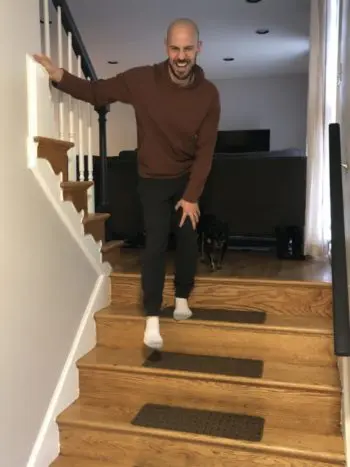
I have this quirky habit every morning as soon as I get out of bed. I keep my right heel on the floor and move my knee over my toes until I feel and hear a pop in the back of my heel. It freaks out my wife, Deb, every time.

The cracking or popping in a joint is similar to the sound of pressure being released from a soda bottle. Over time, pressure builds up within a joint, and for some people, it feels good to release it. That’s the noise you’re feeling and hearing.

However, if you experience pain when the pop occurs or if the area feels unstable, it’s important to reach out to us. We can help determine the root cause of these issues and whether any treatment is necessary.

We’ll assess if your pain is related to arthritis, overuse, or another movement-related issue that we can address through physical therapy, with exercises you can do at home.

Here are a few questions to ask yourself. If you answer “yes” to any of these, it might be time to seek help:

1) Is the popping I feel painful?
2) Has there been a recent injury to this area?
3) Does this area feel unstable?
4) Do I have weakness in this area?

You might not even need to visit the office—a phone call could be enough. Check out our homepage here and click on the “free phone consultation” tab!

Create Your BS Meter

I’m lying on the couch as I got sucked into Instagram and all of their sports physical therapy videos. While scrolling, one exercise video grabbed my attention. This wasn’t because it was good information. It was because it wasn’t and had thousands of likes.
 
There is so much information out there and anyone with a social media account can have a platform. You have access to the best and the worst information. It is overwhelming!
 
You need a BS detector so that you aren’t doing bicep curls while standing on a ball, blowing up a balloon (not far off what I saw the other day).
 
So how do you determine when you should ignore a social media post?
 
Speaking in absolutes. Most times, the best answer that a professional can give you is “it depends.” Rarely is there a correct answer for every situation. For example, stretching or mobility is often promoted as a “fix” for a given injury. Yet, many people have more important problems to solve. For more information, check out our post, Is Mobility Overrated? It is impossible to know of every possible factor that could be contributing to pain or injury. Even the best among us cannot be 100% certain, especially on social media.
 
It is too complicated. An expert can take a complex topic and break it down so that it makes sense to you. Complicated medical jargon is a red flag that the presenter does not understand what they are posting.
 
Promoting personal success stories as evidence. Personal success stories are subjective and ignore the facts and research. Many influencers post personal success stories as evidence for their approach. This ignores all the other factors that may have contributed to the results being promoted (genetics, differences in lifestyle, priority differences, etc.). Quality research requires thousands of trials before it is valid. A case study of 1 or 2 people only applies to those 1 or 2 people!
 
P.S. If someone is promoting a “quick fix”….run!

Stop Standing Straight

“Stand up straight!”

If your parents were anything like mine, you heard that growing up and when I started my career as a physical therapist, I assumed that I would be telling my patients to do the same.

However, that has not been the case.

As a sports physical therapist here in Bethesda, I find this cue to be detrimental to how the body functions. In fact, correcting the need to stand up straight has been one of the most helpful suggestions during physical therapy sessions and throughout the injury rehabilitation process.

Standing up straight causes you to pull your shoulder blades down and back, which limits the amount of movement available to your shoulder blades. The shoulder blades are meant to elevate and abduct (move apart) as the arm is moving away from the body. Just try to keep your shoulder blades down and back as your reach for something!

The cue to stand up straight also commonly causes people to arch their back and tip their pelvis forward. This position places increased strain on the lower back and pelvis, while limiting the amount of motion that is available at the hips.

Correcting this posture is of particular importance for athletes. Every sport has an amount of movement that is necessary to perform it. Golf requires a large amount of rotation at the hips, serving a tennis ball requires a great deal of shoulder flexion, and sprinting requires lot of hip extension.

“Standing up straight” while performing these activities will limit the movements necessary to perform these activities and can often lead to injuries.

This is not to say that this cue is a bad thing. However, it is important to understand when this cue is helpful and when it is not.

Cues like “standing up straight” may work for drills such as deadlifts, rows, and farmers carries, however it is useful to forget this cue for other activities and when attempting to correct your posture!

Athletes Need Strong Breaks Before They Can Hit The Gas

Athletes must have great breaks before they are able to hit the gas. When they don’t, that is when they find themselves in a sports physical therapy setting.

If you are an athlete that wants to jump higher, run faster, and be more explosive, you must first know how to slow down. In fact, this is one of the first things that we work on with athletes during physical therapy and performance training.

Athletes that struggle to absorb the impact of their bodies during explosive movements have a far greater risk of lower body injury. This can be seen when landing from a jump or cutting to change direction as the foot contacts the ground.

A recent example occurred in the most recent Super Bowl. In the 2nd half Odell Beckham Jr. tore his left ACL when he landed on his left leg as he slowed down to make a catch. While doing so his upper body was turned to the right creating a twisting motion at his knee as he attempted to slow down. He was unable to control the rapid breaking and twisting forces occurring at his knee, resulting in a large amount of stress to the ACL and the subsequent rupture of the ligament.

While none of us are athletes like Odell, we must all be capable of controlling the breaking forces that we experience when exercising, running, or playing recreational sports. The more aggressive and competitive the sport, the more force you must be capable of controlling.

This is especially true for youth athletes.

They play very competitive sports and are growing at the same time. Their soft tissues are adjusting to the changes occurring in their bodies and they have yet to develop all their athletic capabilities. These are just a few of the contributing reasons why lower body injuries like ACL tears are so prevalent in youth sports.

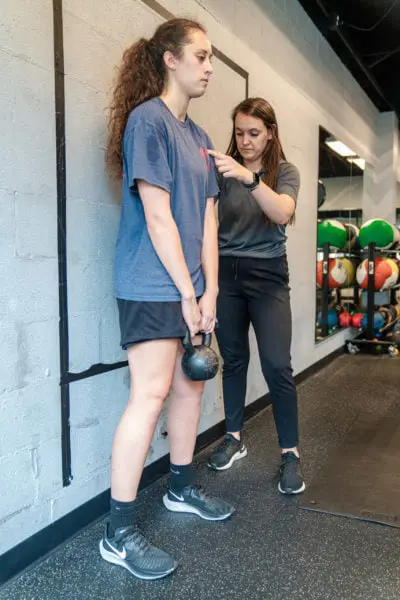
Below are 2 of the first drills that I teach to athletes when they are in physical therapy recovering from or seeking to prevent lower body sport-related injuries during personal training or performance training sessions.

Once you master these seemingly simple drills, you can step things up in a variety of fun ways!

Give these 2 drills a shot and let us know if you have any questions.

Don’t Trust Your Pain

We have all experienced physical pain (in fact, my own history of low back pain is what interested me in sports physical therapy).

Maybe you injured your back lifting weights. Perhaps you hurt you shoulder playing catch with your kids. You may have irritated your knee when training for a marathon.

You decide to see your doctor, physical therapist, or medical provider of choice. They then prescribe the recommended treatment or “plan of care.”

Throughout the course of treatment, you determine if you are getting better by monitoring your pain. Is it decreasing? Is it staying the same or getting worse? If your pain is improving, the treatment is working. If not, it is failing. Pretty straight forward.

That is the way that standard physical therapy views treatment but is short sighted.

Modifying your daily activities or exercise routines will help pain quickly improve in the short term but the root causes of the pain remain. This is when many people stop going to physical therapy or performing their home exercise routine.

This pain-free period of time provides the body with an opportunity to address the root causes of pain. This is essential if you wish to prevent it from returning in the future while returning to full activity.

Pain is a prediction made by the brain. When pain continuously occurs during a movement or activity, the body learns to expect it. This expectation must lessen for pain to ultimately disappear during aggravating activities. If you really want to nerd out on pain science, check out this article by my friend and fellow physical therapist, Zac Cupples.

Imagine that you have lower back pain every time that you attempt to lift something off the floor such as deadlifting a barbell in the gym or emptying dishes out of the dishwasher.

The brain has an expectation that this bent over position will hurt. Therefore, similar positions must be experienced without pain. Does this mean that you should start deadlifting on day 1 of treatment. Absolutely not. The best solution is to start with something less threatening and build from there. Below is an example of a great activity that physical therapy patients with low back pain start with.

The brain will then determine that these positions are not threatening, ultimately reducing risk of pain in the future while facilitating a full return to active life.

If you are an active adult ready to solve chronic pain for good, contact us to receive a customized home exercise program today!

×