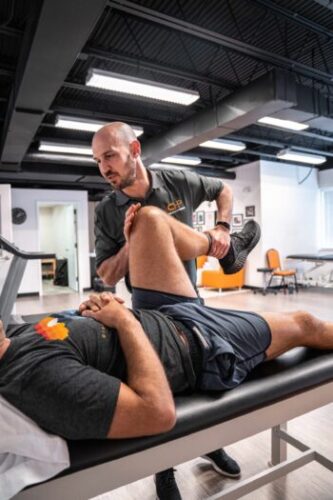
Are You Really Out of Alignment? What You Need to Know Before Your Next Adjustment

“I think my hips are out of alignment.”
“My pelvis feels shifted.”
“My sacrum must be twisted.”

These are phrases we hear all the time at Cohen Health and Performance. If you’ve ever said something similar—or been told this by a friend or provider—you’re not alone. The idea of being “out of alignment” is a commonly held belief and often used to explain nagging pain or movement issues. But here’s the truth:

Your body is built to move—and that includes your pelvis.

Understanding “Misalignment”

Let’s clear something up: your pelvis, hips, and sacrum are supposed to move. With every step you take, your pelvis naturally rotates, shifts, and adapts. This isn’t dysfunction—it’s a sign of a healthy, dynamic system.

The sensation of being twisted or “off” often comes from the body favoring one side over the other. It’s not that you’re structurally broken. It’s that your movement patterns are biased—and over time, those biases can create imbalances that feel like misalignment.

Why Do We Get Stuck in These Patterns?

Most people have a natural tendency to favor one side, especially the right. Why?

  • We’re mostly right-handed
  • We carry kids, bags, or groceries on the right
  • Even society is designed for right-handers (think door handles, tools, etc.)

This daily repetition subtly trains our bodies to prefer the right side. Over time, this can show up in the gym—like when one leg feels stronger during a leg press—or in daily life, where you feel “off” or stuck on one side.

But here’s the important part: you don’t need to be cracked, popped, or adjusted repeatedly to fix it.
You need a plan to address the underlying cause.

A Smarter Approach to Feeling “Realigned”

One of our go-to exercises at Cohen Health and Performance (see the video at the beginning for a demonstration) is a drill that retrains how the body pushes off the right side to shift weight to the left. Here’s what it looks like:

  • Lying on your back with your right foot on a wall
  • Left leg lifted with the hip in flexion
  • Pushing through the arch of the right foot to activate the right glute

This simple but effective movement mimics what your glute should do during walking, sprinting, or cutting—helping you get off the right side and balance your body’s movement patterns.

Done consistently, drills like this can help you:

  • Reduce your reliance on constant adjustments
  • Improve strength and control in underused muscles
  • Feel more balanced and symmetrical in daily life and workouts

Physical Therapy That Addresses the Root Cause

At Cohen Health and Performance, our goal isn’t just to “fix” you temporarily.
We help you understand why you feel off in the first place—and give you the tools to stay better aligned through movement, not manipulation.

Whether you’re looking for physical therapy in Bethesda or physical therapy in McLean, our team specializes in performance-based care that empowers you to move better, feel stronger, and stay pain-free.

Ready to Stop Chasing Adjustments?

If you feel like your body is out of alignment—or you’ve been told that it is—it’s time to dig deeper. Contact us today to schedule an evaluation. We’ll help you understand what’s really going on and create a plan that actually sticks.

Still Struggling with Knee Pain? Why Physical Therapy May Be the Missing Link

At Cohen Health and Performance, we recently worked with an athlete who came to us months after injuring his knee during a workout at the gym. After seeing his doctor, he was told there was nothing structurally wrong—no damage on imaging, no major red flags. The advice? Take a couple of weeks off and slowly return to exercise.

Fast forward several months, and he was still modifying workouts and struggling with lingering pain and frustration.

Sound familiar?

This scenario is incredibly common—especially among active individuals dealing with chronic knee pain. Whether you’re a weekend warrior, a gym enthusiast, or a competitive athlete, you may have been told to rest, stretch, or foam roll your way out of pain. And yet, the discomfort persists.

Why Traditional Approaches Often Fall Short

Most general advice focuses on reducing symptoms—not solving the root cause. Many rehab programs stop as soon as pain decreases or when daily activities become tolerable again. But for those who want to lift heavy, sprint, or change direction on the field, this simply isn’t enough.

Effective therapy for knee pain needs to go beyond the basics. It should train your knees to handle the specific stresses of your sport or activity.

For example, sports that involve cutting and multidirectional movement place your knees in angled, high-force positions. If your rehab never prepares you for those forces—if your shin is never loaded at those angles during training—you’re setting yourself up for continued breakdown.

The Importance of Load-Specific Training

To truly recover and thrive, the tendons and muscles around the knee—especially the patellar tendon and quad tendon—must be reconditioned to tolerate the demands of real movement. Whether you’re jumping, landing, or squatting under load, your knees must be gradually exposed to the stresses they’ll face in the real world.

That’s why our rehab process includes drills and exercises tailored to your goals. Below is an example from our specialist, Dr. Cat, demonstrating exercises that teach the knee how to absorb and produce force under real-world conditions.

By gradually increasing load and focusing on the angles and demands of your sport, we prepare the knee—and the entire lower body—to handle life beyond the treatment table.

Don’t Let Knee Pain Linger

If you’ve been dealing with chronic knee issues, tried resting, icing, stretching, or following online exercise videos with no real progress, it’s time to dig deeper. At Cohen Health and Performance, we take a comprehensive look at your movement patterns, strength, mobility, and sport-specific demands to uncover why your knee pain persists—and how therapy for knee pain in Bethesda can fix it for good.

We don’t just want to help you feel better.

We want to get you back to training, competing, and living life without limitations.

Ready to Get to the Root of Your Knee Pain? 
Contact us today to schedule a comprehensive evaluation and find out how therapy for knee pain can help you move better, feel stronger, and finally leave knee pain behind.

Why Shoulder Injuries Are So Complex

At Cohen Health and Performance, we specialize in physical therapy in Bethesda and physical therapy in McLean for active adults and athletes who want to get back to the activities they love. One of the most common mistakes we see in traditional care—yes, even among other physical therapists—is a failure to appreciate how complex the shoulder really is.

The shoulder is the most mobile joint in the entire body. That’s what makes it so essential: reaching, throwing, lifting, pushing, and pulling all require freedom of motion. But that same mobility also opens the door to a ton of possible compensations and dysfunctions when something isn’t moving well.

Your Shoulder Isn’t Just a “Ball-and-Socket”

Think of your shoulder like a golf ball sitting on a tee. The ball is your humeral head (upper arm bone), and the tee is the glenoid (part of your shoulder blade or scapula). But that “tee” isn’t grounded into the earth—it’s actually floating on your rib cage. That means your shoulder’s stability is influenced by your rib cage shape, position, and even how you breathe.

Most providers stop at the shoulder joint itself. But for us at Cohen Health and Performance, whether it’s physical therapy in McLean or physical therapy in Bethesda, we know that treating shoulder pain means looking beyond the joint.

If the shoulder blade doesn’t sit securely on the rib cage, the muscles around it—like the upper traps or rhomboids—often work overtime to stabilize things, leading to tightness, knots, and nagging pain in the upper back or neck.

The Rib Cage is the Unsung Hero


One of the foundational drills we use to retrain shoulder mechanics involves placing your forearms on the wall. Here’s the key:

  • Straight line from wrist to elbow
  • Externally rotate through the shoulders
  • Use your rib cage—not your arms—to press back into the shoulder blades. Perform 5 breaths in this position.

A cue we love: Imagine a hot poker hovering in front of your sternum. Your job? Pull away from it without slumping forward. This activates a crucial muscle called the serratus anterior, which helps anchor your scapula and sets the stage for clean, pain-free movement.

Getting the Shoulder Blade Moving Again


Once you’ve created a supportive rib cage, the shoulder blade (scapula) can do its job again—mainly rotating upward as your arm reaches overhead.

A simple but effective exercise to improve this scapular movement is Downward Dog:

  • Start in a push-up (or all 4’s) position
  • Press away from the floor with your hands
  • Drive your chest toward your knees
  • Focus on feeling the shoulder blades rotate upward and outward

This kind of targeted movement work is exactly what we emphasize in our programs for physical therapy in Bethesda and physical therapy in McLean. Without proper scapular motion, your rotator cuff is forced to overwork—and that’s when breakdowns happen.

What About the Rotator Cuff?

Only after we’ve addressed rib cage position and scapular movement do we move to the rotator cuff. By this point, rotator cuff exercises are finally in the right environment to be effective—rather than just throwing rubber band exercises at a deeper problem that hasn’t been solved yet.

Final Thoughts: There’s Hope for Your Shoulder

If you’ve had shoulder treatment in the past and it didn’t work—or if you’ve been dealing with shoulder pain for months or even years—don’t lose hope.

The truth is, shoulder pain is multifactorial. It can stem from poor rib cage positioning, scapular movement limitations, limited mobility, or underdeveloped rotator cuff function. And many healthcare providers simply don’t take the time to look at all of these layers.

That’s where we come in.

If you’re looking for expert-level physical therapy in Bethesda or physical therapy in McLean that goes beyond surface-level care, contact us today. Our team of Doctors of Physical Therapy will work with you to get to the root of your shoulder pain and get you back to doing what you love—stronger and smarter than ever.

What Africa’s Maasai Tribe Can Teach Us About Movement

After recently returning from an unforgettable trip to Tanzania and Kenya, I’ve found myself reflecting on more than just the incredible wildlife we encountered on safari. The people also left an imprint — particularly the Maasai tribe, whose way of life offers some insights into human movement and performance.

As a sports physical therapist and business owner serving active individuals in both Bethesda and McLean, I’m always observing movement through the lens of biomechanics, environment, and long-term physical resilience. And the Maasai tribe? They’re a living example of how environment and development shape the human body’s capacity for movement.

The Barefoot Reality

The Maasai grow up immersed in motion — running, walking, jumping, and herding cattle amidst unpredictable terrain and wild animals like lions and hyenas. What’s even more fascinating? They do all of this in traditional sandals they make themselves — minimalistic by our standards, offering little support compared to today’s athletic shoes.

Yet despite the lack of external support, they move efficiently and powerfully, as they developed this way from birth. Their feet, ankles, and lower limbs were conditioned over years to tolerate the high forces of running and jumping — essentially barefoot.

What This Means for Us in Bethesda or McLean

In our society, we’re influenced by very different environmental forces. We spend most of our time on concrete and hard surfaces, not grasslands. Most of us wore structured shoes as children, so our feet developed differently from those of the Maasai.

That’s why trends like barefoot running, inspired by books like “Born to Run”, need to be approached thoughtfully. While the intention behind minimal footwear and natural movement is often positive, our bodies may not be ready for that shift without a smart, progressive plan.

At our performance physical therapy clinics in Bethesda and McLean, we help patients understand how to safely incorporate barefoot-style training — but we do so within the context of their unique background, history, and goals. What works for someone raised in rural Kenya might not be the best place to start for someone who’s been training on gym floors or running on paved roads their whole life.

Context Is Everything

Whether it’s about footwear, mobility drills, strength work, or running technique, context matters. What’s optimal for one person may lead to injury in another — especially when their musculoskeletal system hasn’t adapted to a new stimulus.

That’s where expert guidance can make all the difference.

Looking to Train Smarter?

If you’re experimenting with new training strategies, transitioning to minimalist footwear, or just looking for ways to optimize performance while preventing injury, our team at Cohen Health and Performance would love to help.

We specialize in physical therapy for active adults and athletes in both McLean and Bethesda, helping bridge the gap between rehab, performance, and long-term health.

Contact us today to schedule an evaluation and get expert guidance on how to move better, train smarter, and thrive in your own environment.


Why Objective Strength Testing Is Essential in Physical Therapy

In the world of physical therapy, precision is everything—especially when it comes to helping athletes and active adults recover from injury and return to peak performance. Yet, many rehabilitation programs still rely heavily on outdated tools like manual muscle testing (MMT) to assess strength.

While MMT can offer a general idea of a patient’s capabilities, it lacks the objectivity, consistency, and sensitivity required for high-level performance and injury prevention. At Cohen Health and Performance, we believe it’s time to stop guessing and start measuring.

The Limitations of Manual Muscle Testing

Manual muscle testing is a common practice in many physical therapy clinics. A therapist applies pressure to a limb and grades the patient’s strength based on resistance. While this method may help screen for gross weakness, it’s highly subjective.

Key limitations include:

  • Lack of precision
  • Inability to detect small, yet important, strength deficits
  • Inconsistent results between therapists
  • No ability to track subtle changes over time

When returning an athlete to sport, especially after a major injury such as an ACL tear, rotator cuff strain, or ankle sprain, relying on manual testing alone can lead to premature clearance—and an increased risk of reinjury.

Objective Strength Testing in Modern Physical Therapy


Today’s leading physical therapy practices (like Cohen Health and Performance if I don’t say so myself) use objective strength testing tools to deliver data-driven care. Whether through isometric testing devices, force plates, or handheld dynamometers, the goal is the same: measure what matters and act on real data.

Benefits of objective testing include:

🔹 Identify muscular imbalances
Catch asymmetries or deficits in strength between limbs, which are often invisible with manual testing.

🔹 Set clear, measurable goals
Define baseline numbers and establish precise strength benchmarks for return-to-sport decisions.

🔹 Reduce risk of reinjury
Research shows that inadequate strength—especially side-to-side deficits—increases reinjury risk. Objective testing ensures no major gaps are left unaddressed.

🔹 Optimize recovery timelines
Tracking strength improvements over time allows therapists to adjust training loads and progressions with confidence, ensuring that recovery is both safe and efficient.

Why It Matters for You

Whether you’re an elite athlete or an active adult who wants to stay in the game, data matters. When your recovery is based on objective strength testing, you’re no longer relying on a therapist’s best guess—you’re following a personalized plan grounded in science.

At Cohen Health and Performance, our team uses cutting-edge tools and technology to assess your progress and guide your recovery every step of the way. We don’t just help you feel better—we ensure you’re performing better.

Ready to Get Measured?

If you’re serious about your recovery, performance, and long-term health, physical therapy with objective strength testing isn’t a luxury—it’s a necessity.

Reach out to us at our Bethesda or McLean clinic to schedule your evaluation and experience the difference that data-driven physical therapy can make.

Arm Care Day: The Physical Therapy Routine Every Baseball Player Needs

When you’re deep into a baseball season—logging innings, throwing bullpens, or playing back-to-back games—the demand on your arm is relentless. If you’re not prioritizing recovery and strength maintenance, performance drops… and injuries creep in.

At Cohen Health and Performance, we emphasize one key principle to our baseball athletes: Arm Care Days aren’t optional—they’re essential.

We specialize in physical therapy for baseball players, and one of the most valuable strategies we implement for shoulder and elbow health is a consistent arm care routine. Here’s what a proper Arm Care Day should include—and why it’s a game-changer for performance, injury prevention, and career longevity.

Soft Tissue Work: Restore Mobility and Promote Recovery

Baseball places repetitive stress on the shoulder, elbow, and surrounding tissues. That’s why the first step of any Arm Care Day at Cohen Health and Performance includes soft tissue work to:

  • Break up adhesions and reduce tissue restrictions
  • Improve shoulder and thoracic spine mobility
  • Stimulate blood flow to accelerate recovery between games

This is a foundational aspect of the physical therapy approach we use with our pitchers and field players alike.

Isolated Muscle Activation: Build Stability and Control

Throwing isn’t just about power—it’s about control. And that control starts with the small stabilizing muscles around the shoulder blade and rotator cuff.

Our physical therapy sessions on Arm Care Days focus on:

  • Rotator cuff activation
  • Strengthening the scapular stabilizers
  • Reinforcing neuromuscular coordination

This helps athletes maintain healthy mechanics, reduce stress on the shoulder joint, and build a resilient throwing arm.

Overload Eccentrics: Strengthen the Deceleration Phase

The highest forces in throwing happen after ball release—when your arm has to slow itself down. This is the phase that often leads to overuse injuries if not properly trained.

At Cohen Health and Performance, we use eccentric strengthening drills to:

  • Improve the capacity of the posterior shoulder and forearm
  • Build resilience in the tissues responsible for deceleration
  • Maintain strength under in-season fatigue

This strategy is a staple in our sports physical therapy programs for baseball athletes who want to keep their arms strong all season long.

Why Arm Care Days Matter

At Cohen Health and Performance, we often say:
“Arm care is injury prevention, performance enhancement, and career insurance—all rolled into one.”

Whether you’re a high school pitcher chasing a scholarship or a weekend warrior who still throws heat, prioritizing your arm health will:

  • Keep you on the field, not in the training room
  • Help you throw harder, longer, and with better control
  • Extend your playing career by minimizing injury risk

The Cohen Health and Performance Difference

We specialize in physical therapy for athletes—and that includes creating customized Arm Care routines that are tailored to your position, workload, and goals.

If you’re a baseball player who’s serious about staying healthy and performing at your best, it’s time to make Arm Care Days a consistent part of your training.

📍 Serving athletes across Bethesda and McLean, Cohen Health and Performance is your partner in long-term arm health.

Schedule an evaluation here and take the first step toward a stronger, healthier season.

×