Arm Care Day: The Physical Therapy Routine Every Baseball Player Needs

When you’re deep into a baseball season—logging innings, throwing bullpens, or playing back-to-back games—the demand on your arm is relentless. If you’re not prioritizing recovery and strength maintenance, performance drops… and injuries creep in.

At Cohen Health and Performance, we emphasize one key principle to our baseball athletes: Arm Care Days aren’t optional—they’re essential.

We specialize in physical therapy for baseball players, and one of the most valuable strategies we implement for shoulder and elbow health is a consistent arm care routine. Here’s what a proper Arm Care Day should include—and why it’s a game-changer for performance, injury prevention, and career longevity.

Soft Tissue Work: Restore Mobility and Promote Recovery

Baseball places repetitive stress on the shoulder, elbow, and surrounding tissues. That’s why the first step of any Arm Care Day at Cohen Health and Performance includes soft tissue work to:

  • Break up adhesions and reduce tissue restrictions
  • Improve shoulder and thoracic spine mobility
  • Stimulate blood flow to accelerate recovery between games

This is a foundational aspect of the physical therapy approach we use with our pitchers and field players alike.

Isolated Muscle Activation: Build Stability and Control

Throwing isn’t just about power—it’s about control. And that control starts with the small stabilizing muscles around the shoulder blade and rotator cuff.

Our physical therapy sessions on Arm Care Days focus on:

  • Rotator cuff activation
  • Strengthening the scapular stabilizers
  • Reinforcing neuromuscular coordination

This helps athletes maintain healthy mechanics, reduce stress on the shoulder joint, and build a resilient throwing arm.

Overload Eccentrics: Strengthen the Deceleration Phase

The highest forces in throwing happen after ball release—when your arm has to slow itself down. This is the phase that often leads to overuse injuries if not properly trained.

At Cohen Health and Performance, we use eccentric strengthening drills to:

  • Improve the capacity of the posterior shoulder and forearm
  • Build resilience in the tissues responsible for deceleration
  • Maintain strength under in-season fatigue

This strategy is a staple in our sports physical therapy programs for baseball athletes who want to keep their arms strong all season long.

Why Arm Care Days Matter

At Cohen Health and Performance, we often say:
“Arm care is injury prevention, performance enhancement, and career insurance—all rolled into one.”

Whether you’re a high school pitcher chasing a scholarship or a weekend warrior who still throws heat, prioritizing your arm health will:

  • Keep you on the field, not in the training room
  • Help you throw harder, longer, and with better control
  • Extend your playing career by minimizing injury risk

The Cohen Health and Performance Difference

We specialize in physical therapy for athletes—and that includes creating customized Arm Care routines that are tailored to your position, workload, and goals.

If you’re a baseball player who’s serious about staying healthy and performing at your best, it’s time to make Arm Care Days a consistent part of your training.

📍 Serving athletes across Bethesda and McLean, Cohen Health and Performance is your partner in long-term arm health.

Schedule an evaluation here and take the first step toward a stronger, healthier season.

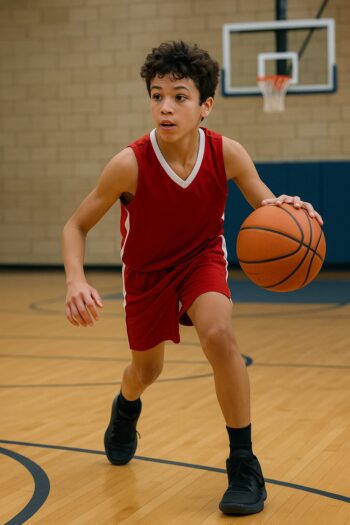
Why Are Young NBA Stars Getting Injured?

It’s a tough time for Boston Celtics fans. Star forward Jayson Tatum ruptured his Achilles during the playoffs—effectively ending this season and possibly the next. But what’s even more concerning is that Tatum’s injury is not an isolated case—it’s part of a much larger and troubling trend in professional sports.

As a physical therapy practice focused on performance and injury prevention, we’re seeing patterns that mirror what’s happening in the NBA: young athletes are breaking down earlier than ever before.

Achilles Injuries Are Happening Earlier—and More Often

Tatum is only 27 years old, yet he suffered an injury typically reserved for players in their mid-to-late 30s. He’s now one of six NBA players to tear their Achilles this season—and five of them are still in their 20s:

  • James Wiseman (24)
  • Dejounte Murray (28)
  • Dru Smith (27)
  • Isaiah Jackson (23)
  • Jayson Tatum (27)
  • (Damian Lillard was the only exception, at a more expected age for this type of injury)

These numbers are highly unusual. Achilles tears and other serious injuries used to be far less common among young, elite athletes.

All-Star Absences Are Surging

In addition to the Achilles tears, six NBA All-Stars missed games due to injury in just the first two rounds of this year’s playoffs. For comparison, from 1995 to 1999, only four All-Stars missed time during the entire playoffs over that five-year span.

Even more alarming: since 2008, the rate of injury among NBA stars has increased fivefold.

What’s Causing This Spike?

The issue goes beyond just bad luck or harder training. According to NBA insiders and medical professionals, the answer often starts much earlier—in youth sports.

1. Year-Round Competition with No Off-Season

Many young athletes, especially in sports like basketball, participate in year-round leagues such as AAU. They may play 3–5 games in a single weekend, and their bodies never get a true off-season to recover.

2. Early Sports Specialization

Specializing in one sport too early limits the body’s movement diversity. This repetitive stress on the same joints, muscles, and tendons builds up over time, making injuries more likely. When athletes don’t cross-train or play other sports, they don’t develop the balanced resilience that helps protect them from breakdown.

3. Wear and Tear by Age 18

As a result of #’s 1 and 2 above, medical teams at the NBA combine have noted that 18-year-old prospects often show the wear and tear of much older veterans. This is not normal—and it highlights just how early these issues start.

What Can Be Done?

As physical therapists, we believe injury prevention starts long before an athlete turns pro. Here are a few key recommendations for youth athletes and their parents:

  • Incorporate an off-season: The body needs time to recover, rebuild, and adapt.
  • Delay sports specialization: Stick with multiple sports through at least middle school.
  • Monitor playing volume: Be mindful of back-to-back tournaments and long weekends.
  • Prioritize movement quality: Incorporate strength, mobility, and recovery work into training.

How Physical Therapy Can Help

At Cohen Health and Performance, our goal is to keep athletes healthy—both in the short and long term. We work with youth athletes, collegiate hopefuls, and even professionals to:

  • Develop individualized injury-prevention programs
  • Monitor physical load and movement patterns
  • Guide athletes through proper recovery protocols
  • Provide strength and conditioning support tailored to each athlete’s body

If you’re a youth athlete (or the parent of one) with dreams of playing in college or beyond, the time to act is now. Reducing the risk of injuries today can mean avoiding setbacks that derail your career tomorrow.

Want to learn more or schedule an evaluation? Contact us here. We’d love to help you stay healthy and strong for the long haul.

Why Are ACL Injuries So Common in Female Athletes—and What Can Be Done?


This weekend, I came across an article that caught my eye: “A WNBA Veteran Becomes the Latest Player to Suffer an ACL Tear.” The athlete mentioned was Katie Lou Samuelson of the Seattle Storm—shockingly, the third player on her team to suffer an ACL tear before the WNBA season even begins.

As a physical therapist who works with athletes of all levels, this hit home. ACL injuries are far too common, especially among female athletes. According to the American Journal of Sports Medicine, females are 4 to 8 times more likely to suffer an ACL tear compared to their male counterparts playing the same sport. Even more alarming—over 70% of these injuries are non-contact. That means they’re not the result of a collision, tackle, or fall. They just happen—or so it seems.

But these injuries are not freak accidents. There are clear biomechanical and muscular risk factors that we, as physical therapy professionals, can help address.

Understanding the Risk Factors

One of the most commonly discussed reasons for higher ACL injury rates in females is anatomical structure, particularly the Q-angle—the angle formed by the hip and knee. Due to a generally wider pelvis, many female athletes have a more pronounced Q-angle, which can result in the thighs angling inward (valgus alignment). This creates a greater tendency for the femur to internally rotate and adduct, particularly during high-speed or high-impact movements like jumping, cutting, or landing.

When combined with muscle imbalances, such as strong quadriceps and weak hamstrings or glutes, the risk increases. A poor quadriceps-to-hamstring strength ratio can reduce the knee’s ability to stabilize itself, leaving the ACL vulnerable to tearing under stress.

How Physical Therapy Can Reduce the Risk of ACL Injuries

Preventing ACL injuries is not just about stretching or doing a few leg exercises. A comprehensive physical therapy approach includes:

1. Strengthening the Right Muscles

To protect the knee, we must target the muscles that slow down internal rotation and adduction of the femur—primarily the glutes and deep hip rotators. Strengthening the hamstrings, calves, and core also plays a vital role in protecting the knee joint.

2. Improving Muscle Coordination and Timing

Being strong isn’t enough. Athletes must be able to generate force quickly, particularly during sport-specific movements. That means physical therapy needs to go beyond the weight room.

We bring our athletes to our turf space to practice jumping, landing, cutting, and acceleration drills that simulate real-game scenarios. We analyze landing mechanics and correct faulty movement patterns before they show up on the court or field.

3. Using Data to Guide Programming

Every athlete we work with is evaluated using force plates and other sports technology to understand how their body handles force and movement. This data helps us create a personalized plan to address the specific deficits or imbalances that could lead to an ACL injury.

The Bottom Line: ACL Injury Prevention Starts with Smart Physical Therapy

ACL injuries are devastating. They can take an athlete out of the game for a year or longer. But the good news is—there are things you can do to reduce the risk.

If you are the parent of a female athlete or an athlete yourself and you’re serious about protecting your knees, now is the time to take action. Our ACL prevention programs at Cohen Health and Performance are tailored to each athlete and built on the principles of scientific assessment, personalized physical therapy, and performance training.

📞 Contact us today to schedule an assessment and give yourself the best shot at staying healthy, strong, and on the field.

Struggling With A Calf or Achilles Injury? What You Need to Know


I’m now at that age where I have to start being more mindful of the nagging calf and Achilles injuries that seem to pop up for so many of us in our 30s, 40s, and beyond. Whether it’s rec league basketball, tennis, pickleball, or just hitting the gym hard, many active adults still love to move with intensity—but we may not have the same resiliency we had in our 20s.

At Cohen Health and Performance, we see it all the time in our physical therapy clinics: a fit, active individual suddenly sidelined by a calf strain. These types of injuries tend to be the first warning sign of lower leg issues that can creep up when we push our bodies beyond what they’re currently prepared to handle.

Why Calf Injuries Happen

A calf strain typically occurs when the loading tolerance of the muscle—its ability to handle force—is exceeded. It’s not always about being out of shape; in fact, many of our patients are in great cardiovascular condition. But if the calf and Achilles haven’t been progressively trained to handle specific types of force—like running, jumping, or quick direction changes—they’re vulnerable.

One of my patients recently told me they went on vacation and, without access to a gym, decided to start running more than usual. They felt fit, so why not? But shortly after, they messaged me with a calf strain. Their cardiovascular system may have been ready—but their calf muscles weren’t conditioned for that repetitive impact. That mismatch between perceived fitness and actual tissue readiness is a common reason we see these injuries in our physical therapy practice.

Physical Therapy for Calf and Achilles Recovery

So what do we do when a calf injury strikes? Or better yet—how can we prevent it?

The key lies in a progressive, personalized rehabilitation plan, and physical therapy plays a critical role in that process. Here’s how we typically approach it:

1. Start with Isometric Loading

We begin with isometric exercises, where the muscle contracts without changing length. This is a safe, low-threat way to begin reactivating the calf muscle after injury. Isometrics help reduce pain, improve blood flow, and reintroduce loading to the tissue without overstraining it. These are often the first steps in any effective physical therapy plan for a strained calf. For more information on isometric exercises, check out this article and video!

2. Progress to Full Range of Motion Drills

Next, we move into more dynamic exercises that take the muscle through a full range of motion. The calf needs to be able to both shorten and lengthen under load, especially if you want to return to activities like running or jumping. These movements are carefully progressed based on how the tissue responds.

3. Introduce Plyometric and Sport-Specific Drills

Once strength and mobility are restored, we introduce plyometric exercises to recondition the tissue for faster, more explosive movements. At this stage, we might use bands or assistance tools to reduce body weight until you’re ready to go full intensity.

Finally, we tailor the program to your sport or activity. Runners may progress to drills like A-skips and A-runs, while basketball or tennis players might focus on reactive jumping or lateral movement training.

Personalized Care is Key

No two injuries—or recoveries—are the same. That’s why every physical therapy plan at Cohen Health and Performance is built around your unique goals, limitations, and lifestyle. Whether you’re returning to a sport or just want to stay pain-free during weekend workouts, we’re here to help you move forward.

If you’ve recently dealt with a calf or Achilles injury—or you’re hoping to prevent one as you stay active into middle age—we’d love to help. Our physical therapy team specializes in helping active adults recover quickly, move better, and keep doing what they love.

Contact us to schedule your evaluation at our Bethesda or McLean location. Don’t let a nagging calf injury slow you down.

How Isometric Exercises Can Boost Your Physical Therapy Success

If you’ve been through physical therapy with us at Cohen Health and Performance — especially after an injury like a tendinopathy or surgery — there’s a good chance you’ve experienced the power of isometric exercises firsthand.

Isometric exercises are a unique and valuable tool we often incorporate into the rehabilitation process. Unlike traditional exercises where muscles actively lengthen or shorten, isometric drills involve maintaining a static position. The muscle remains engaged without changing length, helping it work safely and effectively during early stages of healing.

While these exercises can be surprisingly challenging, one of their biggest benefits is that they’re gentle on healing tissues. This makes them an ideal starting point for anyone recovering from soft tissue injuries like patellar tendonitis, Achilles strains, calf strains, or even surgical repairs. However, as with any aspect of physical therapy, it’s crucial that these exercises are only performed when appropriate for your specific injury.

Why Are Isometric Exercises Important in Physical Therapy?

Isometric drills offer several key benefits during the rehabilitation process:

  • Reduced Pain Sensitivity:
    Research shows that isometric exercises can help decrease pain around an injury. For many patients, this makes it easier to start moving again confidently and safely.
  • Muscle Strength Preservation:
    When other forms of exercise aren’t possible due to injury limitations, isometric holds can help maintain muscle strength, preventing significant deconditioning during the recovery phase.
  • Joint Angle Specificity:
    The strength gains from isometric exercises are specific to the joint angles in which they are performed. That’s why, in physical therapy, we tailor isometric drills to match the needs of each patient — whether you’re a gymnast requiring deep flexibility or a football player needing powerful joint stability.
  • Improved Joint Stiffness:
    Building joint stiffness is vital for high-performance activities like running, cutting, and jumping. Isometrics play an important role in rehabilitating injuries to structures like the Achilles tendon, calf muscles, and more.

How We Use Isometrics at Cohen Health and Performance

Here’s a look at two isometric drills we commonly use in our physical therapy programs:

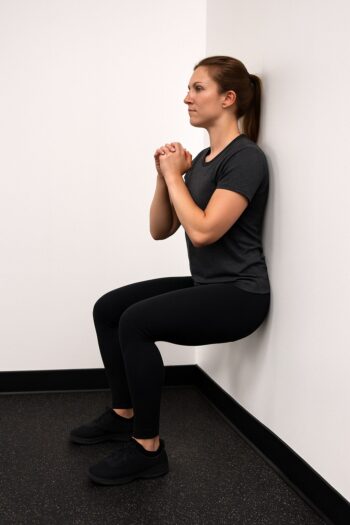
  1. Wall Sit with Heel Raise:
    In this variation, the patient performs a wall sit while staying high up on their toes. This position strengthens the calf and Achilles tendons in a shortened position, while also loading the patellar and quadriceps tendons — critical areas for knee health.
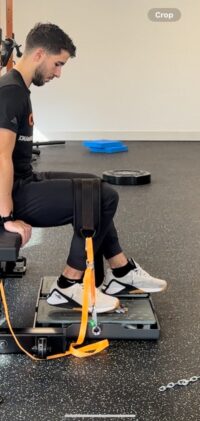
  2. Isometric Split Squat Hold:
    When appropriate, we add a split squat hold to further strengthen the Achilles, calf, and knee tendons. This drill also builds valuable foot and ankle stiffness, setting the foundation for more dynamic athletic movements later in rehab.

We adjust the frequency and intensity of these drills depending on how sensitive the injured tissue is, ensuring that patients progress safely through their rehab journey.

Isometric Drills Are Just One Piece of the Puzzle

While isometric exercises are powerful, they’re most effective when combined with dynamic drills — exercises where the muscles lengthen and shorten through full ranges of motion. A well-rounded physical therapy program will gradually transition patients from static strength work to dynamic, sport-specific movements to ensure a full and confident return to activity.

If you’re currently dealing with a soft tissue injury like tendinitis, a calf strain, an Achilles injury, or even an upper body strain like a pec or bicep tear, we’re here to help. Our expert team can design a customized rehabilitation plan that helps you heal effectively and get back to the activities you love.

Need Help with Your Recovery?

At Cohen Health and Performance, we specialize in helping active individuals recover from injuries through expert-guided physical therapy and performance programs.

Contact us today to schedule an appointment or learn more about how we can help you!

Why We Don’t Cue “Shoulder Blades Down and Back” (And How Physical Therapy Can Help)


Growing up, my Grandma Barbara was one of my favorite people. She lived right next door in a guest apartment, and every afternoon when I came home from school, she was there to greet me. If I walked in with a bit of a slouch—maybe from lugging around a heavy backpack all day—she’d call out, “Stand up straight! Pull your shoulder blades down and back!”

I know she meant well, and I bet you’ve heard similar advice from someone in your life too.

But here’s the thing: as much as I hate to say it, Grandma was wrong.

Why “Shoulder Blades Down and Back” Can Do More Harm Than Good

In physical therapy, we see a lot of people who have been told to constantly brace their shoulder blades down and back to “fix” their posture. While that advice might sound helpful, it often causes more problems than it solves.

The reality is that posture isn’t about locking your body into one rigid position. Slouching often happens because we’re tired or trying to conserve energy—not because our shoulder blades are out of alignment. Trying to force them into place just adds unnecessary tension and restricts healthy movement.

In our physical therapy clinics in Bethesda and McLean, we frequently help active adults correct these habits so they can move better, perform stronger, and live pain-free.

Your Shoulder Blades Were Built to Move

In sport, fitness, and life, your arms need freedom to move—whether you’re lifting weights, throwing a ball, or reaching overhead. Your shoulder blades are designed to support that movement by gliding up and out—not staying pinned back.

As physical therapists, we help patients retrain how their shoulder blades move with their body instead of against it. This improves posture, relieves shoulder pain, and supports stronger performance in the gym or everyday life.

3 Physical Therapy Exercises to Improve Posture and Shoulder Function

These are three of the most effective drills we use at Cohen Health and Performance to teach better posture, improve shoulder control, and support strong, pain-free movement.

1. Core Push-Up with Serratus Activation

Most people perform push-ups with their shoulder blades pulled back and their chest puffed out—but that’s not how your body naturally moves.
In physical therapy, we coach patients to reach their chest away from the floor to activate the serratus anterior. This helps stabilize the shoulder blades in a healthy position.

2. Overhead Press with Scapular Movement

Rather than bracing the shoulder blades, we encourage our patients to let them rotate upward naturally during pressing movements. This protects the shoulder joint and mimics how your body moves in real-life tasks and athletic performance.

3. Dumbbell Pullover for Trunk Positioning

This simple but powerful drill reinforces good trunk posture while allowing natural shoulder motion. We often include this exercise in warm-ups or between sets as part of a customized physical therapy or training plan.

Rethink Posture: A Better Cue

Instead of constantly thinking “shoulder blades down and back,” try this:
Imagine a string gently pulling you up from the top of your head.
This subtle cue can reorient your posture without adding tension or compromising your shoulder mobility.

And here’s the kicker—perfect posture isn’t the goal. At Cohen Health and Performance, our physical therapy team focuses on helping you move efficiently, stay strong, and avoid injury—because those things are what actually matter.

Physical Therapy Can Help You Move Better—Not Just Stand Straighter

If you’re struggling with shoulder pain, poor posture, or feeling like your workouts are hitting a wall, we’re here to help. Our physical therapy approach is personalized, movement-based, and designed for athletes and active adults who want to keep doing what they love—without pain or limitations.

Book an appointment here at our Bethesda or McLean location to get started.

×