The Best Sitting Posture

This is the best sitting posture.

Many physical therapy articles and rehab blogs discuss the importance of sitting posture and how perfect sitting posture is essential to avoid neck and back pain. Here are a few examples of what I found in several articles online.

  1. Sit with your feet flat on the floor. This position helps to distribute your weight evenly and reduces pressure on your lower back.
  2. Support your lower back. If your chair doesn’t provide enough support for your lower back, consider using a lumbar roll or cushion. This can help maintain the natural curve of your spine and prevent low back pain.
  3. Sit up straight. Sitting up straight helps to maintain good posture and reduce strain on your back. Avoid slouching or leaning forward.

While these may be helpful recommendations as part of the physical therapy process, they miss the most important thing.

There is no perfect sitting posture, and the “best” posture is the one that is constantly changing.

When standing, we naturally sway and shift our weight forward and back or from one foot to another. Unfortunately, this goes away as we sit and concentrate on something…like this blog I’m writing!

The longer we concentrate on something, muscular tension increases. This keeps us still and helps us focus better on what is in front of us. Unfortunately, too much muscular tension leads to discomfort.

Does this mean you must get up every 10-15 minutes and move around? In a perfect world, sure, but there may be better solutions if you try to get stuff done.

As I am writing this article, I am fidgeting. My sitting posture is changing, and I am shifting my weight from one side to the other. I sometimes cross one leg under the other and raise or lower my chair.

But one more part of sitting posture may be most impactful.


Give your eyes a break.


Research shows a connection between high levels of focus on a screen and discomfort in the upper body.

Optometrists recommend the 20/20/20 rule to help with this. The 20/20/20 rule states that for every 20 minutes of focus-intensive work, you should take a 20-second break and look 20 feet away.

This helps to reduce your focus on a single point and, as a result, reduces tension in your upper body.

Our bodies typically don’t respond well when we ask them to be still for long periods. A more active approach to sitting helps us avoid the discomfort that may come with it.

If you are interested in learning other strategies that can be used to sit comfortably throughout your day, contact us!

Dry Needling Is Now in McLean

What’s up with this weird needling stuff that sports physical therapists are doing nowadays?

More and more people have been asking me about it as they have seen or heard about it being performed in performance physical therapy settings in McLean and Bethesda.

One person told me that their neighbor calls it “magic” and has cured all his aches and pains. Another person said they hear it only hurts without providing any relief.

So what is it?

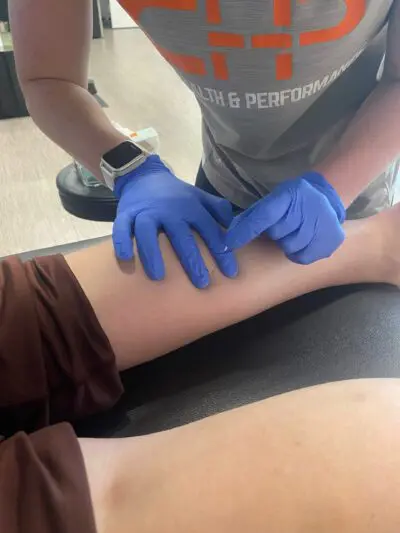
First, let’s define what dry needling is. Dry needling is a technique performed by healthcare providers like physical therapists. They insert small needles, similar to acupuncture needles, into muscles, tendons, and other soft tissues. The needle creates a small lesion (mini-injury) to the tissue, triggering the body to start a healing process.

Dry needling is a tool and like all tools in physical therapy, it has a time and place. It is not appropriate for everyone but may be helpful when used by a knowledgeable (and hopefully, not too biased) physical therapist.

If there is a great deal of inflammation currently present in one area of the body, dry needling likely is not appropriate. But if you’ve had pain for several months or years, it could help.

At the end of the day, dry needling is just one part of the overall treatment plan and will not fix an injury by itself.

At CHP, we now are offering Dry Needling as part of our physical therapy treatment plans in our McLean facility. We use this tool to reduce pain and the symptoms associated with an injury while working on the root causes.

Are you interested in learning more about dry needling and how it may help you overcome chronic pain? Contact us today to learn more and schedule an appointment!

Don’t Trust Your Pain

We have all experienced physical pain (in fact, my own history of low back pain is what interested me in sports physical therapy).

Maybe you injured your back lifting weights. Perhaps you hurt you shoulder playing catch with your kids. You may have irritated your knee when training for a marathon.

You decide to see your doctor, physical therapist, or medical provider of choice. They then prescribe the recommended treatment or “plan of care.”

Throughout the course of treatment, you determine if you are getting better by monitoring your pain. Is it decreasing? Is it staying the same or getting worse? If your pain is improving, the treatment is working. If not, it is failing. Pretty straight forward.

That is the way that standard physical therapy views treatment but is short sighted.

Modifying your daily activities or exercise routines will help pain quickly improve in the short term but the root causes of the pain remain. This is when many people stop going to physical therapy or performing their home exercise routine.

This pain-free period of time provides the body with an opportunity to address the root causes of pain. This is essential if you wish to prevent it from returning in the future while returning to full activity.

Pain is a prediction made by the brain. When pain continuously occurs during a movement or activity, the body learns to expect it. This expectation must lessen for pain to ultimately disappear during aggravating activities. If you really want to nerd out on pain science, check out this article by my friend and fellow physical therapist, Zac Cupples.

Imagine that you have lower back pain every time that you attempt to lift something off the floor such as deadlifting a barbell in the gym or emptying dishes out of the dishwasher.

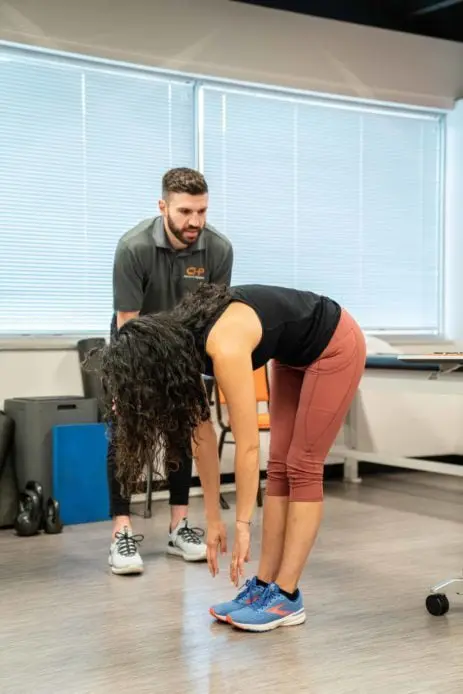
The brain has an expectation that this bent over position will hurt. Therefore, similar positions must be experienced without pain. Does this mean that you should start deadlifting on day 1 of treatment. Absolutely not. The best solution is to start with something less threatening and build from there. Below is an example of a great activity that physical therapy patients with low back pain start with.

The brain will then determine that these positions are not threatening, ultimately reducing risk of pain in the future while facilitating a full return to active life.

If you are an active adult ready to solve chronic pain for good, contact us to receive a customized home exercise program today!

How Our Physical Therapists Coach Squats for People with Low Back Pain

Did you know that experts estimate up to 80% of the population will experience back pain at some time in their lives.

The sports physical therapy patients that we often assume that they no longer can perform common weight training exercises like squats.

However this is not the case. People experiencing lower back can continue to perform these exercises however may require the help of a performance physical therapist to learn how to most effectively do so.

Check out the video below to see how I coach squats for our physical therapy patients experiencing lower back pain.


One Quick Test of Shoulder Health

It’s not as easy as it sounds.

Maintaining a quadruped position (hands and knees) reveals a great deal about your upper body strength and preferred movement strategies. For these reasons, we use this position as a test and exercise within our sports physical therapy setting.

Even strong and muscular patients commonly assume a quadruped position with their shoulder blades pinched close together and deep lower back arch (belly button dropped towards the ground).

This position is often utilized because it conserves energy and allows the body to be lazy. Compression from the lower and upper back is used to hold the torso up against gravity, instead of the abs and muscles involved with reaching. These strategies are common among folks experiencing back pain, shoulder pain and a variety of other issues.

The abs and muscles involved with reaching (for example, the serratus anterior) are essential components of athletic performance, running, walking and pretty much being a human being.

As these skills diminish, the risk of experiencing various injuries may increase.

The bear test is a great way to see if test your upper body strength and movement capabilities.

Think you have what it takes to pass the test? Give it a shot with this drill!

Photo Credit

Polar bear” by tharendra is licensed under CC BY-ND 2.0.

When You Should Be Using a Workout Machine

Workout machines like the prone hamstring curl are underutilized in the sports performance setting and often get a bad rap in the sports physical therapy industry. I have heard people (physical therapists, strength coaches, running coaches, personal trainers, etc.) say negative things about using machines for a variety of different reasons.

“Machines are not functional. Humans should provide their own stability and not rely on a machine to do it for them.”

“X, Y, or Z machine isolates only one area of the body and we do not move 1 area at a time in real life.”

The support that machines provide, allowing people to focus on working one area has many advantages when used appropriately.

Even athletes can benefit from using machines.

High level sprinting requires an athlete to have a great deal of hamstring strength as the muscle is in a shortened position (when the knee is fully bent).

During the recovery phase of sprinting (as the leg is being brought back to the front of the body) the heel should be as close to the athlete’s bottom as possible. As this motion begins, the hip is a relatively extended position.

The prone hamstring curl trains end range hamstring strength when the hip is in this position. Dr. Cohen even pauses briefly in this video when at the end of the movement to stress this position.

During this exercise, the machine will dictate the movement however remember to use your abs to prevent the lower back from extending during any portion of the exercise.

There is no such thing as a good or bad exercise. Almost every exercise is appropriate when used properly. The key is to be clear on the desired outcome of the drill and how to implement it most effectively into your training routine.

Would you like to learn how to design your training most effectively to best accomplish your goals? If so, contact us to receive a customized training program designed specifically for you!

×