Speed Up Your Recovery From Back Pain

As anyone who has thrown their back out and needed physical therapy will tell you, bending over feels rough for several days after.

Putting on socks and even sitting down is uncomfortable as the body attempts to prevent the lower back from moving, especially into flexion.

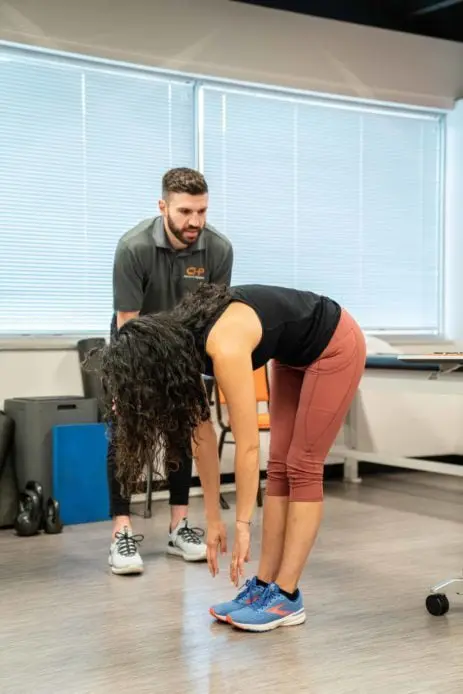
Flexion of the spine is commonly the most aggravating movement for anyone experiencing an acute episode of back pain. In physical therapy we test this by asking our patients to touch their toes. Once the acute episode subsides, the next step is training and learning to tolerate slow, controlled movements of the spine.

When tolerated well, the reverse crunch is great drill to teach this quality and can be used effectively as a warmup in the gym.

Oftentimes this is where the injury rehabilitation process stops. At this point the body can tolerate all normal daily activities however it has not learned to manage rapid movements of the spine, such as those that occur in sport or in the gym.

The Med Ball slam is a great drill to train the spine to tolerate movements that involve rapid spinal flexion. This drill should be pain free before attempting any heavy Olympic lifts like a clean or a snatch.

Also, remember to avoid using a ball that bounces as we don’t want any broken noses from this drill!

The first drills that we teach to youth athletes

It is essential to understand the demands placed onto the body when working in a sports physical therapy, injury rehabilitation, and performance training setting.

Sports and weight training require athletes to control the body when moving rapidly.

If an athlete wishes to own the “stack” (stacking of our head, rib cage and pelvis over one another) and protect their lower back they must be capable of doing so when performing high velocity movements.

When youth athletes first train, we use medicine ball drills to teach this ability.

The medicine ball chest pass is a great drill to teach this capability. During this the drill, the athlete is generating enough velocity to propel the ball into the wall and back. As this occurs, it can be easy to lose the “stack” requiring the athlete demonstrate a higher of level of body control.

After mastering the chest pass, it is time to bring the arms overhead. More trunk strength and control are required with this movement and the ability to manage intra-abdominal pressure is further challenged. Check out this exercise here.

These are just a couple of the exercises that we incorporate into the training sessions and warmups for our youth athletes.

If you interested in learning more about the summer training options for youth athletes at CHP,  please contact us!

What All Rotational Athletes Must Be Capable Of

Low back pain with golf or arm pain with throwing. At our performance physical therapy practice, we see this constantly. 

Swinging a golf club, throwing a baseball and hitting a tennis ball involve a great deal of rotation. Many areas of the body should be involved in these movements, however that is not always the case.

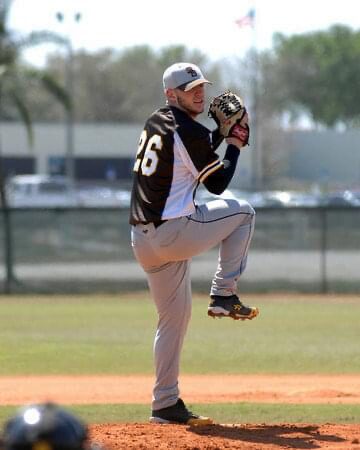
It is common to see baseball pitchers that are experiencing arm issues demonstrate the habit of trying to “arm” the ball as they throw it. There is not much contribution from the legs which places a great deal of stress on the arm and over time results in overuse injuries. 

Many golfers and tennis players experience lower back pain because they do not effectively link the power that they generate in the lower body through the trunk, into the upper body and ultimately to the head of the club. As a result they compensate elsewhere, placing increased stress onto the lower back.

The rotational row is a great drill to train the body to generate rotational power through the legs and connect it through the trunk. View this exercise here.

Once you have mastered the rotational row and learned how to link the power generated in the lower body to the trunk, we can now add in the upper body! The rotational lift trains the body to generate rotational power through the legs and connect it through the trunk and arms. Check this exercise out here.

Interested in learning more ways you can address lower back pain while enjoying your active lifestyle? Sign up for a FREE phone consultation today!

How Focusing on Mental Health Improves Physical Therapy Outcomes

Can focusing on mental health improve outcomes in physical therapy?

Yup!!

This concept is challenging to grasp because the medical system often tries to attribute physical pain to a direct cause. However, it isn’t that simple and this is important for every physical therapist to understand.

Humans are complex and physical pain is influenced by several different factors. One of which is the brain.

An individual’s mental state has a large impact on their physical state and the effectiveness of physical therapy interventions.

Do not miss the latest episode of the CHP Spotlight Interview series with Dr. Kelly Forys Donahue and Dr. Danielle Miro from DC Health Psychology (www.dchealthpsychology.com and www.modernpsychologists.com) to learn this and so much more!

Check out the full interview here.

Photo Credit

“World Mental Health Day Observance” by United Nations Photo is marked with CC BY-NC-ND 2.0.

1 Trick to Perfect Running Foot Strike Position

If you ever experience back pain when running, are a runner that has been to physical therapy, or are curious about foot strike position, this article is for you!

One of my favorite workshops to conduct is the CHP Running Technique and Performance lab. I have a blast throughout the workshop, but the Q&A portion is my favorite. I have gotten the opportunity to answer many different questions which have forced me to expand my knowledge and has helped me to create a better workshop over time.

While the questions that I receive consistently differ, one topic remains consistent. Someone inevitably asks about foot strike position and my answer often surprises them.

There is no correct foot strike position.

Among other things, foot strike position is dependent on an individual’s body dimensions (limb length as an example) and the position of the body above.

While we cannot change your anatomy, we can change the position, aka the posture, of our bodies.

A “stacked” posture will facilitate a foot strike that occurs directly underneath the body. This foot strike position results in a more efficient stride and minimal stress to the body. To learn about the stack, check out a previous article that I wrote on Learn to Stack Like a Snowman.

Attempt the drill below to feel what it is like to have a stacked posture while running.

  • Grab a partner and ask him/her/they to stand behind you (you are also standing)
  • Have your partner press down on your shoulders with a moderate amount of force and do not let them squish you
  • As you resist them you should feel your abs engage and feel as if you are standing tall
  • Next, attempt to shift your weight onto 1 leg and pick up your opposite foot while resisting the force of your partner
  • Try the other leg

For a video on this drill, click here.

After performing this drill, you should have a better sense of your optimal running posture. Try to replicate this feeling the next time you go on a run!

Learn to Stack Like a Snowman

Learn to stack like a snowman….

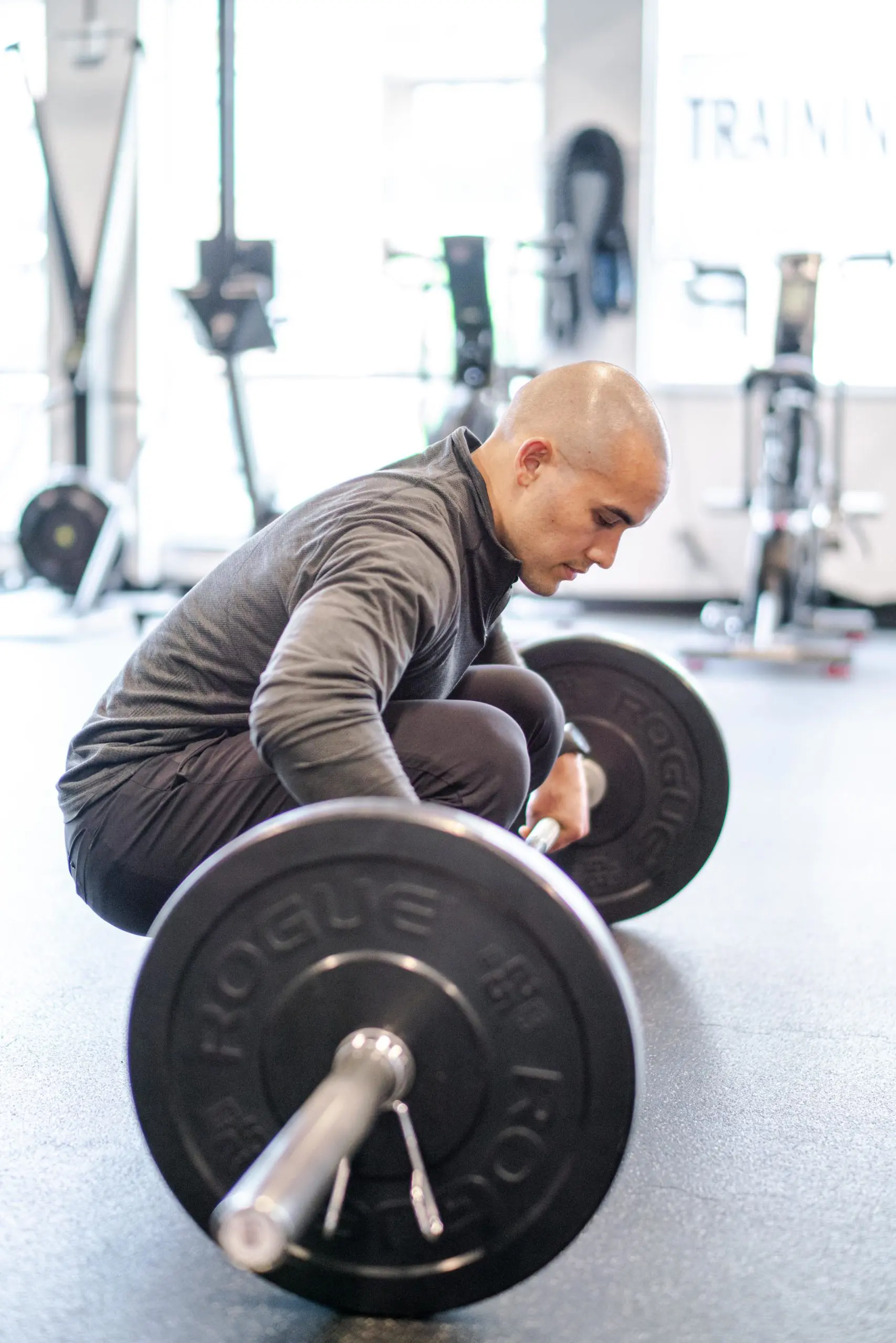
The “stack” is one of the prerequisite positions to master in physical therapy or performance training. This position is essential for movements like squats, split squats, hip hinging and pretty much anything one might perform in the gym.

Think of the stack like a snowman. The 3 balls of a snowman represent the head (top ball), rib cage (middle ball), and pelvis (bottom ball). The goal of the stack is to center each of the 3 balls over one another.

The weight bearing surfaces of all 3 balls are larger when they are centered over one another. This means that the weight of the snowman is spread over a larger area (ie. less stress in each individual spot).

Now imagine that one ball starts to roll forward or backward. The ball above and below must roll with it to avoid falling to the ground and keep the snowman standing upright. This adjustment changes the weight bearing dynamics for each ball and more weight is now directed onto a smaller amount of space. This produces more stress onto these new weight bearing areas and may cause these areas to break down faster (think discs in our lower back).

This same dynamic happens in our body. As one of our balls (head, rib cage, or pelvis) rotates away from center, the other balls must accommodate. This places more stress onto the body as a whole and often results in discomfort.

Achieve the stack by practicing the following steps.

  1. Imagine that you are wearing pants with back pockets. Without bending your knees further, roll your back pockets underneath your body (you should feel your abs turn on)
  2. Without hunching over take a relaxed breath in, followed by a long and relaxed breath out. Feel your anterior ribs move down, back and in. Ensure that you can gently maintain this position while inhaling and exhaling
  3. Imagine that someone is standing behind you pressing hard down onto your shoulders. 

The stack can be a challenging position to master and integrate into your training routine. However it is often the secret to avoiding back pain with common activities in the gym. 

Contact us to learn other adjustments to common exercises that may become your hidden secret to overcoming pain and optimizing your performance.

×