Sports Physical Therapy and the Risk vs Reward Decision in Athletics

In the world of sports, few conversations spark more debate than an athlete choosing to compete while injured. When Lindsey Vonn stepped onto the Olympic stage at the 2026 Winter Olympics shortly after tearing her ACL, the sports world had opinions.

Should she have competed? Was it worth the risk?

At the professional level, these decisions are rarely simple. Elite athletes constantly weigh risk versus reward. Championships, contracts, and lifelong goals are often on the line. The reward can feel enormous.

But when we shift the conversation to youth and adult recreational athletes, the equation changes. This is where sports physical therapy becomes essential.

The Risk vs Reward Equation in Sports Physical Therapy

Every injured athlete is asking some version of the same question:

When can I get back?

In sports physical therapy, the better question is:

Should you get back yet?

Returning to sport is not just about pain levels. It is about tissue healing, strength symmetry, neuromuscular control, movement quality, and re injury risk. An ACL that is five or six months post surgery may feel good. But feeling good is not the same as being ready.

I once worked with a young baseball pitcher for his ACL rehab who wanted to return around the five month mark after ACL surgery. He was not going to be hitting much, so it seemed low risk in his mind. But pitching still places significant torque and rotational stress on the knee. The ligament and surrounding structures were not fully prepared for that demand.

In that case, the short term reward did not justify the long term risk.

Why Rushing Back Can Cost More Than a Season

In youth sports especially, one tournament or one season rarely defines an athlete’s future. However, a re tear, meniscus damage, or chronic instability can have long term consequences.

Without proper sports physical therapy guidance, athletes may:

  • Return before strength deficits are resolved
  • Compensate with faulty movement patterns
  • Increase their risk of secondary injury
  • Compromise long term joint health

The goal of sports physical therapy is not simply to reduce pain. It is to prepare the athlete for the exact demands of their sport. Sprinting, cutting, jumping, decelerating, rotating. Each sport has unique forces that must be trained progressively and objectively.

Professional Athletes vs Youth Athletes

Professional athletes are often making decisions with massive stakes attached. For them, the reward may justify a higher level of risk.

For middle school, high school, and adult recreational athletes, the reward is usually different. Long term development, varsity opportunities, college aspirations, and lifelong participation in sport often matter more than one immediate competition.

This is where sports physical therapy plays a critical role. We provide clarity, not emotion. We assess objective data, not just effort or desire. We guide families and athletes through informed decision making.

What Quality Sports Physical Therapy Should Provide

If you or your athlete are navigating an injury, sports physical therapy should include:

  • Clear understanding of healing timelines
  • Objective strength and power testing
  • Sport specific movement assessment
  • Gradual exposure to real game demands
  • Honest conversations about re injury risk

Our role is not to judge whether someone should compete. It is to ensure that when they do return, they are physically prepared.

Because in the long run, protecting the athlete’s future is always more important than rushing back for one game.

If you are facing a return to play decision and want expert guidance in sports physical therapy, we are here to help you make the most informed choice possible.

What Norway’s Olympic Dominance Can Teach Us About Long Term Athletic Development

I recently returned from Milan after spending a week at the Winter Olympics. Watching the best athletes in the world compete is always inspiring, but one thing stood out in a major way.

Norway, a country with a population of just five million people, is dominating the medal count. They are significantly outperforming much larger countries, including the United States.

Naturally, the question becomes: how?

One of the biggest differences may lie in how Norway approaches youth sports and long term athletic development. And for families here in Bethesda and McLean who care about performance, health, and injury prevention, there are some important lessons worth considering.

A Different Approach to Youth Sports

In Norway, the structure of youth athletics looks very different from what many of us are used to in the United States.

They do not officially keep score until around age thirteen. All children are encouraged to participate, and recognition is universal at younger ages. Athletes are not sorted into elite or travel pathways until their teenage years. Children also have input into how much they train and whether they want to compete.

As a result, approximately ninety three percent of Norwegian children participate in organized sports. That is an extraordinarily high number.

The early focus is not rankings, scholarships, or national exposure. It is enjoyment, skill development, and confidence.

Why This Matters for Sports Physical Therapy

From a sports physical therapy perspective, this approach aligns closely with what research and clinical experience show about long term athlete development.

When young athletes are not pushed into high intensity competition too early, several positive outcomes tend to occur.

They develop broader athletic foundations by playing multiple sports.

They reduce the risk of overuse injuries that are common with early specialization.

They experience less burnout and are more likely to stay active through high school and beyond.

At our sports physical therapy clinics in Bethesda and McLean, we frequently see young athletes dealing with stress fractures, tendon issues, and chronic joint pain that stem from year round specialization in a single sport. Many of these injuries are preventable with a more balanced developmental approach.

Long term performance depends on movement variability, progressive loading, and internal motivation. When athletes enjoy the process, they are more consistent. When they are consistent, they improve.

Early Specialization and Injury Risk

In the United States, it is common to see travel teams at very young ages, national rankings in middle school, and pressure to gain exposure early. While ambition is not inherently problematic, the timeline often becomes compressed.

Early specialization can increase cumulative tissue stress before the athlete has developed adequate strength, coordination, and movement control. From a sports physical therapy standpoint, this increases injury risk.

We often remind families that the body adapts to progressive stress. It does not adapt well to repetitive overload without variation. Multi sport participation during childhood builds a more resilient athlete.

Internal Motivation Drives Longevity

Another important factor is motivation. When participation is driven primarily by external pressure, burnout rates increase. When athletes are internally motivated, they are more likely to remain engaged long term.

Norway’s emphasis on fun and autonomy appears to support that internal drive. The Olympic results may be a byproduct of sustained participation rather than early intensity.

For adult athletes reading this, the lesson is similar. Sustainable training and intelligent load management matter more than short bursts of overreaching. Longevity in sport is a performance advantage.

What This Means for Parents and Athletes

If you are the parent of a youth athlete, especially before high school, consider the following principles.

Encourage multi sport participation to build broad movement skills.

Allow your child input into training volume and competition level when appropriate.

Prioritize skill development and confidence over rankings and short term wins.

Support transitions if they want to explore different sports or adjust their level of participation.

For adult athletes, the takeaway is to build intelligently. Progress gradually. Address movement limitations early. Treat minor issues before they become chronic injuries.

How Sports Physical Therapy Supports Long Term Development

High quality sports physical therapy is not just about treating injuries. It is about optimizing movement, managing load, and creating resilient athletes.

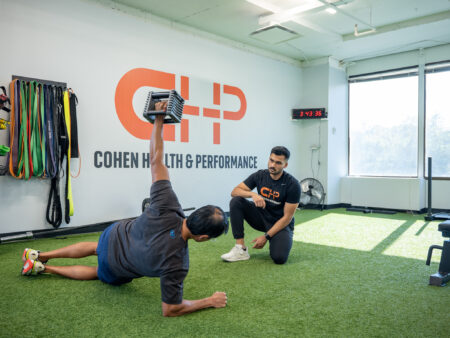
At Cohen Health and Performance in Bethesda and McLean, we focus on one on one care that integrates rehabilitation with strength and performance training. Our goal is not simply to get athletes out of pain. It is to help them move better, perform better, and stay in the game longer.

Whether you are a youth athlete navigating growth and competition or an adult athlete pursuing performance goals, the principles remain the same. Sustainable development outperforms rushed progression.

Norway’s Olympic success may offer a simple reminder.

Long term health and enjoyment of sport are not obstacles to performance. They are often the foundation of it.

If you or your athlete are dealing with pain, recurrent injuries, or questions about safe progression in training, schedule an evaluation with our sports physical therapy team in Bethesda or McLean.

Investing in longevity is one of the smartest performance decisions you can make.

Performance Training for Young Athletes in Bethesda and McLean: What Parents Need to Know

Parents in Bethesda and McLean frequently ask us when their child should start performance training and whether it’s safe, age-appropriate, or even necessary. These are important questions, and ones we hear daily from families with active kids and young athletes.

As physical therapists and strength & conditioning coaches serving the Bethesda and McLean communities, our focus is not on lifting heavy weights early. The goal of performance training for young athletes is to build strong fundamentals, healthy movement patterns, and a positive relationship with exercise that supports long-term athletic development.

Is Performance Training Safe for Kids?

One of the most common concerns parents raise is whether performance training can stunt growth. Fortunately, there is no strong evidence to support this belief.

In fact, when you consider the forces kids experience during normal play. Running, sprinting, jumping, cutting, and landing, those forces often exceed what they experience in a properly supervised performance training environment.

Safe performance training in Bethesda and McLean comes down to:

  • Appropriate coaching and supervision
  • Smart exercise selection
  • Gradual progressions
  • Emphasis on movement quality over load

No responsible program is placing a young athlete under heavy weights. Instead, performance training focuses on control, coordination, and proper mechanics.

What Performance Training Should Look Like for Younger Athletes

For pre-pubertal athletes (roughly ages 9–12), performance training should prioritize learning how to move well. At our Bethesda and McLean locations, this includes:

  • Teaching proper movement patterns and technique
  • Improving balance, coordination, and body awareness
  • Building strength through safe, controlled exercises
  • Developing running mechanics, agility, mobility, and overall athleticism

Performance training is not just weightlifting. It’s a comprehensive approach to helping young athletes move efficiently and confidently, both in sports and daily activities.

Why Consistency Matters More Than Intensity

One of the biggest mistakes we see is treating training as a short-term season rather than a long-term process. For most young athletes in Bethesda and McLean, one to two performance training sessions per week, done consistently, produces far better results than training heavily for a few months and then stopping.

Equally important, training needs to be fun. Younger athletes benefit most from sessions that are engaging, playful, and appropriately challenging. When kids enjoy performance training, they are far more likely to stay consistent, and consistency is what drives long-term success.

Long-Term Benefits of Performance Training for Young Athletes

Athletes who begin performance training early often experience:

  • Better movement quality as they grow
  • Improved strength and coordination during adolescence
  • Fewer injuries over time
  • Increased confidence in the weight room during high school

We regularly see athletes from Bethesda and McLean who started training young enter high school, and even college, with a strong foundation already in place. This allows them to progress faster and train more effectively as demands increase.

Performance Training: The Big Picture

Performance training isn’t about pushing kids too hard or specializing too early. It’s about teaching young athletes how to move well, training consistently, and creating a positive environment around exercise.

When these foundations are built early, sport-specific and higher-intensity training can be layered in safely and effectively later on.

If you’re a parent in Bethesda or McLean looking for performance training that prioritizes safety, fundamentals, and long-term athletic development, our team would be happy to help guide your athlete in the right direction.

Why Shoulder Injuries Are So Complex

At Cohen Health and Performance, we specialize in physical therapy in Bethesda and physical therapy in McLean for active adults and athletes who want to get back to the activities they love. One of the most common mistakes we see in traditional care—yes, even among other physical therapists—is a failure to appreciate how complex the shoulder really is.

The shoulder is the most mobile joint in the entire body. That’s what makes it so essential: reaching, throwing, lifting, pushing, and pulling all require freedom of motion. But that same mobility also opens the door to a ton of possible compensations and dysfunctions when something isn’t moving well.

Your Shoulder Isn’t Just a “Ball-and-Socket”

Think of your shoulder like a golf ball sitting on a tee. The ball is your humeral head (upper arm bone), and the tee is the glenoid (part of your shoulder blade or scapula). But that “tee” isn’t grounded into the earth—it’s actually floating on your rib cage. That means your shoulder’s stability is influenced by your rib cage shape, position, and even how you breathe.

Most providers stop at the shoulder joint itself. But for us at Cohen Health and Performance, whether it’s physical therapy in McLean or physical therapy in Bethesda, we know that treating shoulder pain means looking beyond the joint.

If the shoulder blade doesn’t sit securely on the rib cage, the muscles around it—like the upper traps or rhomboids—often work overtime to stabilize things, leading to tightness, knots, and nagging pain in the upper back or neck.

The Rib Cage is the Unsung Hero


One of the foundational drills we use to retrain shoulder mechanics involves placing your forearms on the wall. Here’s the key:

  • Straight line from wrist to elbow
  • Externally rotate through the shoulders
  • Use your rib cage—not your arms—to press back into the shoulder blades. Perform 5 breaths in this position.

A cue we love: Imagine a hot poker hovering in front of your sternum. Your job? Pull away from it without slumping forward. This activates a crucial muscle called the serratus anterior, which helps anchor your scapula and sets the stage for clean, pain-free movement.

Getting the Shoulder Blade Moving Again


Once you’ve created a supportive rib cage, the shoulder blade (scapula) can do its job again—mainly rotating upward as your arm reaches overhead.

A simple but effective exercise to improve this scapular movement is Downward Dog:

  • Start in a push-up (or all 4’s) position
  • Press away from the floor with your hands
  • Drive your chest toward your knees
  • Focus on feeling the shoulder blades rotate upward and outward

This kind of targeted movement work is exactly what we emphasize in our programs for physical therapy in Bethesda and physical therapy in McLean. Without proper scapular motion, your rotator cuff is forced to overwork—and that’s when breakdowns happen.

What About the Rotator Cuff?

Only after we’ve addressed rib cage position and scapular movement do we move to the rotator cuff. By this point, rotator cuff exercises are finally in the right environment to be effective—rather than just throwing rubber band exercises at a deeper problem that hasn’t been solved yet.

Final Thoughts: There’s Hope for Your Shoulder

If you’ve had shoulder treatment in the past and it didn’t work—or if you’ve been dealing with shoulder pain for months or even years—don’t lose hope.

The truth is, shoulder pain is multifactorial. It can stem from poor rib cage positioning, scapular movement limitations, limited mobility, or underdeveloped rotator cuff function. And many healthcare providers simply don’t take the time to look at all of these layers.

That’s where we come in.

If you’re looking for expert-level physical therapy in Bethesda or physical therapy in McLean that goes beyond surface-level care, contact us today. Our team of Doctors of Physical Therapy will work with you to get to the root of your shoulder pain and get you back to doing what you love—stronger and smarter than ever.

Why We Don’t Cue “Shoulder Blades Down and Back” (And How Physical Therapy Can Help)


Growing up, my Grandma Barbara was one of my favorite people. She lived right next door in a guest apartment, and every afternoon when I came home from school, she was there to greet me. If I walked in with a bit of a slouch—maybe from lugging around a heavy backpack all day—she’d call out, “Stand up straight! Pull your shoulder blades down and back!”

I know she meant well, and I bet you’ve heard similar advice from someone in your life too.

But here’s the thing: as much as I hate to say it, Grandma was wrong.

Why “Shoulder Blades Down and Back” Can Do More Harm Than Good

In physical therapy, we see a lot of people who have been told to constantly brace their shoulder blades down and back to “fix” their posture. While that advice might sound helpful, it often causes more problems than it solves.

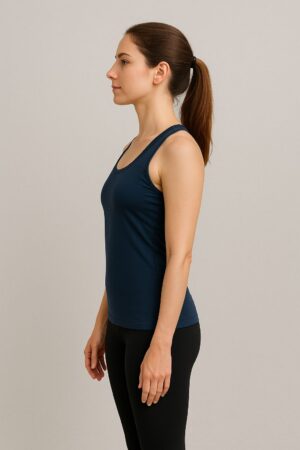
The reality is that posture isn’t about locking your body into one rigid position. Slouching often happens because we’re tired or trying to conserve energy—not because our shoulder blades are out of alignment. Trying to force them into place just adds unnecessary tension and restricts healthy movement.

In our physical therapy clinics in Bethesda and McLean, we frequently help active adults correct these habits so they can move better, perform stronger, and live pain-free.

Your Shoulder Blades Were Built to Move

In sport, fitness, and life, your arms need freedom to move—whether you’re lifting weights, throwing a ball, or reaching overhead. Your shoulder blades are designed to support that movement by gliding up and out—not staying pinned back.

As physical therapists, we help patients retrain how their shoulder blades move with their body instead of against it. This improves posture, relieves shoulder pain, and supports stronger performance in the gym or everyday life.

3 Physical Therapy Exercises to Improve Posture and Shoulder Function

These are three of the most effective drills we use at Cohen Health and Performance to teach better posture, improve shoulder control, and support strong, pain-free movement.

1. Core Push-Up with Serratus Activation

Most people perform push-ups with their shoulder blades pulled back and their chest puffed out—but that’s not how your body naturally moves.
In physical therapy, we coach patients to reach their chest away from the floor to activate the serratus anterior. This helps stabilize the shoulder blades in a healthy position.

2. Overhead Press with Scapular Movement

Rather than bracing the shoulder blades, we encourage our patients to let them rotate upward naturally during pressing movements. This protects the shoulder joint and mimics how your body moves in real-life tasks and athletic performance.

3. Dumbbell Pullover for Trunk Positioning

This simple but powerful drill reinforces good trunk posture while allowing natural shoulder motion. We often include this exercise in warm-ups or between sets as part of a customized physical therapy or training plan.

Rethink Posture: A Better Cue

Instead of constantly thinking “shoulder blades down and back,” try this:
Imagine a string gently pulling you up from the top of your head.
This subtle cue can reorient your posture without adding tension or compromising your shoulder mobility.

And here’s the kicker—perfect posture isn’t the goal. At Cohen Health and Performance, our physical therapy team focuses on helping you move efficiently, stay strong, and avoid injury—because those things are what actually matter.

Physical Therapy Can Help You Move Better—Not Just Stand Straighter

If you’re struggling with shoulder pain, poor posture, or feeling like your workouts are hitting a wall, we’re here to help. Our physical therapy approach is personalized, movement-based, and designed for athletes and active adults who want to keep doing what they love—without pain or limitations.

Book an appointment here at our Bethesda or McLean location to get started.

Back Squats & Back Pain: What Your Physical Therapist Wants You to Know

If You’re Dealing with Back Pain, Not All Squats Are Created Equal

In my physical therapy practice, I work with a wide range of athletes and active individuals dealing with back pain. Earlier today, I had a conversation with a local personal trainer who is about to start working with one of my patients—a patient currently in physical therapy for back pain.

We were collaborating on how to design a training program that supports their recovery. Naturally, the topic of squatting came up. It’s a staple in most fitness routines, but when you’re dealing with low back pain, the type of squat you choose can make a big difference.

Why Back Squats Might Not Be Ideal for Back Pain

Let’s get one thing clear: I’m not saying back squats are inherently bad. But when it comes to physical therapy for back pain, we have to weigh the risk-to-reward ratio of every exercise.

In a traditional back squat, the barbell rests behind the head. This positioning shifts the center of mass forward and often leads to excessive lumbar extension—or over-arching of the lower back. That posture increases spinal compression, limits hip mobility, and can aggravate existing pain.

For patients going through physical therapy for their back, this added pressure on the spine is something we want to avoid—not just for comfort, but for long-term recovery and performance.

Better Squat Alternatives for Back Pain Relief

In my work with patients, I often recommend squat variations that are more compatible with spine-friendly movement mechanics. Examples include:

  • Goblet Squats
  • Safety Bar Squats

These exercises shift the load in front of the body, promoting a more back-friendly spine position, stronger abdominal engagement, more open hips, and reduced stress on the lumbar spine.

In fact, many patients find that these alternatives not only feel better but allow their legs to work harder—because their back is no longer overcompensating for poor positioning.

What This Means for Back Pain Rehab

One of the most important principles in physical therapy for back pain is knowing what to modify and when. You don’t need to stop training—you just need to train smarter.

If you’ve struggled with low back pain in the past or are currently recovering from an injury, making small changes like adjusting your squat style can protect your spine while still building strength, muscle, and endurance.

Need Help with Your Training Program?

At our Bethesda and McLean clinic, we specialize in physical therapy for back pain and helping people return to high-level performance without re-injury. Whether you’re a weekend warrior, a competitive athlete, or someone simply trying to move pain-free, we’re here to help.

Simple contact us and we will take things from there.

×