Should Your Knees Go Over Your Toes? The Truth About ACL Physical Therapy


If you’ve spent time in a gym or around physical therapists, you’ve likely heard the advice:
“Never let your knees go over your toes!”

This myth has been around for years, but the reality is—your knees should go over your toes—especially during physical therapy and rehab.

Think about it: You can’t walk, run, or even rise from a chair without your knees naturally moving forward. For athletes, movements like deceleration, cutting, and landing demand the tibia (shin bone) to angle forward, known as forward inclination.

Yet, many people recovering from ACL injuries fear this knee movement. After an ACL reconstruction, it’s common for patients to hesitate when allowing their knee to pass over their toes. Unfortunately, avoiding this necessary motion can slow down rehabilitation and leave the patient unprepared for real-world physical activity.

Why Knees Over Toes is Essential in Physical Therapy for ACL Rehab

One of the main goals of physical therapy following an ACL injury is restoring movement confidence. As rehab progresses, patients work on drills that allow for controlled knee translation. This begins with slow, straight-line movements and gradually introduces more speed and direction changes to mimic real-world activities.

Athletes don’t just move in a straight line. They cut, pivot, and absorb forces from multiple angles. This is why physical therapy for ACL recovery involves exercises that recreate these unpredictable movements—giving the knee the chance to regain its strength, stability, and range of motion.

Preparing Athletes for the Stressors of Sports with Physical Therapy

The last thing an athlete recovering from ACL surgery should face is their knee being tested in high-stress situations for the first time during a game. That’s why physical therapy should simulate sport-specific movements in a controlled and progressive environment. This prepares the body for the unique demands of each sport and builds up knee resiliency.

In many cases, the goal is not only to return the ACL-repaired knee to its pre-injury strength but to make it even stronger than before to prevent reinjury.

Rehab That Mirrors Performance Training

This is why end-stage rehab should look like performance training. Athletes need to be ready to perform at their peak—prepared for the physical demands of their sport—before returning to competitive play. Physical therapy should not just focus on recovery but also on preparing athletes for the challenges they’ll face once back on the field or court.

If you’re recovering from an ACL injury or looking for a sports-specific physical therapy approach, we can help you get back to peak performance. Contact us today to learn more about how we tailor physical therapy to meet your rehab and athletic goals!

Our most popular physical therapy article of 2024

Here’s a little gift—our most popular article of 2024, just for you!

“My Doctor Said I’m Cleared to Play!”

My patient was thrilled. After months of physical therapy, recovering from knee surgery, she finally received the green light to return to playing soccer.

Unfortunately, I had to bring her back to reality.

The surgeon had done an excellent job—the surgery went smoothly, the knee healed perfectly, and there was no swelling or pain. But while his job was complete, mine was far from over.

Despite making significant progress in physical therapy, the muscles around her repaired knee were still about 30% weaker than those on the other side. Our force plate technology (learn more about that here) revealed that her ability to absorb shock on the repaired side was compromised, and her reaction time was slower.

As much as I wanted to give her the news she was hoping for, allowing her to return to play immediately would have put her at high risk of re-injury.

This scenario is common and understandable. It’s easy to think that physical therapy is over when the doctor says, “you’re cleared.” But in reality, it’s just the beginning.

“Cleared” means the doctor’s role is complete, and now it’s up to us to ensure that you return to play, training, or your active lifestyle as safely as possible.

So, how do we determine when you’re ready to get back in the game? Here are a few key factors we continuously assess throughout the rehab process:

  • Range of Motion: Should be equal to the other side.
  • Strength Testing: The previously injured side should be within 10% of the uninjured side, but ideally, it should be equal. We utilize our technology to make it objective and take away any guesswork.
  • Functional Testing: Specific to your sport or activity.
    • Hop or Jump Testing: Measures your ability to absorb impact and produce force on one side compared to the other. Should be within 10% of the uninjured side, but ideally equivalent. This also gauges how reactive or “bouncy” one side is compared to the other—the closer to equal, the better!
    • Running Analysis: Learn more about that here!
    • Throwing Assessment: For baseball players and other throwing athletes

The last thing anyone wants is a re-injury or a new injury because the body wasn’t 100% ready to return. A thorough return-to-play assessment is essential for anyone looking to resume their sport, activity, or active lifestyle as safely, quickly, and effectively as possible.

Contact us with any questions that you have about how you can ensure that you or your athlete is ready to get back in the game!

Why “corrective exercises” in physical therapy fall short

Back when I was in physical therapy school, I also worked as a strength and conditioning coach with athletes at Northeastern University. Part of our job was to include “corrective” exercises in every training session to address mobility limitations or movement issues. These were low-intensity stretches commonly seen in physical therapy, mobility drills, and other movements that athletes did as part of their warmup.

The idea was solid: reduce the risk of injury by fixing underlying issues. But with 15 years of experience now, I’ve realized that this approach wasn’t as effective as we thought.

The issue with these types of exercises is that they are often performed at an intensity that is too low to produce significant results. Whether you’re a competitive athlete or a recreational gym-goer, your body is used to exerting significant effort when you play, train, or compete. To be effective, corrective exercises need to match that intensity. Your body adapts to effort, not passive movements.

At Cohen Health and Performance, we approach corrective exercises differently. We design customized corrective exercises tailored to each individual. For our physical therapy patients, these are incorporated into their daily routines as “daily essentials” or performed independently before exercise. For our training clients, these correctives are strategically woven into warmups or the training session itself.

But here’s the thing: the best corrective exercise is simply exercise done correctly.

When you perform any exercise with proper technique and enough intensity to challenge your body, it becomes “corrective.” Progress happens when the body is forced to adapt, whether that’s by increasing resistance, moving faster, working through a broader range of motion, or training in a fatigued state.

A strong body is a resilient body—especially when it’s strong through a wide range of motion and capable of handling stress in various conditions. That’s why mastering foundational lifts and progressing them step by step is far more effective than running through a long list of low-effort exercises.

Take the barbell deadlift, for example. It’s a fantastic exercise that can double as a “corrective” for athletes with hip mobility issues or back pain. It challenges core, glute, and hamstring strength while teaching the body how to create intra-abdominal pressure to protect the lower back. It might take time to safely progress to heavier weights, but the payoff is immense: a back that’s strong, resilient, and ready to handle stress.

Watch our Deadlift Tutorial below for tips on how to perform this powerful lift safely and effectively.


We also emphasize high-level movement quality in the end stages of rehab. For athletes, this means testing their ability to maintain excellent form and strength, even under fatigue. This is a critical step to ensure they’re fully prepared to return to their sport or activity.

Check out the video below to see how we approach end-stage rehab for athletes.


If you’re ready to move better, feel stronger, and get back to doing what you love, let’s make it happen. Schedule an evaluation with one of our expert Doctors of Physical Therapy today. Click here to get started.

Exercises that I don’t do anymore as a physical therapist

If you’re an active adult who values fitness and staying in peak condition, you’ve probably encountered the occasional advice on “must-do” exercises. But, as our bodies and needs evolve, certain exercises may no longer serve us as well as they once did, or they may come with risks that outweigh their benefits. At Cohen Health and Performance, we’re committed to helping clients in Bethesda and McLean stay active and injury-free with exercise choices that prioritize safety and effectiveness.

Recently, I was chatting with a former colleague about the early mornings we used to spend training professional athletes. Back then, our routines were packed with intense, high-demand exercises designed to build serious strength and endurance. But over the years, I’ve fine-tuned my approach and adjusted my own workouts, replacing some exercises with alternatives that are safer and yield excellent results—especially for those of us who aren’t competing professionally but still want to stay strong and healthy.

Here are two exercises I no longer include in my routine, along with the safer, more efficient alternatives I recommend to clients who want to build strength and minimize injury risk.

 1. Moving Beyond the Plank: Core Stability Without the Strain

Planks are a classic core exercise and have become wildly popular for strengthening the abdominals  and shoulders. However, planks aren’t always ideal for everyone. Holding a plank for extended periods or performing them without perfect form can put excessive strain on the lower back, which is especially risky if you have existing back issues or aren’t engaging the right muscles.

Instead of traditional planks, I now recommend bear variations, like the bear crawl or bear plank. Bear variations are dynamic and can be modified to target core stability and strength without placing undue stress on the lower back. The bear plank, for example, involves holding a position on all fours with knees hovering just above the ground. This position naturally activates your core muscles while keeping the spine in a better position, significantly reducing the risk of back strain.

For active adults in Bethesda looking to maintain core stability and train safely, bear variations are a great choice. They challenge the core in a more effective way, promoting good posture and balance—skills that are essential not only in the gym but in everyday activities.

2. Replacing the Barbell Back Squat: Safer Alternatives for Building Lower Body Strength

Another staple of strength training is the barbell back squat, an effective exercise for building lower body strength and muscle mass. However, barbell back squats lots of mobility and solid form to avoid injury, especially to the lower back. For many people, this level of mobility and movement competency isn’t practical without extensive preparation, and the risks may outweigh the benefits.

Safer alternatives like goblet squats and safety bar squats offer the same benefits with less risk. Goblet squats, which involve holding a weight in front of your chest, are accessible for most people and help engage the core, which can further protect the lower back. Safety bar squats, which use a specially designed bar to keep weight distributed more comfortably, allow for better form and greater ease in maintaining an upright posture. Both exercises are fantastic for strengthening the legs, glutes, and core while minimizing the risk of injury associated with traditional back squats.

For active adults focused on maintaining mobility and avoiding injury, these squat alternatives offer a way to build lower body strength without the complexity and potential drawbacks of a barbell squat. If you’re working with a physical therapist in Bethesda, they may even recommend these variations as a part of your strength-building routine, especially if you’re managing previous injuries or aiming to improve overall stability and function.

The Power of Purposeful Exercise Selection

When designing a workout program, one of the most important questions to ask is: What is the goal of this exercise? For most active adults, the goal is to build strength, look good, and avoid injury—keeping you strong and capable for years to come. At Cohen Health and Performance, we focus on exercises that provide maximum results with minimum risk. By selecting exercises that target the right muscles without overloading the joints, we create workouts that help you achieve your goals safely and sustainably.

Our philosophy is simple: every exercise in your program should have a clear purpose, whether it’s improving strength, boosting flexibility, or enhancing functional movement. This approach guides all the programs we create, from personal training sessions to physical therapy in Bethesda and McLean, helping clients stay active and reduce the likelihood of injury.

Build a Safe, Effective Training Program with Physical Therapy in Bethesda and McLean

If you’re an active adult looking to refine your workout routine, avoid injury, or just get a professional’s perspective on your training, we’re here to help. Our team of physical therapists and exercise specialists in Bethesda and McLean have the expertise to create a program that’s tailored to your goals and abilities, using exercise strategies designed to keep you moving, strong, and injury-free.

Questions about how to build a safe, effective training program? Contact us today at Cohen Health and Performance to schedule an appointment. Together, we’ll design a plan that fits your lifestyle and keeps you active, healthy, and ready for whatever physical challenges come your way.

Speed Kills: tips to gain that extra edge

As a parent of a high school athlete aiming to compete at the collegiate level, you understand that speed can make all the difference. Faster athletes often outshine their competition, even in physical sports like football, where speed is a game-changer. Fortunately, there are proven ways to help your athlete enhance their speed and give them a competitive edge, whether they’re on the field, track, or court. Below are drills that we incorporate with our sports physical therapy and performance training clients.

Speed Training Essentials for Aspiring College Athletes

Boosting speed requires a comprehensive approach that goes beyond simply moving faster. Here are three key areas to focus on for your athlete’s speed development.

 1. Master the Basics

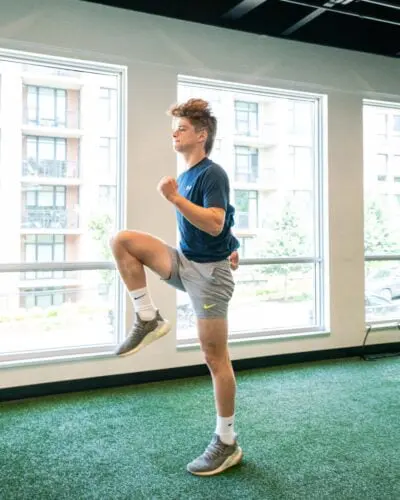
Just like any other skill, sprinting has specific techniques and the mechanics are where we start as sports physical therapists and performance coaches. Practicing sprint mechanics, such as proper foot strike, forward knee drive, and core activation, is fundamental to achieving an efficient stride. Incorporate drills that reinforce these mechanics, such as marching, skipping, and high-knee runs. These simple yet effective drills provide a strong foundation and encourage form that can help increase speed safely.

Recommended Drills:
– A March

– A Skips

– Stepover Drills (Shin Height)

2. Build Strength in Key Muscle Groups

Running fast requires strength, especially in muscles like the quads, hamstrings, calves, and core. Building strength in these areas is essential not only for speed but also for power, endurance, and injury prevention. Compound lifts and single-leg strength exercises targeting these muscle groups are highly effective in making strides more powerful and reducing the likelihood of injury.

Strength Training Exercises:
– Standing Hip Flexion With Band

– Front Foot Elevated Heel Raise

– Copenhagen Hold with Reach

3. Practice Accelerations and Sprint Drills

A well-rounded speed training program includes work on both acceleration and top-speed mechanics. Acceleration drills help athletes reduce the time it takes to reach their maximum speed, while sprint intervals build stamina for sustained performance. Integrating these drills into regular training can drastically improve an athlete’s on-field performance.

Suggested Speed Drills:
– Wall Acceleration Series

– Sprinter Step Up

Sprint Workouts:
– Flying 10s: Build speed over 20-30 yards, sprint for 10 yards, then slow down.
– 10×10: Sprint for 10 yards, then decelerate quickly; repeat 10 times.

Performance U: A Program for Aspiring College Athletes

For parents of high school athletes dreaming of college-level sports, consider our Performance U small group training program. Performance U is designed specifically to help young athletes develop the speed, strength, and stamina needed to excel at the collegiate level. Your athlete will receive a personalized performance assessment and a custom-designed speed and strength program, coached by our expert team. They’ll train in a supportive, small-group environment that combines personalized attention with the camaraderie of a team.

Give your athlete the best possible foundation for their college sports career. Performance U offers everything they need to stay ahead of the competition and stand out to college scouts. If you are interested, contact us here!

Key Takeaways from a Fitness Competition

This past Saturday, I had the privilege of being the performance physical therapy sponsor at an incredible event to raise funds for breast cancer research—Girls Gone RX, hosted by our friends at Crossfit Route 7 in Tyson’s Corner.

From the moment I stepped through the doors, I could feel the energy. A throwback mix of NSYNC, Backstreet Boys, and Britney Spears filled the air, instantly taking me (and probably many others!) back to the days of Total Request Live on MTV.

But it wasn’t just the music that made this event memorable—there were some amazing takeaways from the competition that can apply to physical therapy, or any sport or workout routine. Here’s what stood out:

The Power of a Supportive Environment

One thing CrossFit does exceptionally well—especially at CrossFit Route 7—is foster a fun, supportive community. It was inspiring to see how excited everyone was to be spending their Saturday at the gym, whether they were competing or cheering on the athletes. The event was a women-only competition, yet both men and women were there in full force, cheering loudly from the sidelines.

The participants ranged from beginners to seasoned athletes. Some were lifting impressive amounts of weight, while others were simply excited to be part of the action. The diversity of skill levels only added to the event’s energy and made it even more inclusive. A supportive environment doesn’t just apply to fitness, it matters in healthcare and physical therapy as well.

Taking Warm-Ups Seriously

These athletes were no strangers to competition, and their warm-up routines showed it. Before each event, competitors spent significant time preparing, but these weren’t your typical, one-size-fits-all warm-ups. The exercises were specifically tailored to the movements required for each event.

For example, before an event involving barbell cleans, the athletes took time to perfect their form, using weights similar to what they’d be competing with. It was impressive to see how much attention was given to detail, and it served as a reminder that a good warm-up should transition you smoothly into your workout. By the time the event began, most of the athletes had already broken a sweat, minimizing the risk of injury.

Master the Basics

Most of the women competing had clearly spent countless hours honing their skills. CrossFit requires a blend of mobility, strength, and technical expertise. It’s tempting to jump straight into the fun aspects of a sport, but this event was a great reminder that you must master the prerequisite qualities of any activity first for long-term success.

Just like building a house, laying a strong foundation is key before adding the finishing touches. Whether you’re a beginner or a seasoned athlete, it’s essential to invest time in developing the movement patterns and technical skills that pave the way for long-term success and injury prevention.

A personalized movement assessment can make all the difference, helping you stay injury-free while enjoying your favorite sport. If you’re interested in learning more about how to get your own custom movement evaluation, contact us!

×