3 physical therapy exercises to keep your back healthy from home

I hope that you took full advantage of last week’s long holiday weekend.

My weekend was full of food, family, football, and plenty of time to relax.

In today’s constant, go-go-go society, we all can benefit from a little more time to relax and may help improve your outcomes in physical therapy. But for those of us who are used to moving constantly, this can result in back discomfort.

Research shows that decreased daily movement increases the risk of lower back pain.

Our spines are designed to move, and the structures in our lower backs (most notably, our discs) do not receive optimal nutrition and blood flow when we are sedentary.

The risk for lower back pain further increases if you have a history of lower back pain.

If the holidays are causing you to be less physically active than normal or you have a history of lower back pain, the activities below can make a huge difference!

The goals of these activities are to get the back moving and get the stabilizing mechanisms of the spine going!

Start by performing these activities a couple of times per day as a “movement break”.

  • Spinal Segmentation: 3 spinal waves in each direction
  • 90/90 Hip Lift: 3 sets of 5 breathing cycles (each breathing cycle is in through the nose, followed by a full exhale, followed by a 5-second pause)
  • Physioball rollouts: 2-3 sets of 5 (try performing this with a breath at the top of each rep!)

P.S. If you are looking to solve your chronic back pain once and for all, contact us to set up an evaluation for back pain physical therapy in our McLean or new Bethesda location!

Traveling hurts!

Recently, I was working with a physical therapy client who was sharing her Thanksgiving travel plans with me—multiple rest stops and long hours in the car.

If you enjoy crowded airports and endless traffic, then this is almost your favorite time of year!

But, if you’re like most people, holiday travel isn’t exactly your idea of fun.

It seems like delays are inevitable. Remember the Southwest fiasco last year?

All that extra time sitting in the car or waiting at the airport can be uncomfortable. Your back stiffens up, your hips ache, and you start to feel tight all over. We hear about this a lot at our physical therapy clinics in McLean and Bethesda.

Holiday travel is already stressful, and discomfort is the last thing you need.

So, what can you do?

Move around! There’s no such thing as a perfect sitting posture—what’s important is to keep changing positions.

In our daily lives, we naturally shift from side to side as we stand and move. But this decreases when we’re sitting in a car, at the airport, or on a plane, causing discomfort in more sensitive areas of the body.

When sitting, try to locate your “sit bones”—the bones at the bottom of your pelvis that you sit on. Every 10-15 minutes, shift your weight from one “sit bone” to the other, and occasionally distribute your weight evenly for 5-10 minutes.

As a physical therapist, I often recommend alternating between having your legs straight and bent, and whenever possible, get up and take a walk. If you’re on a flight with me, you’ll see me stand up as soon as the seatbelt sign goes off!

If your neck, chest, or upper back starts to feel tight, remember the 20/20/20 rule!

Staring at your phone for too long can cause upper body discomfort.

The 20/20/20 rule, which comes from optometry, suggests that for every 20 minutes of focused activity, you should take a 20-second break and look at something 20 feet away.

This reduces strain on a single point and helps alleviate upper body tension.

These strategies should help reduce the tension that comes with holiday travel. However, they might not be enough if you have areas of your body that are recovering from an injury or are particularly sensitive.

Reach out to us to find the ultimate solution to your discomfort and start feeling your best this holiday season!

Physical therapy and performance training now open on River Road in Bethesda!

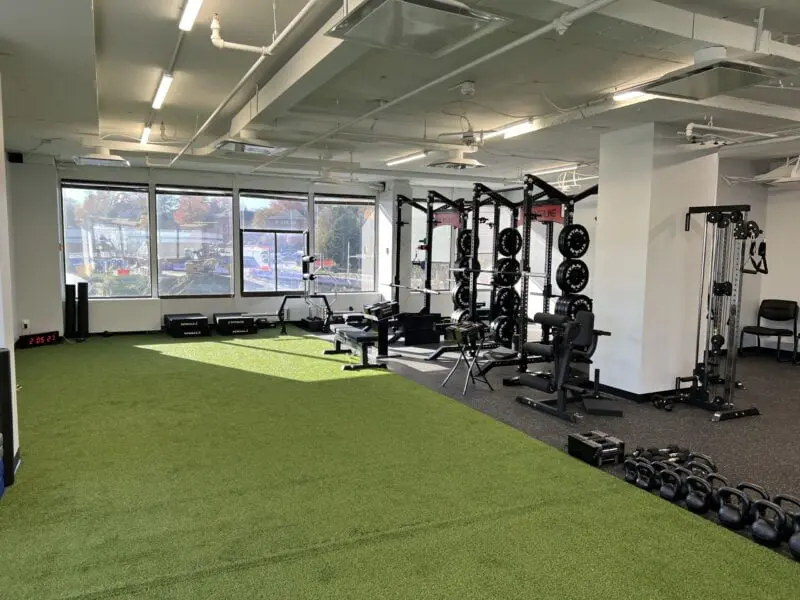
Our new Bethesda facility, located at 5272 River Road, Suite 350 is open! It’s been an exciting journey, and I’m excited to share this incredible 3100-square-foot space with you. But don’t forget about our amazing 2500-square-foot physical therapy and performance training place in McLean, Virginia!

Our new Bethesda facility boasts a range of features, including the CHP Performance Center and Physical Therapy clinic, designed to cater to your health and performance needs.

In case you missed it, in addition to our exceptional physical therapy services, CHP Performance will be introducing an array of exciting programs to enhance your athletic and physical performance:

Performance U: This small-group program is designed for high school athletes who dream of playing in college. It is uniquely tailored and designed using recent advances in sports technology. This personalized approach ensures that athletes receive the training they need to excel in their sport while minimizing the risk of injury. To learn more, click here!

Peak Performance Blueprint: This state-of-the-art assessment provides athletes a customized blueprint for optimizing their athletic potential. Incorporating our years of experience working with elite athletes and force-plate technology (more info about that here), the PPB will show, using clear metrics, how an athlete compares to collegiate athletes in their sport. They will also receive customized recommendations on improving their score to be better prepared for collegiate athletics. To learn more, click here!

Adult Strength and Conditioning: This program is designed for adults worried about re-injury when exercising or seeking a more scientifically designed training program. Our one-on-one sessions are under the direction of a Doctor of Physical Therapy and Certified Strength and Conditioning Specialist. To learn more click here!

If you are interested in any of these programs or have an injury that is bothering you, contact us now!

P.S. We will host our grand opening after the holidays, so stay tuned for future announcements!

Why I don’t coach belly breathing anymore

If you have worked with me as a physical therapy patient in McLean or Bethesda, you know I love talking about breathing.

This is usually well received, but sometimes people look at me like I have two heads.

I get it because I used to think the same thing. “I’m here in physical therapy because my shoulder hurts, and now you are giving me breathing exercises.”

I bring a breathing component into many drills that I prescribe because our body adjusts to the position where it feels most comfortable. That position is the one it can best breathe in.

Sometimes, these adjustments impact the body’s ability to move, resulting in joint pain.

As physical therapists, we can help you correct these problems with drills that assist you in breathing more effectively where you are restricted.

Let’s start by focusing on where the breath comes from.

The lungs are located inside the rib cage. Our rib cage is designed to expand in 360 degrees when we breathe in and compress in 360 degrees when we breathe out. Think of it like an accordion.

When an area of our rib cage is restricted, our breathing is also.

Sometimes, our entire rib cage is stiff, causing people to compensate with an exaggerated belly breath.

While the belly is meant to move with the rib cage, it should not move in place of it. Don’t forget the lungs are in the rib cage, not the stomach!

Pay attention to my breathing cues in this 90/90 hip lift video, beginning at the 50 second mark. I begin with a silent inhale through the nose and a long sigh through the mouse before pausing for 5 seconds. This ensures that my chest and stomach rise as I inhale and reverse as I exhale.

Try including this breathing strategy in your stretches or mobility work, and nasal breath when at rest. Here is an article on the importance of doing so!

A physical therapist’s key to chronic shoulder pain

Recently, I’ve been hanging at a local gym, providing physical therapy in Bethesda and McLean to their members and the most common injuries involve their shoulders.

If you do a lot of weight training or CrossFit or are interested in having healthy shoulders for years to come, keep reading!

Shoulder injuries often occur when the shoulder is repetitively challenged at the limits of its motion, where joints are most vulnerable.

Many people attempt to solve this issue by stretching. Instead, focus on these two areas.

End-Range Strength Training

When your shoulder is pushed to its extreme ranges of motion, the muscles responsible for controlling the shoulder joint are challenged. These muscles struggle to generate the force needed to maintain stability because they are weaker in these positions. This weakness increases the risk of overuse injuries and may create wear and tear on the joint.

Physical therapy is the key to addressing these issues effectively. Rather than focusing solely on increasing flexibility, it’s about training the muscles to handle these extreme positions and generate the necessary strength to support the shoulder. Here is a drill I recently taught a weightlifter struggling with shoulder pain when lifting weights overhead to address this issue.

Get the rib cage moving

The rib cage is the foundation that your shoulder blade rests on, and the position of your rib cage will direct your shoulder where to go as you move.

As you reach overhead, your upper chest should expand. Unfortunately, many weightlifters or people who sit at desks all day have stiff chests that prevent this, resulting in extra stress to the shoulder joints.

If you love to crush chest workouts or are sitting a lot, give this exercise a shot as part of your daily routine or warmup.

What to do if you have months or years of shoulder pain

Work smarter, not harder.

Many people I’ve worked with have seemingly tried everything but didn’t first learn where the pain was coming from. They could have saved a lot of time and effort by first discovering the root cause. If you want to finally solve your shoulder pain, contact us to schedule a physical therapy evaluation today!

New Bethesda physical therapy and performance space is almost here!

As the band Europe said, it’s the final countdown!

Our new sports physical therapy and performance training facility in Bethesda, located at 5272 River Road, is 3 weeks from opening!

We can barely contain ourselves anymore as we prepare to move to this beautiful 3100-square-foot facility, complete with the CHP Performance Center and Physical Therapy clinic.

In addition to our physical therapy services, CHP Performance will be offering:

  • Performance University

    Performance U is a small-group program designed for high school athletes who dream of playing in college. It is uniquely tailored and designed using recent advances in sports technology. This personalized approach ensures that athletes receive the training they need to excel in their sport while minimizing the risk of injury. Learn more about this program here!

  • Peak Performance Blueprint

    This state-of-the-art assessment provides athletes with a customized blueprint for optimizing their athletic potential. Incorporating our years of experience working with elite athletes and force-plate technology (more info about that here), the PPB will show, using clear metrics, how an athlete compares to collegiate athletes in their sport. They will also receive customized recommendations on improving their score to be better prepared for collegiate athletics. Learn more here!

  • Adult Strength and Conditioning

    If you are worried about re-injuring yourself when exercising or are looking for a more scientifically designed training program, this is for you! Our one-on-one sessions are under the direction of a Doctor of Physical Therapy and Certified Strength and Conditioning Specialist. Learn more here!

Keep an eye out for an announcement coming soon about our grand opening.

I would love to see you there!

×