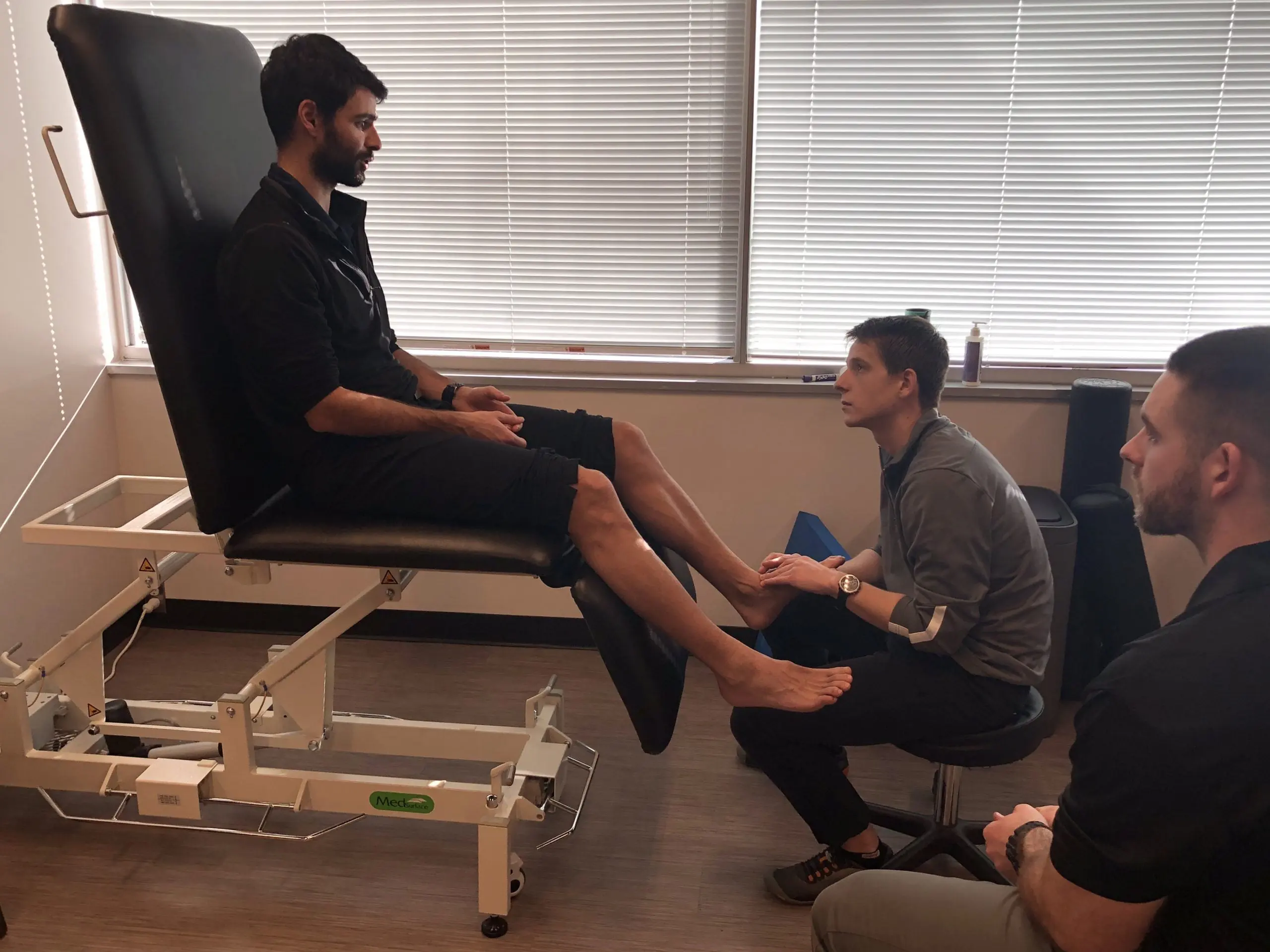
Want to return to running after an ankle sprain?

Ankle sprains are often dismissed as minor injuries, yet they frequently lead runners and other athletes to seek physical therapy.

The seriousness of these injuries is frequently underestimated, with athletes returning to their activities too soon.

The most common type of ankle sprain that we see in physical therapy is an inversion sprain, where the foot typically remains planted as the ankle turns inward, causing the outer edge of the foot to roll onto the ground—hence the term “rolled ankle.” This motion damages the ligaments on the outside of the ankle, often leading to varying degrees of tears.

The severity of the injury and the number of ligaments affected determine the grade of the sprain, ranging from grade 1 to grade 3.

After an ankle sprain, it’s crucial to rule out a fracture. Athletes should seek an X-ray if they are unable to bear weight on the injured leg or experience severe pain around the malleolus (the prominent ankle bone on the outside).

If no fracture is found and the aforementioned symptoms are absent, the focus can shift to gradually returning to running.

During running, there is never a moment when both feet are on the ground simultaneously. This means the body is continuously bouncing from one leg to the other, placing repeated stress on the ankles as they absorb the full impact of the body.

Unfortunately, after an ankle injury, the capacity of the affected area to handle stress (the cumulative amount it can bear before re-injury) is significantly reduced. As a result, recovery from an ankle sprain often takes longer than expected, with many athletes attempting to run before their ankle has fully healed.

To ensure a safe recovery, injured tissues need to gradually reacclimate to the stress associated with running or other sports.

A careful and progressive return to running might start with non-weight-bearing movements, gradually advancing to low-impact, weight-bearing exercises such as squats, split squats, and lunges. From there, single-leg activities like balance drills and single-leg squats can be introduced, followed by plyometric exercises involving two-legged jumps, and eventually, hopping on one leg.

Finally, activities such as jump roping, short runs, and longer runs can be reintroduced into the routine.

In summary, every ankle sprain is unique, making it essential to have a trained medical professional assess the injury to rule out a fracture. This professional can then design a personalized return-to-sport program tailored to your needs.

For further assistance and information on how we can help, you know where to find us!

Exercise Snacking: A Simple Approach To Aging That Can Actually Improve Muscle Function

It’s no secret that finding time to exercise gets more difficult with age. As professional, family, and personal responsibilities stack up, it becomes more and more challenging to find time to get to the gym or exercise.

As part of the aging process, our performance physical therapy patients also tend to lose muscle mass and function. One well-known combatant of muscle loss is resistance training, though it does require access to both exercise equipment and the time to work out.

If you find yourself struggling to get to the gym as you’re getting older, there’s good news! A recent study from The Centre for Sport in Chesterfield, UK, concluded that short bouts of exercise spread throughout the day are an effective method to improve muscle function in a time-efficient manner.

“Exercise snacking,” as the study coined, is the process of breaking down exercise into short sessions throughout the day. During the 28-day study, individuals doing a twice daily home-based exercise snacking program improved their lower limb muscle function and size compared to a control group. In addition, not only did their maximum leg pressing power increase, but those who followed the exercise snacking program also improved their 60-second sit-stand scores.

Although the study is still being examined, the data suggests that “exercise snacking,” or short bouts of exercise, may be a promising strategy to improve muscle function in older adults. Something as simple as a short walk could do the trick.

If you often struggle to find time to exercise, “exercise snacking” is a super time-efficient method to combat the side effects of aging while staying in shape.

For a more personalized approach, our virtual physical therapy team in Chevy Chase can help! Contact us today for a free consultation.

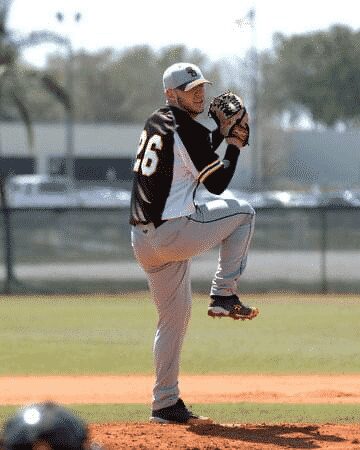
Why Icing After Pitching Isn’t Great For Your Child

Icing after a baseball game is an often-used recovery or injury rehabilitation practice for pitchers.

However, recent research conducted by Electronic Waveform Lab shows that icing damaged tissue after exercise does not improve recovery and can actually delay the healing process.

40 years ago, Dr. Gabe Mirkin coined the term RICE (Rest, Ice, Compression, and Elevation) to treat acute sports injuries. In 2014, nearly 40 years later, Dr. Mirkin retracted his statements stating, “Subsequent research shows that rest and ice can actually delay recovery.”

Why Does Ice Do More Damage Than Good? 

Inflammation is a natural, necessary response to the tissue damage that results from pitching in a baseball game. Due to the inflammation, blood vessels dilate, and the damaged tissue receives an influx of nutrients and cells that begin the process of tissue repair.

This process is necessary for the tissue to remodel and prepare for the future stresses involved in pitching. While icing may decrease pain in the short term, it can actually do more harm than good, as it slows down the recovery process.

Active Recovery: An Alternative To Ice

As part of his 2014 retraction of RICE protocol, Dr. Gabe Mirkin reported, “Mild movements help tissue to heal and the application of cold suppresses the immune responses that start and hasten recovery.”

One of the best alternatives to using ice is active recovery — including low-intensity muscle activation techniques. The goal is to find practical active recovery and loading methods that won’t aggravate the tissue or cause additional damage.

Try to activate the muscles to achieve the largest amount of pain-free, low-stress, and non-fatiguing muscle activation. This technique can act as a “pump” to remove excess waste products from the area and facilitate the release of proteins that accelerate recovery.

If you need in-depth injury rehabilitation or performance physical therapy techniques in Chevy Chase, our team of experienced physical therapists can help!

Arm Care in Baseball is More Than Pitch Counts

The number of shoulder and elbow injuries in youth baseball pitchers is on the rise and we consistently see these injuries for performance physical therapy. In response, consistent efforts have been made to better monitor the amount of stress taken by pitchers after each visit to the mound.

For many years, this was done by simply limiting the number of innings an athlete could pitch and setting a specific number of rest days between outings. More recently, pitch counts have become the standard for tracking a pitcher’s workload. However, while this change is an improvement, pitch counts do not tell the entire story.

What pitch count fails to account for is the varying intensities between throws. For example, a throw at 100% effort has a very different intensity than a throw at 50%. This is why efforts have been made in recent years to more accurately track the intensity, or workload, of a pitcher while on the mound.

A Better Method to Track Stress: Workload

According to athletic physical therapy, a more reliable measure of stress is the acute to chronic workload ratio (ACWR). Acute workload refers to the average workload of a single day over the past 9 days, whereas chronic workload refers to the average one-day workload over the past 28 days.

Research by sports scientist Tim Gabbett has shown that spikes in acute workloads, such as quickly increasing pitch count to more than the body is used to, can increase the risk of injury.

Calculating Your ACWR

There are two main ways to calculate the acute to chronic workload ratio.

The first is to use a series of formulas using pitch count and a subjective rating of perceived exertion (RPE), ranging on a scale of 1–10.

  1. Calculate acute workload by multiplying the number of high-intensity throws (around 70% of full effort or more) by the athlete’s RPE.
  2. Calculate chronic workload by calculating the weekly acute workload average of the past four weeks.

Once you have the acute and chronic workload, divide the acute workload by the chronic workload to get the ACWR.

The second and perhaps much simpler method is to use wearable technology. For example, in recent years, technology has become available to track the stress on a pitcher more accurately after an outing.

Sensors such as the MotusTHROW can accurately measure the amount of force placed on an athlete’s elbow during each throw. This data can be applied to calculate the ACWR to safely and effectively determine when a pitcher needs rest or is ready for their next high-intensity outing.

If you’d like to learn more about keeping your son or daughter safe on the mound, our experienced athletic physical therapy and injury rehabilitation team in Bethesda can help!

Debunking the Bone on Bone Myth

“Best Walking Shoes for Knee Pain for Women” by gm.esthermax is licensed under CC BY 2.0

I’m sure you’ve heard someone say it before:

“My knees are in such bad shape. It’s pretty much just bone on bone down there.”

Although this is a commonly held belief, athletic physical therapy speaks to the truth: “bone-on-bone is largely a myth.

Many patients complain of knee pain because they are “bone-on-bone” assuming there is nothing they can do but get surgery.

Fortunately, this common misconception just isn’t true. If a person is experiencing joint pain, one of the first treatment measures is X-rays or another imaging study of the joint. If the joint damage on the X-ray is severe, you may be told you are “bone-on-bone.” However, all that term means is that there is some amount of cartilage loss in the joint.

As the cartilage deteriorates, there is less cushioning between the ends of the bone that form the joint. This “rubbing” of bones against each other with less cushioning causes pain and discomfort. However, rarely, if ever, is the cartilage of the joint completely destroyed.

A doctor at the Core Medical Center in Blue Springs, MO, conducted more than 1,000 knee X-rays and discovered only one case where the cartilage of the knee joint was completely destroyed. The other 999 cases were simply deterioration of the cartilage, but it remained intact and functioning.

The truth is that “bone-on-bone” is just a fancy way of saying the cartilage is slowly deteriorating. Very seldom does it ever completely disappear. This term is used by doctors and physical therapists to better describe the situation to patients and the severity of their pain points.

If you’re experiencing joint pain or discomfort, our injury rehabilitation clinic in Bethesda/Chevy Chase can help! Whether you’re looking to overcome a recent injury or sick of joint pain preventing you from enjoying an active lifestyle, our team of physical therapists can help!

How Professional Athletes Are Addressing Their Mental Health

“File:20140101 Kevin Love (cropped).JPG” by TonyTheTiger is licensed under CC BY-SA 3.0

Health is a word that has a variety of meanings. Although physical health often comes to mind, mental health is equally important. Quality performance training and injury rehabilitation includes activities that improve both your physical and mental health to improve performance in sport.

What is Mental Health?

According to The Center for Disease Control, “Mental health includes our emotional, psychological, and social well-being. It affects how we think, feel, and act. It also helps determine how we handle stress, relate to others, and make choices.”

Mental health is important at every stage of life, from childhood through adulthood. Positive mental health allows people to better cope with stress, work productively, realize their full potential, and make more meaningful human connections.

Mental illness, such as depression, increases the risk for many physical health problems, particularly long-lasting conditions like diabetes, stroke, and heart disease. Furthermore, the presence of chronic conditions can increase the risk for mental illness.

Put simply — mental health is an aspect of overall health and well-being that cannot be overlooked.

The Impact of Mental Health On Performance

Mental health not only improves your quality of life, but it also improves performance — both in sport and in the workplace.

According to the CDC, poor mental health can negatively affect job performance, productivity, communication, physical capability, and job function. For example, someone could be in elite physical shape, but if their mental health is lagging, their performance will ultimately suffer.

Psychologists and mental health experts aren’t the only ones preaching the importance of mental health. Kevin Love, a professional basketball player for the Cleveland Cavaliers, has been very public with the mental health issues he’s dealt with throughout his career.

To help people strengthen their mental health, Love founded Koa, an online learning experience with therapist-led emotional fitness classes and 1:1 therapy. This growing community is helping people taking on real-life challenges and better prepare for the stresses of life.

“Mental health is an invisible thing, but it touches all of us at some point or another. It’s a part of life,” said Kevin Love of his struggle with mental health. Mental and physical health are equally important components of overall well-being. Love understands that to perform at the highest level, both his physical and mental health must be properly trained.

×