Athletic Physical Therapy for Hypermobility

I’ve been practicing as a physical therapist for nearly 15 years, and one of the biggest changes I’ve seen in that time is the increasing number of people coming in with concerns about joint hypermobility. Some have been formally diagnosed with conditions like Ehlers-Danlos Syndrome or Hypermobility Spectrum Disorder, while others simply recognize that their joints are “loose” and it’s causing pain or limiting their performance.

The increased awareness is a good thing. Many people now understand that hypermobility can create unique challenges — but also potential advantages — especially for athletes and active adults. Let’s break down what that means, and how physical therapy for hypermobility can help.

What Is Hypermobility and Why Does It Matter?

Hypermobility refers to joints that move beyond the normal range of motion. Some people are naturally stiffer, while others are naturally looser — and this is all normal. But when joints are excessively mobile, problems can arise.

For example:

  • Benefits: In sports like gymnastics, dance, or baseball, extra mobility can be a huge asset. A pitcher’s ability to throw, or a gymnast’s ability to achieve extreme positions, often comes from this mobility.
  • Risks: Without proper strength, those same joints may lack stability. This can lead to pain, frequent sprains, hyperextension injuries (such as knees that bend backward), or even dislocations in vulnerable joints like the shoulder.

Why Stretching Isn’t the Answer

If you’re hypermobile, you don’t need more stretching. Your tissues are already like loose elastic bands — they can lengthen easily, but they don’t always provide enough support or rebound.

What you really need is protective stiffness. Think of it as giving that elastic band more “snap” so it can put on the brakes when stretched too far. This stiffness not only protects your joints but also adds athletic qualities like spring, bounce, and efficiency.

The Role of Physical Therapy for Hypermobility

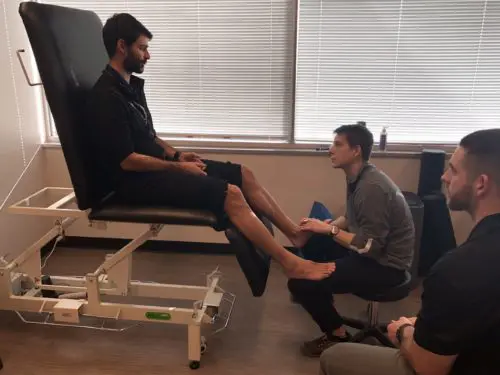
When our physical therapists at Cohen Health and Performance work with athletes or active adults who are hypermobile, our focus is on strength training and joint control rather than flexibility. A tailored hypermobility physical therapy program may include:

1. Foundational Strength Training

Building muscle strength around joints is the first step. Strong muscles provide the support that loose ligaments and tendons can’t.

2. Isometric Exercises

Isometric holds — such as wall sits or split squat holds — help build protective stiffness in specific positions.

3. End-Range Strength Training

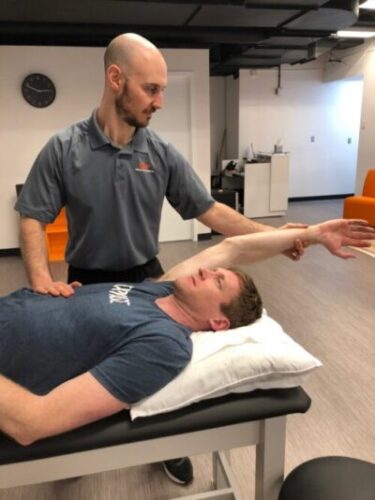
Athletes with hypermobility often have extreme ranges of motion. But can they control those ranges? Strengthening at the end of a joint’s range (such as the shoulder in overhead positions) helps protect against dislocations and injuries where the joint is most vulnerable.

Signs You May Benefit from Physical Therapy for Hypermobility

You may want to seek out a physical therapist if you:

  • Experience joint pain in multiple areas
  • Notice your knees, elbows, or fingers hyperextend past straight
  • Have a history of recurrent sprains or dislocations
  • Feel like your joints “give out” during activity
  • Want to safely improve performance in a sport that demands extreme mobility

Hypermobility isn’t always a problem — in fact, it can be a real advantage in the right sport. But without strength and stability, it can quickly become a source of pain and injury.

At Cohen Health and Performance, we specialize in helping athletes and active adults with hypermobility build strength, develop protective stiffness, and optimize performance. Whether you’ve been diagnosed with a hypermobility-related condition or you’ve simply noticed your joints feel “too loose,” we can create a personalized physical therapy and strength training program to help you stay healthy and strong.

If you’re ready to take control of your hypermobility, contact us today to schedule an evaluation.
Struggling With A Calf or Achilles Injury? What You Need to Know


I’m now at that age where I have to start being more mindful of the nagging calf and Achilles injuries that seem to pop up for so many of us in our 30s, 40s, and beyond. Whether it’s rec league basketball, tennis, pickleball, or just hitting the gym hard, many active adults still love to move with intensity—but we may not have the same resiliency we had in our 20s.

At Cohen Health and Performance, we see it all the time in our physical therapy clinics: a fit, active individual suddenly sidelined by a calf strain. These types of injuries tend to be the first warning sign of lower leg issues that can creep up when we push our bodies beyond what they’re currently prepared to handle.

Why Calf Injuries Happen

A calf strain typically occurs when the loading tolerance of the muscle—its ability to handle force—is exceeded. It’s not always about being out of shape; in fact, many of our patients are in great cardiovascular condition. But if the calf and Achilles haven’t been progressively trained to handle specific types of force—like running, jumping, or quick direction changes—they’re vulnerable.

One of my patients recently told me they went on vacation and, without access to a gym, decided to start running more than usual. They felt fit, so why not? But shortly after, they messaged me with a calf strain. Their cardiovascular system may have been ready—but their calf muscles weren’t conditioned for that repetitive impact. That mismatch between perceived fitness and actual tissue readiness is a common reason we see these injuries in our physical therapy practice.

Physical Therapy for Calf and Achilles Recovery

So what do we do when a calf injury strikes? Or better yet—how can we prevent it?

The key lies in a progressive, personalized rehabilitation plan, and physical therapy plays a critical role in that process. Here’s how we typically approach it:

1. Start with Isometric Loading

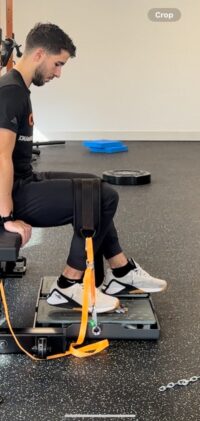
We begin with isometric exercises, where the muscle contracts without changing length. This is a safe, low-threat way to begin reactivating the calf muscle after injury. Isometrics help reduce pain, improve blood flow, and reintroduce loading to the tissue without overstraining it. These are often the first steps in any effective physical therapy plan for a strained calf. For more information on isometric exercises, check out this article and video!

2. Progress to Full Range of Motion Drills

Next, we move into more dynamic exercises that take the muscle through a full range of motion. The calf needs to be able to both shorten and lengthen under load, especially if you want to return to activities like running or jumping. These movements are carefully progressed based on how the tissue responds.

3. Introduce Plyometric and Sport-Specific Drills

Once strength and mobility are restored, we introduce plyometric exercises to recondition the tissue for faster, more explosive movements. At this stage, we might use bands or assistance tools to reduce body weight until you’re ready to go full intensity.

Finally, we tailor the program to your sport or activity. Runners may progress to drills like A-skips and A-runs, while basketball or tennis players might focus on reactive jumping or lateral movement training.

Personalized Care is Key

No two injuries—or recoveries—are the same. That’s why every physical therapy plan at Cohen Health and Performance is built around your unique goals, limitations, and lifestyle. Whether you’re returning to a sport or just want to stay pain-free during weekend workouts, we’re here to help you move forward.

If you’ve recently dealt with a calf or Achilles injury—or you’re hoping to prevent one as you stay active into middle age—we’d love to help. Our physical therapy team specializes in helping active adults recover quickly, move better, and keep doing what they love.

Contact us to schedule your evaluation at our Bethesda or McLean location. Don’t let a nagging calf injury slow you down.

How physical therapy helped my back

In life, sometimes our greatest challenges end up leading us to our most valuable lessons. That was certainly the case for me when an unexpected back injury abruptly ended my college football career. At the time, it felt like everything I had worked for was slipping through my fingers. Little did I know, this injury would be a turning point that not only introduced me to the world of physical therapy but also set me on a lifelong journey of health, healing, and helping others.

Physical therapy became my path to recovery and taught me that our bodies are incredibly resilient when given the right care and attention. Years later, I’m still working to maintain my back health, even after being told I might need spine surgery. And the best part? Today, I feel stronger than ever.

The Power of Physical Therapy in Back Recovery

One of the core concepts I learned in physical therapy is the importance of maintaining the “stack” of the body. This term refers to properly aligning your head, rib cage, and pelvis. Imagine a snowman where each ball is stacked neatly on top of the other. If one of the balls starts rolling out of place, the entire snowman is at risk of falling. Similarly, when any part of our alignment gets disrupted—whether it’s the head, rib cage, or pelvis—it can lead to back pain.

An inability to maintain the stack is a common problem for people recovering from back injuries. Through physical therapy, I learned exercises to restore and maintain this balance, ensuring that my body remains in safe positions even during challenging movements.

3 Exercises to Maintain Back Health

I’ve incorporated many exercises into my routine over the years, but these three drills have been particularly helpful as of late:

1. Kettlebell Pullover

2. Physioball Rollout

3. Wall-Supported Bear March

These three exercises have become staples in my warm-up routine. They not only help me maintain my back health but also prepare my body for more intense workouts by ensuring that my core is activated and my stack is on point!

Join Me for a Free Back Pain Workshop!

If you’ve ever struggled with back pain or found it difficult to train without back discomfort, I want to help. Join me for a FREE workshop where I’ll share my “go-to” drills that can help you reduce back pain and strengthen your body.

– When: Saturday, October 5th at 9 AM
– Where: Cohen Health and Performance-McLean

During this session, we’ll dive deep into these exercises, as well as other essential physical therapy techniques, to help you get your body back on track. Whether you’ve had a back injury in the past or are simply looking to optimize your health, this workshop will give you the tools you need to succeed.

Spots are limited—there are only 15 available, so don’t wait to sign up! If you’re ready to eliminate back pain for good and take control of your health, this is the perfect opportunity.

Click HERE for more information and to reserve your spot.

The fall injuries we see in physical therapy

Are you the parent of a high school athlete? If so, you may have noticed an increase in injuries lately. At Cohen Health and Performance in McLean and Bethesda, we see many of these athletes for sports physical therapy.

While some injuries, like ACL tears, are traumatic, the most common injuries our physical therapists encounter are soft tissue strains and sprains.

Though these terms might sound similar, they refer to different types of injuries.

A strain is an injury to the muscle itself. Muscle strains often occur in the lower body during high-velocity activities like sprinting, cutting, and kicking. They can also happen in the upper body, typically from contact or a fall, though this is less common. Common lower-body muscle strains involve the hamstrings, calves, quadriceps (especially the rectus femoris muscle), and adductors.

If your athlete has strained a muscle, they will likely feel immediate pain in the affected area and describe a sensation of tearing or pulling in the muscle. Lower-body strains usually occur without contact and happen when an athlete is moving at high speed or decelerating.

A muscle strain can often be self-diagnosed at the time of injury using a few simple assessments:

– Pain when touching the injured area
– Pain when stretching the affected muscle
– Pain and/or weakness when contracting the affected muscle
– Possible bruising or discoloration of the skin over the injured area

A sprain, on the other hand, is an injury to a ligament. Common sites for sprains include the ankle and knee. A sprain occurs when a ligament is overstretched, leading to potential partial or full tears. Sprains often happen when an athlete lands awkwardly, steps on another player’s foot, or twists a limb into an unnatural position.

Similar to strains, sprains can also be self-diagnosed using these assessments:

– Pain when palpating the injured area
– Pain when moving or bearing weight on the affected joint
– Bruising and swelling in the affected area

The key difference between these two injuries is their location. Sprains are localized to joints, while strains are specific to muscles.

Future blog posts will provide examples of how you or your athlete can manage these injuries effectively.

If you suspect that you or your athlete has sustained a soft tissue injury, it’s important to have it evaluated by a physical therapist as soon as possible. We will assess the severity of the injury and provide detailed guidance on how to get back in the game as quickly as possible!

It’s an athlete’s right of passage

The first time may have happened as you landed from a jump playing basketball or making a cut while playing soccer. And since that first time, it has happened several more times.

What should you do the next time you sprain your ankle? Should you go to an athletic physical therapy clinic like ours in McLean and Bethesda?

Most likely, it will be swollen and painful, but you should be able to put some weight through it.

If you cannot put any bodyweight through your ankle, see a physical therapist or doctor immediately.

Assuming a fracture has been ruled out, it is time to start the physical therapy process immediately. The sooner you get started, the quicker you recover!

Initial goals are to reduce swelling, restore the range of motion to the ankle, and get back to walking pain-free, without a limp.

Range of motion is often restricted by joint swelling, and below are a few tips to help.

  1. Move the injured ankle through a comfortable range of motion. This can be drawing circles with your ankle, drawing out the ABCs with your ankle, or pumping your ankle up and down. The important thing is that the joint is being moved.
  2. Elevate the limb above the heart as much as possible.
  3. Perform aerobic exercise that elevates your heart rate to increase blood flow to the area, which will help clear out extra fluid in the joint. An exercise bike is recommended so that weight bearing is not an issue.

Next is strengthening.

Once you have restored the normal range of motion and can comfortably bear weight through the injured joint, it is time to start building up the ankle’s tolerance to higher loads and the demands of life/sport. This will be a combination of strengthening and balance exercises.

Here are a few exercises to help you work on strengthening and balance.

Single leg stance with rotation
Front foot elevated heel raise
Multidirectional RDL 

Finally, the fun phase. Sport-specific movements! Movements during this phase are tailored to your sport, often involving change of direction/cutting drills. Various jumping and hopping movements, called plyometrics, are also included.

Below are 2 examples of plyometrics drills we have used with our athletes.

Alternating split stance leaps
Lateral bounds
 
It is important that you feel 100% confident in your ankle before you are finished with rehab.

If you or someone you know recently sprained their ankle, reply to this email and accelerate your return to the field!

Why a physical therapist doesn’t recommend stretching

“My shoulder feels tight.” “My hip flexors are tight; I need to stretch them.”

These are common complaints we hear in physical therapy.

While these descriptions aren’t wrong—after all, no one can argue with how you feel—they can sometimes lead to misconceptions about how to address the problem.

The sensation of “tightness” often arises as the body’s way of protecting areas that are vulnerable to injury. When a part of the body is unstable, the nervous system responds by creating stiffness in the surrounding muscles to safeguard it. For example, the hamstrings, which attach to the pelvis, might feel tight in someone with low back pain. This tightness occurs as the muscles stiffen to provide added stability to the pelvis.

In this case, simply stretching the hamstrings won’t solve the problem. The individual needs to learn how to stabilize their back, perhaps by mastering the stack (find out how to do that here) and strengthening the trunk muscles accordingly. Once the underlying issue is addressed, the hamstrings can finally relax.

This is just one example of why a muscle might feel tight, but it’s important to understand that tightness can stem from various causes—and the solution is rarely just to stretch!

If you’re dealing with tight, uncomfortable muscles, it’s time to uncover the root cause. Contact us today to schedule an evaluation and discover how you can finally resolve those tight muscles!

×