Learn to keep back pain at bay!

Does back pain keep creeping up during your workouts?

You’re not alone—back pain is one of the most common issues people face, especially when they lead an active lifestyle. Whether you’re an athlete, weekend warrior, or just someone trying to stay fit, back pain can significantly hinder your performance and even discourage you from exercising altogether. In fact, back pain is one of the leading reasons people seek physical therapy.

Think of your body like a high-performance car engine. If you let that engine sit idle for too long without maintenance, it starts to misfire. And when you push yourself during workouts without addressing these underlying issues, that’s when the back pain flares up. Many people continue this cycle of inactivity and painful workouts, but there is a better way to break free from this loop.

Physical therapy for back pain at Cohen Health and Performance is specifically designed to identify the root causes of your discomfort. Often, back pain arises from muscle imbalances, lack of core strength, limitations in movement variability, or faulty loading patterns. The goal of physical therapy for people with back pain back pain is to address these issues through a combination of exercises, manual therapy, and education. Our Doctors of physical therapy are experts in movement and biomechanics, meaning they can pinpoint the exact source of your pain and help you make targeted improvements.

Here’s the good news: you don’t need to completely overhaul your lifestyle! A few small but significant adjustments, like discovering new movement strategies, strengthening your core, and improving your mobility, can help relieve pain and prevent it from returning. Physical therapy can teach you how to safely modify your workouts, reduce strain on your back, and build resilience so you can train harder and longer—without the risk of injury.

At Cohen Health and Performance, we specialize in helping active people with physical therapy plans that are personalized to fit their specific needs. Whether you’re dealing with chronic back pain or recent discomfort, our evidence-based approach focuses on long-term relief and injury prevention. We emphasize hands-on techniques, combined with functional exercises that improve strength, mobility, and posture, so you can move freely without pain.

We invite you to join us for a FREE, hands-on workshop where we’ll teach you 3 game-changing strategies to reduce back pain and keep your workouts pain-free. Our expert team will walk you through simple but effective techniques commonly used in back pain physical therapy to help you manage discomfort and optimize your performance.

“Keep Training from Being a Pain in the Back”
Saturday, October 5th at 9 am

Cohen Health and Performance – McLean
1401 Chain Bridge Rd., Suite 203
McLean, VA 22101

There are only 10 more spots available, so don’t miss out on this opportunity to learn practical techniques from trained physical therapists. This workshop will empower you to take control of your pain and equip you with the tools to train safely and effectively. By incorporating these back pain physical therapy strategies, you’ll not only reduce pain but also improve your overall health and fitness performance.

Reserve your spot now and put an end to back pain while taking your training to the next level!

Looking forward to seeing you there!

How physical therapy helped my back

In life, sometimes our greatest challenges end up leading us to our most valuable lessons. That was certainly the case for me when an unexpected back injury abruptly ended my college football career. At the time, it felt like everything I had worked for was slipping through my fingers. Little did I know, this injury would be a turning point that not only introduced me to the world of physical therapy but also set me on a lifelong journey of health, healing, and helping others.

Physical therapy became my path to recovery and taught me that our bodies are incredibly resilient when given the right care and attention. Years later, I’m still working to maintain my back health, even after being told I might need spine surgery. And the best part? Today, I feel stronger than ever.

The Power of Physical Therapy in Back Recovery

One of the core concepts I learned in physical therapy is the importance of maintaining the “stack” of the body. This term refers to properly aligning your head, rib cage, and pelvis. Imagine a snowman where each ball is stacked neatly on top of the other. If one of the balls starts rolling out of place, the entire snowman is at risk of falling. Similarly, when any part of our alignment gets disrupted—whether it’s the head, rib cage, or pelvis—it can lead to back pain.

An inability to maintain the stack is a common problem for people recovering from back injuries. Through physical therapy, I learned exercises to restore and maintain this balance, ensuring that my body remains in safe positions even during challenging movements.

3 Exercises to Maintain Back Health

I’ve incorporated many exercises into my routine over the years, but these three drills have been particularly helpful as of late:

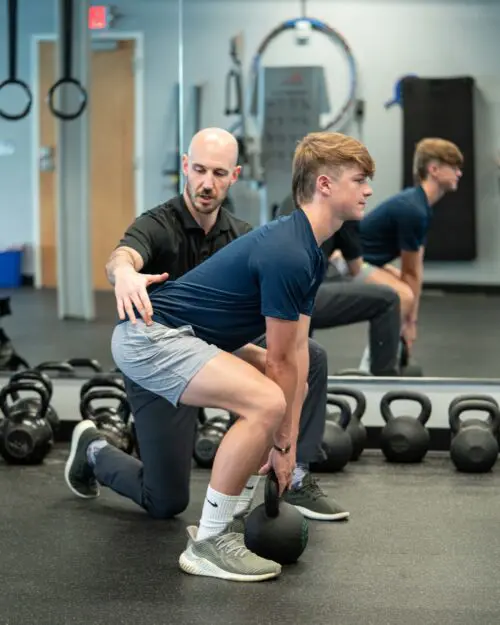
1. Kettlebell Pullover

2. Physioball Rollout

3. Wall-Supported Bear March

These three exercises have become staples in my warm-up routine. They not only help me maintain my back health but also prepare my body for more intense workouts by ensuring that my core is activated and my stack is on point!

Join Me for a Free Back Pain Workshop!

If you’ve ever struggled with back pain or found it difficult to train without back discomfort, I want to help. Join me for a FREE workshop where I’ll share my “go-to” drills that can help you reduce back pain and strengthen your body.

– When: Saturday, October 5th at 9 AM
– Where: Cohen Health and Performance-McLean

During this session, we’ll dive deep into these exercises, as well as other essential physical therapy techniques, to help you get your body back on track. Whether you’ve had a back injury in the past or are simply looking to optimize your health, this workshop will give you the tools you need to succeed.

Spots are limited—there are only 15 available, so don’t wait to sign up! If you’re ready to eliminate back pain for good and take control of your health, this is the perfect opportunity.

Click HERE for more information and to reserve your spot.

Maximizing your child’s chance of earning a college scholarship

ONE person has the final decision in determining if your athlete will receive a scholarship to play college sports. The coach.

Coaches are most concerned with keeping their jobs or earning job opportunities at more prominent programs.

If your athlete can help a college coach with either, a scholarship may be coming their way!

On the other hand, coaches hate inconsistency. When talented players cannot play consistently, a coach can’t trust that they can win consistently, and inconsistent winning equals a lack of job security.

What is the number 1 reason an athlete is unable to play? You guessed it, injury.

I remember speaking to a college football coach in Texas who told me that he would rather have a good player that is consistently healthy than a great player who is always in physical therapy and injury prone. He went on to say that he likes players who overcame an injury and stayed healthy afterward. To the coach, this indicated a strong work ethic, a resilient mindset, and commitment to the physical therapy and performance training process. 

A comprehensive strength training program is best for athletes to stay healthy or overcome a lengthy injury history. Now that summer is here, this is the perfect time for your athlete to get started!

But finding the best strength training solution can be challenging. You should look for three things in your athlete’s strength training program.

  1. Qualified and Experienced Coaches: Look for coaches with a track record of working in your athletes’ sport or discipline. They should demonstrate a strong understanding of exercise science and sport-specific training.
  2. Individualized Program Design: A quality strength training program is tailored to the specific needs and goals of the athlete. Look for programs that start with an individualized assessment to identify strengths, weaknesses, and areas of improvement. The program should be designed to address your athlete’s unique characteristics.
  3. Goal Alignment: Your athlete’s strength training program should align with their goals and sport. Look for programs that incorporate exercises, training methods, or progressions relevant to your athlete’s sport. 

Are you interested in finding the best summer training program for your athlete? 

If so, contact us to participate in our rising-star training assessment.

This assessment will show you and your athlete the secret to helping them avoid injury and take their performance to the next level. 

What I learned by going to the ER

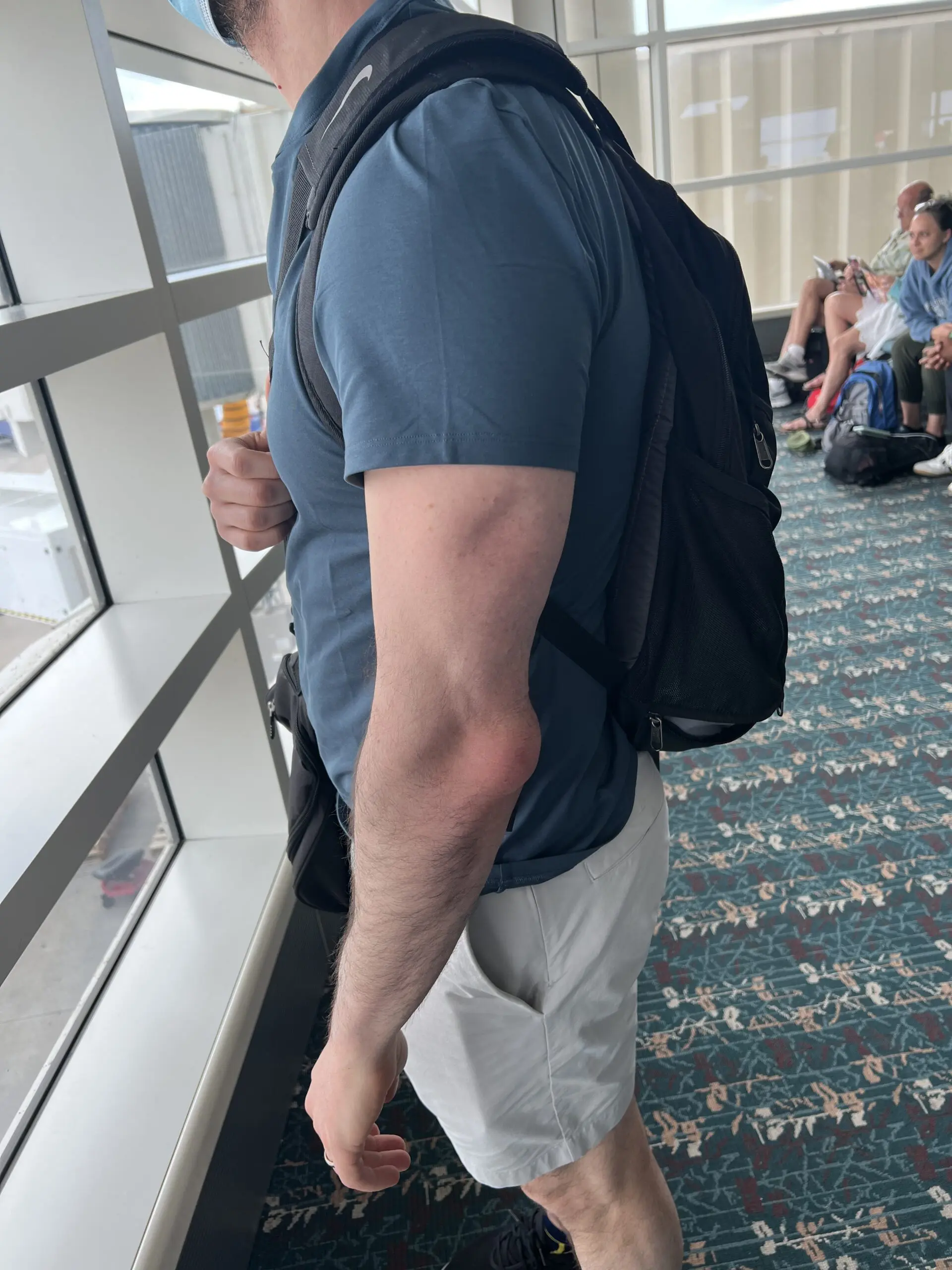
I woke up for the final day of a conference I had traveled to in Orlando. My wife, Deb, joined me for the trip, and the first thing I heard from her was, “What happened to your elbow?!”

I had a golf ball-sized bump on the back of my elbow, consistent with Olecranon Bursitis. I remember one of my professors in physical therapy school calling it “Popeye elbow.” This typically occurs because of a trauma or infection, and there hadn’t been any trauma, so it must have gotten infected, which needs to be treated immediately.

We flew back home that afternoon and went right to the emergency room. After waiting a few hours, they confirmed the infection, prescribed antibiotics, drained my elbow, and recommended that I consistently maintain compression on the area.

But I wasn’t confident in the recommendations….

The PA that treated me had a lot on her plate. She was running from room to room, and I could sense she was providing general recommendations because this wasn’t her area of expertise.

So, I later texted some of my colleagues here in McLean and Bethesda within the physical therapy/medical field, and they confirmed my suspicions.

The antibiotic I was prescribed was not the best option for my type of infection, and these areas of swelling should never be wrapped in compression garments.

This is not the fault of the people of the ER. I greatly respect their expertise, the stressful environments they work in, and the fantastic work they do to help so many people. This just wasn’t their area of expertise.

In fact, they did the most critical part of their job. They kept me safe until I could see a specialist.

Elbow conditions such as mine were his area of expertise. His recommendations were specific and clear, and most importantly, he took his time so that I could ask any questions I had.

What a refreshing experience. My doctor was present, and I didn’t feel like his hand was on the doorknob the entire time as he tried to leave quickly.

It is impossible to provide excellent care when we are rushing. As physical therapists, we learn so much just by being present. One of the first things I tell our doctoral students is that our patients will give us all the clues if we slow down, listen, and ask great questions.

Are your healthcare providers doing that? Can you ask all the questions that you have?

What about when you aren’t in their clinic? It’s normal to forget to ask something during an appointment. Will they answer your question promptly when you aren’t in their office?

If you need help, contact me to connect you with the right healthcare provider. I’ve made it a mission to connect with the healthcare community around the DMV because that will help us better serve you.

As healthcare consumers, we can see whomever we want. Look for an expert that provides you with the type of care that you expect to receive!

My jaw pops, is that bad?

Have you noticed joints making more noise as you have gotten older? One of the strangest ones is the random popping I get in my jaw.

Does that ever happen to you? If so, and if it is painful, you may want to investigate it (our physical therapy team in McLean and Bethesda treats this!). 

Open and close your mouth while feeling in front of your ears. Search until you feel the joint moving, called your temporomandibular joint (TMJ). This joint allows you to open and close your mouth and move your jaw from side to side.

The TMJ has a small shock-absorbing cartilage disc between the jawbone and your skull. If this disc moves out of alignment or there is arthritis in the joint, clicking, popping, and pain can occur.

The alignment of the TMJ is a product of everything below it. When I see physical therapy patients experiencing TMJ pain, I first check the position of the head, neck, and rib cage and look at posture. Check out this article to learn more about how to get your head, rib cage, and pelvis in the proper position.

This sometimes corrects TMJ pain, but we can’t stop here. Here are some factors that may also need to be addressed.

  1. Malocclusion: Malocclusion is when the teeth do not fit together correctly, resulting in jaw misalignment. This is when your dentist needs to work with your physical therapist as part of the healthcare team!
  2. Stress: Teeth clenching is associated with stress. Caring for your mental health is essential to helping TMJ issues. Many dentists also suggest nightguards for those of us that clench when sleeping.
  3. Chewing gum: stay away!
  4. Posture, especially while working: What posture is best? Does that even exist? Check out an article I wrote on that here.

Popping, clicking, and jaw pain is most likely a result of several different factors. TMJ issues usually require a healthcare team such as a physician, physical therapist, and dentist. Popping and clicking without pain likely isn’t much to worry about. Still, please see a healthcare provider if pain is associated with it.

At CHP, our physical therapists we evaluate patients with TMJ discomfort. If you or anyone you know would like help solving these challenging problems, contact us today!

What is blood flow restriction training? Should I try it?

Think of the last time that you injured your arm or leg or needed physical therapy. If you haven’t had an extremity injury, or needed sports physical therapy, congratulations, and I guess you must use your imagination.

You saw your doctor for help, and they told you to rest your injured limb for at least 4 weeks. You have no choice but to relax and allow your injured limb to get small and weak.

This is where blood flow restriction (BFR) training is a helpful part of the physical therapy process. A cuff or strap is placed tightly around a limb to reduce blood flow but not entirely block it. Exercise is then performed in this state.

This allows you to exercise at a lower intensity but enjoy many benefits of high-intensity training, such as muscle growth and improved strength.

While BFR can’t replace regular training, it is an excellent option for people that want to speed up their return from injury or are searching for ways to exercise without beating up their joints.

But restricting blood flow sounds sketchy. Is it safe?

Yes. Research has shown that BFR is safe when used with patients with no contraindications to it. As with all things, it can be unsafe when misused or placed in the wrong hands.

At Cohen Health and Performance, we use BFR both in McLean and Bethesda to limit weakness and muscle atrophy after surgery. Our patients recovering from knee surgery, such as an ACL reconstruction, have seen great results. When more strength is preserved, people have a faster recovery.

But the benefits extend far beyond people recovering from surgery. People struggling with chronic and overuse injuries can use BFR to maintain their strength without interrupting recovery. This helps people to return to the entirety of their active lifestyles much quicker.

Interested in using BFR to speed up your recovery from an injury or help you with your training? Contact us!

×