CHP Spotlight Interview with Sports Medicine Physician, Dr. Richard Edgar

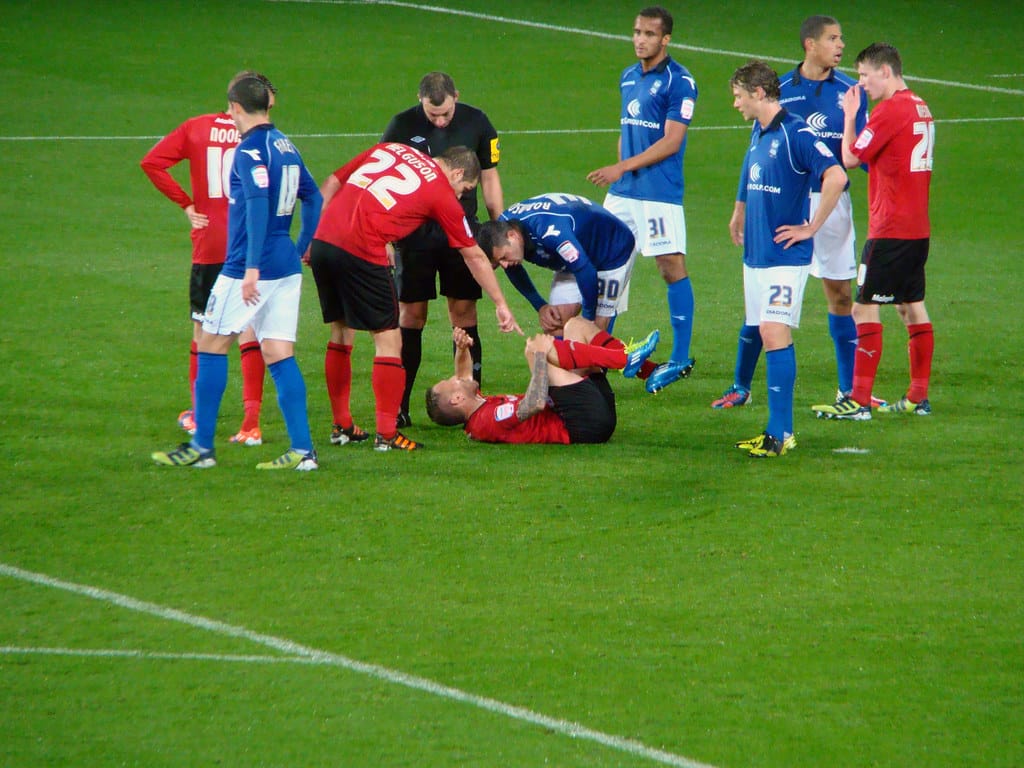
Why do so many field sport athletes and runners suffer lower body soft tissue injuries, like hamstring strains? 

As with all sports, injuries are part of the game and it is impossible to avoid them altogether. But being aware of risk factors can reduce the risk and is an essential component of the physical therapy process. There has been research studying the influence of strength imbalances of opposing muscles. One of the most common comparisons is with the hamstrings and quadriceps, called the hamstring to quadriceps strength ratio.

Research in physical therapy and sports medicine journals suggest that the hamstrings should be at least 60% as strong as the quads, especially among athletes.

Don’t miss my latest interview with Dr. Richard Edgar where we discussed topics like this and so much more! Dr. Edgar is a Primary Care Sports Medicine physician at the Anderson Orthopaedic Clinic. He specializes in non-operative treatment of musculoskeletal injuries and has an extensive sports background himself. 

The mission of the CHP Spotlight Interview Series is to share information with you from the greatest experts in the fields of sports medicine, sports physical therapy, personal training, and performance. Now, more than ever, there is a seemingly infinite amount of information available and finding the most credible information is a challenge. The good news is that we are here to help you find the best information related to physical therapy, personal training, and sports medicine from experts surrounding us in Bethesda, Chevy Chase, DC, McLean and Northern Virginia.

If you or someone you love has had a sports related injury, don’t miss this interview!

To learn more about Dr. Edgar, click here and check out our interview below!

I felt stuck

Times have certainly changed, haven’t they? Just look at all that hair! And it seems like they couldn’t do much about the sun glare on picture day either…

“I really need to stretch more. Should I try Yoga?”

“Everyone’s talking about how Pilates strengthens your core. Maybe I should take a class?”

“I know strength training is crucial, but where do I even begin?”

If you’ve ever had thoughts like these when thinking about exercise, you’re not alone.

The world of health, fitness, sports physical therapy, and injury rehabilitation can feel massive and even a bit daunting. I remember a time when I was unsure about how to approach my own fitness journey.

After wrapping up my college football career, I no longer had coaches designing my training plans. No more structured practices, conditioning workouts, weightlifting sessions, or recovery routines that typically involved stretching, foam rolling, yoga, and light cardio.

With no clear direction, I stuck with what I knew best: lifting weights, following my old off-season routine, and adding a couple of conditioning sessions each week.

After a few weeks of this, I stopped and asked myself a simple but important question: “Why?”

Why was I training this way? What were my goals now? And what were the most effective ways to achieve them? After reflecting and writing down my thoughts, I realized that my training program no longer aligned with my new goals.

My football days were behind me, and it was time to focus on staying healthy long-term.

At the same time, I still enjoyed strength training and the feeling of being strong. Plus, I was working toward becoming a Certified Strength and Conditioning Specialist (CSCS), so I needed to practice what I preached (this was all before I entered sports physical therapy school).

I ultimately designed a new strength training program that focused on increasing strength and muscle mass while also enhancing my mobility. The goal was to feel strong and stay healthy.

This approach worked because I took a moment to slow down and ask myself a few basic questions.

When was the last time you did that? Ask yourself these questions:

– What are the outcomes I want from my training? Do I want to be stronger? Have less discomfort? Improve my mobility? Be honest with yourself.
– What are the best methods to achieve these outcomes?
– If I don’t know the answer to the above, who can help guide me?

As question three suggests, you don’t need to figure it all out on your own. There are experts available who can help you reach your goals, but only you can determine what those goals are.

Once you have that clarity, our team of sports physical therapists in Bethesda and McLean is here to help. Along with being Doctors of Physical Therapy, our Performance Physical Therapists are also Certified Strength and Conditioning Specialists. We specialize in helping injured athletes recover and get back to doing what they love.

Debunking the Bone on Bone Myth

“Best Walking Shoes for Knee Pain for Women” by gm.esthermax is licensed under CC BY 2.0

I’m sure you’ve heard someone say it before:

“My knees are in such bad shape. It’s pretty much just bone on bone down there.”

Although this is a commonly held belief, athletic physical therapy speaks to the truth: “bone-on-bone is largely a myth.

Many patients complain of knee pain because they are “bone-on-bone” assuming there is nothing they can do but get surgery.

Fortunately, this common misconception just isn’t true. If a person is experiencing joint pain, one of the first treatment measures is X-rays or another imaging study of the joint. If the joint damage on the X-ray is severe, you may be told you are “bone-on-bone.” However, all that term means is that there is some amount of cartilage loss in the joint.

As the cartilage deteriorates, there is less cushioning between the ends of the bone that form the joint. This “rubbing” of bones against each other with less cushioning causes pain and discomfort. However, rarely, if ever, is the cartilage of the joint completely destroyed.

A doctor at the Core Medical Center in Blue Springs, MO, conducted more than 1,000 knee X-rays and discovered only one case where the cartilage of the knee joint was completely destroyed. The other 999 cases were simply deterioration of the cartilage, but it remained intact and functioning.

The truth is that “bone-on-bone” is just a fancy way of saying the cartilage is slowly deteriorating. Very seldom does it ever completely disappear. This term is used by doctors and physical therapists to better describe the situation to patients and the severity of their pain points.

If you’re experiencing joint pain or discomfort, our injury rehabilitation clinic in Bethesda/Chevy Chase can help! Whether you’re looking to overcome a recent injury or sick of joint pain preventing you from enjoying an active lifestyle, our team of physical therapists can help!

How Professional Athletes Are Addressing Their Mental Health

“File:20140101 Kevin Love (cropped).JPG” by TonyTheTiger is licensed under CC BY-SA 3.0

Health is a word that has a variety of meanings. Although physical health often comes to mind, mental health is equally important. Quality performance training and injury rehabilitation includes activities that improve both your physical and mental health to improve performance in sport.

What is Mental Health?

According to The Center for Disease Control, “Mental health includes our emotional, psychological, and social well-being. It affects how we think, feel, and act. It also helps determine how we handle stress, relate to others, and make choices.”

Mental health is important at every stage of life, from childhood through adulthood. Positive mental health allows people to better cope with stress, work productively, realize their full potential, and make more meaningful human connections.

Mental illness, such as depression, increases the risk for many physical health problems, particularly long-lasting conditions like diabetes, stroke, and heart disease. Furthermore, the presence of chronic conditions can increase the risk for mental illness.

Put simply — mental health is an aspect of overall health and well-being that cannot be overlooked.

The Impact of Mental Health On Performance

Mental health not only improves your quality of life, but it also improves performance — both in sport and in the workplace.

According to the CDC, poor mental health can negatively affect job performance, productivity, communication, physical capability, and job function. For example, someone could be in elite physical shape, but if their mental health is lagging, their performance will ultimately suffer.

Psychologists and mental health experts aren’t the only ones preaching the importance of mental health. Kevin Love, a professional basketball player for the Cleveland Cavaliers, has been very public with the mental health issues he’s dealt with throughout his career.

To help people strengthen their mental health, Love founded Koa, an online learning experience with therapist-led emotional fitness classes and 1:1 therapy. This growing community is helping people taking on real-life challenges and better prepare for the stresses of life.

“Mental health is an invisible thing, but it touches all of us at some point or another. It’s a part of life,” said Kevin Love of his struggle with mental health. Mental and physical health are equally important components of overall well-being. Love understands that to perform at the highest level, both his physical and mental health must be properly trained.

What Is Blood Flow Restriction Training? Can It Help You Overcome Your Injuries?

“Running by Coolidge Corner” by jpo.ct is licensed under CC BY-NC-ND 2.0

Since the beginning of performance training, athletes have searched for the most effective training methods out there. Although there are countless strategies available, blood flow restriction training, or BFR for short, has been used for more than 20 years in physical therapy and performance training.

What Is Blood Flow Restriction Training?

Blood flow restriction is a training technique that involves performing exercises with a reduced amount of blood flow to the arm or leg. Using a cuff or strap placed tightly around the limb, blood flow is reduced to that specific area. BFR training combines low-intensity exercise with blood flow restriction to produce similar results to high-intensity training.

In recent years, blood flow restriction training has become popular for both athletes and patients recovering from injuries. Mike Reinhold, a leading physical therapist, describes the various benefits as:

  • Provides a great workout with smaller weights and fewer reps or time
  • Can help with rehab from injuries
  • Improve strength for clients with physical limitations
  • Pain reduction after ACL surgery or knee osteoarthritis
  • Relieve pain and treat functional scores for older patients

Is BFR Training Right For You?

Much like anything, it’s important to educate yourself before trying any new training method. For example, blood flow restriction training is commonly used in performance training and physical therapy because it allows patients to develop strength and stability without requiring a lot of weight. 

Although it is within the scope of practice for physical therapists and athletic trainers, our PTs at CHP are certified specifically in blood flow restriction training. If you’re returning from a recent injury or want to learn more, contact us to set up an initial consultation

Why the Frequency of ACL Injuries are on the Rise

“Bellamy Knee Injury” by joncandy is licensed with CC BY-SA 2.0.

Over the past month, our physical therapy clinic in Bethesda has seen an increase in the number of people recovering from ACL injuries and repairs. Although this is a sign that sports are returning to normal, there are some important things to keep in mind when dealing with an ACL injury.

The ACL, also known as the Anterior Cruciate Ligament, is the tissue found in the knee joint that connects the thighbone (femur) to the shinbone (tibia). These ligaments run diagonally in the middle of the knee, controlling the back and forth motion and provide rotational stability.

ACL injuries commonly occur in sports involving sudden movements or changes of direction, such as soccer, football, or basketball. The anterior cruciate ligament can be injured in several ways, including:

  • Rapid changes in direction
  • Sudden stopping movements
  • Slowing down while running
  • Incorrect landing from jumping
  • Direct collision or contact, such as a tackle in football.

Depending on the severity of the ACL injury, treatment can include rest and rehabilitation exercises to regain stability and strength. In severe cases, surgery may be required to replace the torn ligament.

According to Mike Reinold, a leading physical therapist, there are a few important steps to take after surgery:

  • Diminish pain and swelling after surgery using compression wraps, ice, and compression machines.
  • Restore full knee extension through a variety of range of motion and stretching exercises.
  • Gradually improve knee flexion with further stretching and functional movements such as mini-squats and lunges.
  • Maintain patellar mobility with soft tissue mobilization around the knee.
  • Restore volitional quad control using neuromuscular electrical stimulation (NMES) on the quad following the ACL surgery.
  • Restore independent ambulation by improving the ability to walk without limitations or a limp.

Although ACL injuries are impossible to avoid, a proper training program can help to reduce the risk of an ACL injury. If an injury does occur, our performance training and physical therapy clinic in Bethesda will get you back to normal in no time!

×