Sports Physical Therapy Lessons From The Daniels Jones Injury

If you watched NFL football 9 days ago, you probably saw the heartbreaking moment when Colts quarterback Daniel Jones ruptured his Achilles in what had been shaping up to be a breakout season. The kind of year that shapes a career in an instant.

What made it even more concerning is that he had been playing for weeks with a fractured fibula in the opposite leg. And while we’ll never know for certain if one injury caused the other, the situation highlights an important truth:

Your body reacts to injury as a system, not as a single joint or muscle.

This same pattern is something we see every day at our sports physical therapy clinics in McLean and Bethesda.

Pain Is Often Not the Real Problem

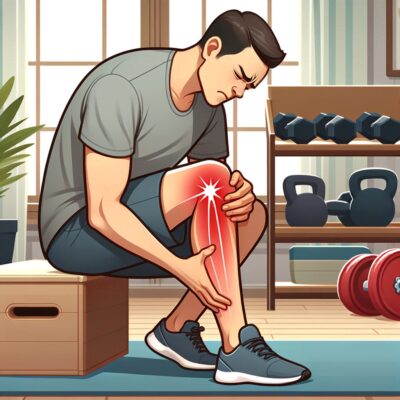
One of the biggest misconceptions in injury recovery is assuming pain always means something is wrong exactly where it hurts.

Your body is a chain. When one link is weak or restricted, the rest of the chain absorbs stress.

At our
Sports Physical Therapy McLean and
Sports Physical Therapy Bethesda clinics, we commonly see:

• An ankle injury showing up later as knee pain
• Hip stiffness leading to low back issues
• A stiff upper back contributing to shoulder pain

A stressed area may feel like the problem, but it often is just compensating for another weakness elsewhere.

Young Athletes Should Not Copy Pro Athletes

Professional athletes live in a different world.

Playing is their job. The reward may be millions of dollars, championships, and career-defining moments.

For high school athletes, the goal should not be to sacrifice long-term health to win the next game. The goal is development, confidence, and staying healthy for years to come.

At our McLean and Bethesda sports physical therapy locations, we help families and athletes make smart decisions every day about when it is okay to push through discomfort and when the risk is simply not worth it.

The Most Common Risk We See: Incomplete Rehab

Most re-injuries don’t happen from a freak accident.

They happen when athletes return before their bodies are truly ready.

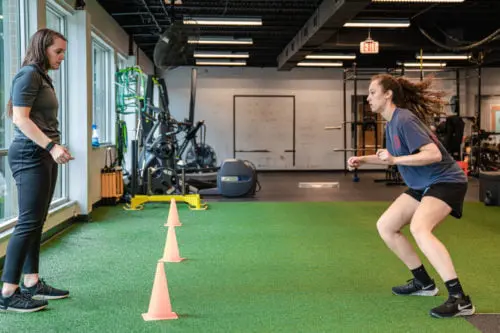
We regularly see athletes who can:

  • Run straight
  • Jog pain-free
  • Walk normally

But cannot yet:

  • Cut safely
  • Decelerate under control
  • Jump and land with good mechanics
  • Handle full game-speed movements

Pain may be gone, but the body may still be under-prepared for the stresses of sport.

If you’re interested in our approach, check out our program for
High School Athlete Injury Rehabilitation — where rehab is not just about healing, but restoring movement, strength, and readiness.

The Right Question to Ask

Instead of asking:
“Can I play?”

A better question is:
“Can I move the way my sport demands without compensating?”

At our sports physical therapy clinics in Bethesda and McLean, return-to-play decisions are based on far more than pain relief.

We evaluate strength, symmetry, movement quality, coordination, and readiness for sport-specific stresses.

How Technology Helps Us Make That Decision — Not Guesswork

One of the biggest advantages we offer is our use of advanced technology for return-to-play testing and performance evaluation. No more guessing if someone “feels fine.” We get objective data.

We’ve written more about this on our dedicated page for How Technology Is Changing Sports Physical Therapy in Bethesda and McLean.

Here’s how that technology helps:

  • Precise movement analysis to catch compensations
  • Strength and power testing to verify balanced return
  • Data on jump mechanics, landing, and force absorption
  • Objective criteria for return-to-play. Not opinions

That means when we clear an athlete for sport again, we can be confident they’re ready for the demands ahead. Not just based on feeling or judgment but on real, measurable performance.

How Sports Physical Therapy in McLean and Bethesda Can Help

If your athlete is coming back from an injury and something still doesn’t feel right, but you’re not sure why, they deserve answers.

At Cohen Health and Performance, we provide:

  • One-on-one sports physical therapy
  • Strength, mobility, and performance testing using advanced technology
  • Sport-specific rehab progressions
  • Return-to-play guidance based on data and movement quality

Whether you are searching for sports physical therapy McLean or sports physical therapy Bethesda, our mission is simple:

Keep athletes healthy now and strong for the future.

Toughness is admired in sports. Preparation and smart decisions are what prevent injuries.

The best athletes aren’t the ones who ignore pain.
They are the ones who listen to their body early and fix the problem before it becomes a season-ending setback.

Looking for sports physical therapy in McLean or Bethesda?

If you are unsure whether your athlete is truly ready to return from injury or want a professional evaluation before letting them get back into full sport, we’d love to help.

Visit:
https://cohenhp.com/mclean-va/
https://cohenhp.com/bethesda-md/

Because staying on the field isn’t just about grit.
It’s about preparation, smart rehab, and long-term health.

CHP Spotlight Interview with Dr. Michael Antonis

Dr. Michael Antonis, a sports medicine specialist at OrthoVirginia, currently serves as the team physician for the Washington Commanders. With a previous tenure as the team physician for D.C. United and Loudoun United spanning five years, his expertise has significantly benefited our physical therapy team.

Recently, I had the pleasure of sitting down with Dr. Antonis for an engaging discussion. He shared a wealth of incredible information that I’m excited to pass on to you. Be sure to watch the full interview below and find a summary of key points right after the video!


Physical therapy plays a crucial role in addressing and preventing injuries among athletes. The injuries of professional athletes differ significantly from those of youth athletes and weekend warriors due to varying levels of physical demands, conditioning, and experience.

Differences in Injuries: Professional Athletes vs. Youth Athletes and Weekend Warriors

Professional athletes often experience injuries due to the intense physical demands of their sports. These injuries can include torn ligaments, muscle strains, and stress fractures, often resulting from overuse or high-impact activities. Due to their rigorous training schedules, professional athletes also face chronic injuries that require ongoing physical therapy for effective management and recovery.

In contrast, youth athletes are more prone to growth plate injuries, sprains, and strains as their bodies are still developing. The lack of proper conditioning and technique can contribute to these injuries. Weekend warriors, who engage in sports activities sporadically, often suffer from acute injuries like ankle sprains, knee injuries, and lower back pain. These injuries are typically a result of sudden, intense physical exertion without adequate warm-up or conditioning.

Reducing Injury Risks for Young Athletes

Parents play a vital role in minimizing injury risks for their young athletes. Ensuring that children participate in a variety of sports can help develop overall athleticism and prevent overuse injuries. Emphasizing proper technique and form through coaching and training is essential. Encouraging adequate rest and recovery time is equally important to avoid burnout and overuse injuries.

Advancements in Sports Technology

Recent advancements in sports technology have significantly contributed to reducing injury risks and facilitating a more effective return to sport. Wearable technology, such as smartwatches and fitness trackers, monitors an athlete’s physical activity, providing valuable data on performance and fatigue levels. This information can help tailor training programs to individual needs, reducing the risk of overtraining and subsequent injuries.

Innovations in sports equipment, such as improved footwear and protective gear, offer enhanced support and safety, reducing the likelihood of injuries. Additionally, advancements in diagnostic tools, like MRI and ultrasound, enable early detection and precise diagnosis of injuries, allowing for targeted and effective physical therapy interventions.

Regenerative medicine, including platelet-rich plasma (PRP) therapy and stem cell treatments, has shown promise in accelerating the healing process and reducing recovery time. These therapies, combined with personalized physical therapy programs, can significantly enhance an athlete’s return to sport.

This is how I ran with an achilles injury

We have a special guest post today! Dr. Kelly Henry, the clinic director of our McLean location, is not only an outstanding sports physical therapist and strength coach but also a former collegiate swimmer at Virginia Tech. In her free time, she dominates triathlons, recently placing 2nd in her latest race. Enjoy her insights!


The Persistent Heel Pain Runners Know All Too Well

Most runners can relate to that dull, nagging pain at the back of your heel—a discomfort that’s more irritating than debilitating. It’s rarely severe enough to stop you from running or send you to physical therapy, but it lingers for a few miles each run, leaving you hoping it’ll fade away, or stretching beforehand in the hope that it won’t bother you.

I experienced this for months while training for my first triathlon. I breezed through the initial weeks, steadily increasing my mileage without any issues—until one day, I felt a twinge at the back of my heel at the start of a long run. The pain disappeared during the run, so I didn’t think much of it. But the next morning, it was back, and the morning after that, it persisted, gradually interfering with my training routine. Determined to stick to my program, I refused to cut back on my running volume or intensity, hoping the problem would resolve on its own. When it didn’t, I sought advice from a physical therapist colleague. Transitioning from a provider to a patient was humbling, but here’s what worked for me:

1) Adjusting My Running Volume

I had to admit that I needed some rest. Once I did, many of my symptoms began to decrease. Along with the strategies below, I slowly reintroduced running, increasing my mileage by no more than 10% per week.

2) Strengthening My Calves and Lower Legs

Tendon injuries often occur when a muscle isn’t prepared for the physical demands placed on it. Strengthening the calves and lower legs is crucial for enhancing load tolerance and reducing the strain on the Achilles tendon. I incorporated exercises like bent knee heel raises and various split squat variations with my heel elevated into my daily routine.


3) Addressing the Underlying Causes of My Injury

In addition to focusing on strength and running volume, I identified specific mechanical adjustments needed to optimize my running form and prevent future injuries. I improved my ankle range of motion and learned to better absorb ground impact. Drills like single leg box jumping and weighted single leg hopping were key in this process.

Are You a Serious Runner Looking to Overcome an Injury?

If you’re committed to running injury-free for years to come, our Resilient Runners Movement Screen is a must!

This screening utilizes our cutting-edge Forcedeck technology. Learn more about it here!

Contact us for more information and to sign up.

3 training mistakes made by young athletes

After opening our new facility in McLean in December, I jumped back into treating sports physical therapy patients.

Our busiest time was in the afternoon when we saw high school athletes.

Many of these young athletes were training independently in the weight room, and I needed them to change their approach for physical therapy to be successful.

While each athlete needed to change something different, there were three mistakes that I found many were making.


Overtraining

Oh, to be young. Many high school athletes feel invincible and, as a result, push themselves too hard. More is only sometimes better, especially when they are playing on several different teams simultaneously with a demanding school schedule. Constantly pushing the limits causes poor technique in the weight room and increased risk of injury. A more thoughtful approach to strength and performance training will provide the opposite result and reduce injury risk!


Ignoring the basics

Understandably, many young athletes want to focus on the exciting stuff. Lifting heavy weights is exciting and competitive. But improving mobility and foundational movement skills. Not so much.

Building strength on a foundation of poor mobility and movement skills is a recipe for injury.

Can your athlete touch their toes without bending their knees or perform a deep bodyweight squat without falling over? How about a pushup without their chest rising before their trunk?

Below are a couple of exercises we use to address these problems before adding heavy weights.

Lateral step down

Core pushup


Lack of Individualization

Many high school athletes follow generic training programs that don’t consider their individual needs, strengths, and weaknesses. While this works for some, an athlete recovering from an injury is unique and needs a training program tailored to their specific goals and abilities.


If you have an athlete motivated to make the most of their ability, they could be falling for many of the same mistakes.

Contact us if you want a personally designed strength training program.

This program may be all your athlete needs to avoid these common mistakes and take their performance to another level!

3 exercises athletes must master before college

During physical therapy school at Northeastern University, I volunteered as an assistant strength and conditioning coach with varsity athletics.

Summer was the most exciting time as first-year student-athletes came to campus to begin their team’s strength and conditioning program.

Our strength and conditioning and sports physical therapy staff quickly understood which athletes had experience in the weight room and which did not.

The athletes with limited weight room experience seemed lost. They didn’t know how to perform the required exercises and were notably weaker than their teammates.

Their coaches quickly learned about this, putting them at a disadvantage compared to their teammates working in the weight room before attending college.

Here are three exercises to help your athlete gain an advantage over their teammates.

Deadlift

Core pushup

Lateral stepdown

Does your athlete dream of playing a sport in college? Are they looking to get ahead of their competition? 

If so, don’t miss this opportunity to join our rising-star summer performance program. In this program, your athlete will be coached through a customized program that will transform them into a stronger, faster, and more explosive athlete. Contact us to learn more!

×