10-Minute Sports Physical Therapy Warmup To Stay In The Game

Athletes and parents of young athletes all want the same outcome: staying healthy, confident, and on the field for the entire season. At Cohen Health and Performance, our sports physical therapy team works with athletes every day who are trying to balance school, practices, games, and multiple teams, all while avoiding injury.

One of our physical therapists at our McLean location, Dr. Samuel Kinney, recently shared a simple and practical strategy based on his experience as both a former college soccer player and a sports physical therapist. While his examples come from soccer, these principles apply to all field- and court-based sports, including basketball, lacrosse, field hockey, football, and more.

Why Many Athletes Skip Strength Training

Most athletes already perform a decent warm-up. This usually includes jogging, sport-specific drills, and dynamic stretching. While this prepares the body to move, it often does not address strength deficits that contribute to common injuries.

The challenge is time. Between school, work, practices, games, and travel, many athletes do not have the capacity to strength train multiple days per week. As a result, strength training is often skipped entirely, increasing injury risk over the course of a season.

A More Effective Warm-Up Strategy

A practical solution used frequently in sports physical therapy is to build small amounts of strength training directly into the warm-up. Adding just 10 minutes before practice or games does not replace full strength training, but it significantly improves consistency and injury risk reduction.

This approach is especially effective for reducing overuse injuries and serious knee injuries that commonly bring athletes into sports physical therapy clinics.

Common Injuries We See in Sports Physical Therapy

Across soccer and other field- and court-based sports, three injuries consistently appear:

  • Groin strains
  • Hamstring strains
  • ACL tears

Below are three simple exercises commonly used in sports physical therapy and ACL physical therapy programs that can be added directly into a team warm-up.

Groin Injury Risk Reduction

Groin muscles play a major role in lateral movement, cutting, and stabilizing the plant leg during kicking and change of direction. Groin strains are common when strength and control are lacking.

Exercise: Copenhagen Plank
This exercise strengthens the groin muscles and their attachment points.

It can be performed using a bench or bleacher with padding under the knee, or with a teammate supporting the top leg.

Recommended dosage is 2 sets of 15 to 30 seconds. Athletes should start with the short-lever version. Once they can confidently complete 2 sets of 30 seconds, they can progress to the long-lever version and reduce time back to 15 seconds.

ACL Injury Risk Reduction and ACL Physical Therapy Principles

The ACL plays a critical role in knee stability during cutting, pivoting, and landing. ACL tears are among the most serious injuries we treat in sports physical therapy, often requiring surgery and 9 to 12 months of rehabilitation.

One of the primary goals of ACL physical therapy is improving strength and control around the knee, particularly through the quadriceps and hip musculature.


Exercise: Split Squat Isometric Hold
Athletes hold the bottom position of a split squat, focusing on knee alignment and control.

Perform 2 sets of 20 to 30 seconds per side.

This type of isometric exercise is commonly used in both ACL injury prevention programs and post-operative ACL physical therapy to improve knee stability.

Hamstring Injury Risk Reduction

Hamstring strains frequently occur during sprinting and rapid acceleration. Strong hamstrings also contribute to knee stability and play a role in reducing ACL injury risk.


Exercise: Elevated Hamstring Bridge
Athletes begin with both feet on a bench or bleacher.

Perform 2 sets of 20 to 30 seconds, then progress to a single-leg variation when ready.

This exercise is commonly prescribed in sports physical therapy to improve posterior chain strength and protect both the hamstrings and knees.

Why This Matters for Athletes and Parents

A consistent warm-up that includes even a small amount of strength work can meaningfully reduce injury risk. These exercises do not require additional training days, specialized equipment, or long workouts. They help athletes stay healthier, miss fewer games, and build a stronger long-term relationship with their sport.

How Sports Physical Therapy Can Help

If you or your athlete is dealing with a sports-related injury, recovering from an ACL injury, or wants to be proactive about injury prevention, our sports physical therapy team is here to help.

At Cohen Health and Performance, we specialize in sports physical therapy and ACL physical therapy for athletes of all levels. We create individualized, sport-specific plans to help athletes return to play safely and perform at their best.

Schedule an evaluation with a member of our team to receive a clear, personalized plan built around your athlete’s goals.

Is Aging Really the Reason Injuries Increase in Your 40s and beyond? A Sports Physical Therapy Perspective

One of the most common things we hear from patients in our McLean and Bethesda clinics goes something like this:

“I guess I’m just getting old.”

People come in with back pain, knee pain, or shoulder pain and immediately attribute it to aging. While age does play a role, it is often given far more credit than it deserves. In our experience providing sports physical therapy to active adults, aging is rarely the main reason injuries begin to pile up in your 40s and beyond.

More often, the real issue is how lifestyle changes affect your body over time.

How Aging Actually Affects the Body

There is no denying that the body changes as we get older. From a sports physical therapy standpoint, some of the most common age-related changes include slower tissue recovery, gradual declines in muscle mass and power if those qualities are not trained, and a reduced tolerance for sudden spikes in activity.

However, these changes are gradual. They do not suddenly appear when you turn 40. Chronological age alone does not determine how resilient or capable your body is. What matters far more is how consistently you prepare your body for the demands you place on it.

The Bigger Factor: Lifestyle Changes in Middle Age

For most active adults in McLean and Bethesda, the biggest shift is not physical aging but lifestyle.

Careers become more demanding. Family responsibilities increase. Time to get to the gym becomes limited. Sleep is often shorter and more interrupted. Nutrition can take a back seat to convenience.

Over time, these factors reduce how well the body is prepared for physical stress. Yet many people still expect their body to perform the same way it did years ago. This gap between preparation and demand is where injuries tend to occur.

In sports physical therapy, we often describe this as a capacity problem. Your body adapts to what you do consistently. If strength training, mobility work, and recovery are inconsistent, your capacity gradually decreases, even if you still consider yourself active.

Why Injuries Feel Sudden in Your 40s

Many injuries in middle age seem to come out of nowhere. A weekend pickup basketball game leads to a calf strain. The first ski trip of the season triggers knee pain. A return to running causes persistent Achilles or hip discomfort.

In most cases, these injuries are not random and they are not simply the result of aging. They occur because the body was not adequately prepared for a sudden increase in intensity.

As we get older, we tend to tolerate these spikes in activity less effectively. That does not mean you should avoid high-level activities. It means you need a more intentional approach to preparation.

How Sports Physical Therapy Helps Active Adults Stay Resilient

The goal of sports physical therapy is not to tell you to slow down or stop doing what you enjoy. The goal is to help you build and maintain the physical capacity needed to keep doing it safely.

For active adults in McLean and Bethesda, this often means consistent strength training two to three days per week, gradual progression instead of an all-or-nothing approach, and prioritizing recovery, especially sleep.

Addressing small aches and pains early is another critical component. Minor discomfort that is ignored often becomes a bigger issue over time. In sports physical therapy, intervening early can mean the difference between missing a few days and missing several weeks or months.

Aging Matters, But It Is Rarely the Main Problem

Aging does matter. But it is rarely the primary driver of injury. More often, injuries reflect a mismatch between what the body is prepared for and what it is being asked to do.

With the right plan, many of these issues are preventable and reversible. Sports physical therapy focuses on rebuilding strength, improving movement quality, and restoring confidence so you can continue to train, compete, and stay active well into middle age and beyond.

If you are an active adult in McLean or Bethesda dealing with recurring injuries, nagging pain, or the sense that your body is not responding the way it used to, sports physical therapy can help. A personalized approach that accounts for your lifestyle, goals, and physical demands can make a meaningful difference.

Your body is not broken. It may simply need the right inputs to perform at a high level again.

Why Being Pain-Free Does Not Mean You Are Ready to Return to Sport

A Sports Physical Therapist’s Perspective in McLean and Bethesda

One of the biggest mistakes athletes make during recovery is assuming that being pain-free means they are ready to return to sport. In reality, relying on pain alone as your return-to-play criteria is one of the primary reasons athletes suffer re-injuries or fail to perform at the level they expect once they return.

As a sports physical therapist serving McLean and Bethesda, this is something we see every week.

Pain-Free Does Not Mean Problem-Free

Think of your body like a car.

If the check engine light is on, something is clearly wrong. But when the light turns off, that does not automatically mean the underlying problem has been fixed. It simply means the warning signal is no longer active.

Pain works the same way.

Pain is an important early indicator that something needs attention, but the absence of pain does not mean your body is fully prepared to handle the demands of sport, training, or high-level activity.

Why Pain Is a Poor Standalone Return-to-Sport Metric

Pain is inherently subjective.

  • Everyone experiences and processes pain differently
  • Athletes are exceptionally good at masking symptoms
  • Many athletes underreport pain because they want to return to play quickly

More importantly, pain often resolves before true readiness returns.

What frequently lags behind pain relief includes:

  • Strength
  • Power
  • Neuromuscular control
  • Tissue tolerance
  • Fatigue resistance

This gap between how you feel and what your body can actually handle is where re-injuries occur.

What a Sports Physical Therapist Looks at Instead of Pain

At our physical therapy McLean clinic, we rely on objective criteria, not guesswork, to determine when an athlete or active adult is ready to return to sport or high-level activity.

Pain still matters but it is only one piece of the puzzle.

Objective Return-to-Play Measures We Use

A comprehensive return-to-sport process includes assessing:

  • Strength symmetry between sides
  • Power output, not just max strength
  • Rate of force development (how quickly strength can be produced)
  • Sport-specific movement capacity
  • Multi-directional control, not just straight-line movement
  • Repeated effort under fatigue, similar to game or practice demands

Athletes must demonstrate the ability to perform these tasks consistently, efficiently, and under conditions that resemble real sport, including fatigue and chaotic environments. Check out an article that we wrote here about the technology that we use at Cohen Health and Performance to ensure that we are assessing these criteria as objectively as possible.

Feeling good in a controlled rehab setting is not the same as being prepared for competition.

Why Stopping Rehab at “Pain-Free” Leads to Re-Injury

Being pain-free is a milestone, and an important one but it is not the finish line.

When rehab stops too early:

  • Athletes return with unresolved asymmetries
  • Performance expectations are not met
  • Injury risk increases dramatically
  • Confidence may exceed physical preparedness

This mismatch is what leads to setbacks, frustration, and prolonged time away from sport.

A More Complete Approach to Physical Therapy in McLean

If you are looking for physical therapy in McLean and Bethesda that goes beyond symptom relief and focuses on long-term performance, injury prevention, and confident return to activity, a comprehensive approach matters.

A qualified sports physical therapist should guide you through a process that:

  • Starts with pain reduction
  • Progresses through strength and control
  • Builds power and fatigue tolerance
  • Prepares you for real-world sport demands

This is how athletes return not just safely, but successfully.

Ready for a Smarter Return to Sport?

If you are currently injured, coming back from an injury, or unsure whether you are truly ready to return to sport or high-level activity, working with a sports physical therapist who uses objective decision-making can make all the difference.

At Cohen Health & Performance, this comprehensive approach is exactly what we do.

Contact us today to learn how we help athletes and active adults in McLean return to the activities they love, stronger, more confident, and better prepared than before.

Therapy For Knee Pain: How to Prepare Your Body for Ski and Snowboard Season

Winter is here, and with it comes ski and snowboard season. After a fresh snowfall and a morning spent shoveling the driveway, I was reminded how quickly winter sports sneak up on us. I also thought back to a trip I took out west last year. It was an amazing experience, but I remember feeling more sore afterward than I had in years past.

As I approach 40, I have realized something many skiers and snowboarders experience. You cannot get away with the same preparation you once did.

If you ski or snowboard and deal with knee pain, or want to avoid it altogether, a little intentional preparation can make a significant difference. This is where knee pain physical therapy becomes especially valuable.

Why Skiing and Snowboarding Stress the Knees

Both skiing and snowboarding place repeated, high-load demands on the knees. Every turn, landing, edge change, and deceleration sends force through the knee joint. By the end of the day, fatigue sets in, technique changes, and the risk of pain or injury rises.

For snowboarders, rotational forces through the hips and knees are constant. Controlling the board requires the knees to tolerate twisting forces while staying stable. Skiers face repeated knee flexion and extension under load, especially when carving or navigating uneven terrain.

If you have ever noticed your knees becoming sore late in the day, struggling to carve clean turns, or feeling stiff after a trip, those are signs your body may not be fully prepared for the demands of the sport.

Our team sees this every winter, which is why knee pain physical therapy is one of the most common reasons skiers and snowboarders come into our clinics.

You can learn more about common causes of knee pain we treat here:
 Knee Pain Physical Therapy in Bethesda and McLean

The Role of Strength, Endurance, and Control

One of the biggest misconceptions is that knee pain is only about weakness. In reality, skiing and snowboarding demand a combination of strength, muscular endurance, and control.

Most gym exercises are performed in mid-range positions for short sets. On the mountain, however, your knees live in deeper positions for long periods of time. This means your muscles must sustain force, not just produce it briefly.

In knee pain physical therapy, we often shift training to better match sport demands. This may include:

  • Longer sets with moderate loads to build endurance
  • Hinge-based exercises such as RDL and deadlift variations
  • Controlled rotational drills to improve knee and hip stability
  • Landing and deceleration training to prepare for jumps and terrain changes

Small programming changes like increasing reps from 5 to 10 or 12 can significantly improve how your knees tolerate a full day on the slopes.

Why Falls Matter for Knee and Joint Health

Falls are part of skiing and snowboarding. When they happen, the body often ends up in vulnerable positions. Knees, shoulders, wrists, and elbows are commonly exposed to sudden forces.

Most people train strength with their arms and legs close to their body. Injuries, however, tend to occur when limbs are farther away. Part of effective knee pain physical therapy includes preparing the body to tolerate force in these vulnerable positions.

This means incorporating drills that teach the body how to absorb force quickly and safely, helping protect the knees and surrounding joints when things do not go as planned.

If you have had a previous knee injury, this type of preparation becomes even more important. You can read more about how we approach post-injury knee rehab here:
Sports Physical Therapy for Knee Injuries

Do Not Forget About Ankles and Feet

Knee pain is often influenced by what is happening above and below the joint. Boots and bindings limit ankle mobility, which changes how force is transferred through the legs.

Snowboarders, in particular, know the burning sensation in the shins that can build up when riding the toe edge or getting stuck on flats. If the ankles and shins fatigue, the knees often compensate.

A comprehensive knee pain physical therapy program will address ankle strength, endurance, and control to reduce unnecessary stress on the knees.

Skill Level Matters

The demands on your knees vary depending on how you ski or ride. Higher-level skiers and snowboarders who ride steeper terrain or hit jumps experience much higher forces through the knees.

In these cases, plyometric training and controlled jumping drills are often incorporated to prepare the knees for rapid deceleration and landing forces. These drills are progressive and tailored to the individual, not random high-impact exercises.

This is a core principle of how we approach knee pain physical therapy for active adults and athletes.

Keep It Simple and Consistent

Preparing for ski and snowboard season does not require an overhaul of your workouts. In fact, simpler is usually better.

Choose two or three drills that closely match the demands of your sport. Spend five to ten minutes incorporating them into your warm up two to three times per week. This approach is often more effective than long, exhausting workouts that are difficult to sustain.

Consistency matters more than complexity.

When Knee Pain Physical Therapy Can Help

If you already have knee pain, a history of injury, or want a personalized plan to prepare for ski or snowboard season, knee pain physical therapy can help you address the root cause rather than just managing symptoms.

This is something we see consistently every winter at our Bethesda and McLean clinics. Our goal is to help you enjoy longer days on the mountain with fewer setbacks.

If you would like to learn more or schedule an evaluation, visit:
Schedule a Physical Therapy Evaluation


Skiing and Snowboarding Physical Therapy FAQs

Q: Why do skiers and snowboarders commonly experience knee pain?
A: Skiing and snowboarding place repeated rotational and impact forces on the knees. Fatigue, poor muscular endurance, limited mobility, or prior injuries can increase stress on the knee joint, leading to pain during or after time on the slopes.

Q: How can knee pain physical therapy help before ski season?
A: Knee pain physical therapy helps identify strength, mobility, and control deficits that increase injury risk. A targeted program improves knee stability, muscular endurance, and force absorption to better prepare the body for skiing and snowboarding demands.

Q: Should I do physical therapy even if I don’t currently have knee pain?
A: Yes. Preventive knee pain physical therapy can reduce injury risk, improve performance, and help you tolerate longer days on the mountain by preparing your joints and muscles for winter sport demands.

Q: What exercises help prevent knee pain for skiing and snowboarding?
A: Common exercises include hinge-based strength work, controlled rotational drills, landing mechanics training, and muscular endurance exercises. These movements better match the real demands placed on the knees during skiing and snowboarding.

Q: How often should I train to prepare my knees for ski season?
A: Incorporating 5 to 10 minutes of targeted knee-focused drills into your warm-up two to three times per week is often sufficient to build resilience and reduce knee pain risk.

Sports Physical Therapy Lessons From The Daniels Jones Injury

If you watched NFL football 9 days ago, you probably saw the heartbreaking moment when Colts quarterback Daniel Jones ruptured his Achilles in what had been shaping up to be a breakout season. The kind of year that shapes a career in an instant.

What made it even more concerning is that he had been playing for weeks with a fractured fibula in the opposite leg. And while we’ll never know for certain if one injury caused the other, the situation highlights an important truth:

Your body reacts to injury as a system, not as a single joint or muscle.

This same pattern is something we see every day at our sports physical therapy clinics in McLean and Bethesda.

Pain Is Often Not the Real Problem

One of the biggest misconceptions in injury recovery is assuming pain always means something is wrong exactly where it hurts.

Your body is a chain. When one link is weak or restricted, the rest of the chain absorbs stress.

At our
Sports Physical Therapy McLean and
Sports Physical Therapy Bethesda clinics, we commonly see:

• An ankle injury showing up later as knee pain
• Hip stiffness leading to low back issues
• A stiff upper back contributing to shoulder pain

A stressed area may feel like the problem, but it often is just compensating for another weakness elsewhere.

Young Athletes Should Not Copy Pro Athletes

Professional athletes live in a different world.

Playing is their job. The reward may be millions of dollars, championships, and career-defining moments.

For high school athletes, the goal should not be to sacrifice long-term health to win the next game. The goal is development, confidence, and staying healthy for years to come.

At our McLean and Bethesda sports physical therapy locations, we help families and athletes make smart decisions every day about when it is okay to push through discomfort and when the risk is simply not worth it.

The Most Common Risk We See: Incomplete Rehab

Most re-injuries don’t happen from a freak accident.

They happen when athletes return before their bodies are truly ready.

We regularly see athletes who can:

  • Run straight
  • Jog pain-free
  • Walk normally

But cannot yet:

  • Cut safely
  • Decelerate under control
  • Jump and land with good mechanics
  • Handle full game-speed movements

Pain may be gone, but the body may still be under-prepared for the stresses of sport.

If you’re interested in our approach, check out our program for
High School Athlete Injury Rehabilitation — where rehab is not just about healing, but restoring movement, strength, and readiness.

The Right Question to Ask

Instead of asking:
“Can I play?”

A better question is:
“Can I move the way my sport demands without compensating?”

At our sports physical therapy clinics in Bethesda and McLean, return-to-play decisions are based on far more than pain relief.

We evaluate strength, symmetry, movement quality, coordination, and readiness for sport-specific stresses.

How Technology Helps Us Make That Decision — Not Guesswork

One of the biggest advantages we offer is our use of advanced technology for return-to-play testing and performance evaluation. No more guessing if someone “feels fine.” We get objective data.

We’ve written more about this on our dedicated page for How Technology Is Changing Sports Physical Therapy in Bethesda and McLean.

Here’s how that technology helps:

  • Precise movement analysis to catch compensations
  • Strength and power testing to verify balanced return
  • Data on jump mechanics, landing, and force absorption
  • Objective criteria for return-to-play. Not opinions

That means when we clear an athlete for sport again, we can be confident they’re ready for the demands ahead. Not just based on feeling or judgment but on real, measurable performance.

How Sports Physical Therapy in McLean and Bethesda Can Help

If your athlete is coming back from an injury and something still doesn’t feel right, but you’re not sure why, they deserve answers.

At Cohen Health and Performance, we provide:

  • One-on-one sports physical therapy
  • Strength, mobility, and performance testing using advanced technology
  • Sport-specific rehab progressions
  • Return-to-play guidance based on data and movement quality

Whether you are searching for sports physical therapy McLean or sports physical therapy Bethesda, our mission is simple:

Keep athletes healthy now and strong for the future.

Toughness is admired in sports. Preparation and smart decisions are what prevent injuries.

The best athletes aren’t the ones who ignore pain.
They are the ones who listen to their body early and fix the problem before it becomes a season-ending setback.

Looking for sports physical therapy in McLean or Bethesda?

If you are unsure whether your athlete is truly ready to return from injury or want a professional evaluation before letting them get back into full sport, we’d love to help.

Visit:
https://cohenhp.com/mclean-va/
https://cohenhp.com/bethesda-md/

Because staying on the field isn’t just about grit.
It’s about preparation, smart rehab, and long-term health.

How Technology Is Changing Sports Physical Therapy in Bethesda and McLean

If you’ve been inside our clinic recently, you’ve probably noticed that sports physical therapy today looks very different than it did just a few years ago. At Cohen Health & Performance, we combine expert clinical care with advanced performance technology to help athletes, runners, and active adults recover faster and return stronger.

With locations in Bethesda, Maryland and McLean, Virginia, our sports physical therapy clinics focus on delivering results through data driven decisions, individualized care, and objective testing that takes the guesswork out of rehabilitation.

Why Technology Matters in Sports Physical Therapy

Traditional sports physical therapy relied mostly on observation, experience, and how an injury “felt.” While those things absolutely matter, modern technology now allows us to combine clinical expertise with objective data.

That means fewer setbacks, faster decisions, and safer progressions.

Instead of relying on timelines, we measure readiness.

Instead of guessing, we test.

This approach leads to smarter rehab and better outcomes for both high school athletes and athletic adults across Bethesda, McLean, and surrounding communities.

The NordBord: Protecting Hamstrings and Preventing Reinjury

Hamstring injuries are common among runners, soccer players, football players, and any athlete who sprints or cuts. The NordBord allows our sports physical therapy specialists in Bethesda and McLean to measure hamstring strength and side to side balance with precision.

During a Nordic hamstring exercise, we capture how much force each leg produces. That data helps determine whether an athlete is truly ready to progress or return to sport without elevating reinjury risk.

Hamstrings work as braking muscles when the leg swings forward during sprinting. If one side cannot tolerate that demand, strains usually follow.

Using the NordBord ensures that return to play decisions are based on real performance data rather than time since injury.

The ForceFrame: Strength Testing That Improves Sports Physical Therapy Outcomes

The ForceFrame is a high level strength testing system that measures isometric force through the shoulders, hips, knees, and ankles.

In our Bethesda and McLean sports physical therapy locations, we use this system to assess limb differences, detect weaknesses that increase injury risk, and monitor progress across visits.

It provides clear answers to important questions like:
Are you truly stronger?
Is one side compensating for the other?
Are you ready for higher load training?

That information allows us to tailor rehab for each person rather than applying generic protocols.

The ForceDecks: Understanding Movement and Impact

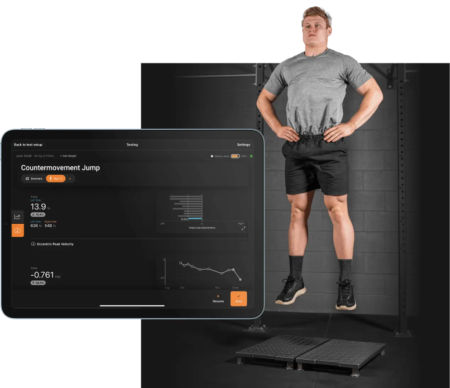
ForceDecks are dual force plates that allow us to analyze how athletes interact with the ground when they jump, land, and accelerate.

This technology gives our sports physical therapy teams in Bethesda and McLean insight into:
Force production
Landing mechanics
Imbalances
Stress patterns across joints

For runners, team sport athletes, and parents of youth athletes, this is incredibly valuable. It allows us to identify risky movement patterns before pain even starts.

If something feels off when you jump, sprint, or cut, we can convert that feeling into data and use it to guide treatment.

Dynamos: Tracking Strength and Mobility

Dynamos allow us to measure strength and range of motion across joints with precision.

In our sports physical therapy clinics in Bethesda and McLean, these tools help us verify that treatment is working rather than simply hoping it is.

We use dynamos to track:
Joint motion improvements
Muscle strength gains
Rehab progress accuracy

It gives patients proof of progress and clinicians better direction on how to load and advance exercise safely.

Why Our Approach to Sports Physical Therapy Works

We use technology to enhance our clinical decision making, not replace it.

By combining hands on treatment with objective testing, we create treatment plans that adapt in real time rather than following rigid timelines.

This allows us to:
Progress athletes sooner when appropriate
Slow down when necessary
Reduce repeat injuries
Improve confidence in return to play decisions

For active individuals in Bethesda and McLean looking for sports physical therapy that focuses on results, this approach delivers a higher level of care.

See the Technology in Action

We created a video walkthrough showing how each of these tools works inside our Bethesda and McLean clinics.

You’ll see how testing is performed, how we analyze results, and how it translates into better rehab outcomes and safer return to sport.

If you’re dealing with pain, stiffness, or a lingering injury, this behind the scenes look will help you understand how modern sports physical therapy is different from traditional rehab.

And if you’re ready to experience it firsthand, our team at Cohen Health & Performance would love to help.

×