3 exercises athletes must master before college

During physical therapy school at Northeastern University, I volunteered as an assistant strength and conditioning coach with varsity athletics.

Summer was the most exciting time as first-year student-athletes came to campus to begin their team’s strength and conditioning program.

Our strength and conditioning and sports physical therapy staff quickly understood which athletes had experience in the weight room and which did not.

The athletes with limited weight room experience seemed lost. They didn’t know how to perform the required exercises and were notably weaker than their teammates.

Their coaches quickly learned about this, putting them at a disadvantage compared to their teammates working in the weight room before attending college.

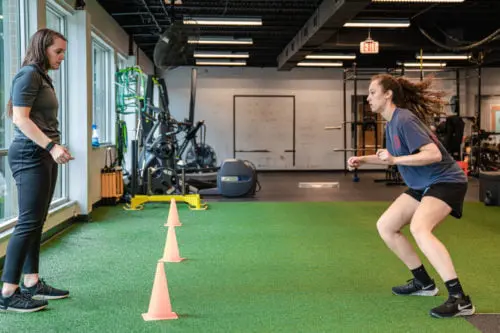
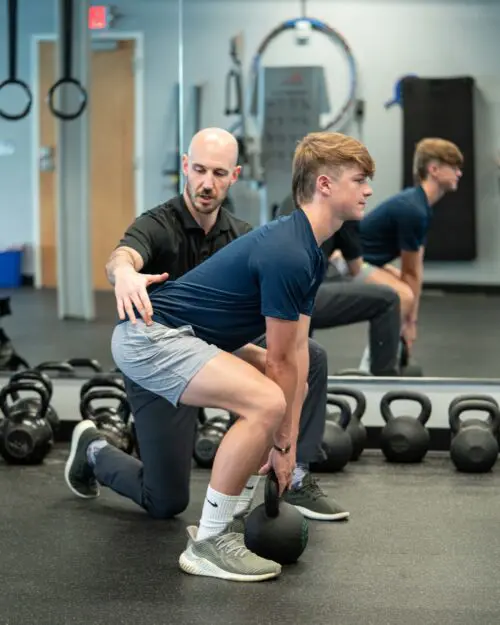
Here are three exercises to help your athlete gain an advantage over their teammates.

Deadlift

Core pushup

Lateral stepdown

Does your athlete dream of playing a sport in college? Are they looking to get ahead of their competition? 

If so, don’t miss this opportunity to join our rising-star summer performance program. In this program, your athlete will be coached through a customized program that will transform them into a stronger, faster, and more explosive athlete. Contact us to learn more!

Bob’s rehab journey from injury to college athletics

Bob was a talented high school lacrosse player with dreams of playing at a Division 1 college. However, despite his ideal size and athletic ability, he wasn’t attracting any interest from college coaches.

The issue wasn’t his talent or drive—it was his injury history. Bob had been plagued by various injuries over the past two seasons, and it was affecting his ability to stay on the field consistently. His history of injuries was the major reason coaches were hesitant to recruit him.

He had already visited multiple doctors and physical therapists but couldn’t seem to stay healthy long enough to make an impact. Frustrated and doubting his chances of ever getting recruited, Bob came to us seeking help.

When we first saw Bob, he was dealing with both ankle and knee injuries that had been bothering him for months. Our sports physical therapy process started with a thorough assessment of his lower body’s range of motion, strength, and movement patterns. We also evaluated his ability to perform the specific movements required in lacrosse.

It quickly became clear that he had significant movement limitations in his ankles and hips, which were causing him to compensate during running and training. These compensations had become ingrained in his movement habits, further reinforcing his limitations and contributing to his recurring injuries.

We worked with Bob to restore proper motion in his ankles and hips, and taught him specific drills to retrain his body to move naturally without compensating.

Once his mobility improved, we shifted our focus to rebuilding his strength, speed, and explosiveness. Our role began to transition from physical therapists to performance trainers. We developed a tailored gym program to help Bob regain his athletic edge and enhance his overall performance.

Three months later, Bob was ready to return to the field for his high school lacrosse season. Although he was nervous about getting back to playing, he was eager to show his coaches the progress he had made.

After his first practice, Bob called me, excited. His coach had pulled him aside to ask what he had been doing during the off-season. Bob had completely outperformed his teammates, returning stronger, faster, and more explosive than ever before.

Fast forward a year, and Bob earned a Division 1 lacrosse scholarship, fulfilling his dream.

If your athlete shares similar aspirations of playing at the collegiate level, reach out to us and join our Performance U Training Program! Let us help your athlete stay healthy, improve performance, and reach their full potential.

Maximizing your child’s chance of earning a college scholarship

ONE person has the final decision in determining if your athlete will receive a scholarship to play college sports. The coach.

Coaches are most concerned with keeping their jobs or earning job opportunities at more prominent programs.

If your athlete can help a college coach with either, a scholarship may be coming their way!

On the other hand, coaches hate inconsistency. When talented players cannot play consistently, a coach can’t trust that they can win consistently, and inconsistent winning equals a lack of job security.

What is the number 1 reason an athlete is unable to play? You guessed it, injury.

I remember speaking to a college football coach in Texas who told me that he would rather have a good player that is consistently healthy than a great player who is always in physical therapy and injury prone. He went on to say that he likes players who overcame an injury and stayed healthy afterward. To the coach, this indicated a strong work ethic, a resilient mindset, and commitment to the physical therapy and performance training process. 

A comprehensive strength training program is best for athletes to stay healthy or overcome a lengthy injury history. Now that summer is here, this is the perfect time for your athlete to get started!

But finding the best strength training solution can be challenging. You should look for three things in your athlete’s strength training program.

  1. Qualified and Experienced Coaches: Look for coaches with a track record of working in your athletes’ sport or discipline. They should demonstrate a strong understanding of exercise science and sport-specific training.
  2. Individualized Program Design: A quality strength training program is tailored to the specific needs and goals of the athlete. Look for programs that start with an individualized assessment to identify strengths, weaknesses, and areas of improvement. The program should be designed to address your athlete’s unique characteristics.
  3. Goal Alignment: Your athlete’s strength training program should align with their goals and sport. Look for programs that incorporate exercises, training methods, or progressions relevant to your athlete’s sport. 

Are you interested in finding the best summer training program for your athlete? 

If so, contact us to participate in our rising-star training assessment.

This assessment will show you and your athlete the secret to helping them avoid injury and take their performance to the next level. 

The Secret to Recruitment for College Sports

College coaches are most concerned with keeping their jobs or earning job opportunities at more prominent programs.

If your athlete can help a college coach with either, a scholarship may be coming their way!

On the other hand, coaches hate inconsistency. When talented players cannot play consistently, a coach can’t trust that they can win consistently, and inconsistent winning equals a lack of job security.

What is the number 1 reason an athlete is unable to play? You guessed it, injury.

I remember speaking to a college football coach in Texas who told me that he would rather have a good player that is consistently healthy than a great player who is injury prone. He went on to say that he likes players who overcame an injury and stayed healthy afterward. To the coach, this indicated a strong work ethic and resilient mindset.

A comprehensive strength training program is best for athletes to stay healthy or overcome a lengthy injury history. This is a large component of the sports physical therapy process in Bethesda and McLean. Now that summer is here, this is the perfect time for your athlete to get started!

But finding the best strength training solution can be challenging. You should look for three things in your athlete’s strength training program.

  1. Qualified and Experienced Coaches: Look for coaches with a track record of working in your athletes’ sport or discipline. They should demonstrate a strong understanding of exercise science and sport-specific training.
  2. Individualized Program Design: A quality strength training program is tailored to the specific needs and goals of the athlete. Look for programs that start with an individualized assessment to identify strengths, weaknesses, and areas of improvement. The program should be designed to address your athlete’s unique characteristics.
  3. Goal Alignment: Your athlete’s strength training program should align with their goals and sport. Look for programs that incorporate exercises, training methods, or progressions relevant to your athlete’s sport.

Are you interested in finding the best summer training program for your athlete? Contact us!

CHP Spotlight Interview with Dr. Jamie Grossman

What can you do to prevent common upper and lower body injuries? When is it time for you to see an orthopedic surgeon? Are there surgical procedures that can preserve the lifespan of a joint? 

I sat down with Dr. Jamie Grossman to tackle these questions and more in the latest CHP Spotlight Interview series edition. Dr. Grossman is an orthopedic surgeon with OrthoVirginia specializing in the field of joint preservation. Her areas of interest include sports medicine, joint reconstruction, and hip preservation.

The mission of the CHP Spotlight Interview Series is to share information with you from local experts in the fields of sports medicine, physical therapy, personal training, and sports performance. Now, more than ever, a seemingly infinite amount of information is available, and finding credible information is challenging. But we have good news. We are here to help you find the best information about physical therapy, personal training, and sports medicine from experts in Bethesda, Chevy Chase, DC, McLean, and Northern Virginia.

If you or someone you love has had a shoulder, hip, or knee injury, don’t miss this interview! 

To learn more about Dr. Grossman, click here and check out our interview below!

My shoulder pops. Is that bad?

I call these rice crispies. Snaps, crackles, and pops are typical in the shoulder and a concern for many physical therapy patients.

Rice crispies occur in the shoulder for many reasons. The shoulder joint has the most range of motion in the entire body. But with great mobility comes great responsibility!

The large amount of motion in the shoulder provides many ways to compensate. If the quality of shoulder movement is poor, it risks becoming unstable. Excellent movement quality is challenging in such a mobile joint, so the shoulder is commonly injured.

But before you worry too much about rice crispies in the shoulder, ask yourself if it is painful. If it is painless, it may only be a harmless joint noise known as crepitus, simply pressure released from the joint. Crepitus is what happens when you crack your knuckles.

But, if there is pain with the noise, consider seeing a physical therapist like our team here at CHP.

Movement compensations in the shoulder and repetitive use can irritate several tissues within the shoulder. One example is rotator cuff tendinitis, which is a common sports physical therapy injury in Bethesda and McLean.

Tendons are the cords that connect muscle to bone. The rotator cuff tendons can become worn down over time, much like the sole of a shoe that eventually wears apart. If left untreated, the result is a tearing of the rotator cuff tendon, resulting in increased pain and an inability to exercise or train fully. Limitations can progress further, affecting sleep, strength, and the ability to use the arm with daily activities.

The most important thing is to figure out why the pain or rice crispies started in the first place.

Small rotator cuff tears, arthritis, and joint damage is expected within the shoulder. But there is still a great deal that you can do (without surgery) to get out of pain and back to performing the activities that you love.

A great sports physical therapist will help you identify the root cause of your symptoms so that you can continue to exercise and enjoy your active lifestyle.

Contact us if you have questions about how we can help you with shoulder pain/popping and get you back to doing the activities you love.

×