The truth about stretching and physical therapy

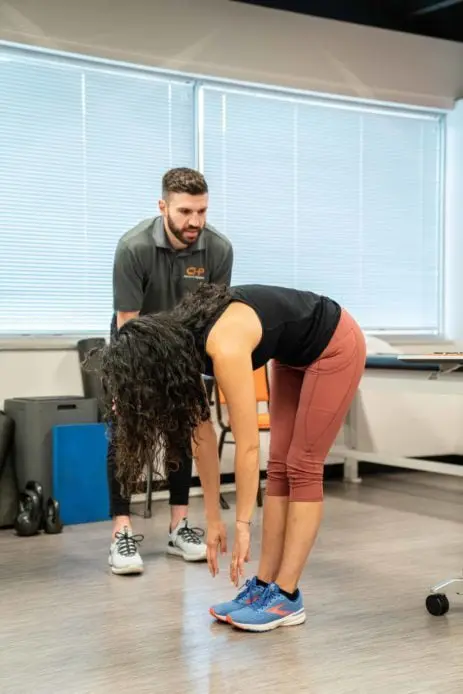
Many people believe that sports physical therapy and performance training should involve a significant amount of stretching. However, every aspect of injury rehabilitation or athletic training needs to serve a clear and specific purpose. When was the last time you paused and asked yourself, “What do I hope to gain from stretching this area?” or “Does this particular muscle even need to be stretched?”

The truth is, like most things in physical therapy, the answer isn’t black and white—it depends. To understand whether stretching is appropriate, you first need to know why a muscle has become stiff or tight in the first place.

Why Do Muscles Become Stiff?

Muscles can become stiff when they are held in a shortened position for extended periods of time. For example, if you spend most of your day sitting or standing in the same position, your muscles may “lock up” in that position and feel tight. Another common cause of stiffness is repetitive movement—when you continually perform the same motions without incorporating enough variety into your routine.

So, if your day involves repetitive tasks or being in a static posture for hours on end, stretching might temporarily relieve the stiffness, but it won’t address the root cause. The solution to “tight” muscles often lies in incorporating more varied movement into your daily routine.

Stretching Without Purpose: A Common Mistake in Physical Therapy

One of the biggest misconceptions in physical therapy is that stretching is always the answer to stiffness or discomfort. However, stretching a muscle without addressing the underlying reason it became stiff is like putting a bandage over the problem—it may help in the short term, but it won’t fix the issue.

For example, in many cases, a muscle might become stiff to protect the body from injury. This is particularly common with back pain. When your back muscles tighten up, they are often responding to underlying instability or strain in the spine. Stretching those muscles could actually make the problem worse by compromising the body’s natural protective mechanisms, increasing your risk of injury.

A Smarter Approach to Stretching in Physical Therapy

Next time you think about stretching a stiff muscle, ask yourself this important question: “Why is this muscle stiff in the first place?” In physical therapy, we focus on identifying and treating the root cause of muscular tightness, rather than just addressing the symptoms. Often, incorporating more variety into your daily movements or addressing imbalances through targeted exercises is a far more effective approach than simply stretching.

Remember, physical therapy is about **rehabilitation with purpose**. Instead of stretching without knowing why, work with a physical therapist who can help you identify the root cause of stiffness and develop a plan to address it safely and effectively. This will not only help you overcome your current discomfort but also reduce your risk of future injuries.

The first drills that we teach to youth athletes

It is essential to understand the demands placed onto the body when working in a sports physical therapy, injury rehabilitation, and performance training setting.

Sports and weight training require athletes to control the body when moving rapidly.

If an athlete wishes to own the “stack” (stacking of our head, rib cage and pelvis over one another) and protect their lower back they must be capable of doing so when performing high velocity movements.

When youth athletes first train, we use medicine ball drills to teach this ability.

The medicine ball chest pass is a great drill to teach this capability. During this the drill, the athlete is generating enough velocity to propel the ball into the wall and back. As this occurs, it can be easy to lose the “stack” requiring the athlete demonstrate a higher of level of body control.

After mastering the chest pass, it is time to bring the arms overhead. More trunk strength and control are required with this movement and the ability to manage intra-abdominal pressure is further challenged. Check out this exercise here.

These are just a couple of the exercises that we incorporate into the training sessions and warmups for our youth athletes.

If you interested in learning more about the summer training options for youth athletes at CHP,  please contact us!

Is Your Doctor (or physical therapy clinic) Taking Care of You?

Recently, I joined my mother-in-law for a visit to a physician’s office.

The physician she saw has a solid reputation and is known as a “go-to” expert in his field.

During the visit he spent a total of 5 minutes with my mother-in-law, glossing over test results and providing very brief recommendations.

He appeared to be speaking as fast as he could so that he could finish the visit and to get to his next patient. After his rushed explanation, we attempted to ask questions, which he answered while backing out of the room.

Sadly, experiences like this are very common in the world of healthcare and I do not blame the healthcare providers because they oftentimes are not left with much of a choice.

The health insurance industry consistently reduces reimbursement to health care providers, forcing them to schedule more patients within a fixed time period. As a result, the quality of care suffers, and everything becomes less personalized.

This also occurs in physical therapy, forcing many clinicians to resort to “cookie cutter” protocols.

If you go to Physical Therapy because of lower back pain then you get put on the lower back pain protocol, shoulder pain=shoulder protocol, etc.

Many times, this works, however, it is not the best choice for those looking to live an active, pain free, and healthy life.

For this reason I typically seek out practitioners that are out of network with health insurance as it enables them to provide me with the highest quality of care possible. In this approach I am treated like an individual and I get to ask all the questions that I would like so that I can a better understanding of my health.

We are out of network providers here at Cohen Health and Performance. We strive to get the best possible results for our patients in the least number of visits, while also providing the education necessary to prevent future issues from occurring.

People can feel better, move better, and enjoy an active lifestyle.  Our mission at CHP will always be to take the best possible care of our patients and that is why we are out of network with health insurance.

Interested in learning more about how this approach can help you? Contact us here!

Why Are You Bench Pressing?

How often do you stop and think about how you want to perform an exercise and if that is conducive to your goals?  Our physical therapy patients here in Bethesda often have the goal of learning to train without pain or discomfort. Training clients, most concerned with sports performance may have goals that include becoming stronger, faster, or building muscle mass.

There is not always a “correct” way to perform every exercise.⁣ Let’s take the bench press as an example.

Depending on your goals and capabilities, you may want to play around with the angle of your arms when bench pressing.⁣

Is your goal to build big pecs? Perform the lift with the arms closer to 90 degrees and do not allow the arms to drift past the body as you can see in the video here.

Do you want to lift more weight while keeping your shoulders and lower back healthy? If so, perform this lift with the arms closer to 45 degrees to take the stress off the front of the shoulders. Check out this bench press variation here.⁣

This is just one of many exercises that can be altered to change the focus.

The key is being clear on the outcome that you have in mind!⁣

Image Source

Bench Press” by A. Blight is licensed under CC BY 2.0.

What All Rotational Athletes Must Be Capable Of (Part 2)

The best ability is availability.

Rotational athletes come to physical therapy for help for with a variety of different overuse injuries (for more information, check out part 1 here). These injuries are the result of an excessive amount of stress placed onto one area which exceeds the body’s ability to tolerate.

Excessive stress accumulates in a particular area (often the lower back) as it is forced to pick up the slack from another area of the body that is not doing its part. Injury rehabilitation often involves discovering what these areas are.

Many times, it is the hips.

The hips are large joints with powerful muscles (ex. The glutes) surrounding them. This area should be generating the power to make things easier elsewhere.

The med ball hip toss teaches the body to generate rotational power at the hips and ultimately propel the ball through the arms. Once you have mastered this drill, step things up and give the perpendicular med ball throw a shot!

Do you feel your body is getting beat up during golf, tennis, or baseball? Come discover the root cause of your discomfort and specific strategies to address it. Visit our website to schedule a FREE phone consultation with a member of our team! Link in bio.

What All Rotational Athletes Must Be Capable Of

Low back pain with golf or arm pain with throwing. At our performance physical therapy practice, we see this constantly. 

Swinging a golf club, throwing a baseball and hitting a tennis ball involve a great deal of rotation. Many areas of the body should be involved in these movements, however that is not always the case.

It is common to see baseball pitchers that are experiencing arm issues demonstrate the habit of trying to “arm” the ball as they throw it. There is not much contribution from the legs which places a great deal of stress on the arm and over time results in overuse injuries. 

Many golfers and tennis players experience lower back pain because they do not effectively link the power that they generate in the lower body through the trunk, into the upper body and ultimately to the head of the club. As a result they compensate elsewhere, placing increased stress onto the lower back.

The rotational row is a great drill to train the body to generate rotational power through the legs and connect it through the trunk. View this exercise here.

Once you have mastered the rotational row and learned how to link the power generated in the lower body to the trunk, we can now add in the upper body! The rotational lift trains the body to generate rotational power through the legs and connect it through the trunk and arms. Check this exercise out here.

Interested in learning more ways you can address lower back pain while enjoying your active lifestyle? Sign up for a FREE phone consultation today!

×